Blog

  • American Shop Windows by Rikki Santer

    after “The Munich Mannequins” by Sylvia Plath

    Mannequins lean tonight
    sober-faced giraffes,

    eyebrow apparitions, torsos
    imagining animal pleasures.

    Surrogate armies defend
    molded nipples & navels,

    postural idiosyncrasies
    always captured ready

    to wear. Tweens with their 
    own rod & base, trail through 

    the mall, libidos with fables 
    glittering from cellphones.

    Smoothies sustain them.
    Credit cards explain them.

    Suburban world trips the axis.
    Selfies, like flatlined cameos, 

    frame vapor tongues numb
    under fluorescence.


    Rikki Santer’s work has appeared in various publications including Ms. Magazine, Poetry East, Margie, Hotel Amerika, The American Journal of Poetry, Slab, Crab Orchard Review, RHINO, Grimm, Slipstream, Midwest Review and The Main Street Rag. Her seventh poetry collection, In Pearl Broth, was published this past spring by Stubborn Mule Press.

  • Interview with Poet Carol Smallwood by Carole Mertz

    I am pleased to feature Carol Mertz’s interview with Carol Smallwood.

    Carole Smallwood is an interviewer, editor, and literary judge. Her most recent book is Patterns: Moments in Time (Word Poetry, 2019). A multi-Pushcart nominee, she’s founded and supports humane societies. A collection is also forthcoming from Main Street Rag. Their conversation right after this poem by Smallwood:

    We Select

    a few—the selections random: a melody, morning fog, a path,
    knowing with certainty at the time they’ll be ours to the end—
    an imprinting sudden as first love with no thought of aftermath:
    a sunset, muffled cry, a Thanksgiving dressing, smile of a friend.
    Knowing with certainty at the time they’ll be ours to the end,
    they return at unexpected moments, their clarity a surprise:
    a sunset, muffled cry, a Thanksgiving dressing, smile of a friend
    bringing feeling from depths we cannot withhold, disguise.
    They return at unexpected moments, their clarity a surprise
    an imprinting sudden as first love with no thought of aftermath
    bringing feeling from depths we cannot withhold, disguise:
    a few—the selections random: a melody, morning fog, a path.

    C.M. Carol, from the number of collections you’ve published within the last decade, it’s obvious your work is a rich flow of creativity. Can you tell us a little about your attitude toward work and your writing process? When did you start writing poetry?
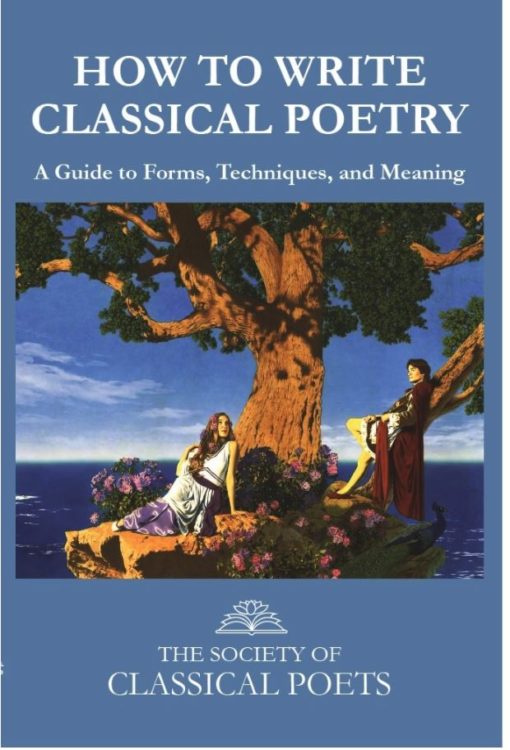
    Smallwood: Writing never seemed to be work ever since learning to read in school. The whole idea of words—the way they sound, look, evoke, made me feel right away it was a new world I wanted to explore. Of course I had no idea what was involved but knew it was one I wanted to be in. Poetry was a form I didn’t think I’d ever try, as after taking college poetry classes in which one class period was figuring out what a poet meant in one line seemed impossibly hard. But finally I decided to try a few so jumped in and was amazed to get acceptances which encouraged me in 2006 to keep going. Probably dealing with cancer at this time prompted me. Yes, I’m OK now but facing mortality pushes one. By chance I ran across formal poetry and after much struggling came up with a villanelle which gave me so much satisfaction I found out how to do triolets, pantoums, and other forms; the rondeau my latest. I found How to Write Classical Poetry: A Guide to Forms, Techniques, and Meaning (Ragazine) to be of great help. As far as the process of writing, it is illusive, very mysterious. The best comes from our unconscious which we know little. It seems the times I try the hardest are times I do the least and when I am not trying, ideas come. Writers are always writing even if not putting words down as it is a simmering on a back burner we have little to do with. Hemingway wrote The Old Man and the Sea in a very short time as he was ready for it, it was cooked so to speak.

    C.M. Do you work mostly at home? If not, how do you establish your routine, for example, if working at a library or another location? In Interweavings, your collection of creative nonfiction, in your essays, and in some of your poems, you refer to visits to the library, and sometimes to the napkins at McDonald’s. I’ve always wondered if you actually took lunches at McDonald’s.

    Smallwood: Yes, I work mostly at home now, around 5 hours at the desktop computer. When not at home I often jot down words on paper that is always handy and yes, sometimes when I run out, on napkins or placemats. Lunch out is my carrot to keep me working and I’m a good customer of fast food places—they know me by name and what I order.

    C.M. When working at an outside location, what writing tools do you carry in your tote bag?

    Smallwood: Just my list of things to shop on back of scrap paper and two pens. Often ideas pop up while I’m driving, so I have a clipboard handy on the passenger seat. It is hard to read on the fly (if you want to read it).

    C.M. I’ve admired your essays at Society of Classical Poets on various poetical forms. Does content of your poems dictate the form you choose, or vice versa?

    Smallwood: A cinquain sometimes starts as a poem but ends up as a sestina or fiction. My computer screen has a big folder called Unfinished Work that I keep going and often use, that is, finish. My latest notes I took last night long hand watching television.

    C.M. Does the material reside in your mind (pre-inscription, as it were) and then you shape the poem? Or do you begin with the formal outline of a villanelle or pantoum, for example, and work the lines into the poem’s formal construct?

    Smallwood: Ideas come first and then I write it as a narrative not thinking what form it would fit. The challenge in most formal poetry is not to make it too “sing song” that is, the rhyme must not overwhelm. I often start out with many lines but end up with just a few or toss it.

    C.M. In various passages from your writing, you’ve referred to John Galsworthy? How has his writing influenced your own?

    Smallwood: I have lunch with John every day even if carrying hard copies in my purse makes it heavy. It was in high school I first read him and greatly admired his style—not knowing about him at all, I just felt it was special and someone I wanted to keep reading. I now have a set (Devon Edition) I treasure that came with uncut pages as well as several autographed books. He has written widely in other forms besides fiction, but it is his novels I keep reading. His The Forsyte Saga has been in at least 2 major television series but I can’t watch it because my image of the characters just doesn’t match those on screen after reading it so often. I often think of his:  “Art was unsatisfactory. When it gave you the spirit, distilled the essence, it didn’t seem real; and when it gave you the gross, cross-currented, contradictory surface, it didn’t seem worth while.”

    C.M. Do you have favorite contemporary poets? I feel I’m always trying to catch up on authors I haven’t yet read. Do you feel that kind of pressure?

     Smallwood: Yes, I have that same pressure of keeping up to date. And concluded one just cannot!

    C.M. One of my favorite essays from your Interweavings is the one you call “Beginning the Day.” I like it for the “present moment” of the essay and for its reverence of the past, told as much by the scarf the cat played with (made from flour sack material), as by items such as stones saved from the past and reference to an old Department of Agriculture land study. This essay achieved such a balancing of “then and now.” Can you tell us something of how this essay came about?

     Smallwood: Thank you! The things I mention were taken from what I saw. As one that fights to fall asleep, seeing dawn has become very familiar but I can never really capture it—it is an amazing process seeing familiar things take on reassuring form early in the day. The essay was an attempt.

    C.M. Your collections are so interesting and so varied, one from the other. In Water, Earth, Air, Fire, and Picket Fences you organize your material according to the earth’s elements, speaking sometimes of the Swan Nebula and sometimes of tea bubbles. The unity of Prisms, Particles, and Refractions, on the other hand, is so different from that of A Matter of Selection where in your preface you address the question of words left in poems and thoughts suggested by what’s left out. When you start assembling your material, do you always recognize immediately the common thread that will make the collection cohere?

    Smallwood: Thank you! It isn’t until I’ve written nearly twenty new poems that I can detect a theme to shape a new collection. There is a thread that connects them even if didn’t know it when writing them and it is satisfying to find, pin it down.

    C.M. I think readers would be most interested in learning what part of the collection process you find most enjoyable? most laborious? most challenging?

     Smallwood: The most enjoyable is seeing the collection fall into place as a unit out of so many parts. In each collection I use 3-5 Parts in Roman Numerals to place the poems as a further definition. And begin with a Prelude, end with an Epilogue. Give it structure, maybe it is the librarian part of my background. The most laborious is thinking of a new poem: thinking is the wrong word—it just comes when it is ready. Sometimes you are convinced you have written your last one and a new one is a thing of the past; it is all over. The most challenging is to keep yourself open, the waiting.
    C.M. If you don’t mind serving further as teacher, could you tell the novice poet how to go about organizing his/her material, or how or when (s)he should approach a publisher?

    Smallwood: Once you finish putting the collection together, add requested blurbs, let it sit a month at least, read it with new eyes. Make sure the table of contents matches the order of the poems, spellcheck. If possible, have a friend spellcheck.  This is the way I organized my most recent poetry collection, In the Measuring:

    • Blurbs
    • Half Page (title only)
    • Title/Author Page
    • Epigraph
    • Recent Selected Work
    • Table
    • Foreword
    • Introduction (Preface)
    • Acknowledgments
    • Prelude
    • Names of Parts
    • Epilogue
    • About the Writer

    Decide if you want to pay a fee for a contest, or a reading fee. Most publishers go this route but some do not. A reliable list of publishers is by Poets & Writers: Small Presses

    Expect to wait, make dozens of submissions as the competition is high. I’ve had 8 poetry collections published so far and another hybrid (not all poetry) is coming out in November from Finishing Line Press; a poetry collection in 2019 from WordTech Editions. John Dos Passos expressed it well when he wrote:  “If there is a special Hell for writers it would be in the forced contemplation of their own works, with all the misconceptions, the omissions, the failures that any finished work of art implies.”

    ***

    Carole Mertz, poet and essayist, is the author of the 2019 poetry chapbook, Toward a Peeping Sunrise (Prolific Press). She writes for various literary journals in U.S. and Canada and resides in Parma, OH. Mertz is the Book Review Editor at Dreamer’s Creative Writing.

  • Finally Going to Tell You about the Staircase Ghost by Luanne Castle

    When my baby said peaches, peaches,
    I put the can into the opener.
    Its lid rose on the machine’s arm.
    The peaches smelled peachy-spice
    and curled into little moons.
    My son gummed his peaches, sloshing
    juice from his mouth’s ends.
    I washed out the can and then saw
    what I had missed in my loving him
    like water into wine. The cool blond
    of pear slices on the Del Monte label.
    The membrane between here
    and there can separate as an unexpected
    wind swishes silk draperies apart.

    Here’s another one.
    You might not have noticed.
    You could have been standing
    at the base of the stairs,
    seen a woman in a long shift hesitate.
    What was happening was this.
    My foot reached for the next step,
    and in that instant a ghost
    passed through my chest
    on its way downstairs.  It didn’t
    move out of the way for me,
    didn’t care that I knew it existed.
    We both went our separate ways,
    my path leading me to this moment
    where I tell my tiny limitless tales.

    Luanne Castle’s Kin Types (Finishing Line), a chapbook of poetry and flash nonfiction, was a finalist for the 2018 Eric Hoffer Award.  Her first poetry collection, Doll God (Aldrich), was winner of the 2015 New Mexico-Arizona Book Award. A Pushcart and Best of the Net nominee, she studied at University of California, Riverside (PhD); Western Michigan University (MFA); and Stanford University.  Her writing has appeared in Copper Nickel, TAB, Glass, Verse Daily, and other journals.

  • The Lark Ascended by Wayne Lee

    –for Mica and Annie

    First Mother’s Day without her
    and you are pulled in two, toward the open arms
    of your thirsty girls and that blue expanse of sky.

    Flute song on the radio, evanescent as breath.

    Once there was a lark, and speckled eggs,
    and fledglings testing their wings. Now they fly
    in time to that most ephemeral of melodies.

    Wayne Lee (wayneleepoet.com) lives in Santa Fe, NM. Lee’s poems have appeared in Pontoon, Tupelo Press, Slipstream and other journals and anthologies. He was awarded the 2012 Fischer Prize and has been nominated for a Pushcart Prize and three Best of the Net Awards.


  • 2019 Best of the Net Nominations

    The annual Best of the Net Anthology from Sundress Publications promotes the diverse and ever-growing collection of voices who are publishing their work online and serves to bring greater respect to an innovative and continually expanding medium.

    The judges for poetry this year is  Eloisa Amezcua.

    Nominations must have originally appeared online and must have been first published or appeared on the web between July 1, 2018, and June 30, 2019. Nominations were due on September 30, 2019 and must have come from the editor of the publication.

    Congratulations to this year’s nominations from Zingara Poetry Review. I hope every poem is included in this year’s anthology!!

  • African Rice by John Short

    First night it’s all hugs and kisses
    presents and rich food, then
    as the days wear on I’m an errand boy:
    sent out for a ton of frozen fish
    or olive oil in demijohns,
    sacks of African rice
    dragged back from the store
    then heaved up narrow stairs and:
    could you pop across the road for wine,
    you know the one I mean?
    It’s as well we don’t live together
    or this would never have lasted six years.
    A romance in small doses –
    we sip it like brandy, cautiously
    and sometimes I wonder
    if this is what I signed up for
    until we take the train to Barcelona,
    hit the bars and she’s dynamite
    and I’m floating down Avignon street.

    John Short lives in Liverpool (UK) and has been published in magazines such as Yellow Mama, Rat’s Ass Review, The Blue Nib, Poetry Salzburg, Barcelona Ink, French Literary Review, Envoi, Sarasvati and South Bank Poetry. His collection Those Ghosts (Beaten Track) will appear hopefully later this year.

  • Because I Like to Make My Mind Pretty the Way We’re Told to Make our Bodies Pretty, I Work at Thinking Beautiful Things by Rebecca Macijeski

    My imagination kitchen
    fills with a hundred giraffes
    crouching to help with dishes.
    My bathrobe is made of cloud.
    The houseplants debate each other
    over dinner, wrinkling their leaves
    in thought. My nail trimmings
    are little moons. I watch the backyard birds
    become helicopters hauling their bird knowledge
    in and out of trees. When my fingers make food,
    they’re searching through time for fire and caves
    and simple families. I remember my childhood
    as a series of collections—blackberries in my hand,
    snowmen, river stones, the sound of deep sky
    over a rural emptiness.

    Like you, too, I suspect,
    I clothe my worry
    in these decorations.
    It’s harder to hate a beautiful thing.
    It’s harder to hate what I’ve made
    when it shines or quacks or spreads
    bright juice all over my skin.
    I protect myself. So my armor is
    these imaginations.
    Wild animals crowding out the pain.

    Rebecca Macijeski holds a PhD from the University of Nebraska-Lincoln and an MFA from Vermont College of Fine Arts. Her poems have appeared in The Missouri ReviewPoet Lore, Barrow Street, Nimrod, The Journal, Sycamore Review, Fairy Tale Review, Puerto del Sol, and many others. Rebecca is Creative Writing Program Coordinator and Assistant Professor at Northwestern State University.

  • Things to Be Grateful for During the American Winter by Michael Brockley

    ~For K.D.

    The portrait of Harriet Tubman burbling in the ink of a twenty-dollar bill. The way hands can be cupped to form eagles and bison when the shadows on bedroom walls slip through the jet stream of your imagination. The way women’s boots never go out of style. The way wallets are cluttered with unclaimed lottery tickets and Chinese fortune scripts. Take pleasure knowing chaos theory honors the wisdom of Japanese butterflies. Cherish this year of lunar wonders. October’s Hunter’s Moon. The November moon so close a heroine could step off of her hometown street into zero gravity. Hold your memory of a president racing his puppy through the White House halls at Christmas. Celebrate the happy accident of the newest blue and the oldest cherished songs. Sing Hallelujah! Thank the fog. Thank the way persimmons ripen during hard frosts. The taste of haiku lingering on your tongue. Take comfort in the assurance that scarves will always fit. Be grateful for the circle of light dancing above your head. It guardians the secrets in your eyes. Be grateful for the photographs of your most embarrassing moments. Be grateful for the impossible challenges before you. Be grateful knowing that, for this hour, gratitude is enough.

    Michael Brockley is a 68-year old semi-retired school psychologist who still works in rural northeast Indiana. His poems have appeared in Atticus Review, Gargoyle, Tattoo Highway and Tipton Poetry Journal. Poems are forthcoming in 3Elements Review, Clementine Unbound, Riddled with Arrows and Flying Island. 


  • Balm by Anne Whitehouse

    A parade of goats clambered down the path,
    bells clanging. Between two cliffs
    jutting out to sea was a green valley
    with a gray road like a fallen ribbon
    surrounded by palm groves
    and little houses like white sugar cubes
    sprinkled down the slope.

    The ocean crashed against the cliffs,
    frothing white on dark blue, and puffy
    white clouds massed on the horizon
    beyond the shadowy shapes of distant islands.
    The air smelled of sweet juniper, as I bit
    into the soft flesh of a ripe fig
    and basked in the warm sun.

    Anne Whitehouse is the author of six poetry collections, most recently Meteor Shower (Dos Madres Press, 2016). She has also written a novel, Fall Love, which is now available in Spanish translation as Amigos y amantes by Compton Press. Recent honors include 2017 Adelaide Literary Award in Fiction, 2016 Songs of Eretz Poetry Prize, 2016 Common Good Books’ Poems of Gratitude Contest, 2016 RhymeOn! Poetry Prize, 2016 F. . She lives in New York City. www.annewhitehouse.com

    Other poems on ZPR by this poet: A Dog’s Life, Dance in a Drugstore, Shadows


  • Blackbird by Yvette R. Murray

    (on Nina Simone’s “Blackbird”)

    A dot sprouted in the universe
    She wanted, she wanted, wanted flight
    Doubt filled her hollow bones with sand
    and night kept her black wings from rising.

    How could there ever be enough tears
    for an orphaned bird still at the nest?
    How could fear ever make her sun rise
    or drip moonlight rest into her soul?

    No place wanted a black bird like this.
    Nowhere a hometown she can call near.
    A little sorrow can hold a soul back
    and force the brightest of lights to roam.

    Nina Simone: February 21, 1933 to April 21, 2003

    Yvette R. Murray received her B.A. in English from Duquesne University in Pittsburgh, Pennsylvania.  She has been published in Fall Lines, The Petigru Review, Catfish Stew, Genesis Science Fiction magazines and online.  Presently, she is working on her first collection of poetry and a children’s book series.

  • Landing in Snow-Covered Landscape by Anneliese Schneider

    I take the comfort from
    the seasons’ soft edges

    That this is not time.

    The ice that holds your
    footprint slides upwards
    into my bones

    We must step—
    Carefully. Slower, now.

    I have been thinking
    that all snow is
           some form
                of falling

    Soon it will be time
    to forget the old fear,

    slipping off
    the wrong side
    of that darkened line.

    Anneliese Schneider is currently an undergraduate student, living in Virginia and pursuing a personal interest in poetry and literature.

  • Sound the Trumpet by Edith Friedman

    All hail the trash-talking bball players, high-voiced sixth graders,
    out on the courts this early summer evening
    I curve my bike through San Pablo Park.
    The city took the big oaks last year, but the fields are lush and broad
    and the sunset sky is full of treasure.
    Here at the border of have and have not
    there’s a shooting about three times a year.

    Four months since the last one took a grandfather to the ICU.
    We’re nervous, but we can’t live inside.
    At noon today the park was full for Eid al Fitr, prayers in the open
    a woman in a burqa walked down my block with her package of food
    then a family on bikes, dad and two little girls
    long handlebar streamers and flowered helmets.
    Flowing garments, people laughing,
    full plates on laps, smell of grilled meats.

    Tonight softball players race across the June grass.
    The scofflaw dog owners, out in force
    cluster deep in right field
    as the bright lights come on.
    Back home, praise the boy who unloaded the dishwasher unbidden
    now he’s lacing up basketball shoes
    bigger than dinner plates.

    The gleaming crescent moon clutches her drab mother
    but you always go back to the park.
    I say, don’t come home too late.

    Edith Friedman is sheltering in California with her partner and two stunned and bored sons. Her work has appeared in Sisyphus Literary Magazine. She studies Writing at California College of the Arts.


  • Maybe It was Spring by Luanne Castle

    or winter
    and there were nine girls or seven.
    Certainly it was overnight church camp
    when we formed a second
    skin around Lacy
    with our fingertips.
    What happened wasn’t a dream unless
    a mass dream dreamed en masse.
    We were one organism,
    the skin we made stretched
    tautly like a drumhead, lifting
    up the girl Lacy, a musical offering.
    Our song flowed in and from us,
    all seven or nine, with Lacy the melody.
    But one of us must have felt an itch
    and discovered she was separate
    and, doing so, withdrew her touch.
    An epidemic followed
    from this undoing until Lacy’s body
    shared many points
    of contact with the floor.
    I remember looking under her
    just before and noting
    her two inches above it all
    though of course that is ridiculous
    because it wasn’t a dream.


    Luanne Castle’s Kin Types (Finishing Line), a chapbook of poetry and flash nonfiction, was a finalist for the 2018 Eric Hoffer Award.  Her first poetry collection, Doll God (Aldrich), was winner of the 2015 New Mexico-Arizona Book Award. A Pushcart and Best of the Net nominee, she studied at University of California, Riverside (PhD); Western Michigan University (MFA); and Stanford University.  Her writing has appeared in Copper Nickel, TAB, Glass, Verse Daily, and other journals.

  • Hurt Friends by Max Reese

    this body of mine used to be
    all papercuts and scraped knees,
    beestung summers clinging to our heels and sunburn blushing
    across our cheeks;
    you showed up to the picnic with bruises and I thought nothing
    of it – clumsy boys will fall
    as they please.
    I never knew a home could be a gravesite until
    you moved away and the grass overgrew
    the porch steps.
    I wish I could have saved you,
    back then,
    but we were both so far away and so hurt
    we could never go back to our new skin,
    to the blackberry stained mornings
    when there were no broken bones,
    or hearts —
    only fireflies and cherry coke.

    Max Reese is from Reno, Nevada, and currently attends the University of Nevada, Las Vegas as a sophomore. Max is long-time, self-taught poet whose mother instilled a love of poetry in him from a young age.

  • Listening To Poetry That I Don’t Understand by John F. McMullen

    I sit in the audience
    and listen attentively
    trying to make sense
    of what the poet
    is reading.

    I wonder whether there is anyone
    who doesn’t understand what I write
    I think not because I write very
    clearly (or so I think).

    Others may write about important
    issues but in such unclear poetry that
    I am not able to grasp their meaning.
    Why is that, do you think?

    Is my lack of comprehension
    the fault of the writer or of me?
    Whatever?
    I clap anyhow.

    After all
    they clap for me.

    John F. McMullen is a writer, poet, college professor and radio host. Links to other writings, Podcasts, & Radio Broadcasts at his web home, www.johnmac13.com, his books are available on Amazon (bit.ly/johnmac), he may be found on Facebook, LinkedIn & Skype as johnmac13 and he blogs at Medium — https://medium.com/@johnmac13. He is also a member of ACM, American Academy of Poets, and Freelancers Union