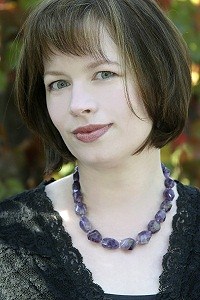
Author: Lisa Hase-Jackson

  • On Sunday by Karen Loeb

    Tomorrow I will make potato latkes.
    I will be a renegade and use sweet potatoes,
    not the white potatoes I grew up with,
    the white potatoes that were always
    used in the pancakes. The white potatoes
    that my mother never questioned,
    that she placed on the table in many
    different disguises—mashed, baked,
    boiled and cold in salad with mayo stuck
    on everything, obscuring what lay beneath
    the slick white coat.

    I will use sweet potatoes when I make
    my latkes. I will use minced scallions
    instead of yellow onions cut in chunks.
    I will even use the green leaves that
    arc out from the white bulb like a dancer
    extending a leg. I will cut off the roots.

    Of course I will do that.

    I will grate the potatoes in a processor,
    something my mother never had. I will
    not feel guilt for doing this. My latkes
    will not be less authentic because the potatoes
    were whirled around and chopped into many
    small bits. I will invite friends over
    to eat the small round cakes with a
    tinge of orange. They cannot be mistaken
    for white potato latkes. I’ve made sure of that.

    Karen Loeb writes and teaches in Eau Claire, Wisconsin.  Recent publications have been a story in Thema, poems in The Main Street Rag, Bloodroot and Hanging Loose.

  • There is Darkness to the Water by Martin Willitts Jr.

    There is darkness to water
    of intent and revenge for what we’ve done,
    as the earth becomes hotter and hotter.

    What will we tell our sons and daughters?
    In our destruction, what have we won?
    There is darkness to the water.

    It thirsts for revenge and in its anger
    it flattens cities, ending what we begun,
    causing the earth to become hotter and hotter.

    Who was the leaders? Why did they falter?
    Our forests, ruined land, both made barren.
    There is darkness in the water.

    What will we tell children after?
    We ruined the earth and all we were given,
    and made the air sulfur, becoming hotter.

    Now we cannot go back. The winds stir
    nothing and we cannot alter
    the intense darkness in the water
    which floods as things get hotter.

    Martin Willitts Jr forthcoming poetry books include “Waiting for the Day to Open Its Wings” (UNBOUND Content), “City Of Tents” (Crisis Chronicles Press), “Swimming in the Ladle of Stars” (Kattywompus Press), “A Is For Aorta” (Kind of Hurricane Press, e-book), “Martin Willitts Jr, Greatest Hits” (Kattywompus Press), “The Way Things Used To Be” (Writing Knights Press), “Irises, the Lightning Conductor For Van Gogh’s Illness” (Aldrich Press).

  • Swedish Flooring by Jeannie E. Roberts

    The old linoleum spoke,
    kept track, took note,
    of scuffs and cracks,
    marked anecdote, recalled
    a lifetime worn by others;
    where, thoughts of feet
    made floorboards creak,
    caused stabs near grab
    of knob and turn meant
    throbs when dotard trod
    with memory-mud and
    gore; still, shine imbued
    in servitude, light infused
    this floor, where pets were
    friends, pledged care―no end,
    and softness sat times four, sat
    just beyond the door.

    Jeannie E. Roberts is the author of two books, including the newly released Nature of it All, a collection of poems (Finishing Line Press). For more, visit http://www.jrcreative.biz.

  • NeverNever Holes by Karen Bovenmyer

    NeverNever Holes

    We have been together for fifteen years and
    Never, never
    Have you left a hole in my wall

    There’ve been holes in other things
    to-do lists, clothes, missed birthdays,
    valentines days, anniversaries, sometimes
    But never, never
    A fist-sized hole in my bedroom wall

    Your voice saying
    What do you want? I don’t know what you want, I can’t be what you want
    Tearing your hair, scratching your arms, punching a
    heart-shaped hole in my wall

    And I stand there, sobbing
    Like the eight-year-old I suddenly am again watching my sister
    throw dishes at my mother
    I said, I will never, never be like her

    And under the thick sounds I am making
    Like fifteen holes knocked into fifteen walls
    I am saying, I will never, never leave you

    And you are saying, I will never change
    But
    There is a hole in my wall now
    An opening that wasn’t there before

    And finally I am hearing
    Please, please love me for who I am

    And so, I say again
    Fifteen times

    I do, I do, I do
    I do, I do, I do
    I do,  , I do
    I do, I do, I do
    I do, I do, I do

    Karen Bovenmyer holds an MFA in Creative Writing: Popular Fiction from the University of Southern Maine. She teaches and mentors students at Iowa State University.

  • The Sounds of a Breakdown by Dr. P

    The sounds of
    A Breakdown is
    Messy and loud –

    An en media res
    Heathen sound –

    A crashing down —

    Like pagan workers
    Who carelessly

    Throw away cast
    Away bricks – from
    Long ignored
    Pyramids – just
    To load machine
    Made construction
    Beams –

    Walk beneath
    The metal
    Street slowly,
    And surely you
    Will hear the Snap –
    The breaking,
    Falling Wreck —

    Such a sound:
    Total – Forlorn –.

    Dr. P. holds a Ph.D. in English from SUNY Stony Brook University. She is Grenada born, Brooklyn-based Poet and Essayist.

  • Tides by Diane Kendig

    ~”We lower our sails, awhile we rest.” — Longfellow

    My nine-year-old niece’s mother called us from the Midwest. Lauren, distraught,
    asked, “Why couldn’t they just run, leave home?” as she’s been taught
    to do for fire. They’ve looked at maps. What else ought

    she explain to her child about Nicaragua, wracked and wrecked again, the Erinyes
    of Mitch. One day later, driving along the coast, we saw the perigee of perigees
    made the moon the most huge and gorgeous mound, a “geez”

    experience, as we say in Ohio. And too, it shone so full that night, a near coincidence
    wrote Joe Rao, an astronomer, explaining in the Times that the high incidence
    of sand at low tide was autumn “spring tide,” this widest expanse of dense

    beach yet. We love low tide for walking, and that huge space it cleared, like a spark
    gap, stretched us as we zigzagged with our Nicaraguan friend in a state park
    and spoke of the home she hates to be away from. Under a pine arc,

    so greenly dark, so pained and useless as we felt, we heard more from her of Nicaragua’s
    mudslides. We’ve lived through its usual rainy season: no umbrellas, paraguas,
    can stop it, only wait for the breezes of November after the rains, las aguas,

    end. But this was so much more and worse even than the last, when the most banefully
    wicked winds and water lashed the land, killing thousands. We didn’t fully
    fathom the difference yet, standing in that moon-dazzling lovely lee.


    Diane Kendig curates a website for the Cuyahoga County Public Library (greater Cleveland, OH) for National Poetry Month which features a prompt, a poem, a link, and a book recommendation each day in the month of April. The “Nesting Poem” will be the prompt for Monday, April 14th: http://www.cuyahogalibrary.org/What-to-Read/Read-Write-30-Days-of-Poetry.aspx

  • Goddessing Above the Waist by A.J. Huffman

    The shirt was not hair. I was.
    Chewed. And left
    for death
    in the middle of a road.
    Crossed. Gnarled.
    And gnatted.
    Until the wind broke
    through. And against me.
    My wishes:
    wished and washed.
    Discarded by the locks.
    Plait one.
    Pearl two.
    They hate me
    because I am beautiful
    ly vacant.
    *Sigh*
    Hold me
    to your ear.
    And listen for the coming
    of the crows.


    A.J. Huffman has published five solo chapbooks and one joint chapbook through various small presses. Her sixth solo chapbook will be published in October by Writing Knights Press. She is a Pushcart Prize nominee, and the winner of the 2012 Promise of Light Haiku Contest. Her poetry, fiction, and haiku have appeared in hundreds of national and international journals, including Labletter, The James Dickey Review, Bone Orchard, EgoPHobia, Kritya, and Offerta Speciale, in which her work appeared in both English and Italian translation. She is also the founding editor of Kind of a Hurricane Press. http://www.kindofahurricanepress.com

  • Shadows by Anne Whitehouse

    The stone garden lingers like a shadow
    reflected in the depths of her eyes.

    The shadows of water spiders
    lie on the sandy stream bed
    like black petals.

    Here, in the heart of the forest,
    cleft by a waterfall,
    the sun’s heat never penetrates.

    Bio- Anne Whitehouse was born and raised in Birmingham, Alabama, and graduated from Harvard College and Columbia University. She is the author of the poetry collections—The Surveyor’s Hand, Blessings and Curses, Bear in Mind and One Sunday Morning. Anne Whitehouse’s most recent poetry collection is The Refrain (Dos Madres Press, 2012). Her novel, Fall Love, is available in ebook format from Feedbooks, Smashwords, Amazon Kindle, and iTunes.

  • Made Worse by Jeff Burt

    Hurt is the manner in which the homeless
    pronounce heart, and in doing so

    identify the state of it, their cold
    puckered mouths unable to slow

    the gutteral vowel. And we, more proud
    of our rags than the rich their silk,

    we had wanted to feed the famished, turn
    tanks and subs into cups of milk.

    But words cannot multiply fish and loaf,
    so you chose the worming up

    the corporate tree and I chose grubbing
    out cash for the most appealing group.

    Today I handed out cups of coffee
    to those who utter hurt for heart

    and mean the same, and listened to their cold
    hard prose, not a warm word in it.

    We have not written for these many years
    and I am one made worse for it.

    Jeff Burt works in manufacturing. He has work in Dandelion Farm Review, Nature Writing, and forthcoming in Windfall and Thrice Fiction.

  • Secret River (for the poets) by Jules Nyquist

    The Mississippi shows herself

    by waiting under the bridge.
    She saves those wanting to walk on water
    drowns others.

    Her veil falls over the dam,
    built from the sand
    she eroded first.

    I am married to my work
    to bear my children one spoonful at a time.

    Her humming knows,
    and I sleep

    with the fish and the rocks
    and the damned.

    From Behind the Volcanoes, released March 22, 2014: http://www.julesnyquist.com/events.html

    Jules Nyquist lives in Albuquerque and is the creator of the Poetry Playhouse.  She received her MFA from Bennington College, VT and her poetry collection, “Appetites,” (Beatlick Press) was a finalist for the New Mexico/Arizona 2012 Book Awards.  Her next book of poems is entitled “Behind the Volcanoes.”  www.julesnyquist.com

  • Song of Sorrow by Jeremy Garnett

    Harken, to the breeze which blows, and the words which flow, like a curlew’s cry on the evening wind.
       Haunting, ever haunting,
    till in the fading light, gone to memory.

    Listen, beneath the moon-time glow, for the dance of silent wanderers, beyond the edge of hearing,
       haunting, ever haunting.
    Crying out in absent loss, gone to memory.

    Glance, from below shuttered eyes, as wisps of sorrow vanish between decaying buildings, forgotten trees.
       Haunting, ever haunting.
    A remembrance of reality, gone to memory.

    Sidle out of space or time, step from reality’s dream to the edge of darkness, balance on the edge that is
       haunting, ever haunting
    the stream of life that never was, gone to memory

    Hear the curlew’s cry and pirouette on the edge of silence, till truth’s song cascades across the frontier,
       to haunt, forever haunt,
    on the periphery of existence, atop the wall of sanity, in memory’s future and history’s impending past.

    Wait,
       For the curlew’s haunting cry
    and weep, for all that wasn’t and all that will never be,
    gone to memory.

  • Like Her by by J.D. Isip

    Thirty-eight, maybe forty boxes—
    how does that divide by nine marriages?
    Old photo albums we don’t look through
    stacked sideways, shut for years—
    A hat box her third husband gave her
    from Italy—where she said he died
    At least to her—stuffed with Christmas cards
    the old 70’s, foil kind—flimsy
    And showy, now frail, like her

    I’ve begged her to dump them, dump them all
    but she protests, she pulls some trick—
    A yellowed picture of my dad in a fading, brown suit
    or my brother’s first card from his father (not mine)—
    I digress. To me, it’s a waste
    like being married nine times

    To hold onto the crumbling pieces of a past
    that rots away in a rented storage space
    Each box as empty as they are full

    Married nine times—unfathomable
    as these old boxes, stuffed, overflowing
    Contents far too daunting, too consuming to explore—
    probably not enough to learn from, or care for
    To me, it’s a waste—I’m not like her—
    I’d throw them away
    Clean up and move on.

    J.D. Isip’s academic writings, poetry, plays, and short stories have appeared (or will appear) in a number of publications including The Louisville Review, Changing English, Revista Aetenea, St. John’s Humanities Review, Teaching American Literature, The Citron Review, Poetry Quarterly, Scholars & Rogues, Mused, and The Copperfield Review. He is a doctoral student in English at Texas A&M University-Commerce.

  • Do the Dead See? by John Brugaletta

    I was new at the job, so the corpses were new to me.
    As I snored in my room, a mortician came in, woke me.
    It was a homeless man, our mortuary’s month for them,
    and he needed me to assist. When I got to the
    room with the porcelain table, he said, “I’ve got to go
    over to the other side for more embalming fluid.”

    So I waited, looking at the street dweller’s face,
    stone white and rigid. How many soup kitchens
    had poured their chicken plasma down that throat?
    What career of his had crashed, what wife died
    or left him as he sank? What did his voice sound like,
    his walk look like? What would he say about himself?

    Then his eyes opened.
    I waited for him to speak, make a move, anything.
    Nothing. Just the eyes staring at the ceiling.
    The mortician came back. I said, “Don’t embalm him.
    He’s alive. Look, his eyes opened.” He said, “Aah,
    they all do that,” and he slipped holders under the lids.

    John Brugaletta likes to make tables out of unusual woods like jatoba and purpleheart. He also likes to write poems, sometimes about himself, sometimes not. He left the Marine Corps in 1960.

  • The Tall Arab by Andrea Jackson

    I followed you across the ocean, 
    	didn’t I?  
    The tall Arab made my path clear, 	
    	gave reality and shape 
    	to my existence. 
    
    I collected anecdotes for you, 
    	harvested personal events. 
    My eyes were your servants;
    	They sought nothing
    	for themselves.
    
    Will you tell me 
    	how you could let it happen, 
    this bifurcation between the outside, 
    	the heat and the golden light 
    	and the tall Arab, 
    and the inside where you plot 
    	and conceal?
    
    And didn’t you notice, 
    	just at that moment, 
    	how the world ended?


    Andrea Jackson has an MFA from the University of Missouri – St. Louis. She writes fiction and poetry. Her most recent publication is a story in the 2013 Alligator Juniper.

  • Fire Rainbow by Fern G.Z. Carr

    “My heart leaps up when I behold
    A Rainbow in the sky;” ~William Wordsworth

    Diaphanous wisps of cirrus
    laden with hexagonal crystals
    beckon the sun
    to traverse their
    optically aligned
    plate-shaped faces
    and refract its rays
    at perfect right angles
    to create an ice halo
    also known as
    a fire rainbow –
    a chiffon cloud
    of flame-like plumes
    the colors of the spectrum –
    its vibrant reds, oranges, yellows,
    blues, greens, indigos and violets;
    the colors that set skies ablaze
    with their icy fire.

    Fern G.Z. Carr is a member of The League of Canadian Poets. A 2013 Pushcart Prize nominee, she composes poetry in five languages and has been published from Finland to the Seychelles.  www.ferngzcarr.com