Author: Lisa Hase-Jackson

  • Blowing on the Pinwheel by Luanne Castle

    Blowing on the Pinwheel by Luanne Castle


    Night terrors woke my baby son.
    We let him lie between us, but he refused to sleep.
    So I put him back, and resumed crying.

    Pinwheel would be a great word
    if it wasn’t so close to pinworm.
    If pinwheels stop, everything slides to a halt.

    The crying carried out over our garden.
    We called it our convent garden, beautiful,
    spiritual, chaste, pure, and isolated.

    That night I dreamed of a huge black rat,
    bigger than a jackrabbit, with pinwheels
    for eyes, staring at me, telling me something.

    What I heard wasn’t crying, but screaming,
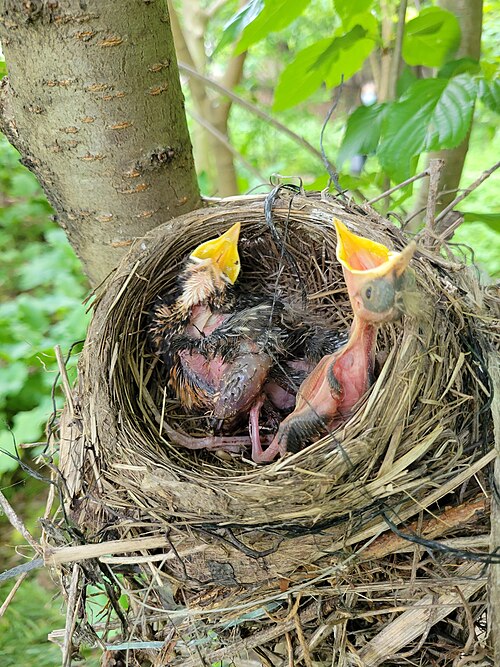
    from a nest of baby birds in the garden.
    We are hungry, hungry, hungry, they wailed.

    Another time, I dreamed of a party, women
    in a group around me, one of them tried
    to pull a mouse from my mouth by the tail.

    My son woke crying, so I fed and rocked him,
    When I set him down, he cried. Waiting for a baby
    to stop crying is like waiting for something to die.

    Luanne Castle has published four award-winning poetry collections and has been awarded nominations for Pushcart and Best of the Net. It has been published in Copper Nickel, Verse Daily, Saranac Review, American Journal of Poetry, The Ekphrastic Review, Thimble, The Mackinaw, One Art, Lothlorien, and many other journals and anthologies. 
  • The Voices of My Fathers by Jeanne DeLarm-Neri

    The Voices of My Fathers by Jeanne DeLarm-Neri

    In response to the “The Thin Veil” prompt posted on April 14, 2025.

    Someone is always talking to my father and now I realize

    a spirit trudges the southern banks of the Riviere Saint Lawrence,
    bandage wrapped around his belly, strips of bedsheet tight.

    My father’s grandfather walked in front of a priest’s hunting rifle,
    took a bullet between the tenth and eleventh rib,

    and it tore a path into the bowel. The metal lies to this day
    under a tilted gravestone crusted with white lichens.

    My father and his grandfather shared small eyes set close
    like the boy in between, four years old when Henry died.

    “Like father, like son,” Dad says. They converse in his living room,
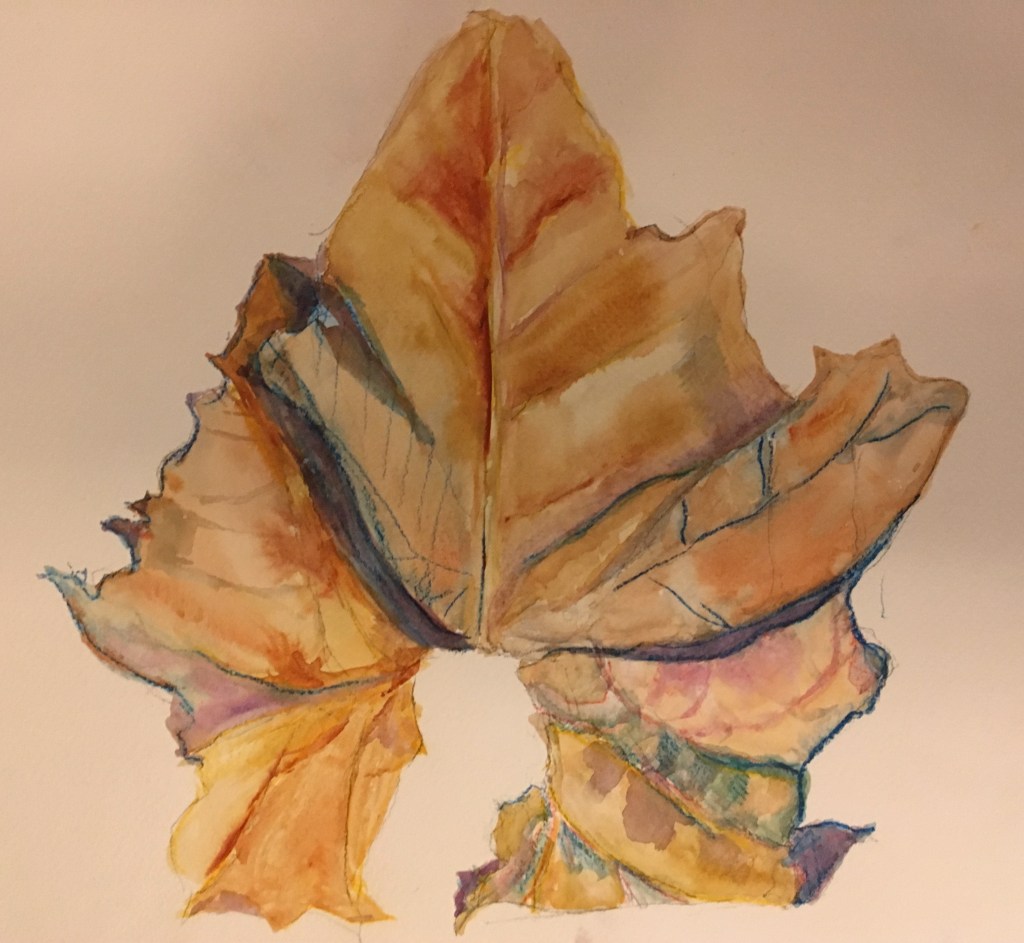
    He built a plywood wall and papered it with orange maple-tree foliage.

    “That was before I came. Maybe that’s why they put me in the country.”
    His psyche split in two, divided by a fence of lightning bolts.

    I catch a rip in the photographed wallpaper, peel it with a fingernail,
    press it down again flat. “Did he die, your grandfather?”

    “Sure! He died.” In 1890, a generation before my father
    arrived on this stage of ours. “Sail Away,” Randy Newman sings

    and I strain against the piano notes. The cassette revolves on its spool.
    My father hacks, draws in smoke. “I had a dream last night.

    Tell me what it means.” No one answers. “Somebody put the peanuts –
    I don’t think we should…May be something they want done over.”

    My brother takes a drag of the joint, coughs from his lungs.
    Before we entered stage left, he heard the voices.

    We grew up with him talking. Hearing. Silence. Explosion.
    “I told you–shut up about Schaeffer. If you say anything.

    Schaeffer.” I hear him take a drink and suck in another drag.
    My brother picks up the thread. “Who’s Schaeffer?”

    “The ones on my father’s side were not important.
    My mother’s mother, now. There was a leader. The power.

    Any question, she knew the answer. Gasoline, water, the end –
    The world will be a ball of fire. The sun will crash into the earth.”

    All his life they watched his moves, these ghosts, and their flesh.
    “Of course, you never know what will be the cause.”


  • Almost Ancestral by Sharon Scholl

    Almost Ancestral by Sharon Scholl

    The “Intangible Inheritance” prompt immediately struck me as something that I, in my 93rd year, wonder about.  I’m fairly sure how my children and grandchildren will remember me.  I leave behind long years of personal association with them.   But great-grandchildren are simply separated by time and frailty into a gulf that cannot be crossed.  So what dim impression of me might linger with them?

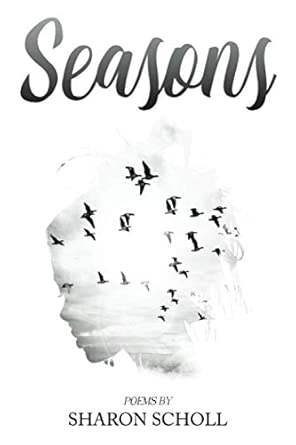
    Sharon Scholl is a retired college teacher who convenes a poetry critique group and maintains a website (freeprintmusic.com) which donates music to small, liberal churches.  Her poetry collections, Remains, Seasons, Classifieds, Ghosts, are available via Amazon Books.  Her poems are current in Rattle and Red Rose, Thorns.

  • Found Poems from Christina Baumis

    Found Poems from Christina Baumis

    This submission is in response to the “What You Leave Behind” prompt posted April 13 2025.

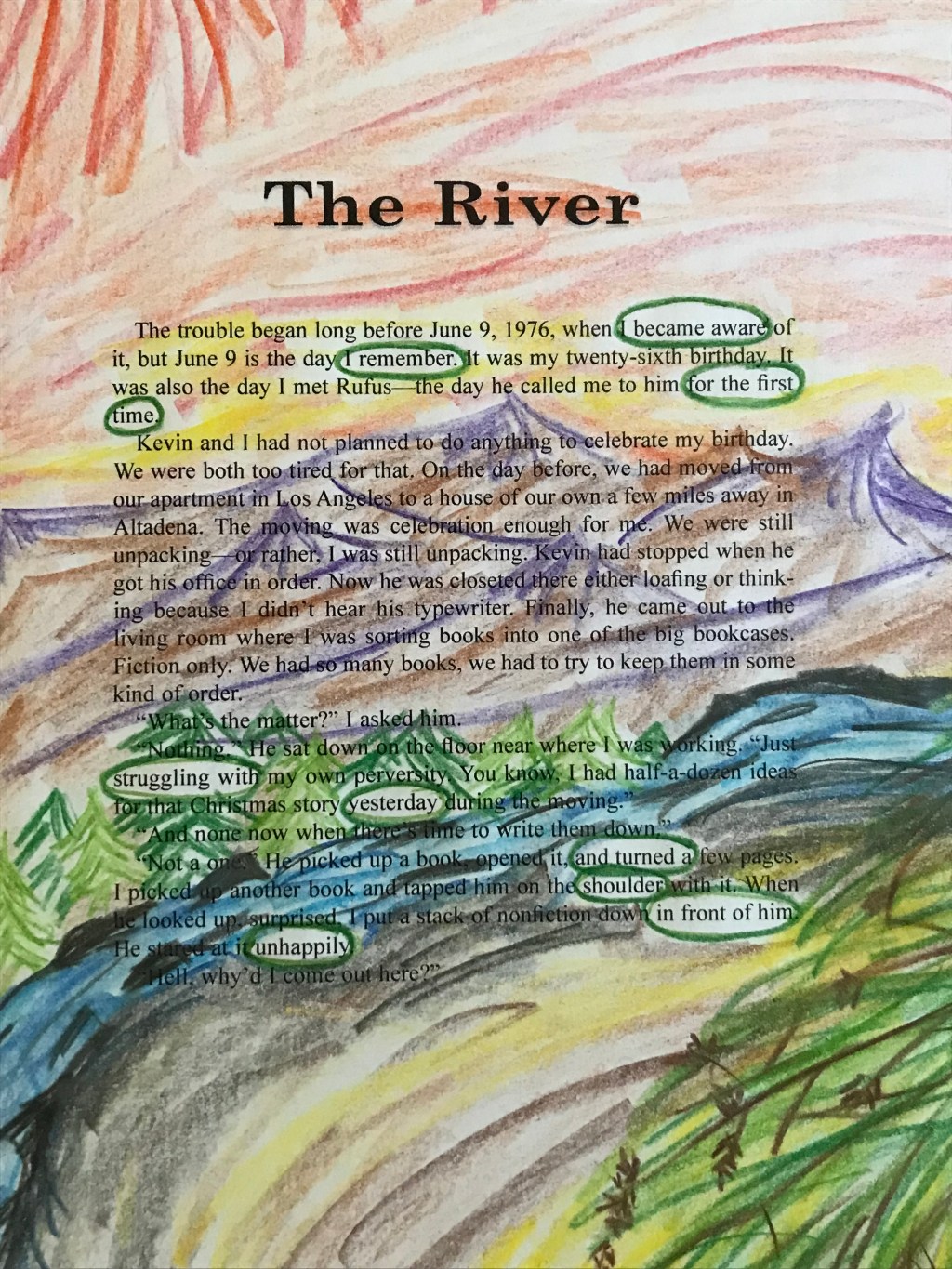
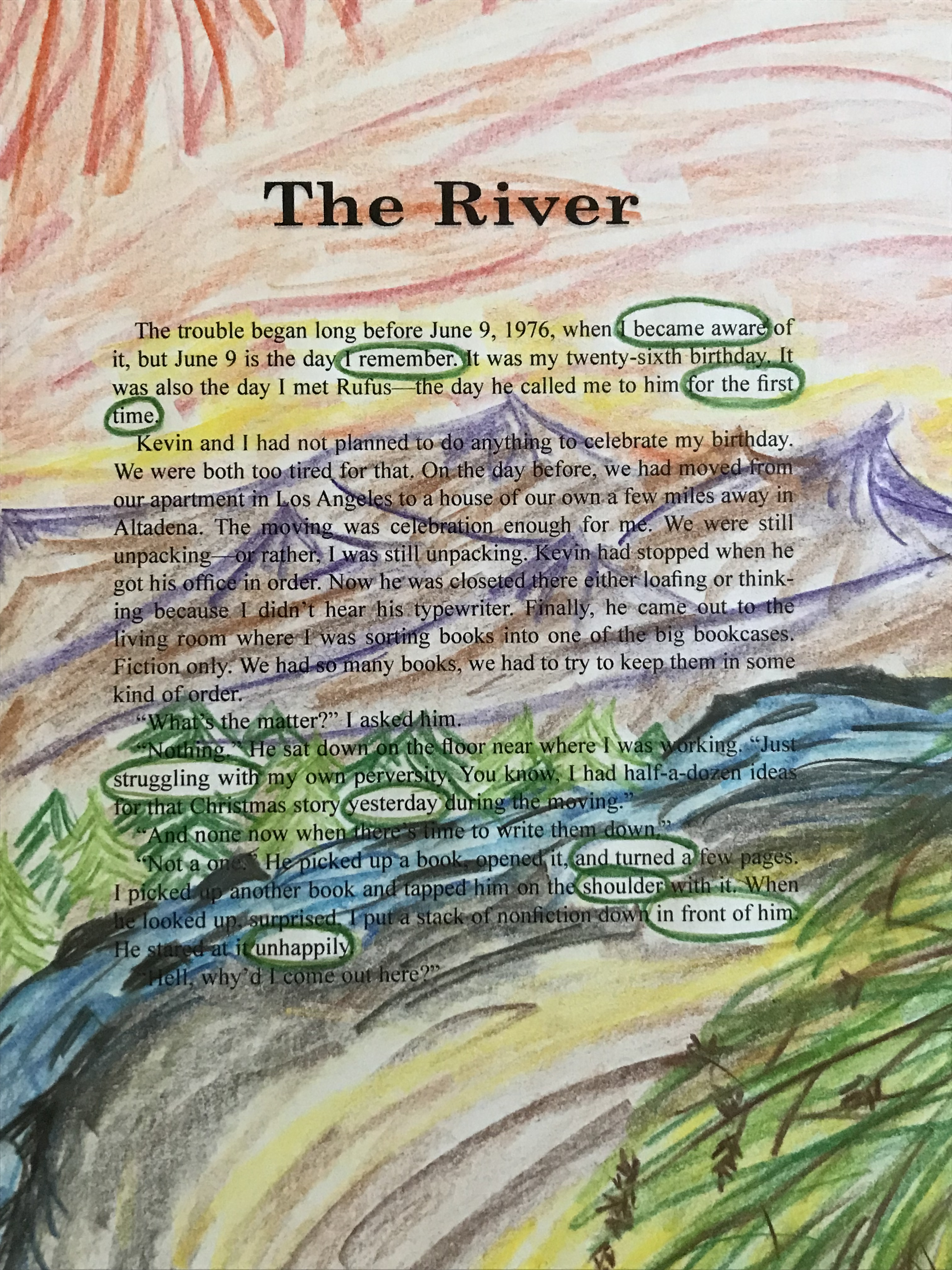
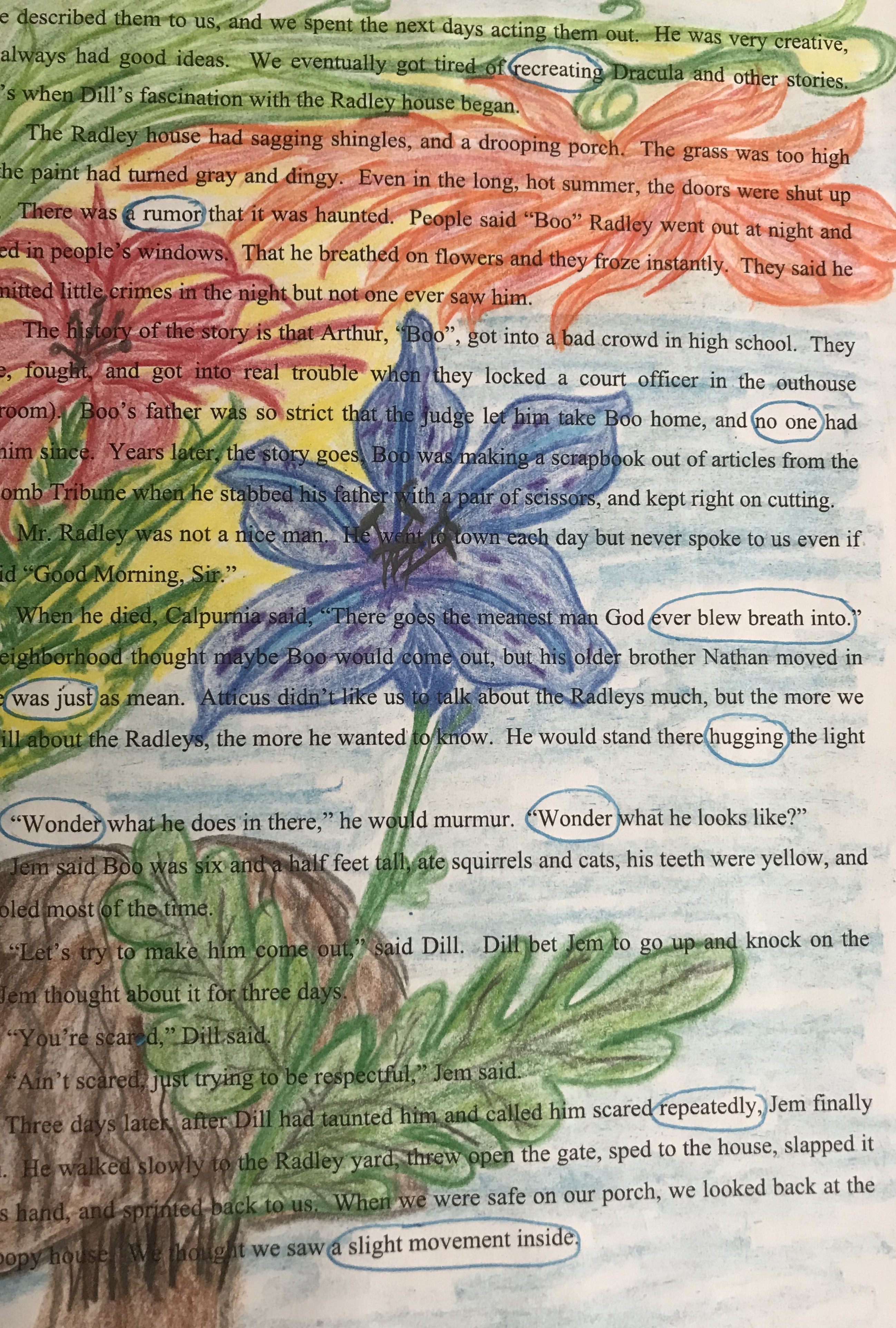
    Artist’s Statement: I love a good blackout poem because of the quick surprise of what called to me and arises from what was left behind. The poem almost evolves as a “do not touch the hot stove…there is a lesson here”. My approach seems to be scan rapidly and circle phrases or words that propel the thoughts I am reaping. Then I enjoy using colored pencil to “blackout” the text which wasn’t selected. Often I use a free domain classic book and open to a page and let myself go for the quick surprise.

     Turned

    I became aware
    I remember
    for the first time.

    struggling with
    yesterday
    and turned
    a shoulder

    in front of him
    unhappily
     A Slight Movement Inside

    Recreating
    a rumor
    no one
    ever blew breath into

    was just hugging
    wonder
    wonder, repeatedly
    a slight movement inside.

    Christina Baumis serves on the board of The Poetry Society of South Carolina (PSSC). Ms. Baumis’ works are in Poems on the Comet, The Dead Mule School of Southern Literature, and South 85 Journal among other engaging publications. She was the second place recipient of The North Carolina Poetry Society’s Jean Williams Poetry of Disability, Disease, and Healing Award 2024. With PSSC, Ms. Baumis hosts Poetry Trails- gatherings to share poems on SC trails and parks. She co-initiated and volunteered for Cypress Gardens SC’s annual Poetry Walk event with participants’ poetry displayed around the swamp. Ms. Baumis recently was named the inaugural Poet Laureate of the City of Goose Creek, SC.

  • Emily Dickinson Duet of Original Poems by Charles Weld

    Emily Dickinson Duet of Original Poems by Charles Weld

    Both poems below contain lines from Emily Dickinson and are about birds. So, a little nod to the “Collect, Remix, Repeat” prompt of April 11, but more in line with the “Not the Kind You Flip” prompt of April 26. I’ve been writing single-rhyme poems with Emily lines for about a year, but the bird subject returned when our spring migrants returned in April and May.

    Duet with Emily about White-throated Sparrows

    They stop in our yard for a week or two
    late April, early May—passing through
    fast on their way north to nest. A few
    blue notes this year, the only clue,
    the minor third repeated, no bird in view—
    a single term of cautious melody—
    sounding tired after weeks of migratory
    travel from Georgia, Florida—some southern vicinity.
    Yankee listeners like Emily and family
    heard the bird say, “Old Sam Peabody, Peabody,”
    a moniker to tame strangeness with familiarity,
    and ease it into a place among the certainties.
    Unordered flux, bordering the realm of taboo,
    called out for intervention. Measure, name, subdue.
    Duet with Emily at Dawn

    Birds, a Summer morning Before the Quick of Day
    start in our yard with robins who arpeggio away
    in the darkness before a cardinal joins the melee.
    An alarm sounds from a jay
    or crow—scolds, both wanting their say.
    Then every bird is bold to go on record and forté
    amps up to fortissimo in a wild array
    of tunings. By 7—I’m surprised—the heyday
    is over. Dawn’s promise begins to decay.
    The sun is up, and things weigh
    in, each with its own gravity. Some days I say yea,
    some nay to unremitting Hope—active always
    Yet never wearing out—words from the sensei
    who studied life deeply, but stayed outside its fray.

    Charles Weld’s poems have been collected in two chapbooks, Country I Would Settle In (Pudding House, 2004) and Who Cooks For You? (Kattywompus, 2012.) A full-length collection, Seringo, was published by Kelsay Books in 2023. A partially-retired administrator for a non-profit agency serving the mental health needs of children and youth, he lives in the Finger Lakes region of upstate New York.

  • Into the Land of Mother Goose by Luanne Castle

    Into the Land of Mother Goose by Luanne Castle


    Pouring the carton of milk down the sink
    I reflected how I need to change my habits
    to save a cow or two from anguish and despair.
    Which led me to land upon the border
    between fantasy and history and the work
    of my ancestors—in Goes, pronounced Hoose—
    my 5th great-grandmother, Adriana Goose
    the mother of 3 living children, hence,
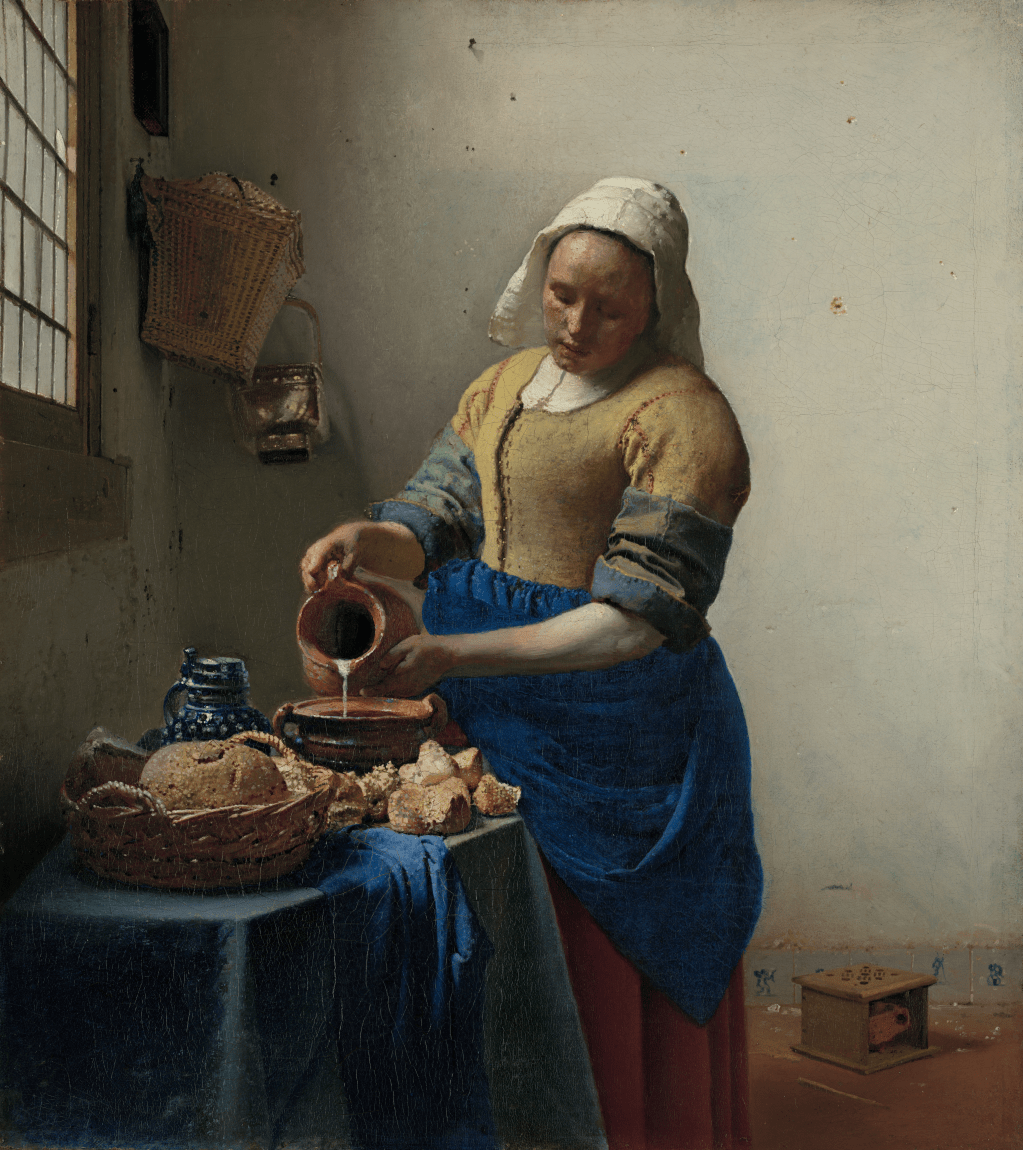
    Mother Goose, worked as a milkmaid,
    the spitting image of Vermeer’s painting,
    even more the crone in spectacles and cap
    riding the goose as if she delivered imagination
    when in reality, Adriana delivered milk and cheese
    to her customers and kept the cows content.
    My 3rd great-grandfather, Adriaan Zuijdweg,
    was a tailor who sat on his table, hunched
    over the cloth, sewing pants for the townspeople.
    My 2nd great-grandfather, Pieter Mulder, learned
    the shoemaking trade before he immigrated
    to Grand Rapids where he learned cabinet-
    making, until he was promoted to the level
    just below the members of the owning family.
    Gone was the need for shoemaking and for elves,
    but the burgeoning middle class demanded
    well-crafted bureaus and chairs and armoires.
    Going was the need for tailoring except
    for wedding alterations and hemming.
    Gone was the need for milkmaids when
    the cows went into the factories that recreated
    them as objects to be sacrificed to change.

    "Into the Land of Mother Goose" was inspired by the "whispers of work" prompt and by the work my ancestors did in their country of origin, The Netherlands, as well as after immigration to the United States. I am especially intrigued by having a milkmaid ancestor named Goose.

    Luanne Castle has published four award-winning poetry collections and has been awarded nominations for Pushcart and Best of the Net. It has been published in Copper Nickel, Verse Daily, Saranac Review, American Journal of Poetry, The Ekphrastic Review, Thimble, The Mackinaw, One Art, Lothlorien, and many other journals and anthologies. 
  • Call for Submissions

    Call for Submissions

    Submissions for poems written in response to prompts posted here are open until July 1, 2026.

    Submit poems to zingarapoet(at)gmail.com (replace “at” with @)

    REMEMBER to include the NAME OF THE PROMPT in the subject line of your email.

    Paste your poem submission(s) into THE BODY OF YOUR EMAIL.

    Include a few sentences about your writing process (how you got from prompt to final draft) in your email.

    It’s not necessary to explain what your poem is about, rather why you made the choices that you made.

    For instance:

    • What about the prompt compelled you to write?
    • Why did you chose the form you chose?
    • How did you come to include musicality into your poem?
    • How did you discover the imagery or metaphors used in your poem?
    • How many revisions did you make?

    There are a number of great example of poets writing about process like this one on Marsh Hawk Press in which Ellen Bass explicates some of her work.

    Yours does not have to be anywhere as involved or detailed as this example, but Bass’ essay does exemplify a beautiful approach.

    Poems may be overtly related to the prompt of choice or have only a thread of connection.

    If you wrote a poem in response to a prompt and threw out all but one line during revision, that counts.

    Surprising is preferred to the predictable.

    Be sure to also mention if you happened to also use any of the revision prompts posted during May or June in the process.

    Please include a brief professional biography of 50 words or fewer, also in the body of your email.

    Simultaneous submissions are fine, but please let ZPR know immediately if submitted work is accepted elsewhere.

    All poetry prompts from the 2025 challenge can be found under that tab 2025 POETRY PROMPTS or by clicking here: 2025 Poem-a-Day Challenge

    Feel free to email or comment with questions. I look forward to reading your work!

  • A Visit to the Palm Springs Palace by Judy Fitzpatrick

    Everyone has lost weight here
    at the palace in Palm Springs.
    Where orchids, roses, lilies flourish
    but people do not.

    A helper hefts her client from bed
    to wheelchair, to table.
    First a thorough clean up.
    Then they eat, but not much.

    The helper’s husband is in Sri Lanka.
    He hopes to join his wife
    who is also hopeful.
    “God never gives you anything
    you can’t handle,” she says.
    I see my sister-in-law drop
    a green grape into her lap, crippled hands
    that can’t close completely
    and think God’s plan isn’t working.

    A loving son pays the rent.
    He is cheerful.
    Sleeps late.
    Happy to weigh 30# less.

    Mornings I sip coffee.
    Pick at glazed buns bought for me.
    Ask the helper to put me on her prayer list.
    My sister-in-law chews and swallows THC and CBD.
    It helps her tolerate the pain.

    This morning my sister-in-law stabs
    a piece of egg, the yolk burnt orange.
    “Got it!” She exclaims.
    I lean in to her, fill the space inside her shirt collar.
    No longer a sister-in-law.
    Instead a sister after more than sixty years.

    A mallard nests at the palace.
    Eggs laid poolside among the petunias.
    Upon my return home I receive a photo of
    nine ducklings paddling alongside their mother.
    The next day I’m told they’re gone.
    “She was squawking at 7 a.m.” the helper says.

    Blame it on the hawks who soar overhead.
    It’s as good an explanation as any.
    We have photos to prove what we saw,
    how we suddenly felt hopeful.
    Then we didn’t.


    I spent part of April in Palm Springs with my sister-in-law at a house her son had rented. It was “a palace” but my sister-in-law has had a stroke and it was painful to see her unable to totally enjoy this gorgeous place. My nephew left a copy of Rosemary Wahtola Trommer’s book ALL THE HONEY by my bed and I was reading her poems. You were sending poetry prompts. I was journal writing a poem I couldn’t share with anyone.

    Here is what came of the experience: A Visit to the Palm Springs Palace. My process was to make observations and put them into a form I could manage mentally. I was feeling pretty down. It helped to concentrate on getting the poem right.


    Judy Fitzpatrick, aka Blaze Defiant, hosts BEYOND WORDS, a radio show, on KUPR LPFM in Placitas, New Mexico. 


    Her program streams internationally and you can listen to recent shows by going to KUPR. org and clicking on Archives.
    BEYOND WORDS airs every Saturday at 1 o’clock pm Mountain Time. 

  • True Friends

    A long time ago in China there were two friends, one who played the harp skillfully and one who listened skillfully.

    When the one played or sang about a mountain, the other would say: “I can see the mountain before us.”

    When the one played about water, the listener would exclaim: “Here is the running stream!”

    But the listener fell sick and died. The first friend cut the strings of his harp and never played again. Since that time the cutting of harp strings have always been a sign of intimate friendship.

    From Zen Flesh Zen Bones: A Collection of Zen and Pre-Zen Writings compiled by Paul Reps and Nyogen Senzaki

  • The Up and The Down by Christina M. Rau

    The Whispers of Work prompt jumped out at me because one of my favorite poems is Hayden’s “Those Winter Sundays” and one of my favorite poetry collections, to which I frequently return, is Jennifer Fitzgerald’s The Art of Work, and it so happens that my grandfather was an elevator operator. When I saw elevator operator on the list of extinct professions, I realized this was a poem for me.

    I did some research about elevators in the 1940s–which is a change for me since I consider myself a lazy poet and rarely look things up. I was fascinated. I created stanzas following grammar and geography, and then I went back and added elevator-language to create authenticity. 

    Christina M. Rau, The Yoga Poet, leads Meditate, Move, & Create workshops for various organizations worldwide. Her collections include How We Make Amends and the Elgin Award-winning Liberating The Astronauts. She moderates the Women’s Poetry Listserv and has served as Poet in Residence for Oceanside Library (NY) since 2020.During her downtime, she watches the Game Show Network.  
    http://www.christinamrau.com

  • After Frank Frame by Kitty Jospé,

    I love “corresponding” with poets, borrowing lines, or trying erasure technique on other  poems, as if I were in the same room, having a silent conversation.  Just the idea of another human being looking over my shoulder as if to ask, “so, where are you going to go with that line?” changes the writing from scribbled thoughts to something to which I add extra polish.  

    The April 3 prompt was to read three different poems from different sites.  It seemed there was an option to start with a line…then remove it and find an original title, OR, title the poem after XYZ, using the poet’s name.

    I tried both.  I “borrowed” different lines from Frank Frame (his poem here: 

    Come In, Houston, or Everything I Know I Learned from the Guitar Solo in Tori Amos’ “Doughnut Song” (Live in Frankfurt, Germany )

    Two-and-a-half months later, I am submitting a new attempt, using his last two lines as epigram and keeping his first line.  

    I’m using a word game technique, where words made out of the letters that spell transformation are in italics.

    I liked the idea of penning 14 lines about a 14 letter word, having two lines in a row filled with 14 words made from transformation, scattering another 14 (one of which is an invented verb). 

    After Frank Frame
    Remember, you and I began as stardust. Whatever
    we turn into, let us live up to that brilliance.

    Lately, I’ve been into transformation, 
    sifting the words formed from its 14 letters:
    formation, format, form, fit (the) fan —
    ration, rim, ram, rant of rat, tit for tat;
    what norm means in this nation,
    what storm roars, how fit is fat,
    how a trot ran to rot.  Your turn 
    to find words to describe the rifts
    in this country, the senseless
    hatred, violence, distrust when
    it could be so easily otherwise,
    each one of us an instrument
    of peace.  I want  transformate, ion 
    by ion, to roll in l – v-e, full circle. 

    Kitty Jospé, retired French Teacher, art docent, moderates weekly poetry appreciation sessions since 2008 after receiving her MFA.  Known for her teaching enthusiasm, joyful presentations, demonstrating the uplifting power of art and word, her work delights the ear with the sound of sense.  Her poems appear in numerous journals, books.  

  • Snorkeling Off Keawakapu Beach by Carolyn Martin

    Snorkeling Off Keawakapu Beach by Carolyn Martin

    Your April 2 Protection prompt inspired this poem based on one of my favorite vacation spots and activities: snorkeling with turtles on Maui. 

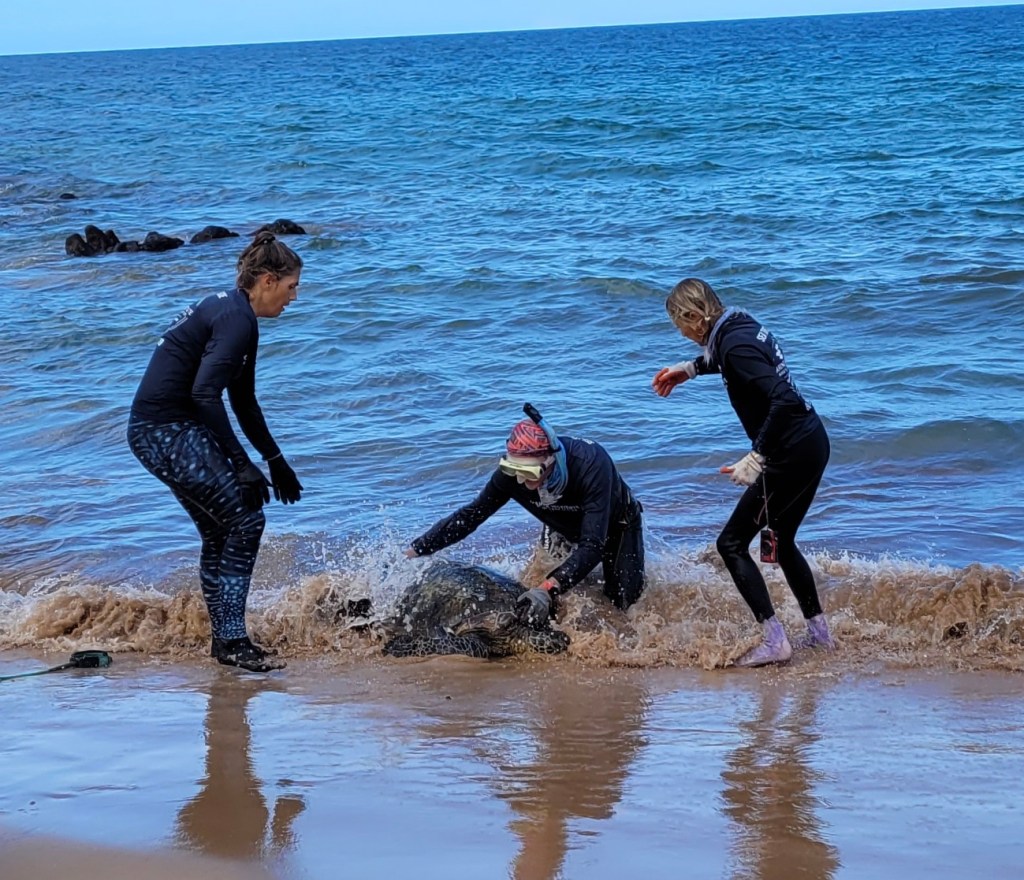
    Over the years, I’ve come to recognize where these lovely creatures hang out and watch with awe as they rise for air or swim from beach to beach. The last time I was there, I witnessed turtle-rescue volunteers lug a big critter out of the surf and cut away fishing line that had entangled her. What a dedication!

    Images such as the reef, boats, fish lines, the slashed shell, as well as parasites, shivers of sharks, and divers create the specific world the narrator and turtle share––and which I have witnessed. 

    The turn in the second stanza adds a current-events theme. “Headline news” motivates the narrator to plan to emigrate from earth above to the sea below. Here mutual protection will be celebrated with local fish: angels, tangs, butterflies. 

    I chose to use shorter lines to lend fluidity to the poem, and the lineation breaks make, I hope, make for easy reading. Finally, the ending rhymes––harmonize, butterflies, rise––provide the sense of an upbeat resolution for the narrator and her companion.

    Snorkeling Off Keawakapu Beach

    where I don’t have to speak to anyone
    except the turtle I hang out with
    on the third reef to the south.
    Ours, a fluid camaraderie:
    she ear-witnesses my splashing kicks
    and bemoans my headline news.
    I commiserate about boats, fish lines,
    fear, and grief and ask about the slash
    on her shell. “A hard year,” she replies
    in turtle-speak and lets me pat her fin.

    “As above, so below,” we almost agree.
    But, from what I know of betrayal and loss,
    lies and regret, earthlings are drowning
    in themselves and I am done with them.

    I’ll find a shelf on her reef so I can listen
    for fishermen and scrub parasites
    off her back. She’ll steer me away
    from shivers of sharks and divers with spears.
    And, if we plan it right, we’ll harmonize
    with choirs of angels, tangs, and butterflies
    singing down the sun, singing up its rise.

    Carolyn Martin is a recovering work addict who’s adopted the Spanish proverb, “It is beautiful to do nothing and rest afterwards” as her daily mantra. She is blissfully retired—and resting–– in Clackamas, Oregon. Her poems have appeared in more than 200 publications around the world. For more: www.carolynmartinpoet.com.

  • Stop Monkeying Around

    Q: What happened when the monkey scored the winning goal?

    A: The crowd went bananas.

    Q: How did the monkey start a flea circus?

    A: From scratch.

  • Nothing Exists

    Yamaoka Tesshu, as a young student of Zen, visited one master after another. He called upon Dokuon of Shokoku.

    Desiring to show his attainments, he said: “The mind, Buddha, and sentient beings, after all, do not exist. The true natured of phenomena is emptiness. The is no realization, no delusion, no sage, no mediocrity. There is no giving and nothing to be received.”

    Dokuon, who was smoking quietly, said nothing. Suddenly he whacked Yamaoka with his bamboo pipe. This made the youth quite angry.

    “If nothing exists,” inquired Dokuon, “where did this anger come from?”

    From Zen Flesh Zen Bones: A Collection of Zen and Pre-Zen Writings compiled by Paul Reps and Nyogen Senzaki

  • Spring Dreams by Michelle Holland

    Journal Mining Prompt

    I mined my journal,  chock full of my relationship with nature, in nature. I wanted to distill the quality and the relationship lyrically, with a song – a sonnet – lyric and inviting, to capture an ongoing leitmotif of the recurring experience, in dream and by streams, of feeling a part of the natural world. I’d like to be a stream, a rock in a stream, the ongoing and the static of existence.

    After gleaning phrases from my journal and responding to the photo, the sonnet began to form. I have since worked with rhythm and meter to capture more of a classic sonnet, without a set a rhyme scheme.

    Spring Dreams

    I am the dawn child of clear mountain streams
    one with the smooth sheen of rocks and pebbles,
    rings of waves eddy around curved boulders,
    a kaleidoscopic light in snow fed

    shallow flowing water, no color but
    what is borrowed from the sky. New green leaves
    create a mottled shade, sanctuary
    for rainbow trout. I will not drown, spread out,

    span the width from dirt bank to cool elbow
    of sand for my bare toes on a hot day.
    Can I be both, river and child, my heart
    alive under growing clouds, threat of rain?

    I hear the Rio Santa Barbara call,
    years flow past, water cold on my bare calves.

    Michelle Holland lives in Chimayó, New Mexico. Her poetry publications include “Event Horizon,” The Sound a Raven Makes, New Mexico Book Award for Poetry, Tres Chicas Press, and Chaos Theory, Sin Fronteras Press. Her books Circe at the Laundromat is forthcoming from Casa Urraca Press. Michelle is treasurer of New Mexico Literary Arts, and poet-in-residence at the Santa Fe Girls School.