Tag: Poetry

  • Running With The Wolves by Bruce McRae

    An hour of joy, an ounce of sorrow.
    This monumental moment, in part and in whole.
    I’m being touched by moonlight, so a little bit mad.
    Moonstruck and nightblind. Gone the way of the wolf.
    I’m lying in a loony half-light and recounting the myths,
    the stories we tell ourselves in order that we might carry on.
    Meaning imbued over coincidence. Memories shorted.
    The past redacted and redressed, so all is calm.
    You can put away those nerve-pills and quack confections.
    You can rest easy. Write a poem. Go whistle.
    A full harvest moon, and you can see into the darkness.
    You can sail that moonbeam over the shallows of paradise.
    Hang tight, my passenger, it’s full on into morning.

    Bruce McRae, a Canadian musician currently residing on Salt Spring Island BC, is a Pushcart nominee with over a thousand poems published internationally in magazines such as Poetry, Rattle and the North American Review. His books are “The So-Called Sonnets” (Silenced Press), “An Unbecoming Fit Of Frenzy” (Cawing Crow Press), and “Like As If” (Pskis Porch), all available via Amazon.

    Read these other poems by Bruce on Zingara Poetry Review: “Hinting at Eternity,” Making Do,” and “Stop the Clock.”


  • To Go From Here by Michelle Holland

    Our little lives extinguish themselves
    like lit matches – ephemeral brilliance –
    then darkness that can’t be helped.

    The match is not meant to burn long,
    just a moment in order to ignite
    something else – a camp fire,
    a cigarette, to sterilize a needle
    before the splinter is removed.

    We flame up, create our colors,
    burn briefly, with just enough time,
    maybe to start something.
    Another life, a movement, a poem,
    a garden, a body of work,
    a connection with a network
    of family, friends, our momentary mark.

    Before Jim died, an arbitrary sequence of events,
    his son, our daughter, the threat of fire –
    led to their family evacuating
    to our big, rambling adobe home,
    created a chance to connect,
    to get to know his silent ways,
    his wry grin, his shaggy, black dog.

    Just a guy and his family,
    a daughter, young and moody,
    whose tears brought him to her borrowed room,
    where she let him know she wanted
    no part of our hospitality, just wanted
    to go home. He listened,
    and later she groomed our big, friendly horse.

    Her father is dead now; only a couple of days ago
    he was alive. Suddenly, his match lost its fire,
    whatever he was able to touch with his light
    done. A son who wants to fly,
    the last ignition of a father who made the connection
    real. The fire will continue,
    in ways no one knows.

    Fathers die. Fathers die unexpectedly,
    commonly, on the floor sprawled, unaccountably breathless.
    The match was lit, and sputtered to its ashen end,
    but everyone else he illuminated continues to inhale,
    embrace the connection to keep our flames alive.
    resist the breath that will extinguish.


    Michelle Holland lives and writes in Chimayo, New Mexico.  Her books include the New Mexico Book Award winning collection, The Sound a Raven Makes, Tres Chicas Press; and Chaos Theory, Sin Fronteras Press.

    Enjoy additional poems by Michelle Holland: “Take The Apple”, “Approaching Another New Year,” and “Empire of Dust”.
  • Yellow Jackets and the Demons of Indecision

    By the time this post appears, it will have been a week since the exterminator came and took care of the yellow jacket problem in my back yard.

    I didn’t know the exterminator had even arrived until my husband called me around mid-morning to say he’d received an invoice for the exterminator’s services via email. My husband was in San Diego at the time, attending the Comic Con.

    I was surprised because the appointment had been scheduled for 2:00 PM., and  because it was raining cats and dogs when I’d left the house at around 8:20 AM. I was attending a conference in town.

    Of course, it makes much more sense to extract a wasp’s nest first thing in the morning. That’s when the nest is most occupied by wasps.

    I just hadn’t thought of it.

    Still, I was in doubt. I couldn’t  fathom that the heavy rain and wet conditions wouldn’t interfere with the extermination. Honestly, I half-expected the phone call was to cancel.

    But my husband confirmed that, yes, according to the exterminator, the wasps had in fact been “augmented” from the yard. It was a sizable nest, my husband quoted the exterminator as saying, probably 500 wasps or more. There is a chance that a few are still buzzing around looking for their home, but they won’t last long without their nest,” my husband continued.

    Something about this last observation made me feel cold-hearted.

    I’m not confessing a secret love for yellow jackets here, or anything like that, but I have to admit to experiencing some residual feelings of guilt over creating a situation that caused the death of hundreds of innocent creatures. Those yellow jackets were, after all, only behaving as yellow jackets do: making and protecting their home, creating more yellow jackets, and generally building an existence.

    It just so happened that their existence was interfering greatly with ours.

    Specifically, they made it impossible to mow the yard, first by attacking my husband when tried mowing the back yard before we left town, then attacking a friend, who tried to mow just the front yard while we were gone.

    They simply had to go.

    Still, I couldn’t help imagining those few surviving wasps, stunned and confused, hovering around the hole in the ground that was once their nest. Couldn’t help but sense their groundlessness.

    Such are the thoughts of a writer.

    But then I realized that, since the extermination had been taken care of, my afternoon was free.I felt cheered, then, and shifted my thoughts to how to spend the rest of my day.

    And this, dear reader, is precisely the moment that the demons of indecision appeared.

    A virtual drop-down list of options, including everything from doing homework for the conference to editing my manuscript, finishing a quilt I’ve been sewing to taking a nap with the cat, to going to the gym or staying on campus to work on my syllabus, all popped into my mind.

    Good options, all. But together, potentially overwhelming.

    Especially since I am apt to paralyze myself with indecision in these moments.  I mean, just making the decision to eat out, for example, can evolve into a mental debate of what and where to eat.

    Choosing to write opens an even wider array of menu options: should I write poetry or prose, something formal or informal, personal, creative or academic?  Should I write something new or revise something old? Should I catch up my correspondence by sending cards or composing emails?

    Really, the list is endless.

    The point is, I tend to put too much pressure on myself when it comes to decisions. I feel I must make the absolute best decision and fear that making the “wrong” decision will result in drastic, long-lasting consequences which I neither wanted nor intended.

    Even though this has never happened.

    Still, it is true that no matter what I choose to do, I am choosing NOT to do a whole host of other things. If I write, I am not exercising. If I do homework, I am not working on my poetry manuscript. If I work on my blog at Starbucks, I am not working on my quilt at home.

    And of course, making no decision at all is a decision in itself.

    So it is that with every choice I make, I feel a little bit of grief and a smidgen of sorrow. Like those stunned wasps unhoused by the exterminator, my unchosen options hang around searching for a home – a place into which to burrow and build an existence.

    But such are the thoughts of a writer.

  • Stop The Clock by Bruce McRae

    I remember,
    you were pointing a stick
    at the moon.
    It was the day before
    the wolf bit you.
    Near to that incident
    with the toothpick.
    You were with a girl
    who rubbed brass for a living.
    I remember,
    you had a signed edition
    of a box of bags
    and were dating an ex-nun.
    Around the time
    of the break out.
    Sure, and as I recall,
    you were studying wych elm,
    or was it moonwort?
    Either way,
    that was the same summer
    they moved the graveyard
    into the secret forest.
    Remember?
    You had that awful sunburn
    and a lung had collapsed;
    the very same day
    as the mudslide . . .
    Makes you wonder, doesn’t it?
    Makes you think
    real hard.

    Bruce McRae, a Canadian musician, is a Pushcart nominee with over a thousand poems published internationally in magazines such as Poetry, Rattle and the North American Review. His latest book out now, ‘An Unbecoming Fit Of Frenzy’ is available on Amazon and through Cawing Crow Press, while in September of this year, another book of poems, ‘Like As If’, will be published by Pskis Porch. His poems on video can be viewed on YouTube’s ‘BruceMcRaePoetry’


  • We Go, Departing to Dusk by Emily Strauss

    Odd that earlier we existed,
    felt our own substance before
    disappearing to despair,
    sometimes gone by nightfall.
    We may linger awhile but
    the lamp will be snuffed out—

    and unless we steel ourselves
    to loss, our own and more,
    moons will dispel around us
    like a vase of flowers with wilted
    stems sinking into cloudy water—
    then we will lose our grasp.

    Surely, this early today, there
    remain the skins of opaque ghosts
    not yet torn from our ribs
    though we may remember the feel
    of yesterday’s body extinguished
    in our blood, lingering at daylight.

    Emily Strauss has an M.A. in English, but is self-taught in poetry, which she has written since college Over 300 of her poems appear in a wide variety of online venues and in anthologies, in the U.S. and abroad. The natural world is generally her framework; she also considers the stories of people and places around her. She is a semi-retired teacher living in California.


  • Mouse Heaven Richard King Perkins II

    The exterminator has taken away
    the small carcasses
    and left the smell of Lysol
    and coiled snap traps
    baited with peanut butter.
    Your eyes mourn
    those tiny missing lives
    wanting there to be
    a mouse heaven
    free from human dominance.
    My laughter makes you wince
    and cry even harder.
    I hold myself open to you
    but even
    in my most comforting arms
    you cannot find
    the slightest hint
    of comfort.

    Richard King Perkins II is a state-sponsored advocate for residents in long-term care facilities. He lives in Crystal Lake, IL, USA with his wife, Vickie and daughter, Sage. He is a three-time Pushcart nominee and a Best of the Net nominee whose work has appeared in more than a thousand publications.

  • I Get to Race by Frederick Foote

    I get to race
    I get to run

    Three times
    Around the
    Oval cross

    Five of us
    On a
    Hard packed
    Dirt track

    Coursing hounds
    Chasing time

    First lap
    Speed to burn
    Records to set

    Second lap
    Stretch it out
    Take the lead

    Third lap
    Legs dead
    Lungs afire

    Nothing left
    On empty
    Falling across
    The finish line

    Snot and spit
    Covered face
    Lips peeled back

    Eyes rolled up
    Gasping to death

    The most beautiful
    I have ever been

    Frederick K. Foote, Jr. was born in Sacramento, California and educated in Vienna, Virginia and northern California. He started writing short stories and poetry in 2013.

    He has published numerous stories and poems and will have a collection of his short stories published this year by Blue Nile Press.


  • Belongings by Richard King Perkins II

    It’s too late to gather your clothes
    about you;

    the morning light has already found you naked
    just before his eyes of acid rain—

    working the last half day in reverse
    without the sun’s spirant assistance.

    An intimate world collapsing

    swans in a cesspool
    branches of brine
    hands barricading your clouded face

    if there was a chance out
    it wasn’t beneath the lost demure of these sheets—

    flailing gestures only bind you tighter
    to a bed that was never yours.

    Richard King Perkins II is a state-sponsored advocate for residents in long-term care facilities. He lives in Crystal Lake, IL, USA with his wife, Vickie and daughter, Sage. He is a three-time Pushcart nominee and a Best of the Net nominee whose work has appeared in more than a thousand publications.

  • Submissions Open Today

    Zingara Poetry Picks seeks submissions of previously unpublished poems (on-line or in print) of 40 lines or fewer for 2016 picks. New, emerging, and established poets are encouraged to submit and all submissions will be given careful consideration.

    Please keep the following in mind when submitting your best poems:

    • Reading period for Zingara Poetry Picks is from August 15 to December 31st. Unless the deadline is extended, submissions received outside of this time period will not be acknowledged or considered. In fact, they will be deleted.
    • There is no fee to submit
    • Title of poem(s) should appear in the email subject line. Poems should be attached as word documents and mailed to zingarapoet@gmail.com
    • The body of the email should include a cover letter and a professional biography of 50 words or fewer written in the third person
    • Attach a word document with no more than three poems of 40 or fewer lines
    • Only one submission at a time (please wait to hear back before submitting more poems)
    • Simultaneous submissions are fine, but please let ZingraPoet know immediately if submitted work is accepted elsewhere
    • ZingaraPoet does not accept previously published work
    • Published poets receive bragging rights and the chance to share their work with a diverse audience
    • Poets who are published on Zingara Poetry Pick should wait 24 months before submitting again
    • Do not submit if you have had a poem featured on Zingara Poetry Picks in the last 24 months.
    • Submissions which do not follow these guidelines will be deleted without acknowledgement
    • If accepted work is later published elsewhere, please acknowledge that the piece first appeared as a Zingara Poetry Pick.

    What I look for in a poem:

    Like all editors, I like to see interesting poems that do what they do well. Whether traditional, conceptual, lyrical, or formal, they should exhibit the poet’s clear understanding of craft and, just as importantly, revision. Very elemental poems that have not undergone effective revision will probably not make the cut. Likewise, poems which are contrived, sacrifice meaning for the sake of rhyme, feel incomplete, do not risk sentimentality (or are too sentimental), or lack tension when tension is needed, will also be dismissed. Finally, poems which perpetuate harmful stereotypes of gender, race, or class will most certainly not be considered.

    For a very good discussion on the elements of effective poetry, take a look at Slushpile Musings by James Swingle, publisher and editor of Noneucildean Cafe’

    A note on formatting: poems that contain lines which are flush with the left margin are more conducive to publication on a blog site than those which have unconventional indention or unusual margin settings. Likewise, poems which feature long lines may require additional line breaks or may require the right-scrolling function to be viewed in full.

    Response time is 6 months.

  • Inception by Joanne Bodin

    It’s a tiny drop of dew on a blade of grass after a rainstorm
    that won’t let you shift your focus until it burrows into your subconscious
    with tangled images that call out to you
    then it disappears for awhile
    but you know it’s still there,  the melancholy thoughts
    still disjointed pulling at you to give them life
    to tell their story untill they weigh you down with abandon
    you try to convince yourself that it’s not your story
    but then the tidal wave, no longer a tiny drop of dew
    envelopes your subconscious and debris of human suffering wash along
    the shore of your mind and interrupt your every day routine
    then it disappears for awhile
    until you are sitting at the Sixth Street Cafe with your writing pad, pen
    cup of Moroccan dark roast coffee
    the sound of rain pellets on the picture window
    in the corner of your wooden booth
    the drone of a train whistle tunnels into your subconscious
    and synapses begin firing away
    a train roars by
    rain mixed with snow blurs your vision and you look out of the window
    see the ghostly shadow of the red caboose as it disappears into the mist
    suddenly the fog lifts
    you see distant sun drenched fields of poppies and columbine
    the entire story now unfolds and you know everyone so well
    their stature, their favorite foods, their deepest secrets
    and your hand begins to write- you dribble words onto
    paper like creamy butterscotch candy in metaphors of longing
    of pain and  euphoria that dance with you in a
    tango of sentences and the floodgates open
    you stay with them until the finish, not to win the race
    but to honor their presence, and the heaviness lifts
    your muse gives you a creative wink
    and runs off to romp in her fields of glory.

    Joanne Bodin is a retired teacher of the gifted in New Mexico. She received her Ph.D. in Curriculum Instruction and Multi-Cultural Teacher Education. Her latest novel, Orchid of the Night, is a dark psychological thriller about a man running from his troubled past who finds solace in the gay community of Ixtlan. It won the 2017 New York City Big Book Award as “distinguished favorite” in GBLT fiction. It also won the 2017 New Mexico/Arizona Book Award in GBLT fiction and placed as “favorite” in three other categories.
    Visit her website at http://www.joannebodin.com for updates

  • Interview with Poet Amy Beeder

    Amy Beeder is the author of Burn the Field (Carnegie Mellon University Press, 2006). Her next book, Now Make An Altar, will appear from the same press in early 2012. Her work has appeared in POETRY, Ploughshares, The Nation, The Kenyon Review, The Southern Review and other journals. She lives in Albuquerque and teaches poetry at the University of New Mexico. Amy has lived and/or worked in France (student), Mauritania (Peace Corps teacher), Suriname (elections) and Haiti (elections and human rights observation). Before teaching, she was was also a sous-chef, a freelance writer, and a political asylum specialist. She has been teaching at the University of New Mexico for ten years, is married and has two daughters.

    1, Tell me a little bit about your history with poetry – the when, why and how of your experience.

    A. Like most writers/poets, I started writing when I was in grade school: mostly poetry. I also took poetry workshops in college, but I never even thought of trying to publish anywhere beyond the small departmental magazine.

    I spent a lot of time after college (and then after graduate school) working overseas or in DC . I never wrote anything but journals during those years

    Basically, poetry remained an occasional hobby until I went to graduate school. There, even though my major was literature, I started taking workshops with a poet named Gerald Barrax. That’s when I started writing seriously.  A few years later (after another stint in Haiti), I decided I wanted to publish−a sudden mania!−and started sending out to magazines and contests. My big break came when I won the “Discovery”/The Nation Award in 2011. On the strength of that I was hired as an adjunct to teach poetry at UNM, which I’ve been doing ever since.

    2. Many writers have regular writing schedules and rituals which contribute to their writing and creative product. How about you?

    On mornings I don’t teach, and after my kids go to school, I sit at my desk with coffee and a sharpened pencil (which is only for fiddling around with or scribbling notes, I actually write on the computer). Often I spend awhile looking at other people’s poems, usually from whatever journals I’ve received in the last month, looking for a word I like, or looking through books on other subjects for an idea or interesting phrase.  I keep telling myself I need to write on a laptop at the coffee shop like everyone else. But I haven’t done it yet.

    3. How do you maintain mental creative space when you can’t be at your work?

    I talk to myself a lot.

    4. In your experience, how do writing and teaching influence each other?

    I love teaching poetry, but the influence it has on my own work is mostly to keep me from it.  I think most writers, if they’re being honest, would admit this. Both writing and teaching require considerable time and dedication, and both are kind of intoxicating when things are going well. It’s easy to let teaching push writing out of the way.

    There’s a great essay by Stephen Dunn called “The Poet as Teacher: Virtues and Vices,” in which he says that teaching can’t hurt your writing as long as you remain more of a poet than a teacher.  I try to keep this in mind. If a poem is going well and I need to keep writing, the lesson plan, critique, grading, etc., can wait a day or two.

    5. Tell me about any current or upcoming projects you are working one or hope to begin working on. How do your early creative dreams guide and inform these projects?

    My second book, Now Make An Altar, will come out either late this year or in January 2012.  I am working on the third book, which will probably take a few years. I write slowly.

    Read more about Amy Beeder at The Poetry Foundation. “The Sunday Poem” by Amy can be read at Duke City Fix

    A copy of Amy’s book Burn the Field can be purchased at Amazon.com

  • Poking Your Psyche with a Stick: Fun with Writing Exercises!

    Today’s guest blog is written by good friend and amazing poet who goes by the moniker “Oh Hells Nah.” We I met in Albuquerque sometime between 2007 and 2009  through a network of mutual friends (a.k.a – our boyfriends).

    I love this writer’s wry sense of humor and honest appraisal of the writer’s life – she likes to keep it “real.”  She offers a frank discussion of the writing process as well as several great writing exercises, including some of the dadaist absurd variety (and my personal favorite).

    At this very moment I am spraining my arm from patting myself on the back for being smart enough to ask Oh Hells Nah to write something for ZingaraPoet. Watch for future writings from this featured writer and be sure to visit her blog at ohhellsnah.com. In the meantime, enjoy!

    ——

    My writing process is messy and somewhat nonsensical. I believe ideas grow in my subconscious like moss (or a fungus, depending on what), and that I must excavate them with a metaphorical scoop. Sometimes I see an image and then feel it nestle in the folds of my memory. They hatch eggs in my brain! I know that I may not know how to respond to it at that moment, but eventually, perhaps many years later, it will manifest itself in a poem. I’ll be peeing or washing my hands or something equally mundane and then suddenly remember. I will run to my journal before it disappears, hopefully without my pants around my ankles.

    I’ve felt this way since I was a little girl. There were times the sight of something like a green sunset or a glittering puddle would leave me speechless. I think I always had a keen eye for beauty in surprising places and forms. That ineffable feeling is what made me want to write—the determination to make it effable. Needless to say, I didn’t have many friends, so time to write was plentiful. (Also plentiful were bad haircuts and ill-fitting clothes.)

    I wish I still had that kind of time. It’s hard to make myself write after I get home from work exhausted and disgruntled. Sometimes I’m convinced that a lobotomy was performed on me at work when I wasn’t looking. Maybe some sort of corporate gnome stealthily climbed in through my nose and then hacked away at my brain. However, I believe that a major part of being a writer is writing even when you’d rather slow dance with a possum, when you think you have nothing at all to say, when all you wanna do is watch a that nasty show about Brett Michaels.

    I admit I have a chip on my shoulder when people I meet tell me they are writers. Many of them say that they write  sometimes when they’re sad or angry or some shit. There is so much I want to say at these moments, i.e. I bet your poems are full of adverbs and crying fairies, but instead, I just keep my mouth shut and smile politely. I suspect this makes me an asshole.

    I don’t have a specific writing schedule, but I write, in some form or other, nearly every day. I’ve been writing a lot of prose lately. It’s enjoyable, and in some ways, so much easier for me than poetry. When writing nonfiction, my goal is always to address some sort of timely issue and find a way to make it funny. Poetry, however, requires a different sort of concentration. And poetry is what truly makes my heart flutter.

    A major component in writing poetry for me is exploring my subconsciousness and challenging myself to use language unlike my own. I’ve compiled a list of writing exercises that help me exhume the mess in my brain or force me to use words that I rarely use.

    Dada

    I have taught this one numerous times. It learned it from my zany poetry professor in Madrid. It’s weird, but I promise it works. (If it doesn’t, you can find me and give me a severe noogie.) I have adapted it slightly.

    1. Before you go to bed, write the word “fish” on a sheet of paper and leave it nearby.

    2. Upon waking, write down whatever comes to mind on that sheet.

    3. Later in the day, close your eyes and count to 30. When you open your eyes think of the word “needle.”

    4. Write down whatever this word evokes. Do not let reason or rationality limit you. Be as absurd as your subconscious allows.

    5. Immediately after, write three lines in iambic pentameter.

    6. Then write: “This poem is about” then the first 7 words that come you.

    7. Write a word that that references the first word, “needle” then take a word from #4.

    8. Join these two words in a long line. The reference to “needle” should be the first word and the word from #4 should be the last.

    9. Immediately write 6 lines. Lines 1,3,5 should start with the same word. Lines 2,4,6 should end with the same word.

    10. Try to use all this hooha in a poem in some form or other.

    100 Things Worth Living For

    I got this one from an undergrad professor whose guts I ended up hating. I don’t want to name names, but his very famous book has a bird in the title. Man, he was douche… But  anyway, this exercise worked very well. I came up with all sorts of precise images. You will get very specific and surprise yourself, trust me. All you do is write a list of 100 things worth living for. It may seem easy, but it gets difficult after a while. One of my last ones was Pup-Peroni and I don’t even own a dog.

    The Ole Translation Exercise

    I’m sure most of you know this one. All you do is take a poem in a different language and translate it to English based only on the way the words look and sound. Don’t try to make sense. Your brain will come up with something strange and compelling. I, for example, came up with “octopus carrot orgy ” in one of them. Jealous? I recommend that you use a language that is really unfamiliar to you. I am fluent in both English and Spanish so I find many of the romance languages too familiar. I often use Gaelic, Welsh, or Irish poem. Those languages look funky!

    Language Stealing

    I know this is wrong, but I call this one poem raping. (Please don’t send me angry emails.) The point of this one is to force you to use another’s language when your diction becomes predictable. I got this one from Kim Addonizio’s The Poet\’s Companion: A Guide to the Pleasures of Writing Poetry. From what I remember, you take a poem you admire and then make three lists—adjectives, nouns, and verbs. In each list, circle five words that stand out. Try to use these words in a poem.

    Speech Acts

    This one I got from my former professor Dana Levin who I believe got it from Helen Vendler. I wrote a lyric poem that I was quite pleased with (and was later published) as a result of this exercise. The point of this exercise is to try to use several speech acts that you don’t typically use.

    Here is a short list of speech acts. For some examples, click here.

    apology

    complaint

    compliment

    response

    refusal

    boast

    request

    lament

    Those are just a few exercises that help me get some creative juices flowing. I hope your writing is fruitful and unsettling. I hope you unearth some nuggets of weirdness.

    Love and Squalor,

    Oh Hells Nah

    —-

    www.ohhellsnah.com is like hot dogs for your brain! I am a small Mexican American woman who likes to bitch, eat good food, and write poems. I cover some of the following topics: writing, hot dogs, feminism, weird fashion, Buddhism, misanthropy, humanism, culture, Chicago, Muppets, race, travel, time travel, manners, and gnomes.
  • Interview with Poet Juan Morales

    Today’s featured poet, Juan Morales, resides in Pueblo, Colorado where he is acting Director of Creative Writing at Colorado State University-Pueblo, a small public university. I know Juan as a conscientious and hardworking poet as well as a supportive friend. Here, Juan discusses the nuances of putting together a manuscript for publication as well as how to balance work with writing poetry. First, this poem from Juan:

    GARCILASO RECALLING A CHILDHOOD MEMORY, 1599

    I used to play in Sacsayhuaman,
    a neglected fortress that stretched
    above everyone into tidy tiers.  I felt

    my smallness walking the overgrown trail,
    gliding hands along smooth limestone, interlocking
    perfection, which once walled out

    enemies and elements.  Every day I watched men haul
    stones to town, quartering the angry spirits, leaving only
    enough rock to defeat its height until a day

    when wind rushed past like a broken army’s
    murmur.  I heard Sacsayhuaman call me
    beyond its crenulated walls, to the doorway

    into its long plunging arteries, passages under Cuzco,
    where light waned and chambers carried
    my voice deep into the labyrinth.  I stepped inside,

    to meet its haunted past, tumbling over
    like the hunger of rockslides, the heat
    of banked fires searing inside my innocent mind.

    (Previously published in Pilgrimage Magazine)

    1. Tell me about the publication of your first book of poetry.

    The first book of poems, Friday and the Year That Followed, originally started as my MFA thesis at the University of New Mexico, and I was fortunate to have the opportunity to work on refining it while I was in graduate school.  I submitted the manuscript to several contests and was a finalist a few times.  A short time after I defended my thesis and moved back to Colorado, I got a phone call from Tony Gorsline, Editor of Bedbug Press, who informed me I was the winner of the 2005 Rhea and Seymour Gorsline Poetry Competition.  Over the next year, I worked closely with Tony on editing, revising, and shaping the book as Bedbug was a smaller press.  He was very supportive and willing to give me a lot of input on the finished product, which helped me learn a lot about the publishing process.  The book was published in 2006.  Sadly, the press recently closed when Tony Gorsline passed away and with no one else to take up his cause. As previously mentioned, Bedbug was a small press and delivered beautiful books.  Tony Gorsline’s passing is a real loss to the poetry community.  He gave a lot and showed a lot of love for the written word.  Since the publication of the book, I have spent a lot of time doing readings at large and small venues and whenever they present themselves in the vicinity of Colorado and occasionally in other states.  The process of publishing and promoting have been an ongoing process that takes a lot of work and discipline, but I feel very lucky to get my book out there in the world.

    2. What anxieties arise around putting together a manuscript and how to you negotiate them?

    Assembling a manuscript can be an exciting experience, but it’s also pretty challenging and humbling.  After putting together the first book and my continued efforts on the second manuscript, I find one of the challenges is keeping the work fresh after spending so much time with the poems.  You live with the work so long that there’s a risk of getting lost in the revision process and overlooking the good work in there.  Sometimes when I read older poems at readings, I surprise myself with how much I like the poem.  With Friday, I had the experience of workshop and the publishing experience to figure out the right order, and I try to take those lessons into this new manuscript.  The original organization had an elaborate theme that wove the poems together with some specific epigraphs, but my readers became very confused about who was involved in the poems, where the poems were taking place due to all the jumps in time and place.  Ultimately, I simplified the manuscript with the organizing principle of geography: part one in Ecuador, part two following my father’s military career, and part three entering the supernatural.  The grounded approached helped the complexities emerge with the moments and snapshots in the poems.

    Now with the new manuscript, a book of encounters between the Incan empire and Spanish conquest, the anxiety for me comes with finding a way for the specific era of history matters to the contemporary reader while showing more of this world to the readers.   Stylistically, I want to make sure the book is concise but that it’s also in the right order, but the current manuscript also demands a sort of chronology to it as well.  I am working to navigate long sequence poems with concise choices inside them to give the reader enough time to pause and reflect on how these sections of poems become weaved into the larger tapestry.   By nature, I am very narrative with my work, so I hope to touch the lyrical more as I go on.  I guess the other anxiety is whether or not the intended organization will reach the readers or not, but I think all poets wrestle with this.

    3. How do you balance the duties entailed with your position as Director of Creative Writing at your college and writing poetry?

    I am finishing up my fourth year as the Director of Creative Writing at Colorado State University-Pueblo, which is a small public university.  My role as Director requires me to teach in multiple genres, advise creative writing major and minor students, act as faculty sponsor for Tempered Steel, CSU-Pueblo’s student literary magazine, and also curate the Southern Colorado (SoCo) Reading Series.  When I first started the position, I was overwhelmed with all the roles I had to play and the administrative side of the job, but it slowly came together.  Over the years, I have come to learn that my writing time has to be balanced with my role as a teacher.  Both are worthy pursuits and they overlap well.  One way I navigate my writing is keeping notebooks everywhere and writing whenever time permits.  I also make sure my courses overlap with my areas of interest and I also start every class I teach with 7-10 minutes of writing to help students get in the routine of writing and to keep me on track.  I used to think writers should always be writing, but I know now that we can go through times when we don’t write and emerge unscathed.

    4. Do goal setting and planning play a role in your creative process?

    As far as goals and planning go, they vary depending on deadlines and other things going on in my life.  I am always amazed when I see poets produce books and manuscripts so quickly, some of them being every other year or so.  As far as my process goes, I don’t like to rush it; instead, I want the product to be as polished as possible.  I’m a young writer so I still have a lot to learn.  My writing process starts with handwritten versions, then typed, and then sometimes I go back and write them by hand again to see how I can compress them further and remove instances of reporting.  I like to think that the poems can tell you when they are done, but I keep chipping away at them while also giving myself distance from them to return to them fresh.

    5. What creative endeavors, poetic or otherwise, are in your future?

    As I mentioned, the second manuscript is on track to be finished soon, so I hope to have that ready to submit to publishers in the near future.  I also find myself writing poems and flash fiction/prose poem pieces that do not fit the new manuscript.  The first two books have had specific focuses, so it’s exciting to write some poems with no plans or expectations, to see them grow organically into a project I can’t identify yet.  I also hope to start working on a larger fiction project that has been in my head for awhile.  That’s the fun thing about teaching so many genres at my university because the students and the different genres can be quite inspirational.  Hopefully, more work will find its way into the world very soon.

    Juan J. Morales is currently the Director of Creative Writing and Assistant Professor at Colorado State

    University-Pueblo. He is curator of the Southern Colorado Reading Series as wells as the student literary magazine, Tempered Steel.

    Read “My Eco Crimes” and “How My Father Learned English”, both by Juan Morales.

    “Friday and the Year That Followed” (ISBN 9780977197354) is available for purchase at Amazon

    Other books by Juan Morles include The Siren World—Poetry collection published by Lithic Press, 2015, and  The Ransom and Example of Atahualpa,” a limited edition poetry chapbook published by Casa de Cinco Hermanas Press, 2014.


  • Summer Image Prompt

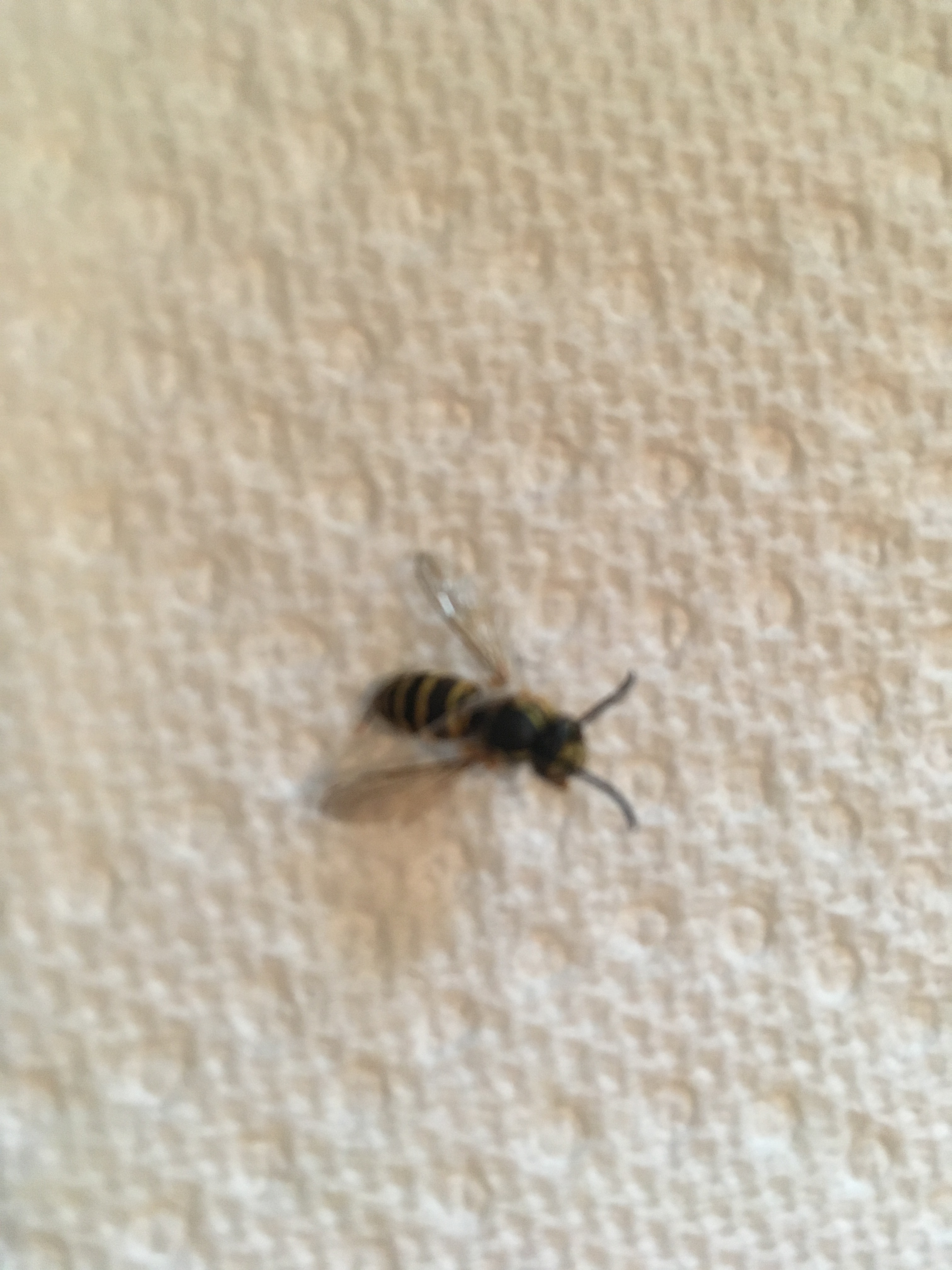
    Photo by Anthony Flaco
    Photo by Anthony Flaco

    Summer. The season when daylight and warm temperatures prevail and vacation plans come to fruition. Unless of course you are a gardener – in which case you have probably been examining seed catalogs since February and plotting flower beds and furrows on graph paper since January.

    For this first week of June, which marks the seasonal beginning of the summer season if not the astronomical, write a summer inspired poem. That is, write a poem based on whatever summer images inspire you, whether its swimming pools and car trips, camping by the lake or in the foothills, or canning tomatoes in a steamy kitchen.

    Or perhaps you are a person who prefers winter months over summer and who finds summer not so much an inspiration as something to survive. Feel free to use your discontent as fodder for your poem.

    Below is a summer inspired poem  to spark a creative flame (or a bit of malcontent) to help get you started:

    Vespers
    by Louise Glück

    In your extended absence, you permit me
    use of earth, anticipating
    some return on investment. I must report
    failure in my assignment, principally
    regarding the tomato plants.
    I think I should not be encouraged to grow
    tomatoes. Or, if I am, you should withhold
    the heavy rains, the cold nights that come
    so often here, while other regions get
    twelve weeks of summer. All this
    belongs to you: on the other hand,
    I planted the seeds, I watched the first shoots
    like wings tearing the soil, and it was my heart
    broken by the blight, the black spot so quickly
    multiplying in the rows. I doubt
    you have a heart, in our understanding of
    that term. You who do not discriminate
    between the dead and the living, who are, in consequence,
    immune to foreshadowing, you may not know
    how much terror we bear, the spotted leaf,
    the red leaves of the maple falling
    even in August, in early darkness: I am responsible
    for these vines.

    Share your poem in the comments section below.

  • Writing Exercise: Memorize

    Poetry is meant to be spoken, and it is meant heard. So this week, memorize a favorite poem – preferably one of your own. Make memorizing fun by trying any of the following approaches:

    • Sing your poem out loud in the shower.
    • Write it a hundred times in a notebook.
    • Post copies of it on the refrigerator, on the bathroom mirror, or on your car’s dashboard.
    • Perform it in front of a mirror or in front your stuffed animals or portraits of your family and friends.
    • Record yourself reciting the poem and listen (or watch) your performance – repeatedly.
    • Prepare as if you were going to perform in front of a live audience of hundreds. Someday, you might.

    Feel free to share the poem you choose to memorize in the comments section below.