Category: Zingara Poetry Review: Poetry Picks

  • Michaelangelo by Austin Smith

    I never thought it would be the last
    time I saw him.

    I never thought to pet his head.

         I never thought to set him on our bridge and set a cherry tomato in his line
    of view, in case he needed a bite or two before his journey.

    By the way, he’s named after the ninja.

    The only thing I’ve learned about turtles is
    they hold no loyalty.

    *

    Whenever at my grandfather’s cabin,
    I take a wander on my own.

    The small, light, walking type
    down to our little pond to sit on the bridge.

    The patch of sunlight over it is a dream.
         A dream of the years’ old, bright red paint glittering.

    One day I saw a deep,
    deep green, softball sized circle gliding
    toward my dangling boy feet.

    I bolted up cement stairs
    to tell Grandpa of the circle.

    He nabbed Mikey just for me.

    *

    We fell in love over a pile of aspen leaves
    but I told him I wasn’t hungry.

    He met aspen the same day he met me.

    I didn’t realize he was planning an escape with each little
    bite from the elevated bridge.

    He’ll be a ninja when he grows up, I’d say,
    after I teach him how to hyahh!

    I trotted back down from snack time
    to check on him with goldfish in hand

    and found an empty bridge frowning.


    Austin Smith is a freshman at Rocky Mountain College in his hometown, Billings, Montana.

  • Tug by Stephen Mead

    back to back, it’s
    a sort of duel, this,
    only at High Noon,
    refusing to pull apart.
    The arms are laced.

    The shoulders are red sands
    of matador energy
    against an equally bloody heat.

    Here, striations
    of the bull-ring scene are ivy
    and upon that wrestling flesh,
    Christmas lights dangle from the leaves.

    Over rippling torsos
    they gentle like lightning bugs
    any straining muscle.

    What lock keeps
    this enjoined heart captive
    by the pumping, bumping chambers
    of hips, legs, buttocks?

    It is all the hypersensitive
    self-consciousness & suicide callings
    of youth vs. the scrapbooks of the spirit
    age makes albums of:
    time capsules of photos
    in the mind’s flickering eye.

    Listen, if there is a war
    to that passion then let it turn
    sky blue as letter paper,
    turquoise clear
    as the gaze of a Siamese.


    Stephen Mead is an Outsider multi-media artist and writer.  Since the 1990s he’s been grateful to many editors for publishing his work in print zines and eventually online.  He is also grateful to have managed to keep various day jobs for the Health Insurance. Currently he is resident artist/curator for The Chroma Museum, artistic renderings of LGBTQI historical figures, organizations and allies predominantly before Stonewall, https://thestephenmeadchromamuseum.weebly.com/

  • Signs by Anne Whitehouse

    A brief April snow disrupted our spring.
    Amid clumps of snow, daffodils
    nodded in the icy breeze. A glaze 
    of snowflakes sugared the hyacinths.

    I worried for them and the tender lettuces,
    red and green, I’d only just planted.
    But the sun came out; by mid-morning,
    the snow was gone as if it hadn’t come.

    You’d have to be able to read the signs—
    the water drops glistening gaily
    on the new leaves, the green moss
    wet and velvety, the bushes slick.

    Perhaps patience is the key, I thought.
    How hard it is to wait out a siege.
    The enemy is the invisible virus,
    and there is no way out but through.

    Once it has passed, we will have to know 
    where to look to spot the absences 
    only glaring for those who miss 
    what has ceased to exist.


    Anne Whitehouse is the author of six poetry collections, most recently Meteor Shower (Dos Madres Press, 2016). She has also written a novel, Fall Love, which is now available in Spanish translation as Amigos y amantes by Compton Press. Recent honors include 2017 Adelaide Literary Award in Fiction, 2016 Songs of Eretz Poetry Prize, 2016 Common Good Books’ Poems of Gratitude Contest, 2016 RhymeOn! Poetry Prize, 2016 F. Scott and Zelda Fitzgerald Museum Poetry Prize. She lives in New York City. www.annewhitehouse.com


  • How to Baptize a Child in Philadelphia, PA by Mike Zimmerman

    First, clasp the crown of his head
    like a football, a hot pretzel,
    like the accidental bird flown
    in you forgot to let go.

    Say “you can be anything.”
    Let him drink soda at breakfast;
    read him a story at night.
    Let this story be about

    A car or a dog or a fish.
    Say, “I wish you didn’t
    ask questions at bed.”
    Turn out the light.

    If you’re going to the dollar store, bring him with you.
    Let him buy Mountain Dew and sour lemons.

    Help him with his homework.
    When he asks, “we’re mostly water? how
    can that be true?” Tell him, “because it’s
    in the book.” You don’t know the particulars
    Except that Jesus walked on water,
    The Delaware must be a sacred thing
    despite the bodies in cold clothes
    on the news. Baptism happens in water.

    If he finds a blue jay with a broken wing, tell him
    it serves those Jays right for beating the Phillies.

    When hell comes up in church, he’ll ask
    “What’s revelation? What’s sin?” Show him
    The steel mill again. Tell him, “Son,That time of reckoning is not for us.”


    Mike Zimmerman is a writer of short stories and poetry, as well as a middle school Writing teacher in East Brooklyn. His previous work has been published in Cutbank, A & U Magazine, and The Painted Bride. He is the 2015 recipient of the Oscar Wilde Award from Gival Press and a finalist for the Hewitt Award in 2016. He finds inspiration and ideas from the people and places he loves. Mike lives in New York City with his husband and their cat.

  • Gentle Stratigraphy by Kim Malinowski

    Leaves crowd blossoms into wispy

    decent—

    is that how it always is?

    Meandering fall into glade—

    your hand reaches out—
    moss between toes
    pebble jutting into hip
    coyote jawbone at brow.

     Banks cut by patient water.

    Soft decent—

    Sandstone and lime carved into stratigraphy.

    I map it like I do your irises, your dimples—gentle craft. 
    Do you carve me with your caresses?
    Shape me as the stream does the bank?
    Fingers tap at my stomach.
    Moss and mud—water—do you map me?  

    The sun sets. First stars appear.
    Do you know the constellations of my freckles?

     You may bend and ford me.

    Let my stratigraphy show layers.
    Love and loss—unbearable and bearable pain—
    show life lived to the brim.

     Reveal me.

     Revel in godhood—shape my soul.


    Kim Malinowski earned her B.A. from West Virginia University and her M.F.A. from American University. She studies with The Writers Studio. Her chapbook Death: A Love Story was published by Flutter Press. Her work was featured in Faerie Magazine and has appeared in War, Literature, and the Arts, Mookychick, and others.

  • grounded by Heather Laszlo Rosser

    today, I watched
    the red tailed hawk
    swoop through the bare
    trees, and wanted to fly.

    I don’t know why now
    or why not before
    but suddenly, it’s
    imperative that I know
    something about flight.

    do I ask someone?
    boys dream of flying.
    the fellow in the deli
    probably knows. excuse me,
    sir, what is it like to fly?

    last night I walked down a narrow
    passage in a charcoal sketch,
    but like my young daughters,
    I wanted up.

    can we be too rooted to the Earth?

    tonight I will ask the boy next to me
    the one hiding out in a lean, sure man,
    I will ask him, beloved, can I hold on
    behind you on your way through?

    Heather Laszlo Rosser is a New Jersey native and has been writing all her life. She holds an MA in English Literature from the University of Vermont and an MFA in Fiction Writing from Vermont College. This is her first published poem.

  • Chocolate by Michael T. Smith

    “I just
    Brought you
    Chocolate,
    So we can start from
    There.”

    The word
           Itself
    Was intoxicating –
    ‘chocolate,’
    Hung on my lips before I
    Said it.

    Tasting it,
    And letting the idea
           Seep into my mind
    In some eternal moment.

    But the idea
    Should not be dormant,
           Alone –
    And so it will be joined
    To a thing not untoward –
    To what I bring to you.

    Michael T. Smith is an Assistant Professor of English who teaches both writing and film courses. He has published over 150 pieces (poetry and prose) in over 50 different journals. He loves to travel.

    *July 7 is World Chocolate Day

  • Even When by Shannen Angell

    Thank you to this damned body
    a middle ground
    no man’s land
    mediation between the warring sides
    the daggers in its skin
    its joints
    its bones
    and the self that extends past
    physicality

    instead embracing compassion
    creativity consistency
    even when its body is
    incapable of walking
    even when its body is
    locked to the bed
    even when its body
    cannot contain an ounce more
    of pain

    Thank you to this damned mind
    a middle ground
    pie in the sky
    idealist who insists that
    inviting cousin chronic illness
    to the wake will not
    reignite the generations-long battle
    between the self that extends past
    physicality

    and the physicality itself
    the space it demands to fill
    even when its mind is
    struggling to swim
    even when its mind is
    convinced of its dusk
    even when its mind
    still cannot give up
    and continues to raise
    its hand


    Shannen Angell attends Utah Valley University and is pursuing her bachelor’s degree in writing studies. When she isn’t writing poetry, she can be found cross stitching or playing Animal Crossing. She has previously been published in UVU’s Touchstones and Snow College’s Weeds.

  • the fruit archive by Derek Berry

    inheritance is the incorrect word for the righteous
    pulse that stutters when i learn of this history,
    how the story spills teeth on asphalt.
    each document in the fruit archive
    is a red-soaked landscape, 
    a forget-compass leaving bruises on the map.

    under every map, a new map— secret
    as joy & ancient as erosion. marble faces
    with age-busted visage, like stolen
    territory etched with opulent monuments
    to a forgotten resistance. i find too brilliant
    pebbles speckled with blood, evidence
    that someone once was alive carving desires into stone.

    stone shelves worn, chipped
    like a brick thrown back. in the fruit archive,
    the water rises. brief flood 
    swelling tomes into indecipherable violence,
    river-urgent end of a heterosexual reign.

    rain seeps through the ceiling of the fruit archive,
    riot of seeds splitting open easy as a skull. 
    the dirt is bloodwet & blooming rage, 
    and here, even drowning 
    in what is never said aloud,
    i find a worthy inheritance.

    Derek Berry is the author of the novel Heathens & Liars of Lickskillet County (PRA, 2016), and poetry chapbooks GLITTER HUSK and BUGGERY, recipient of the 2020 BOOM Chapbook Prize from Bateau Press. They live in South Carolina.

  • Behind the Bruised Peach by Kitty Jospé

    I hold something resembling a fruit whose form
    perhaps could pass as peach. We know the story:
    starts as blossom, with the expectation of turning
    into the honest-to-goodness jubilance of juicy
    sun-ripe peach.

    How to understand the truth of the matter?
    It reminds me of my father’s lesson about the indelible
    mark of a lie: he folded a piece of paper,
    handed it back to us, saying, no matter
    what you say, there is nothing you can do to get
    rid of that telltale pleat. It is a hurt that will always
    wear its scar—

    like this rock of a fruit
    bearing the marks of multiple beatings,
    in a mass of fellow picked-too-soon fruits
    under the sign “Fresh Peaches.”

    Kitty Jospé, MA French Literature, New York University; MFA Poetry, Pacific University embraces the joy of working with language and helping others to become good readers of poems, people, life. Docent at the local art museum, moderator of two weekly poetry discussion groups, singer and pianist, she enjoys applying these skills in workshops on ekphrastic poetry. Her work is in 5 books, published since 2009 and numerous journals and anthologies.

  • Cotton and Coconut by Michelle Grue

    Phone turned off, but I can still hear the elegiac
    wails of mothers unmade by bullets shot by
    my money turned into taxes,
    turned into uniforms with golden shields
    more afraid of unarmed melanin than white
    murderers

    Generations of hatred that disregard the sanctity of Black lives
    Black queer lives, young lives, old lives, ratchet lives, politics of respectability made flesh – none safe
    Tragedy unpunished because of policies and laws and the comfortable
    ignorance of everyday people unwilling to remove
    rose-colored glasses that hide the reality of a
    nation we love that we wish loved us back

    I can’t un-see the latest viral video of generations of hope turned into a corpse,
    but I can feel the black cotton in the field of my son’s head rub against my face.
    I can smell the coconut as his hair tickles my nose.
    I hear the hallelujah in every rustle his warm child body makes against mine.
    I marvel at how he takes every scarred lump and fleshy cranny of my body and
    remixes them into safety,
    a sense of security I know is an illusion.

    Hands that dump flour into a mixing bowl, that
    tug mine as we count pinecones, that
    hold mine as we dance to the Motown songs of my Dad’s
    youth, my youth, now his youth
    anchor me while I try not to hear the
    haunting of
    strange
    fruit.


    Michelle Grue is a doctoral candidate at the University of California, Santa Barbara. She studies higher education pedagogy and Writing Studies through the lenses of intersectionality and critical digital literacies. She has previously published in Zingara Poetry Review, the fantasy journal Astral Waters Review, the Expressionists Magazine of the Arts, and DASH Literary Journal. Feeding her creative energies and making space during motherhood and graduate school life has been a challenging pleasure.


  • American Shop Windows by Rikki Santer

    after “The Munich Mannequins” by Sylvia Plath

    Mannequins lean tonight
    sober-faced giraffes,

    eyebrow apparitions, torsos
    imagining animal pleasures.

    Surrogate armies defend
    molded nipples & navels,

    postural idiosyncrasies
    always captured ready

    to wear. Tweens with their 
    own rod & base, trail through 

    the mall, libidos with fables 
    glittering from cellphones.

    Smoothies sustain them.
    Credit cards explain them.

    Suburban world trips the axis.
    Selfies, like flatlined cameos, 

    frame vapor tongues numb
    under fluorescence.


    Rikki Santer’s work has appeared in various publications including Ms. Magazine, Poetry East, Margie, Hotel Amerika, The American Journal of Poetry, Slab, Crab Orchard Review, RHINO, Grimm, Slipstream, Midwest Review and The Main Street Rag. Her seventh poetry collection, In Pearl Broth, was published this past spring by Stubborn Mule Press.

  • Finally Going to Tell You about the Staircase Ghost by Luanne Castle

    When my baby said peaches, peaches,
    I put the can into the opener.
    Its lid rose on the machine’s arm.
    The peaches smelled peachy-spice
    and curled into little moons.
    My son gummed his peaches, sloshing
    juice from his mouth’s ends.
    I washed out the can and then saw
    what I had missed in my loving him
    like water into wine. The cool blond
    of pear slices on the Del Monte label.
    The membrane between here
    and there can separate as an unexpected
    wind swishes silk draperies apart.

    Here’s another one.
    You might not have noticed.
    You could have been standing
    at the base of the stairs,
    seen a woman in a long shift hesitate.
    What was happening was this.
    My foot reached for the next step,
    and in that instant a ghost
    passed through my chest
    on its way downstairs.  It didn’t
    move out of the way for me,
    didn’t care that I knew it existed.
    We both went our separate ways,
    my path leading me to this moment
    where I tell my tiny limitless tales.

    Luanne Castle’s Kin Types (Finishing Line), a chapbook of poetry and flash nonfiction, was a finalist for the 2018 Eric Hoffer Award.  Her first poetry collection, Doll God (Aldrich), was winner of the 2015 New Mexico-Arizona Book Award. A Pushcart and Best of the Net nominee, she studied at University of California, Riverside (PhD); Western Michigan University (MFA); and Stanford University.  Her writing has appeared in Copper Nickel, TAB, Glass, Verse Daily, and other journals.

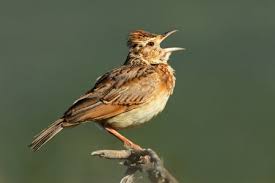
  • The Lark Ascended by Wayne Lee

    –for Mica and Annie

    First Mother’s Day without her
    and you are pulled in two, toward the open arms
    of your thirsty girls and that blue expanse of sky.

    Flute song on the radio, evanescent as breath.

    Once there was a lark, and speckled eggs,
    and fledglings testing their wings. Now they fly
    in time to that most ephemeral of melodies.

    Wayne Lee (wayneleepoet.com) lives in Santa Fe, NM. Lee’s poems have appeared in Pontoon, Tupelo Press, Slipstream and other journals and anthologies. He was awarded the 2012 Fischer Prize and has been nominated for a Pushcart Prize and three Best of the Net Awards.


  • 2019 Best of the Net Nominations

    The annual Best of the Net Anthology from Sundress Publications promotes the diverse and ever-growing collection of voices who are publishing their work online and serves to bring greater respect to an innovative and continually expanding medium.

    The judges for poetry this year is  Eloisa Amezcua.

    Nominations must have originally appeared online and must have been first published or appeared on the web between July 1, 2018, and June 30, 2019. Nominations were due on September 30, 2019 and must have come from the editor of the publication.

    Congratulations to this year’s nominations from Zingara Poetry Review. I hope every poem is included in this year’s anthology!!