Category: Poetry Prompts

  • Children’s Day Prompt

    Children’s Day was observed by South Koreans earlier this week, so for this week’s poetry prompt, consider the following poem by Eugene Field:

    Little Boy Blue

    The little toy dog is covered with dust,
                But sturdy and stanch he stands;
    And the little toy soldier is red with rust,
                And his musket moulds in his hands,
    Time was when the little toy dog was new
                And the soldier was passing fair,
    And that was the time when our Little Boy Blue
                Kissed them and put them there.

    “Now, don’t you go till I come,” he said,
                “And don’t you make any noise!”
    So toddling off to his trundle-bed
                He dreamt of the pretty toys.
    And as he was dreaming, an angel song
                Awakened our Little Boy Blue, —
    Oh, the years are many, the years are long,
                But the little toy friends are true.

     Ay, faithful to Little Boy Blue they stand,
                Each in the same old place,
    Awaiting the touch of a little hand,
                The smile of a little face.

     And they wonder, as waiting these long years through,
                In the dust of that little chair,
    What has become of our Little Boy Blue
                Since he kissed them and put them there.

    Use Field’s “Little Boy Blue” to inspire a poem suitable for a child, perhaps one you know personally (as Field did).

  • Holiday Poetry Prompt

    May is host to a number of holidays, and in keeping with April’s first poetry prompt, this week’s poetry prompt also suggests you write a poem inspired by a holiday – any one that occurs this month. There are, of course, the American holidays of May Day, Mother’s Day and Memorial Day. Then there is Cinco de Mayo, as celebrated in Mexico, and Children’s Day, as celebrated in South Korea. Or you could opt for a lesser-known holiday, such as Bird Day, which is May 4th (and rather established in certain circles) or the even more obscure Twilight Zone Day, which is celebrated on the 11th (for no obvious reason). Whatever holiday you choose, celebrate it with style and honor it with a poem.

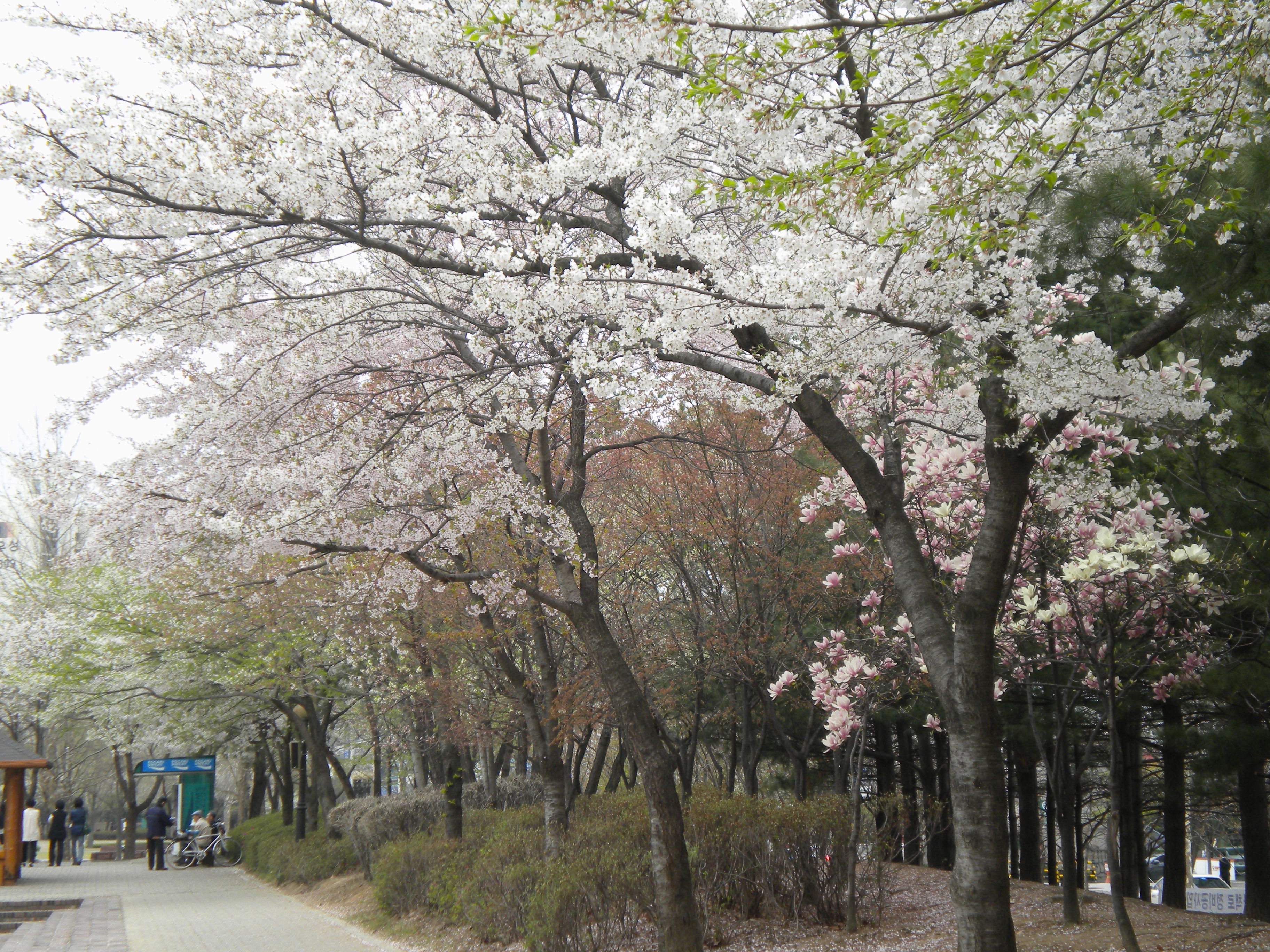
    *Today’s featured photo is by Moriah Beagel. Learn more about Moriah from the contributors page.

  • Rondeau Poetry Prompt

    Today’s prompt comes from Frances Mayes’ “The Discovery of Poetry”

    Write a a Rondeau:

    A Rondeau is a poem consisting of fifteen lines arranged in a quintet (five-line stanza), a quatrain (four-line stanza) and a sestet (six-line stanza). The first few words of the first line act as a refrain in lines 9 and 15. These refrain lines do not rhyme, but repeating the fragments seems to imply the rest of the line, including the rhyme. The rhyme, therefore, acts invisibly. The roundeau’s usual rhyme scheme is aabba, aab Refrain. An eight-syllable line is traditional:

    Here’s an example:

    DEATH OF A VERMONT FARM WOMAN
    (Barbara Howes, 1914-)

    It is time now to go away?
    July is nearly over; hayt winter lingered; it was May
    Fattens the barn, the herds are strong
    Our old fields prosper; these long
    Green evening will keep death at bay.

    Last winter lingered; it was May
    Before a flowering lilac spray
    Barred cold for ever. I was wrong.
    Is it time now?

    Six decades vanished in a day!
    I bore four sons: one lives; they
    Were all good men; three dying young
    Was hard on us. I have looked long
    For these hills to show me where peace lay . . .
    Is it time now?

    Share your poem in the comments area below.

  • April is the Cruelest Month

    Spring’s tumult stirs the air and moves the poet’s heart. It was T.S. Eliot who lamented:

    April is the cruelest month, breeding
    Lilacs out of the dead land, mixing
    Memory and desire, stirring
    Dull roots with spring rain.

    Centuries before Eliot’s angst Chaucer wrote this of spring:

    Whan that Aprill, with his shoures soote
    The drought of March hath perced to the roote
    and bathed every veyne in swich licour;
    of which vertu engendred is the flour

    For this week’s prompt, write the beginning, or prologue, of an imaginary epic poem that evokes the feeling and imagery of Spring. Be wildly imaginative.

  • The Found Poem

    Try this writing exercise for overcoming blocks, shifting perspectives or stretching the imagination. The technical aspects of this exercise keeps the left brain busy so the right brain can freely imagine.

    The found poem, variation 1: Take a stroll through the grocery store with paper and a writing utensil. Write down interesting words as you encounter them. Create a form by making arbitrary line and stanza breaks. Be as random as you like. In lieu of the grocery store, try a retail store or the public library.

    The found poem, variation 2:  Find book which contains hundreds of pages. Turn to different page numbers as they coincide with a significant number. For example, think of an important date and use those numbers as your guide. If the important date is June 12, 1930, for example, you might turn to page 6, page 12, page 19 and page 30 of the text. Feel free to rearrange the numbers in any manner. Each time you turn to a new page, close your eyes and drop your finger somewhere on the text. Use the words or sentence closest to your finger as a line in your poem. Don’t over think this – just jot down the first words your eyes land on. Do this several times with a series of significant numbers until your poem reaches its ideal length.

    Most of all, have fun.

  • Lift an Image Poetry Prompt

    Lift an image from this stanza of the poem To a Young Poet by Mahmoud Darwish, as translated from the Arabic by Fady Joudah, and use it as the basis for a poem of your own.

    Alternately, chose a line from the given stanza with which to begin a poem, craft the poem, then omit the borrowed line in your revision.

    Be strong as a bull when you’re angry
    weak as an almond blossom
    when you love, and nothing, nothing
    when you serenade yourself in a closed room.

  • Poetry Prompt: April Fools

    “The fool thinks himself to be wise, but the wise man knows himself to be a fool.”
    ~William Shakespeare

    For this the first day of April, otherwise known as April Fool’s Day, write a foolish poem. Feel free to interpret this prompt broadly. For example, perhaps for you a foolish poems suggests writing about a past foolish endeavor, a foolish game or plan, or perhaps it simply  suggests utilizing foolish language and silly words. Alternately, maybe it suggests writing about fools, and there are many of those from which to choose. There is the quintessential court jester, the fool in love, the foolish student, any number of fools (or foils) in Shakespeare’s works, even the foolish raven (fox, cat, frog…) of Aesop’s fables. If none of these strike your fancy, consider writing a poem about the origins of April Fools, which is vague enough to encourage fanciful (foolish) interpretation.

  • Informal Notes on The Japanese Renku

    A Renku is an endless poem consisting of alternating three- and two-line stanzas. The fist stanza consists of three lines while the second contains two lines. This pattern repeats indefinitely, or until a specified and predetermined date and time of its conclusion. Each stanza is written by a different poet and attempts to change the focus, utilize mixed images, borrow syntax or otherwise thwart expectations set up by the previous stanza.

    The Japanese tradition of Renku suggests that the beginning stanzas include compliments about and generally acknowledge the graciousness of the host.

    Ways to shift focus and link stanzas in surprising ways:

    1) kotobazuke (link through words): Observe rhymes, existing repetition, puns, familiar phrases, grammar or syntax and carry them through. For example, if the first line of one stanza is something like “The man in the hat,” you may want to consider using the same syntax but with a very different subject, like “The car in the street.” Alternately, free associate with words and images. For example, if the previous stanza has a word like “goggles,” it makes me think of “google,” which makes think of searching, so I may write about searching. If the previous stanza uses a word like “sleep” it makes me think of a rhyme, like “sheep”, so maybe I will include something about sheep (sheep searching, searching sheep, shepherds searching for sheep…)

    2) monokuze (shift through things/use contrast): Ask a question to which there is no answer, deepen the observation or present an opposite or contrasting mood. If it’s dark, lighten it. If it’s active, present a still setting, if it is quiet, add some noise.

    3) ioizuke,  a.k.a./ “scent” (shift mood or feeling): Like syncopation, add an unexpected element to the mood. Use a metaphor or change the setting.

    4) Finally, do not explain connections: resist the temptation to explain the image you have presented.

    For a pre-Renku exercise, students work  with the Haiku three line concept, but discard the 3-5-3 syllabic restrictions (as Japanese doesn’t adapt to that English language parameter very well).

    Here are a few exercises:

    Focus: Look at an image, then deepen your focus; don’t worry about making connections.

    Image: Sheep in a field.

    Response: First Stanza

    Sheep in a field
    Men on horseback
    Un-hitch the barbed wire

    Second Stanza:

    Focus: Contrast the mood that has been established; present its opposite

    Prompt: Small boat in calm harbor

    Response:

    Small boat in the calm harbor
    breeze echoes the sound
    of raised voices

    Third

    Focus: Ask a question/add a person

    Prompt: The cat returns after eleven nights

    Response:

    The cat returns after eleven nights
    Where are you?