Author: Lisa Hase-Jackson
-

Apex
Just a quick note to thank everyone for participating in the 2025 Zingara Project Poem-A-Day challenge.
I’ve received much encouragement in your emails and appreciation for the prompts, and I’ve really enjoyed reconnecting with all of you.
Below is a list of prompts posted so far this month for anyone wishing to take another look and for those who didn’t get a chance to see them the first time around. With each prompt, I include poems published on Zingara Poetry Review that I believe serve as apt examples or as inspiration, so check the list for your name.
You can join in anytime and write poems to as many or as few prompts as you like. April too busy? Write your poems in May and beyond.
Tuesday, April 1
Journal Mining Prompt
“How I Arrived Here” by Karen Neuberg
Wednesday, April 2
Protection Prompt““Protection” by F.I. Goldhaber
Thursday, April 3
Beginnings Prompt
Friday, April 4
Whispers of Work: A Lament for Extinct Professions
“Barnwork We Didn’t Talk Much About” by Charles A. Swanson“Stay at Home Mom” by Sabina M. Säfsten
Saturday, April 5
Absences Unfolded“What We Leave Behind” by Yvette A. Schnoeker-Shorb
“Song of Sorrow” by Jeremy Garnett
“My Sister’s Baby Blanket” by Alejandro Lucero
“Absence by Inference” by Duane L. Herrmann
Sunday, April 6
Transformation
“The Ugliest Girl in Christendom Goes to the Gynecologist” by Camille-Yvette Welsch“Ugliness came up” by Kitty Jospé
“City of Bread” by Marc Janssen
Monday, April 7
Humor in Public Spaces
“Permanence” by Denise Duhamel Dance in a Drugstore by Anne WhitehouseTuesday, April 8
Utterance
“Ambidextrous” by Denise LowWednesday, April 9
Contradictions
“What is Lost is Not Lost” by Peter MladinicThursday, April 10
Game On
Friday, April 11
Collect, Remix, Repeat
Saturday, April 12
Prose
Things to Be Grateful for During the American Winter by Michael BrockleySunday, April 13
What You Leave Behind
Monday, April 14
The Thin Veil“Where the Dead Go” by Denise Low
“Do the Dead See?” by John Brugaletta
“Alternate Life Number Two” by Jeanne DeLarm-Neri
Tuesday, April 15
Eyesore
“Ugliness Came Up” by Kitty Jospé,
Wednesday, April 16
Apocryphal“The Parable of the Mustard Seed, the Chanteuse and Wild Rice” by Libby Bernardine
“In My Story” by Chella Courington
“My Stepmother, Having Returned to This Earth, Becomes Hannya” by Tara McDaniel
Submissions for poems written from these prompts open on June 1
-

Apocryphal Prompt
Is there a particular fairy tale stereotype you think could use a revision?
Or perhaps a mythical -ism that could do with a more contemporary perspective or retelling?
Write a poem that retells a fairy tale or myth in which a two-dimensional stereotyped character is fleshed out or rebels against their typecast.
Alternatively, write about a archetype you’ve encountered in real life.
Consider how the world of today would react to such a retelling.
Poems for Inspiration:
“The Parable of the Mustard Seed, the Chanteuse and Wild Rice” by Libby Bernardine
“In My Story” by Chella Courington
“My Stepmother, Having Returned to This Earth, Becomes Hannya” by Tara McDaniel
-
Eyesore Prompt
We’re halfway through National Poetry Month with 15 more prompts to go before April 30.
Here’s another to spur your imagination and provide a little motivation. All of the prompts offered this month are meant for inspiration, not rigid rule follwing, so if your writing veers off in unexpected directions, you owe it to your muse to follow.
Choose a location in your community that is considered ugly or an eyesore.
Spend time describing your chosen location in detail using vivid imagery and specific sensory features (sight, touch, taste, smell, sound). Include a metaphor or two to make it extra rich.
Once you have plenty of material and a vivid description, us it as the basis for a poem that conveys the location’s un-attractivenes then transforms it into something beautiful, meaningful, or admirable.
For inspiration, read “Ugliness Came Up” by Kitty Jospé, Zingara Poetry Review
-

The Thin Veil
Duende generally refers to a spirit folklore and literally means “ghost” or “goblin” and believed to derive from the phrase dueño de casa, which means “owner of a house” in Spanish.
Today’ prompt is to write a poem that imagines what the ghosts of our ancestors discuss among themselves and what they spend their time doing on the other side. Situate them in a house — one they lived in or one they moved into, maybe even your house. Consider the following questions as you write:
- Do they have parties?
- Do they Quarrel?
- Are they happy, depressed, anxious?
- Do they concern themselves with the quotidian?
- The banal? Or only the sensational?
- What are their opinions on their living relatives? The condition of the world?
- What would they like to change?
- If they could be reincarnated, would they? What would they come back as? Why?
Poems for Inspiration:
“Where the Dead Go” by Denise Low, Zingara Poetry Review
“Do the Dead See?” by John Brugaletta, Zingara Poetry Review
“Alternate Life Number Two” by Jeanne DeLarm-Neri, Zingara Poetry Review
-

What You Leave Behind
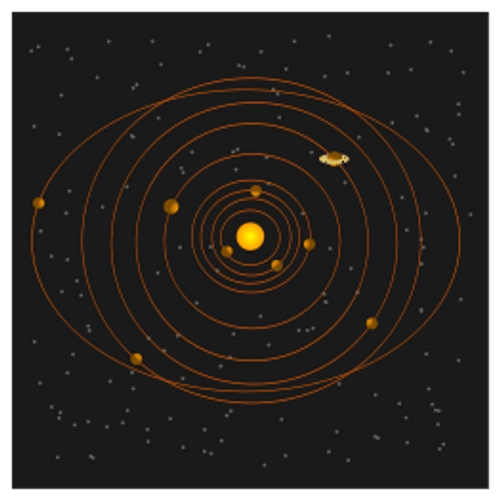
Blackout poetry is a process whereby the artist creates a poem by redacting words, sentences, and phrases from an existing text to expose a new poem.
Because there are a variety of techniques and medium for redacting text, such as crayons, colorful markers, white out, or painting and drawing or even using thread, yarn, and fabric, redacted poems can become more akin to visual art than to literary, a blurred distinction which can be exploited for the sake for your final piece.
For today’s prompt, begin by choosing any existing text: newspaper article, page from a textbook, novel, or other prose, an advertisement, newsletter, or even old pages from a journal or diary (yours or another’s). Don’t overthink your source material for this exercise. You can always repeat the process later (and repeatedly) using different sources.
Begin by skimming over the text for words or phrases that suggest a poem or otherwise “pop.” No need to read carefully for understanding. Just get a sense of the language you are working with.
Unless, of course, reading for understanding helps your process.
Next, use a pencil (with an eraser) to circle the words you plan to reveal and/or cross through the words you plan to conceal. The eraser let’s you change you mind.
You may even decide to write the words you plan to keep on a separate piece of paper to get a sense of their poetic potential before making your final choices.
Once you’re satisfied with your poem, begin redacting the text you plan to hide with the medium of choice (paint, sharpie, eraser, white out, tape, fabric, yarn, thread, etc.) using your pencil marks as a guide and being willing to change the path if you find a more interesting one in the process.
This process can be used for lengthier texts or as part of an altered book project. It can also be repeated with the same passage for different results.
Most importantly, let imagination take the reign and enjoy the process on your way to making something as elaborate and intricate as you like.
For a more comprehensive discussion on blackout poems and other types of found poetry, including examples and names of poets who create them, you might enjoy reading “This Ocean of Texts: The History of Blackout Poetry”
For a discussion on using fiber arts with blackout poetry, take a look at Wendy Eiteljorg’s article on her Thoughts from School blog, “Blackout poetry and sewing.”
-
Prose Prompt
Prose poems are written in paragraph form resembling prose but employ poetic aesthetics such as lyricism, associative leaps, rhythm, figurative language, musicality, and metaphor rather than lineation or strict rhyming. Prose poems are intended to be read and appreciated for these poetic qualities.
For today’s prompt, write a prose poem with two of the above listed aesthetics.
Here is a previously published prose poem by Michael Brockley for inspiration:
Things to Be Grateful for During the American Winter, Zingara Poetry Review
~For K.D.
The portrait of Harriet Tubman burbling in the ink of a twenty-dollar bill. The way hands can be cupped to form eagles and bison when the shadows on bedroom walls slip through the jet stream of your imagination. The way women’s boots never go out of style. The way wallets are cluttered with unclaimed lottery tickets and Chinese fortune scripts. Take pleasure knowing chaos theory honors the wisdom of Japanese butterflies. Cherish this year of lunar wonders. October’s Hunter’s Moon. The November moon so close a heroine could step off of her hometown street into zero gravity. Hold your memory of a president racing his puppy through the White House halls at Christmas. Celebrate the happy accident of the newest blue and the oldest cherished songs. Sing Hallelujah! Thank the fog. Thank the way persimmons ripen during hard frosts. The taste of haiku lingering on your tongue. Take comfort in the assurance that scarves will always fit. Be grateful for the circle of light dancing above your head. It guardians the secrets in your eyes. Be grateful for the photographs of your most embarrassing moments. Be grateful for the impossible challenges before you. Be grateful knowing that, for this hour, gratitude is enough. -
Game On Prompt
Make a list of your favorite game shows or game shows that you remember from your youth.
Select one to use as the basis for today’s poem.
Next, draft a poem in which the format of your chosen game show becomes the poetic form for any topic of choice, like answers must take the form of a question (as in Jeopardy).
Whether you use the Price is Right, Who Wants to Be a Millionaire, or opt for a reality based game show, like The Bachelorette, as the form for your poem, let the parameters of your chosen form push your use of language into the realm of the unexpected.
-
Contradiction Prompt
Begin a poem with a phrase that contains a contradiction, something like:
- Let me say it again: I never repeat myself.
- Deep down, you are really shallow.
- My brother is jealous of me because I am an only child.
- I don’t like any fish at all, but I like tuna and flounder.
Or, begin with an oxymoron, like:
- historical present
- seriously funny
- working vacation
- alone together
Once you have a contradictory statement or oxymoron that feels like a fruitful beginning for a poem, build on it by adding a narrative with plenty of concrete, sensory details.
In the process, be sure to move your narrative back and forth through time (past, present, future).
Conclude your poem with a declarative statement that states a fact, opinion, observation, or explanation using plain language.
Poem for Inspiration:
“What is Lost is Not Lost” by Peter Mladinic from Zingara Poetry Review, March 2021
-
Utterance Prompt
Using Anaphora (phrase repeated at the beginning of successive clauses or lines), write a poem that also works as a speech act, that is, an utterance that performs an action, such as a request, promise or apology, rather than simply conveying information.
For a great example see “Ambidextrous” by Denise Low, Zingara Poetry Review
-
Humor in Public Spaces
Write about a time, maybe recently, when an encounter with a stranger in a public space provided or resulted in humor, maybe a joke was told or one of you made an observational quip, apt pun, or there was a “pie-in-the-face” moment of physical comedy.
Poems for Inspiration:
“Permanence” by Denise Duhamel
“Dance in a Drugstore” by Anne Whitehouse
-
Transformation Prompt
Make a list things in life that you find ugly, shameful, or repulsive–things like foot odor, rudeness, cockroaches, road kill, belching in public, etc.
Choose one or more items from your list to include in a poem.
For an extra challenge, see if you can transform something usually deemed ugly into something desirable, beautiful, and worthy of admiration.
Poems for inspiration:
“The Ugliest Girl in Christendom Goes to the Gynecologist” by Camille-Yvette Welsch
“Ugliness came up” by Kitty Jospé
“City of Bread” by Marc Janssen
-
Absences Unfolded
Freewrite about absence, absenteeism, or absent things.
Start with real, ordinary absences, both abstract and concrete, then progressively larger absences, each growing in size and scope, even to the point of hyperbole, until you find an absence that feels larger than all other absences, larger than the world, larger than the universe.
Poems for Inspiration:
“What We Leave Behind” by Yvette A. Schnoeker-Shorb
“Song of Sorrow” by Jeremy Garnett
“My Sister’s Baby Blanket” by Alejandro Lucero
“Absencece by Inference” by Duane L. Herrmann
-
Whispers of Work: A Lament for Extinct Professions
Write a poem about a profession which does not exist anymore or which is phasing out.
If you like, you can aim for an ode, a lament, a diatribe, a docu-poem, narrative poem, or found poem with your chosen profession as the central image, setting, or source.
Examples of extinct professions:
- ice cutter
- elevator operator
- milkman
- lamplighter
- switchboard operator
Examples of professions phasing away:
- farmer
- travel agent
- mason
- tailor
- literary translator
Professions at serious risk:
- teacher
- librarian
- journalist
- writer
For Inspiration:
“Barnwork We Didn’t Talk Much About” by Charles A. Swanson, Zingara Poetry Review
“Stay at Home Mom” by Sabina M. Säfsten, Zingara Poetry Review
“Fugitives” by Stephen Mead, Zingara Poetry Review
“The Milkman” by Isabella Gardner, Poetry Foundation
“London’s Summer Morning” by Mary Robinson, Poetry Foundation