Author: Lisa Hase-Jackson

  • Writing Exercise: Memorize

    Poetry is meant to be spoken, and it is meant heard. So this week, memorize a favorite poem – preferably one of your own. Make memorizing fun by trying any of the following approaches:

    • Sing your poem out loud in the shower.
    • Write it a hundred times in a notebook.
    • Post copies of it on the refrigerator, on the bathroom mirror, or on your car’s dashboard.
    • Perform it in front of a mirror or in front your stuffed animals or portraits of your family and friends.
    • Record yourself reciting the poem and listen (or watch) your performance – repeatedly.
    • Prepare as if you were going to perform in front of a live audience of hundreds. Someday, you might.

    Feel free to share the poem you choose to memorize in the comments section below.

  • Children’s Day Prompt

    Children’s Day was observed by South Koreans earlier this week, so for this week’s poetry prompt, consider the following poem by Eugene Field:

    Little Boy Blue

    The little toy dog is covered with dust,
                But sturdy and stanch he stands;
    And the little toy soldier is red with rust,
                And his musket moulds in his hands,
    Time was when the little toy dog was new
                And the soldier was passing fair,
    And that was the time when our Little Boy Blue
                Kissed them and put them there.

    “Now, don’t you go till I come,” he said,
                “And don’t you make any noise!”
    So toddling off to his trundle-bed
                He dreamt of the pretty toys.
    And as he was dreaming, an angel song
                Awakened our Little Boy Blue, —
    Oh, the years are many, the years are long,
                But the little toy friends are true.

     Ay, faithful to Little Boy Blue they stand,
                Each in the same old place,
    Awaiting the touch of a little hand,
                The smile of a little face.

     And they wonder, as waiting these long years through,
                In the dust of that little chair,
    What has become of our Little Boy Blue
                Since he kissed them and put them there.

    Use Field’s “Little Boy Blue” to inspire a poem suitable for a child, perhaps one you know personally (as Field did).

  • My Stepmother, Having Returned to This Earth, Becomes Hannya, by Tara McDaniel

    Culling through the Winter/Spring 2010 volume of the Crab Orchard Review, published twice yearly by the Department of English, Southern Illinois University in Carbondale, I found this darkly whimsical play on Japanese imagery and knew I had found this week’s poetry pick.

    According to the Contributors’ Notes at the time publication, the author of this poem – Tara McDaniel –  is a student at the Bennington Writing Seminars. Her previous work has been featured in Cimarron Review, Marginalia: The Journal of Innovative Literature and Gloom Cupboard.

    My Stepmother, Having Returned
    to This Earth, Becomes Hannya

    When my stepmother unzips her body bags and snaps
    The rubber tag from her toes, I know
    She’ll creep into the kitchen and slake her immortal
    Thirst with 6 bottles of beer. She’ll sucker at the glass
    Greedily to get at its yeasty fizz, remembering – quite
    Exactly – where they keys to my gate are. Down
    Into the basement she’ll trundle, her tail
    Growing long beneath her pile of dressings,
    Making a hollow sound
    Where her serpent-belly slaps at the stone. A likely darkness:
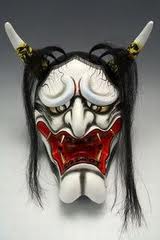
    Black cabinet, squeaky doors, stale air, and Hannya
    On a bed of velvet. A little key behind one eye.
    Her claw will lift this wooden mask
    To her face: slavering jaw, hard-boiled egg eyes
    Cheekbones shaped like mallets,
    Crescent horns rising from the wild hair
    Weeping over her forehead and shoulders
    Like spilled Japanese ink. She’ll put the key
    Deep inside her throat, for safekeeping. Tomorrow,
    When the sun rises again over my back garden,
    She’ll wait out the morning till I’ve returned dozing
    To cough up the key, graze her claw over my door.

    Note: Hannya is a mythological Japanese character, a vengeful and jealous female demon. She is represented in traditional Noh theater by a horned mask.

    For more information regarding Crab Orchard Review, including submission guideline, contests, and awards, follow this link: Crab Orchard Review

  • Interview with Poet Lisa Chavez

    This month’s featured poet hails from the East Mountains of Albuquerque, New Mexico. Described by fellow poets as supportive and possessing a particular intuition for sequencing poems in a collection, Lisa weighs in on such topics as the creative process, the role of the MFA and the genesis of her poetry. Here then, following a poem from her most recent collection, is this month’s poet interview:

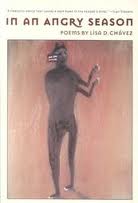
    In an Angry Season

    They’ve gone to witness the river’s mad
    descent into spring. The heave and thunder
    as the ice shakes itself from the shore,
    the way the frozen slabs–pachyderm grey
    and similarly sized–shear one into
    another as the Yukon shudders awake.
    From a hawk’s height the pipeline bridge
    mocks the river’s riot and churn. Perched
    there, they watch–then his pale hand
    turns her tawny face to his and
    they kiss, roar of loosed ice echoing.
    They are both just nineteen.

    And now they sit, hands clutching brown
    bottles, in a one-room cabin turned
    tavern. A wooden counter, scabbed over
    with men’s names. A naugahyde couch,
    slouching by the door. One man at the bar,
    face flat in a puddle of beer.
    His phlegmy snores. The room choked
    with smoke. The one they call Dirty Dave
    is telling a story: “We picked up this squaw
    hitching her way into town. Weren’t no room
    in the cab, so she crawled in back. I went after her.
    I said, whatever you hear, boys,
    don’t stop this truck.” Laughter.  He grins,
    gap-toothed and mean. Leers at the girl.
    “I like it when they fight.”  She shivers.
    Twists at a strand of her black hair.
    Her boyfriend draws her closer.
    Six men–they’ve been drinking
    all winter. One girl. One nervous
    boyfriend. A mining camp a hundred miles
    or more from town. And Dave stares
    at the girl. “What do you think of that?”

    And she thinks: There is so much evil
    in this world. And she thinks of her hand,
    squeezing the bottle till it breaks, scraping
    this man’s face to bone with the shards.
    And she thinks of the river, how in some
    angry seasons it could not be contained–
    bridges snapped like thread, whole villages
    devoured by the Yukon’s flood and fury.
    And she hears the river shift and growl.

    1. Tell me a little about your inspirations. In other words, what, or who, inspires you to write and create poetry? 

    My inspiration has changed over the years. I used to write more out of a sense injustice: I believed, and still do believe, that poetry can be a vehicle for change.  I haven’t given that up, but I’ve also written a lot about issues that were really personally compelling: on issues of race, gender and class, for example, and now I find it easier to address some of those big topics in creative nonfiction rather than in poetry. One thing that has not changed, however, is my love of story and character: poems often begin because I become fascinated by a character and his or her story. I see the poem as a way to live another life, however briefly, and to really get inside someone else’s head.

    When I’m looking for inspiration, photographs are a great trigger – photographs of people are great for creating characters. Several of the poems in my second book come from photographs. Reading poetry is also great inspiration.

    2. Often poets and writers are involved in a number of creative projects beyond writing. Tell me about some of the other ways you express your creativity. 

    For years, writing was pretty much all I did, and when the writing wasn’t going well, I felt creatively stuck. I think I had that kind of perfectionism that some artists have: I know I’m not nearly so skilled in other art forms, so I tend not to try them.  But in the past few years, writing had gotten much too serious and it just wasn’t fun anymore, so I decided to try some other creative projects, with absolutely no expectations.  And it was really fun!  I’m not a good visual artist by any means, but I enjoy a number of crafts, from paper crafts and altered books, to fabric art. I still can’t draw or sew very well, but I make do, and have fun.  I particularly like anything that involves collage and found art:  making new things out of old stuff.  In some ways it reminds me of writing: rearranging things until they make a pleasing pattern, the same way I may move words around on a page.

    3. What has been the role of poetry in your development as a creative person?

    You might say poetry has been the extended metaphor for my creative life. It is not all of it, but it has been a long-lasting mode of expression.  I started writing stories at 4, when my grandmother taught me how to write, and I never stopped. I thought I’d be a fiction writer, because mostly it was fiction I read and was nourished by, but even though I am very much a narrative poet, fiction is by far my weakest genre.  I never even tried to write poetry until I was an undergraduate, but once I discovered it, I felt like I’d found my form, and kept going with it.

    Still, not everything works in poetry. Sometimes I want to “tell” rather than just “show” and I’ve been writing creative nonfiction almost as long as I’ve been writing poetry.  The two genres go well together, I think, and when I want a larger palette, creative nonfiction is a good option.

    But writing is just one aspect of my creativity. I don’t hear people talking about this a lot, but for me one hazard of being a writer and academic is how professionalized writing becomes, and how tied to the job it is, and for me, this has stolen some of the magic of writing.  It seemed like work, not fun.  I’ve considered switching to genre fiction to get some of the playfulness back (I could literally write about magic then, if I’m writing fantasy!) and I do have some fantasy and sci-fi projects in the works.  I also regained some pleasure in writing about dogs on my blog—it’s so far removed from my work that I can feel free to just follow my interests.  But much of the rest of my creative life is something that is not professional in any way:  it’s the various projects I work on at home–dying cloth, making collage paintings or artist’s books, gardening, or whatever.

    4. What is your view on education in the creative process. Is an MFA an important credential for artists and writers to attain?  

    I think an MFA can be very useful, but it is certainly not the only route for artists.  What it does best is give artists and writers a time to fully devote themselves to their art in a way they will likely not be able to do again.  The best part of the MFA is the time immersed in writing, in taking classes, in writing, in critiquing writing, in teaching writing.  It’s a great gift, and a great way to hone craft.  That said, it certainly won’t guarantee people an academic job, nor will it even guarantee publication.  It’s an apprenticeship, and what comes after is up to the individual writer or artist.

    5. What are your current creative dreams and goals?  

    My current interests may not initially seem related to art, but I think they are. I’m really interested in holistic healing and a more holistic lifestyle in general; in fact, I’m planning on taking classes in things like aromatherapy, herbalism, etc.   From what I’ve discovered so far, holistic healers are incredibly creative people, working in a way I’d never considered, as their creativity is focused on health, both spiritual and physical.  They are also very intuitive in a way that really resonates with me as an artist, as so much of art begins in intuition. This kind of study will open up a new way of looking at the world that is rooted in the physical and energetic, rather than in just the intellect. I don’t know where this will take me as a creative person, but I do know that it has already energized my life, and I know that for me, health must be based in the physical, spiritual AND creative life, and I’m looking forward to what comes next creatively.

    Lisa D. Chavez has published two books of poetry: Destruction Bay and In an Angry Season, and has been included in such anthologies as Floricanto Si! A Collection of Latina Poetry, The Floating Borderlands: 25 Years of U.S. Hispanic Literature, and American Poetry: The Next Generation. Her creative nonfiction has been published in Fourth Genre, The Clackamas Literary Review and other places, and has also been included in several creative nonfiction text books. Her most recent essays appear in An Angle of Vision: Women Writers on Their Poor and Working Class Roots and The Other Latin: Writing Against a Singular Identity, forthcoming from the University of Arizona Press.
  • Writing Exercise: Reminisce by Proxy

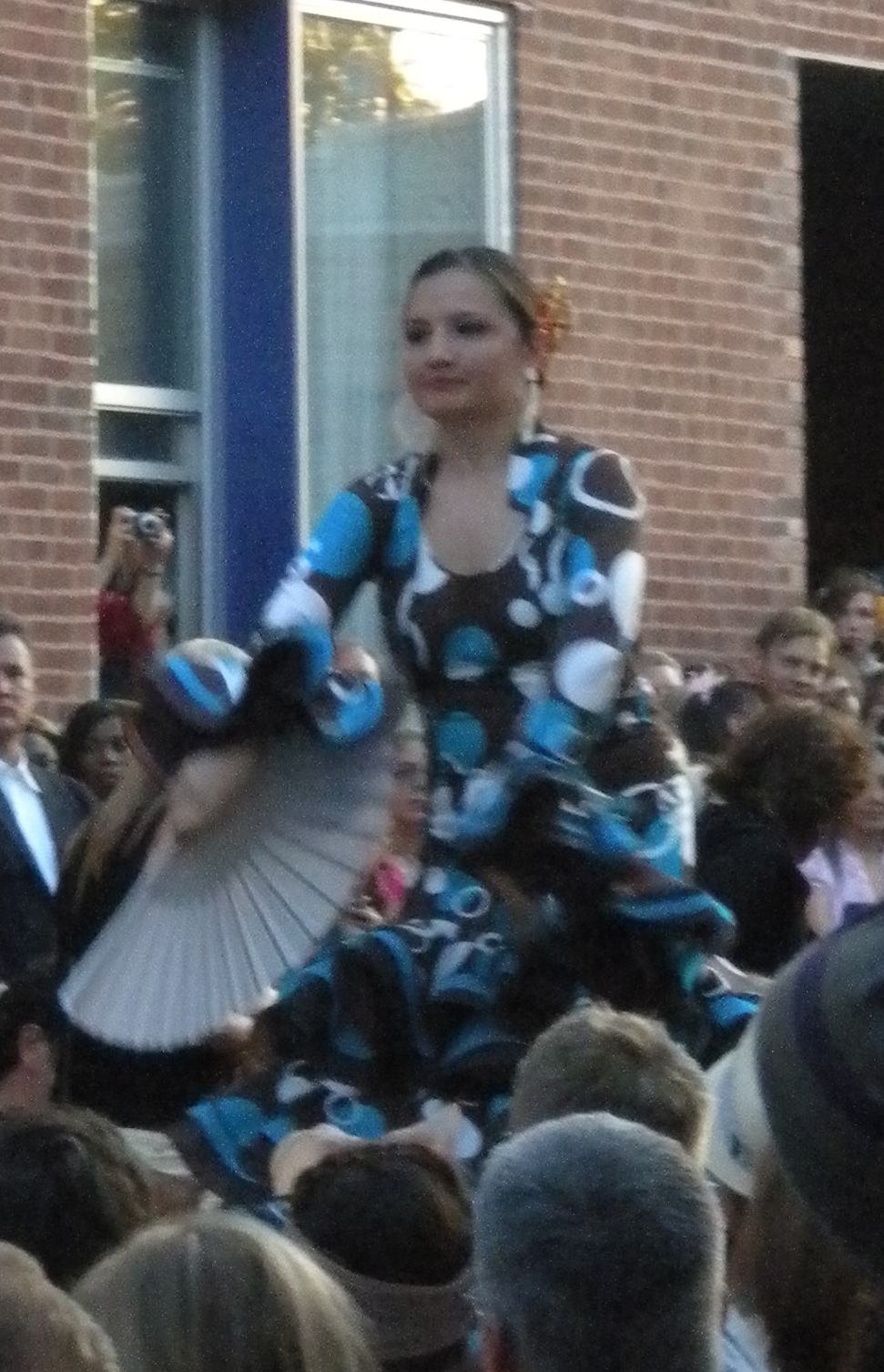
    Photo Courtesy Moriah Beagel

    Look through someone else’s old photo albums for photos of people and places you know little to nothing about. Old black-and-white-turned-sepia photos work well for this exercise. The less information you have about the context and the people in the photos, the less likely you are to just retell the “true” story leading up to the moment the photo was taken; the less information you have, the more your imagination can fill in.

    Not sure where to find old photographs? Consider asking your grandmother, or your aunt, or even your friend’s brother’s mother-in-law for a gander at their old albums. They will likely be thrilled that you are interested in looking at something that is personally important to them, and in fact took pains to preserve over the years. If this is not an option for you, consider cruising antique shops in your area for boxes of old photographs. In many ways, these are the best. You can develop full characters and entire histories for the individuals whose likenesses appear on these little squares of photo-finished paper.

    Post your resulting character sketch, narrative, poem or paragraph in the comments section below.

  • Holiday Poetry Prompt

    May is host to a number of holidays, and in keeping with April’s first poetry prompt, this week’s poetry prompt also suggests you write a poem inspired by a holiday – any one that occurs this month. There are, of course, the American holidays of May Day, Mother’s Day and Memorial Day. Then there is Cinco de Mayo, as celebrated in Mexico, and Children’s Day, as celebrated in South Korea. Or you could opt for a lesser-known holiday, such as Bird Day, which is May 4th (and rather established in certain circles) or the even more obscure Twilight Zone Day, which is celebrated on the 11th (for no obvious reason). Whatever holiday you choose, celebrate it with style and honor it with a poem.

    *Today’s featured photo is by Moriah Beagel. Learn more about Moriah from the contributors page.

  • In the Field by Rebecca Aronson

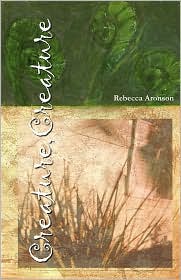
    This week’s Poetry Pick comes from Rebecca Aronson’s 2007 collection of poetry Creature, Creature, which holds the honor of first recipient of the Main-Traveled Roads Poetry prize. This first collection of poetry reflects the author’s familiarity with the landscape and inhabitants of both the Midwest and southwest regions of the US. They juxtapose picturesque scenes with honest appraisals of the people which inhabit them, and provide the weight of truth and a measure of clarity. In the following poem, Aronson effectively captures a culmination of images and notions leading up to the kind of moment many a Midwesterner would recognize as genuine:

    In the Field

    Where cows graze
    among mud and stones
    and their own droppings
    we spread our blanket
    and sit close
    for the first time
    this whole week spent
    in your mother’s house,
    we put our hands
    on each other and slide
    quiet under the enormous eyes
    of cows, fogging up as I
    spread my skirt (your mother said
    as skirt for walking? yes I said
    it’s a walking skirt), and we
    are moving together, the skirt
    around us so the cows might wonder
    but not the ruddy-faced man
    bobbing suddenly over a hedge
    or the one with him who
    tipped his hat, later introduces
    as your mother’s favorite
    neighbor at the market where
    he shook your hand
    a long time.

    Formerly with Northwest Missouri State University, Rebecca Aronson continues to act as contributing editor to the Laurel Review. She currently teaches and resides in the Albuquerque area.

    “Creature, Creature” is available at Barnes and Nobel online

  • Line a Day Writing Exercise

    Write one line of poetry, inspired by any images you encounter, for each day of the week. Pay special attention to those images that engage your sense of sight, smell, taste, touch and hearing. Favor tactile images over cognitive ones.

    If you like the seven lines you created at the end of the week, write another seven over the course of the following week and combine them to fashion a kind of sonnet.

  • Zingara’s Poetry Pick: Manzano Sunflowers by Dale Harris

    Dale Harris is an Albuquerque potter, poet and author of this week’s Poetry Pick. Her poem can be found in “A Bigger Boat” anthology as published by the University of New Mexico Press. I met Dale and heard her read Manzano Sunflowers at the volume’s book release in the summer of 2008.

    Because this poem evokes images of sunflowers, which are as common in the Midwest as they are in the Southwest, it calls forth the character of both regions while yet focusing on the New Mexican landscape. Harris’ sunflowers, therefore, capture more than place and image, but the very essence of sunflower-ness. And while a Midwesterner may not fully appreciate the significance of the arroyo’s image, or never attend the Indian Market, or discern the difference between Manzano or Sandia, she does understand the way sunflowers amass – has seen them take the place of prairie grass – and can appreciate the truth of sunflowers as offered in this poem:

    Manzano Sunflowers by Dale Harris

    You missed Indian Market and of course, the sunflowers.
    As usual they swept across August,
    at first a few, a yellow trickle along the fence line;
    then more, making pools in the pasture
    and splashing down into the arroyo;
    then incredibly many more,
    dappling the distance as though
    a giant hand had buttered the land.

     Yet with the entire prairie to expand into
    they prefer crowds of themselves.
    They mass along the roadsides line up
    as though a parade were about to pass.
    Here and there one stands alone but not for long.
    Soon his kin will come and there will be
    sunflower squalor, a floral slum.

     Once out they will not be ignored.
    Stretching their skinny stalks, they top our roofline,
    press against the window screens, peep in a the door.
    Familiar footpaths to the outbuildings are obscured
    and from the road we seem afloat,
    our cabin an odd tin boat in a sea of sunflower faces.

     They are the most staccato of flowers.
    I catch them humming snatches of polkas
    and John Philip Sousa marches,
    bobbing in the breeze to the Boogaloo,
    the Boogie-woogie and the Lindy Hop.
    I call their names, Clem, Clarissa, Sara Jane
    to try and tame them.

    My neighbor comes by, she has a field full.
    They’re useless, she complains;
    her horses won’t eat them.
    I should hope not, I exclaim after she’s gone.

    I don’t remember if you even liked sunflowers
    but you like life and they are all about that.
    Today I wrote to your family finally.
    I expect they are occupying themselves
    with beautiful gestures
    in order to get over the grief  of you.
    As for me, I have sunflowers.

    Read more of Dale’s poetry and learn about her pottery skills at Dale Harris Pottery.

    A copy of “A Bigger Boat” anthology is available from The University of New Mexico Press


  • Writing Exercise: Dream

    For this week’s writing exercise, keep a pad of paper and a pen or pencil next to your bed and use them to capture the vestiges of your most recent dream upon waking. If you find the act of writing in the mornings a difficult task (or your eyes simply don’t focus that quickly in the morning) you can dictate your dreams  into a tape or digital recorder and transcribe them later. After a few nights of recording the images, themes and emotional texture of your dreams, try synthesizing them into a poem. Don’t worry about remembering every detail correctly. Instead, just make up the parts that are “missing.” No one will accuse you of getting the facts wrong.

    Feel free to post your poem in the comments section below.

  • Rondeau Poetry Prompt

    Today’s prompt comes from Frances Mayes’ “The Discovery of Poetry”

    Write a a Rondeau:

    A Rondeau is a poem consisting of fifteen lines arranged in a quintet (five-line stanza), a quatrain (four-line stanza) and a sestet (six-line stanza). The first few words of the first line act as a refrain in lines 9 and 15. These refrain lines do not rhyme, but repeating the fragments seems to imply the rest of the line, including the rhyme. The rhyme, therefore, acts invisibly. The roundeau’s usual rhyme scheme is aabba, aab Refrain. An eight-syllable line is traditional:

    Here’s an example:

    DEATH OF A VERMONT FARM WOMAN
    (Barbara Howes, 1914-)

    It is time now to go away?
    July is nearly over; hayt winter lingered; it was May
    Fattens the barn, the herds are strong
    Our old fields prosper; these long
    Green evening will keep death at bay.

    Last winter lingered; it was May
    Before a flowering lilac spray
    Barred cold for ever. I was wrong.
    Is it time now?

    Six decades vanished in a day!
    I bore four sons: one lives; they
    Were all good men; three dying young
    Was hard on us. I have looked long
    For these hills to show me where peace lay . . .
    Is it time now?

    Share your poem in the comments area below.

  • The Name of a Tree by Catherine Anderson

    Today’s Poetry Pick comes from Catherine Anderson’s second book  of poetry titled “The Work of Hands,” published in 2000 by Perugia Press, whose mission it is “to produce beautiful books that interest long-time readers of poetry and welcome those new to poetry.”

    THE NAME OF A TREE

    Right here on Ash Street, Ana says, she used to stagger
    up the stairs like a drunk.
    There was no light, so she patted the wall,
    following hardened gum and kick marks.
    Those were crazy days she tells me –
    two kids, no money, no job –
    when English made the sound of click, swish,
    money gliding from a cash drawer,
    and the only words she knew were numbers –
    seventy-five cents ringing down the throat
    of a soda machine, her soapy fingers counting quarters
    to feed the dryer.

    Some days I am Ana’s teacher, some days she is mine.
    This morning we look through her kitchen window,
    The one she can’t get clean, cobwebs massed
    between sash and pane. The sky is blue-gold, almost
    the color of home. Ana, I say, each winter
    I get more lonely. Both of us would like the sun
    to linger as that round fruit in June, but Ana says
    it’s better to forget what you used to know:
    the taste of fish cooked in banana leaves,
    the rose color of sea waves at dusk,
    the names for clouds and wild storms, and a tree
    that grows, she says, as full
    as a flame in the heart of all countries
    south of here.

    Catherine’s book is informed by her work with immigrants and refugees and explores the pathos involved in such work. Her poem “Womanhood,” which was chosen by Billy Collins’ “Poetry 180” project, can be read at poets.org

  • Listening Writing Exercise

    This week’s exercise requires the writer venture away from home and the writing desk to find an interesting public venue in which to work.

    Find a comfortable spot in a busy location where you can to sit and listen to conversations of others around you. Naturally, restaurants and coffee shops can provide such a setting, but try to broaden your search to less obvious locals. For example, a classroom fits the bill well, especially if you happen to be student or a teacher. So does a work environment, the park, a long line or the waiting room at the tax preparer ‘s office. Be sure to bring your notebook with you.

    As snippets of conversation float your way, take selective dictation in long-hand in your notebook. While there is no rule against using a lap-top computer for this exercise, the key here is to be selective in your dictation and try not to write down every detail – long-hand will lessen that temptation.

    Alternately, and particularly if you are a techy, you could use a voice recorder of some sort, transcribing selectively when you later listen. This approach allows you to listen closely in the moment and focus on the texture of the conversation rather than the details of the words. Your note-taking can focus on intonation and other non-linguistic details that might help animate your later (selective) transcription.

    Instead of returning to your transcribed notes right away, let time lapse and events intervene with your memory. When finally you return to your notes, it will be with fresh eyes (and ears). Hopefully you will have forgotten some of what you heard and your subconscious will have already begun to make up alternate explanations for the notes you have taken. Let your imagination fill in the parts you don’t remember accurately, or, better yet, let your imagination rearrange everything contained in your notes.

    Create a poem from this experience and share it in the comments area below.

  • April is the Cruelest Month

    Spring’s tumult stirs the air and moves the poet’s heart. It was T.S. Eliot who lamented:

    April is the cruelest month, breeding
    Lilacs out of the dead land, mixing
    Memory and desire, stirring
    Dull roots with spring rain.

    Centuries before Eliot’s angst Chaucer wrote this of spring:

    Whan that Aprill, with his shoures soote
    The drought of March hath perced to the roote
    and bathed every veyne in swich licour;
    of which vertu engendred is the flour

    For this week’s prompt, write the beginning, or prologue, of an imaginary epic poem that evokes the feeling and imagery of Spring. Be wildly imaginative.

  • How My Father Learned English by Juan J. Morales

    Cover by Oswaldo Guayasmin

    This next Poetry Pick is pulled from Juan Morales’ book of poems “FRIDAY and the Year That Followed,” winner of the 2005 Rhea & Seymour Gorsline Poetry Competition.

    HOW MY FATHER LEARNED ENGLISH
    382nd Hospital, Japan 1952

    The wounded who could not speak English
    congregated around the bedridden every morning.
    Manuel, the nurse from some other ward,
    taught my father and others English
    word by word. Sometimes, phrases, the sloppy
    repeated English made sense — Because es porque.
    Yo soy es I am.  I am.  Otra vez, diganme.–
    Bee cause.  Pain.  I am in pain.

    English moved my father’s tongue unlike Spanish.
    It stuck in his mouth, stumbled past his teeth.
    He dreamed he forgot Spanish and his tongue
    withered away.  My father never told anyone
    about this or the scratching fear of his legs,
    under bandages and scars, never walking again.
    He didn’t have words in English yet.

    From its initial lines to its closing stanza, Morales’ book of poems are nothing short of compelling. Sometimes surreal, other times magical, these poems evoke moods akin to the visual art of Frida Kahlo. It is a staple for any lover of the arts.

    Juan J. Morales is currently the Director of Creative Writing  and Assistant Professor at Colorado State University-Pueblo. He is curator of the Southern Colorado Reading Series as wells as the student literary magazine, Tempered Steel.

    “Friday and the Year That Followed” (ISBN 9780977197354) is available for purchase at Amazon