Author: Lisa Hase-Jackson

  • Write While Standing

    Among writers who are known to enjoy writing while standing are Vladimir Nobokov, Thomas Wolfe and Ernest Hemingway. This week, take a stand and dedicate at least one of your writing sessions to writing standing up and discover the many benefits, including: freedom of movement and therefore freedom of thought, better posture and therefore less back pain, passive exercise (you burn more calories when standing than you do when sitting), and a general change of pace that may result in clearer writing and fresh ideas.

    Not sure what to write on while taking this new approach to working? Try a clipboard, your kitchen counters (clean and dried), the top of a waist-high bookshelf, a piece of plywood resting atop a few bar stools, or one of those tall tables at the library.  If you like the results, you can build or purchase something permanent, like a drafting table, later.

    Remember, the best way to get your writing done is to write – so don’t over think it, just write right now!

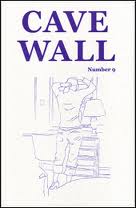
  • The Good Wife by Allison Elrod (Cave Wall)

    This week’s poetry pick is from the Winter/Spring 2011 issue of Cave Wall, to which I recently subscribed. Cave wall is published bi-annually and, according to their website, is dedicated to publishing the best in contemporary poetry. Follow this link to find out more about their publication and submission guidelines: Cave Wall

    The Good Wife
    by Allison Elrod

    On the day she knew for sure
    she walked through her quiet house
    admiring its lovely bones.
    She loved the light
    that filled the place,
    the view from every window.

    She went upstairs and lay down
    on her boy’s small bed.
    Lying very still, she made herself
    small — watched the paper dragon
    hanging by a tread above her, watched
    it turn and turn in endless circles.

    Later,
    she folded shirts
    and started dinner.
    She went out to meet the school bus right on time.

    From the contributors notes: Allison Elrod is a poet and essayist whose recent work appears in or is forthcoming in Iodine Magazine, Kakalak, The Mom Egg, and The Sound of Poets Cooking. She is Associate Editor at Lorimer Press in Davidson, NC.

  • Interview with Kansas City Poet, Catherine Anderson

    Catherine Anderson is a Kansas City poet whom I met at a reading with former Kansas Poet Laureate, Denise Low, at The Writers Place. I find Anderson’s poetry to be socially aware and particularly compassionate toward the plight of the underprivileged and newly immigrated, which is also why I am drawn to it. It is no wonder her sensitivities lean towards such concerns, since Anderson has worked extensively with immigrant and refugee communities in the Kansas City area for a great deal of her professional life.  I was thrilled when Anderson agreed to an interview and am happy to introduce her to my readers this week. I hope her sentiments regarding the writing life find as much resonance with you as they have with me.

    How did you come to writing and what keeps you going?

    In the 1960’s I grew up in an industrial suburb of Detroit, half in nature and half in a rapidly changing urban environment. My father was a newspaper reporter covering Eastern European communities in Detroit and abroad, and my mother was a teacher, so I was fortunate to be living in a house of towering bookcases. Also, and perhaps not just as fortunate, my younger brother was diagnosed at the time with mental retardation and mental illness, a duality that kept him out of the public schools and made him ineligible for health insurance. Later, the diagnosis was autism, but by then the window of language acquisition had shut, and although he has grown into a sweet person, his language is severely disabled. The paradox of living in a family of storytellers, word wizards and comedians alongside a rather confused sibling who couldn’t do the most ordinary things has given me the gift of being comfortable in contradiction, uncertainty, and the absurd– most of the time. An unusual childhood resembling a circus act is not bad material for a writer. My late mother allowed my brother Charlie to roller skate in his bedroom, much to the disapproval of the neighbors. My father’s friends were mostly immigrants from Poland, the former Czechoslovakia, the Ukraine, Lebanon, and he had dictionaries from the whole range of languages these friends and contacts spoke. Between his good ear, their broken English, shots of vodka and his quick thumb through a dictionary, they entertained each other for hours in our small living room. Words and the absence of words were the central mystery of my childhood. Also, the civil rights and anti-war movements were major events in the 1960’s, and because of my father’s work, they couldn’t be easily ignored, even in the suburbs.

    As a kid, I wanted to write because my father made his living that way, and it seemed fun and adventurous. When I asked my father what I needed to do to become a writer, he said, without hesitation, “learn to type.” This told me a lot about his approach to the written word – one of labor, and work done by hand. I was constantly composing plays for school, or creating a newspaper and I’d end up writing out copy after copy because I didn’t have access to a mimeograph machine (the kind with purple ink). However, my father brought home carbon copy paper from his office, and I could make at least five carbon copies at a time for other kids to read. Always I wrote in the smallest possible letters, to get in as much as I could, without wasting carbon pages. Those were the problems of the craft I encountered in trying to enliven a dull history assignment or interpret a Biblical passage. At least once, I used writing to get through the tedium of school punishment. At St. Thecla’s Catholic school in Mt. Clemens, MI, talking to other students was not permitted in the hallways, on the school bus or while eating. I was a repeat offender so often that a nun told me I had to make up my own penance. Usually, I wrote out a thousand times, “I will not talk on the school bus,” but for this penance, I researched various folktales of talking animals and the consequences of just too much talk. (Remember the turtle who flew through the air by biting on a stick carried by two birds? We know what happened when he opened his mouth!) I am sure what I wrote was didactic and convincingly penitential. I had no intention of entertaining the nuns at the Felician Sisters’ Motherhouse in Livonia with this penance (no carbons made) but that was the result my mother told me months later.

    At the University of Missouri I studied philosophy intensely and was centered on learning German and French so that I could read European philosophers I liked in their original language. I was spending an enormous amount of time reading and writing my papers when I noticed that my language was beginning to become much more figurative. I was losing patience with the methodical discipline of philosophical thinking. At the same time, I worked as a desk clerk at local hotel in Columbia called The Downtowner, running from the front desk to my philosophy and language classes. When a major conference of phenomenologists came to town, I got to check all of them in, yet I was too shy to let on that I had read their work and was attending the conference. Instead, I helped Bill Minor, the custodian, spell “Welcome Phenomenologists” on the hotel’s neon marquee. Soon after the conference, I took Larry Levis’s poetry workshop and realized that I had found the art I wanted to practice, poetry. I worked hard on poems for two years, and then by graduation had won a fellowship to Syracuse University where I later received my master’s degree in English and Creative Writing, a kind of half breed of a program that was pre-PhD, and half MFA. I was not interested in the PhD program. Eventually I moved to Boston where I worked as an ESL teacher, community journalist, and finally staff writer for the health care reform organization that spirited through universal coverage in Massachusetts. By then, though, I had moved to Kansas City where I now work training healthcare interpreters.

    Writing that was clear, direct, and about something in the world was the style admired in my family. Poetry was not in that category, unless it was written by an Eastern European and reflected the geopolitical state of post World War II Europe! Although my father and my mother both appreciated literature they thought a young person from the Midwest writing poetry was a silly affectation & were thrilled when I landed teaching jobs, or spent time working as a journalist because these jobs assured them I could make a living. Most poets experience some opposition to their vocation, especially if someone is worried that you’ll never make a living. The best thing to do is keep employed because the last thing in the world your family wants you to be is a penniless dreamer. Ignore the pleading as well as any testy remarks about your chosen art. Keep dreaming but count your pennies.

    A feeling of adventure, defiance, and the possibility of transformation keeps me writing. Poetry has always been the essential lens through which to more deeply discern meaning in the absurd and unpredictable events of our lives. An appreciation for the paradox of being human, fated, and vulnerable in an astonishingly beautiful world is with me constantly as I write.

    How do you keep space in your life, home, and psyche for the creative life?

    Finding space and time to write is extremely difficult, and not something I do well. Some people have been able to accomplish the feat by taking on an academic career that may afford a little more time off (not as much as one would think, however) to devote to creative work. I started out teaching, but became impatient with the pace, and threw myself early on into anti-poverty work as an ESL teacher, activist and community journalist. This has been very demanding work over the years, requiring a lot of weekend and night-time hours. In order to write, I had to discipline myself to make the most of the time available, so that meant writing notes on the subway back and forth during the week, then spending a good eight hours at least on the weekend, creating poems from my notes. I also used every vacation and holiday to write, as much as I could. This became provincial after a while, and I wouldn’t advise it. There were times when I was writing steadily for the Chinatown community newspaper, or writing essays or grants when poems had to be overthrown for prose. Still, I always tried to keep the poetic line alive somewhere, somehow.

    I often keep two or three notebooks going: one is a kind of a daily encounter group – what I’m reading, thinking, responding to. Very literal, very boring, almost a log. Another one is purely for imagery, and that can be as crazy as it gets, with drawings, doodles, big letters. The rule is that nothing literal is allowed into that notebook, though images and figurative language are allowed in the boring notebook.

    Now that I live in a city without a subway, I miss the dream time that daily travel offered to the creative imagination. Since moving to KC, I’ve had to travel a bit in rural KS, and a few other cities where I find I can usually write in a hotel or a diner. The writing feels more alive, striking and honest to me when I pull it out of its usual hometown box. I’m still trying to re-create the sense of taking the subway while living in Kansas City, but haven’t been successful. There used to be access to a staircase at Union Station in Kansas City I could visit that from a certain angle that resembled the entry to North Station in Boston, but they won’t let anyone up the stairs anymore.

    What did you read as a child?

    I could get lost in the Bookhouse Books, a twelve-volume series my mother remembered from her childhood and bought me for my birthday. These books were chockfull of myths, fairytales, legends, history, all sequenced to follow a child’s developmental stages of reading. The introduction explaining the pedagogical intent of the series was interesting to me, as was all my mother’s infant development books. (I was the oldest in a family of three children.) The lives of those quirky medieval saints we had to study at St. Thecla’s were fascinating. And no quirkier a saint you’d ever find was Thecla herself who coaxed the female lions from devouring her when she was thrown into the arena. Through a series that was popular in the school library, I remember reading about the life of Luther Burbank and wanting to become an agronomist, and then Maria Mitchell, and wanting to be an astronomer. I read both Life and Time, following the Birmingham church bombings, the March on Washington, the Vietnam War, Haight-Ashbury, etc.  My parents had a copy of a remarkable book by Dale Evans of their disabled daughter titled The Necessary Angel, and it was one of the few I came across, as a child, that helped me to make a little more sense of life for a family with a disabled child.

    In high school, I adored Walt Whitman, John Steinbeck, especially East of Eden, and Thomas Hardy, especially Jude the Obscure. I loved Joyce Carol Oates, whose book reviews I remember reading in the Detroit News, the paper my father worked at.

    How do you approach the large task of putting a book together?

    I am not sure if I am very good at it, at least for my own work. A book I have now in manuscript has gone through a baptism by fire to get the right order. For now, I think I’ve got it. That might change. Titles are also confounding. The whole process is so strangely difficult. One suggestion I have is to not necessarily group poems according to subject matter, but go perhaps for tone. Also, sections may not always be necessary. If you do use sections, you can think of the middle section (usually the 2nd) as a centerpiece for the other two surrounding it. I wish I had better advice for this question. Another thing to do is study the sequencing of books you absolutely admire and try to crack the code. Ordering a book is kind of like trying to make art that can only be seen from the sky.

    A bit of advice about the poems themselves: ask your fellow readers to be as hard as possible on the book, and throw out poems that don’t hit the mark head-on, even if they have been published in the New Yorker, or Poetry.

    Biography:

    Catherine Anderson is the author of In the Mother Tongue (1983), a book of poems published by Alice James Books of Cambridge, Massachusetts. She was the Cornelia Ward Fellow for Poetry at Syracuse University in 1976, where she received an M.A. in English and creative writing in 1979. Anderson has published in many journals, including The American Voice, The Antioch Review, and The Harvard Review.

    Follow this link to read Anderson’s poem, Womanhood
  • Writing Exercise: Do it in Bed

    DSCN3581Numbered among authors known to enjoy writing in bed are Edith Wharton, Winston Churchill, Colette, and Mark Twain. Certainly there a others, well-known and novice alike, who also find the benefits of writing in bed worthwhile. And why not? Writing in bed, especially first thing in the morning (before fully rising to begin the day) is an excellent way to tap into the interstice state of mind that exists between dreaming and waking states. Writing while reclined, more than any other position, also reduces the effect of gravity, thus encouraging the mind to wander. Worried your muscle memory will put you to sleep the minute you hit the mattress? Try writing while reclined on the living room sofa or your favorite recliner. If you wind up dozing between lines, all the better. You may find your writing takes an unusual, even refreshing, turn.

    This week, try writing in a reclined position, at least once, and embrace the nonchalance this exercise will bring to your prose or poetry.

  • The Perfect Creative Space

    The characteristics of the perfect creative space are as varied and subjective as the myriad individuals who utilize such spaces. What makes an ideal space for one may be abhorrent to another. One writer, for example, may prefer the solitude of a quiet room with a closed door while another prefers the white noise and human bustle typical of the neighborhood café. One painter may prefer En plein air while another longs for the consistency of the indoor studio. Time and mood, too, play roles in an artist’s preferences.  Perhaps yesterday the objective was to get out of the house and away from the dirty dishes, making the coffee shop, where the dishes are another’s concern, more conducive to working. Tomorrow the concern may be reducing caffeine intake and limiting sugary snacks, making the library a more attractive choice. Artists intuit this about themselves and constantly adjust in order to get their creative work done.

    Artists also know that physicality of space is important to the creative process. The painter/sculptor must be able to make a mess; the musician must make noise without raising the ire of neighbors; the photographer must have space to store and use specialty equipment; and the writer must have a surface upon which to write or to place the computer upon which she types. In considering creative space, it is certainly useful to know that quiet is generally more conducive to creating than noise, that large spaces dissipate energy while small spaces concentrate it, and that distractions can prove homicidal to focus. But most important for creating is having the intention to create.

    One of the ways artists undermine their intention to create is to focus on acquiring the perfect creative space – even waiting to create until everything about a space is perfect. Manuscripts are postponed until the perfect house on the perfect lane with the perfect view are purchased, occupied and decorated. Musical arrangements delayed until the ideal music studio secured. Great paintings left imaginary until just the right cooperative opens up. Then, once the perfect space is acquired, the artist becomes paralyzed by that very perfection. The writer is so stunned by the view beyond the windows of their dream writing space they never write a word. The painter becomes afraid to make a mess in their newly built studio with its hardwood floors. The sculptor becomes distracted by loft-mates or other artists member of the cooperative she has joined. The perfect space, then, is just another way perfectionism can thwart an artist’s efforts.

    The intention to create, then, is every bit as important as the physicality of the space.  The artist must ask – Is it really the thought of those dirty dishes that interferes with creating, or are those dirty dishes a convenient way to avoid facing the blank page, empty canvas or block of stone? Will the perfect creative space really improve the creative process, or will the act of creating improve the creative process?

    Take into consideration other professions in which focus is crucial to success. The surgeon, the dentist, even the chef. None work in luxurious open spaces or demand astonishing views. They do not entertain distracting thoughts of inadequacy or images of failure while practicing their craft. They do not worry about the dishes.

    Artists can take a note from the pages of the professional practice book and learn to focus just as intently to give the creative process as much consideration as a surgeon gives the patient beneath his scalpel.

    Set an intention to create today and get to it.

  • Celebrate Your Independence Prompt

    Today America celebrates its declared independence from Britain. For today’s prompt, write about achieving your own independence. Perhaps this means independence from parents through emancipation or reaching the age of majority, or perhaps gaining independence from a spouse through divorce. Independence can also be a a state of mind, so perhaps your independence has to do with thinking, and making choices independently.

    To serve as inspiration for your poem, here is A.A. Milne’s poem of the same name:

    Independence

    I never did, I never did,
    I never did like “Now take care, dear!”
    I never did, I never did,
    I never did want “Hold-my-hand”;
    I never did, I never did,
    I never did think much of “Not up there, dear!”
    It’s no good saying it.
    They don’t understand.

  • Poet Interview: Esther Lee

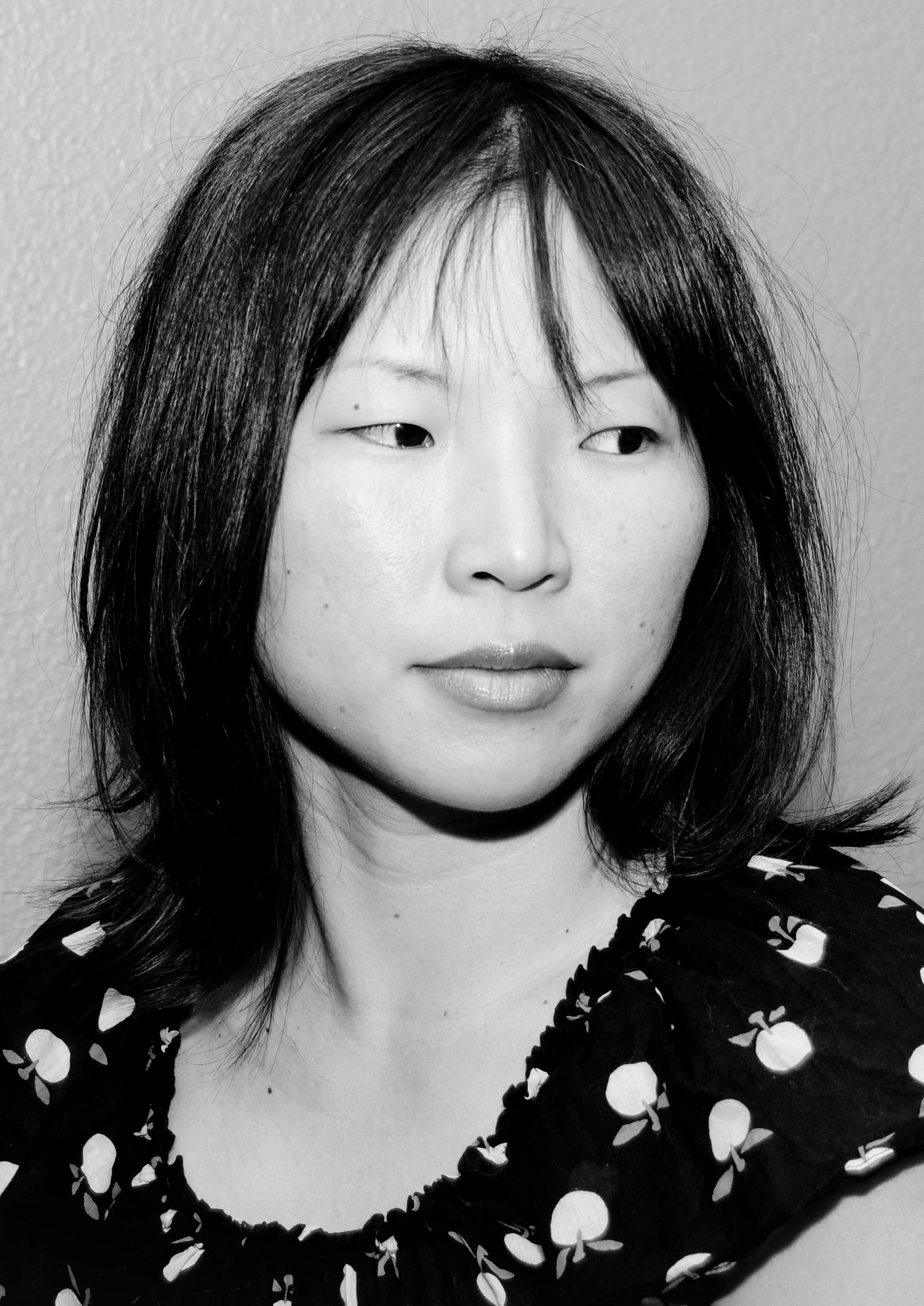
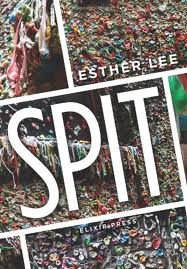
    This week’s featured poet is a “friend of a friend,” whom I look forward to knowing better. Becoming familiar with her poetic aesthetic these past couple of weeks has been a joy and I am eager to promote her work among my readers. While it’s never possible to truly sum up a poet’s work, Lee’s poems are admirably pithy, wry, and honest – concerned with the things in life and history that are difficult to contemplate. Waste no time acquiring her book “Spit” –  I personally recommend it.

    Here is a sample poem and interview with Esther Lee followed by an author bio and information about the book, “Spit.”

    Dear ____________est,

    I sleep between fits of awake. When luck outruns the
    running out, call me, the horrible habit. It’s not our
    fault, I scream. At four years old, wearing my mother’s
    clogs, my sister balances a tray, on it a cup of lemonade.
    She steps like a small elephant clamoring over burning
    tires. Glass carpeting the floor connotes the fallen
    church, welts my throat for forgiveness. What matters
    matters me the least. My sister’s pawing hands hand our
    bed-ridden father his antidote and next thing I know
    we’re smiling vulgarly. These the days when I mistook
    daffodils for tulips and tulips for one-armed men in
    gardens, their missing arms the evidence of my betrayal.

    Yours,

    __________est

    1. Tell me a little about your relationship with poetry and how it developed.

    I studied visual art as an undergrad, starting with 2-D work (painting, pastels, etc.) but eventually became more interested in installations, performance, and video (albeit, crudely done). I seemed to be attracted to ‘dangerous’ materials like resin, insulation, dead fish, dead bees. The ephemeral and the stinky, the toxic. I’m guessing this may be in part because of my upbringing. My parents once managed a small fish market in Maryland so the smell of crabs and fish surrounded me–in my father’s van, in my parents’ clothes. I learned to have a sick and tender response to those smells but also I was interested in how those ephemeral materials could change a space or performance with their sensory insistence. Those visual art pieces often incorporated language–either overtly with text in a video, or with an audio clip from the media, painted text on the canvas, etc. A mentor at that time encouraged me to seriously pursue writing and film. I’d shelved that advice until after I’d graduated and traveled to Korea. There, I was learning Korean but simultaneously felt this unreasonable fear of losing English, as if I could not have both. I began to dream in Korean and in a desperate attempt to hold onto my English, I started writing.

    2. Often poets and writers are involved in a number of creative projects beyond writing. Tell me about some other ways you express your creativity.

    Along with visual art, I guess another avenue was definitely music. I’d met this blues singer, Charles Atkins, who let me bother him on a regular basis. He helped me to shape my voice for singing, teaching me songs, always encouraging. He helped me to feel more confident on stage, to letting go while singing. Because of him, I started to sing in various music bands. And that love of music and appreciating how it shares qualities with poetry is still there.

    3. In what ways do you contribute to and become involved with the poetic, or creative, community?

    Kundiman, the retreat for Asian American writers, has been one of the most valuable experiences I’ve had as a writer. The other folks there–fellows, faculty, staff–are completely supportive during and after the retreat. I’ve never been part of such a chosen family of writers who genuinely lift each other up again and again. A true community like this thrives by cultivating this kind of generous energy and I hope that I contribute back to these communities that have so enriched my life. A priority for me has been to contribute back to marginalized communities. Sometimes that’s taken the form of managing literary magazines that promote writers from more marginalized communities, such as inmates, writers of color, LBTQ artists. As a teacher of creative writing, I hope that I can help my students recognize the value of diversity in all its forms (aesthetic, philosophical, authorial, etc.) and notice connections in the most unlikely places.

    4. How do you balance the many demands of life with the demands of writing poetry?

    I probably don’t. I’m writing regularly for a minute, then prepping for teaching, sulking about not exercising or whatever, but somehow the writing happens. It doesn’t necessarily happen in the most ideal way, which for me would be getting up and having tea, then writing all day with intermittent breaks of playing banjo and reading. Right now, that’s not my reality, but I am still interested in at least half of what I’ve started, so that’s a good sign.

    5. What are projects are you working on now?

    The main project I’m working on is a novel based on my mother’s childhood during the Korean War and her adulthood as an immigrant in Florida amid times of racial tension and anti-Asian sentiments. The novel explores the intergenerational nature of trauma—my mother’s early loss of her own mother and coping in war-torn Korea as a girl—and how one person’s experience invariably affects the lives of loved ones, in this case, my father, sister, and myself. It’ll incorporate elements of non-fiction, poetry, maps, and photographs too.

    Esther Lee currently lives in Salt Lake City, Utah and is pursuing her Ph.D. at the University of Utah (Literature/Creative Writing Program). She received her M.F.A. in Creative Writing from Indiana University and served as Editor-in-Chief for Indiana Review. She has been awarded the Elinor Benedict Poetry Prize and 2009 Utah Writer’s Contest Award; twice nominated for a Pushcart Prize, as well as nominated for a Ruth Lilly Fellowship.

    Her first poetry collection, Spit, was published this year and was selected for the Elixir Press Poetry Prize, and her chapbook, The Blank Missives, was published by Trafficker Press in 2007. Her poems and articles have appeared or are forthcoming in Ploughshares, Verse Daily, Salt Hill, Good Foot, Swink, Cream City Review, New Orleans Review, Hyphen, Columbia Poetry Review, Born Magazine, and elsewhere.

    Kevin Young calls Spit, Lee’s debut full-length book of poetry, “filled with bravado and brilliance” which makes “profound use of hollering across the ‘rusted hollows.’”

    Purchase a copy  at Small Press Distributors

    Visit Esther’s new website at: http://estherleewriter.com/news.html

  • Writing Exercise: Map

    Draw a map of a familiar location that you either physically survey or remember vividly.  Bear in mind that in addition to highlighting relationships among concrete elements of space, your map can diagram emotional relationships and connections among remembered events and other themes. Mark the places where important events occurred or where interesting, memorable objects are located. Allow reverie and nostalgia to guide your train of thought.

    When finished making your map, reflect upon what it has been revealed to you and choose a moment, location or object to write about.  Use the resulting image as the basis for a story, poem or essay. Feel free to share it in the comments section below.

    And most of all, have fun.

  • Solstice Prompt

    Jemez

    This past Wednesday, June 21st, was the longest day of 2011. Not literally, of course, for June 21st did not contain any more than the usual twenty-four hours allotted to that segment of time referred to as “day.” And yet, because more of those hours occurred while the sun was “up” than any other day of the year, we in the western hemisphere label it the “longest day.” Australianson the other hand, recognize it as the shortest.

    For today’s prompt, consider what conditions warrant the superlative label of “longest” and juxtapose it with the concept that shortest exists simultaneously with longest. For example, sometimes time drags and brief minutes seem to go on for days as seconds stretch into hours. Recall a moment in your life which seemed to last forever – perhaps due to agony, impatience or bliss. Maybe your memory is of the longest car ride, longest parental lecture, longest wait, longest kiss…or the longest 10 seconds of your life. Maybe it is of the longest poem.

    Let the image act as inspiration to craft a poem and share it in the comments section below.

    Most of all, have fun!

  • Poking Your Psyche with a Stick: Fun with Writing Exercises!

    Today’s guest blog is written by good friend and amazing poet who goes by the moniker “Oh Hells Nah.” We I met in Albuquerque sometime between 2007 and 2009  through a network of mutual friends (a.k.a – our boyfriends).

    I love this writer’s wry sense of humor and honest appraisal of the writer’s life – she likes to keep it “real.”  She offers a frank discussion of the writing process as well as several great writing exercises, including some of the dadaist absurd variety (and my personal favorite).

    At this very moment I am spraining my arm from patting myself on the back for being smart enough to ask Oh Hells Nah to write something for ZingaraPoet. Watch for future writings from this featured writer and be sure to visit her blog at ohhellsnah.com. In the meantime, enjoy!

    ——

    My writing process is messy and somewhat nonsensical. I believe ideas grow in my subconscious like moss (or a fungus, depending on what), and that I must excavate them with a metaphorical scoop. Sometimes I see an image and then feel it nestle in the folds of my memory. They hatch eggs in my brain! I know that I may not know how to respond to it at that moment, but eventually, perhaps many years later, it will manifest itself in a poem. I’ll be peeing or washing my hands or something equally mundane and then suddenly remember. I will run to my journal before it disappears, hopefully without my pants around my ankles.

    I’ve felt this way since I was a little girl. There were times the sight of something like a green sunset or a glittering puddle would leave me speechless. I think I always had a keen eye for beauty in surprising places and forms. That ineffable feeling is what made me want to write—the determination to make it effable. Needless to say, I didn’t have many friends, so time to write was plentiful. (Also plentiful were bad haircuts and ill-fitting clothes.)

    I wish I still had that kind of time. It’s hard to make myself write after I get home from work exhausted and disgruntled. Sometimes I’m convinced that a lobotomy was performed on me at work when I wasn’t looking. Maybe some sort of corporate gnome stealthily climbed in through my nose and then hacked away at my brain. However, I believe that a major part of being a writer is writing even when you’d rather slow dance with a possum, when you think you have nothing at all to say, when all you wanna do is watch a that nasty show about Brett Michaels.

    I admit I have a chip on my shoulder when people I meet tell me they are writers. Many of them say that they write  sometimes when they’re sad or angry or some shit. There is so much I want to say at these moments, i.e. I bet your poems are full of adverbs and crying fairies, but instead, I just keep my mouth shut and smile politely. I suspect this makes me an asshole.

    I don’t have a specific writing schedule, but I write, in some form or other, nearly every day. I’ve been writing a lot of prose lately. It’s enjoyable, and in some ways, so much easier for me than poetry. When writing nonfiction, my goal is always to address some sort of timely issue and find a way to make it funny. Poetry, however, requires a different sort of concentration. And poetry is what truly makes my heart flutter.

    A major component in writing poetry for me is exploring my subconsciousness and challenging myself to use language unlike my own. I’ve compiled a list of writing exercises that help me exhume the mess in my brain or force me to use words that I rarely use.

    Dada

    I have taught this one numerous times. It learned it from my zany poetry professor in Madrid. It’s weird, but I promise it works. (If it doesn’t, you can find me and give me a severe noogie.) I have adapted it slightly.

    1. Before you go to bed, write the word “fish” on a sheet of paper and leave it nearby.

    2. Upon waking, write down whatever comes to mind on that sheet.

    3. Later in the day, close your eyes and count to 30. When you open your eyes think of the word “needle.”

    4. Write down whatever this word evokes. Do not let reason or rationality limit you. Be as absurd as your subconscious allows.

    5. Immediately after, write three lines in iambic pentameter.

    6. Then write: “This poem is about” then the first 7 words that come you.

    7. Write a word that that references the first word, “needle” then take a word from #4.

    8. Join these two words in a long line. The reference to “needle” should be the first word and the word from #4 should be the last.

    9. Immediately write 6 lines. Lines 1,3,5 should start with the same word. Lines 2,4,6 should end with the same word.

    10. Try to use all this hooha in a poem in some form or other.

    100 Things Worth Living For

    I got this one from an undergrad professor whose guts I ended up hating. I don’t want to name names, but his very famous book has a bird in the title. Man, he was douche… But  anyway, this exercise worked very well. I came up with all sorts of precise images. You will get very specific and surprise yourself, trust me. All you do is write a list of 100 things worth living for. It may seem easy, but it gets difficult after a while. One of my last ones was Pup-Peroni and I don’t even own a dog.

    The Ole Translation Exercise

    I’m sure most of you know this one. All you do is take a poem in a different language and translate it to English based only on the way the words look and sound. Don’t try to make sense. Your brain will come up with something strange and compelling. I, for example, came up with “octopus carrot orgy ” in one of them. Jealous? I recommend that you use a language that is really unfamiliar to you. I am fluent in both English and Spanish so I find many of the romance languages too familiar. I often use Gaelic, Welsh, or Irish poem. Those languages look funky!

    Language Stealing

    I know this is wrong, but I call this one poem raping. (Please don’t send me angry emails.) The point of this one is to force you to use another’s language when your diction becomes predictable. I got this one from Kim Addonizio’s The Poet\’s Companion: A Guide to the Pleasures of Writing Poetry. From what I remember, you take a poem you admire and then make three lists—adjectives, nouns, and verbs. In each list, circle five words that stand out. Try to use these words in a poem.

    Speech Acts

    This one I got from my former professor Dana Levin who I believe got it from Helen Vendler. I wrote a lyric poem that I was quite pleased with (and was later published) as a result of this exercise. The point of this exercise is to try to use several speech acts that you don’t typically use.

    Here is a short list of speech acts. For some examples, click here.

    apology

    complaint

    compliment

    response

    refusal

    boast

    request

    lament

    Those are just a few exercises that help me get some creative juices flowing. I hope your writing is fruitful and unsettling. I hope you unearth some nuggets of weirdness.

    Love and Squalor,

    Oh Hells Nah

    —-

    www.ohhellsnah.com is like hot dogs for your brain! I am a small Mexican American woman who likes to bitch, eat good food, and write poems. I cover some of the following topics: writing, hot dogs, feminism, weird fashion, Buddhism, misanthropy, humanism, culture, Chicago, Muppets, race, travel, time travel, manners, and gnomes.
  • Highlights of the 2011 West 18th Street Fashion Show, Kansas City

    Every year the Crossroads District orchestrates the West 18th Street fashion show pairing local and national designers with area models for the express purpose of showing off new designs. This year’s themes was “Summer in Paris” and featured designs ranging from upscale professional to positively wild and zany. The outdoor show is free, though those wishing to sit close to the runway may opt to pay the $35 or $100 ticket price for the privilege.  Whether a proprietor of a local dress shop or a casual observer, the fashion show provides a great opportunity to dress up and marvel at the creative visions of  up-and-coming or long-established clothing designers. Here are a few of the highlights:

    The show began with a Flamenco dance…

    introducing the first collection;

    Whimsical children’s fashions:

    Up next – short, hot and sassy;

    El Toreador!

    A lovely juxtaposition of metal and fabric in this collection:

    This next collection looks as if inspired by Nilsson’s animated movie, “The Point

    Next, fun with knitting!

    Men’s fashions:

    These next designs metamorphose…

    My personal favorites:

    For a really great slide show of all the designs featured in this year’s fashion show (taken by a professional photographer and not some poor schmuck in the crowd) as well as a list of this year’s designers, go to westeighteenthstreet.com

    Next year’s show is scheduled for June 9th.

  • Creative Writing Coaching

    What is Creativity Coaching?

    Many people understand “Life Coaching” as a relationship wherein a trained individual helps another achieve certain desirable life goals and dreams. Creativity Coaching provides the same kind of support but with a concentrated focus on the creative personality and involves individuals who identify themselves as creative persons. A creative person can be described as any individual who is serious about their art, regardless of proficiency or amount of time dedicated in pursuit of honing that art, and regardless of the degree of financial support garnered from their art. In simplest terms, the creativity coach supports the artist through all aspects of the creative process, including, but not limited to, overcoming obstacles, mulling over the meaning of creating, planning projects, maintaining dreams while accepting reality, managing time, and completing stated goals.

    Photo by Tony Flaco

    Creativity Coaching differs from therapy or other similarly helpful professions in that coaching is more concerned with supporting the client’s state of being than with analysis of the client’s condition. Objectives generally emphasize discovering what creative pathways the client wishes to explore and supporting such exploration through experienced guidance and compassionate interest. When a client is confronted with an obstacle involving confusing or traumatic past life experiences, the creativity coach is on hand to assist in navigating murky waters and untangling that which has become tangled in the psyche, ultimately allowing the individual to return to the important work of living and creating. Even though the focus of creativity coaching is on creativity, coaching of any kind is holistic in nature and considers every aspect of a client’s well-being.

    It is very common for coaching relationships to develop through telephone and email communication, or even through a Skype connection. Phone sessions typically occur every week and last between 30 and 45 minutes, depending on the situation, the client, and the coach’s parameters. Typically, coach and client stay in touch through regular email communication between telephone calls. Because coaching does not depend on a meeting location, it is possible to coach, or be coached, anywhere that email and phone connections are available.

    Creativity Coaching often yields a high return for clients. Still, it is a relationship and so requires a commitment from both parties. As such, certain characteristics and attitudes are particularly useful to possess when embarking on a journey with a creativity coach. These include: willingness to release resistance, willingness to honestly self- reflect and willingness to truly work towards stated goals.

    As a Creativity Coach, I offer a 20 minute free introductory session for interested individuals and am taking new clients. My clients range from novice writers discovering their voice to accomplished musicians putting together a next CD to visual artists arranging their next gallery showing. Whatever your creative endeavor, I am here to help you on your journey.

    My email is writeone.lisa@gmail.com – write “Creativity Coaching” in the subject line.

  • Interview with Poet Juan Morales

    Today’s featured poet, Juan Morales, resides in Pueblo, Colorado where he is acting Director of Creative Writing at Colorado State University-Pueblo, a small public university. I know Juan as a conscientious and hardworking poet as well as a supportive friend. Here, Juan discusses the nuances of putting together a manuscript for publication as well as how to balance work with writing poetry. First, this poem from Juan:

    GARCILASO RECALLING A CHILDHOOD MEMORY, 1599

    I used to play in Sacsayhuaman,
    a neglected fortress that stretched
    above everyone into tidy tiers.  I felt

    my smallness walking the overgrown trail,
    gliding hands along smooth limestone, interlocking
    perfection, which once walled out

    enemies and elements.  Every day I watched men haul
    stones to town, quartering the angry spirits, leaving only
    enough rock to defeat its height until a day

    when wind rushed past like a broken army’s
    murmur.  I heard Sacsayhuaman call me
    beyond its crenulated walls, to the doorway

    into its long plunging arteries, passages under Cuzco,
    where light waned and chambers carried
    my voice deep into the labyrinth.  I stepped inside,

    to meet its haunted past, tumbling over
    like the hunger of rockslides, the heat
    of banked fires searing inside my innocent mind.

    (Previously published in Pilgrimage Magazine)

    1. Tell me about the publication of your first book of poetry.

    The first book of poems, Friday and the Year That Followed, originally started as my MFA thesis at the University of New Mexico, and I was fortunate to have the opportunity to work on refining it while I was in graduate school.  I submitted the manuscript to several contests and was a finalist a few times.  A short time after I defended my thesis and moved back to Colorado, I got a phone call from Tony Gorsline, Editor of Bedbug Press, who informed me I was the winner of the 2005 Rhea and Seymour Gorsline Poetry Competition.  Over the next year, I worked closely with Tony on editing, revising, and shaping the book as Bedbug was a smaller press.  He was very supportive and willing to give me a lot of input on the finished product, which helped me learn a lot about the publishing process.  The book was published in 2006.  Sadly, the press recently closed when Tony Gorsline passed away and with no one else to take up his cause. As previously mentioned, Bedbug was a small press and delivered beautiful books.  Tony Gorsline’s passing is a real loss to the poetry community.  He gave a lot and showed a lot of love for the written word.  Since the publication of the book, I have spent a lot of time doing readings at large and small venues and whenever they present themselves in the vicinity of Colorado and occasionally in other states.  The process of publishing and promoting have been an ongoing process that takes a lot of work and discipline, but I feel very lucky to get my book out there in the world.

    2. What anxieties arise around putting together a manuscript and how to you negotiate them?

    Assembling a manuscript can be an exciting experience, but it’s also pretty challenging and humbling.  After putting together the first book and my continued efforts on the second manuscript, I find one of the challenges is keeping the work fresh after spending so much time with the poems.  You live with the work so long that there’s a risk of getting lost in the revision process and overlooking the good work in there.  Sometimes when I read older poems at readings, I surprise myself with how much I like the poem.  With Friday, I had the experience of workshop and the publishing experience to figure out the right order, and I try to take those lessons into this new manuscript.  The original organization had an elaborate theme that wove the poems together with some specific epigraphs, but my readers became very confused about who was involved in the poems, where the poems were taking place due to all the jumps in time and place.  Ultimately, I simplified the manuscript with the organizing principle of geography: part one in Ecuador, part two following my father’s military career, and part three entering the supernatural.  The grounded approached helped the complexities emerge with the moments and snapshots in the poems.

    Now with the new manuscript, a book of encounters between the Incan empire and Spanish conquest, the anxiety for me comes with finding a way for the specific era of history matters to the contemporary reader while showing more of this world to the readers.   Stylistically, I want to make sure the book is concise but that it’s also in the right order, but the current manuscript also demands a sort of chronology to it as well.  I am working to navigate long sequence poems with concise choices inside them to give the reader enough time to pause and reflect on how these sections of poems become weaved into the larger tapestry.   By nature, I am very narrative with my work, so I hope to touch the lyrical more as I go on.  I guess the other anxiety is whether or not the intended organization will reach the readers or not, but I think all poets wrestle with this.

    3. How do you balance the duties entailed with your position as Director of Creative Writing at your college and writing poetry?

    I am finishing up my fourth year as the Director of Creative Writing at Colorado State University-Pueblo, which is a small public university.  My role as Director requires me to teach in multiple genres, advise creative writing major and minor students, act as faculty sponsor for Tempered Steel, CSU-Pueblo’s student literary magazine, and also curate the Southern Colorado (SoCo) Reading Series.  When I first started the position, I was overwhelmed with all the roles I had to play and the administrative side of the job, but it slowly came together.  Over the years, I have come to learn that my writing time has to be balanced with my role as a teacher.  Both are worthy pursuits and they overlap well.  One way I navigate my writing is keeping notebooks everywhere and writing whenever time permits.  I also make sure my courses overlap with my areas of interest and I also start every class I teach with 7-10 minutes of writing to help students get in the routine of writing and to keep me on track.  I used to think writers should always be writing, but I know now that we can go through times when we don’t write and emerge unscathed.

    4. Do goal setting and planning play a role in your creative process?

    As far as goals and planning go, they vary depending on deadlines and other things going on in my life.  I am always amazed when I see poets produce books and manuscripts so quickly, some of them being every other year or so.  As far as my process goes, I don’t like to rush it; instead, I want the product to be as polished as possible.  I’m a young writer so I still have a lot to learn.  My writing process starts with handwritten versions, then typed, and then sometimes I go back and write them by hand again to see how I can compress them further and remove instances of reporting.  I like to think that the poems can tell you when they are done, but I keep chipping away at them while also giving myself distance from them to return to them fresh.

    5. What creative endeavors, poetic or otherwise, are in your future?

    As I mentioned, the second manuscript is on track to be finished soon, so I hope to have that ready to submit to publishers in the near future.  I also find myself writing poems and flash fiction/prose poem pieces that do not fit the new manuscript.  The first two books have had specific focuses, so it’s exciting to write some poems with no plans or expectations, to see them grow organically into a project I can’t identify yet.  I also hope to start working on a larger fiction project that has been in my head for awhile.  That’s the fun thing about teaching so many genres at my university because the students and the different genres can be quite inspirational.  Hopefully, more work will find its way into the world very soon.

    Juan J. Morales is currently the Director of Creative Writing and Assistant Professor at Colorado State

    University-Pueblo. He is curator of the Southern Colorado Reading Series as wells as the student literary magazine, Tempered Steel.

    Read “My Eco Crimes” and “How My Father Learned English”, both by Juan Morales.

    “Friday and the Year That Followed” (ISBN 9780977197354) is available for purchase at Amazon

    Other books by Juan Morles include The Siren World—Poetry collection published by Lithic Press, 2015, and  The Ransom and Example of Atahualpa,” a limited edition poetry chapbook published by Casa de Cinco Hermanas Press, 2014.


  • Cut Up Prompt

    Pick up a daily newspaper from your local newsstand or newspaper machine – or your neighbor’s recycling bin. Leaf through its pages and randomly select and cut out interesting words and phrases as you encounter them. Don’t worry about making connections during this stage.

    After you have collected a respectable number of cut-outs – enough to build a poem – arrange and paste them onto a piece of paper; you get to pick the controlling pattern.

    Take a digital photo of your new poem and post it on your facebook status or other preferred social network.

  • Summer Image Prompt

    Photo by Anthony Flaco
    Photo by Anthony Flaco

    Summer. The season when daylight and warm temperatures prevail and vacation plans come to fruition. Unless of course you are a gardener – in which case you have probably been examining seed catalogs since February and plotting flower beds and furrows on graph paper since January.

    For this first week of June, which marks the seasonal beginning of the summer season if not the astronomical, write a summer inspired poem. That is, write a poem based on whatever summer images inspire you, whether its swimming pools and car trips, camping by the lake or in the foothills, or canning tomatoes in a steamy kitchen.

    Or perhaps you are a person who prefers winter months over summer and who finds summer not so much an inspiration as something to survive. Feel free to use your discontent as fodder for your poem.

    Below is a summer inspired poem  to spark a creative flame (or a bit of malcontent) to help get you started:

    Vespers
    by Louise Glück

    In your extended absence, you permit me
    use of earth, anticipating
    some return on investment. I must report
    failure in my assignment, principally
    regarding the tomato plants.
    I think I should not be encouraged to grow
    tomatoes. Or, if I am, you should withhold
    the heavy rains, the cold nights that come
    so often here, while other regions get
    twelve weeks of summer. All this
    belongs to you: on the other hand,
    I planted the seeds, I watched the first shoots
    like wings tearing the soil, and it was my heart
    broken by the blight, the black spot so quickly
    multiplying in the rows. I doubt
    you have a heart, in our understanding of
    that term. You who do not discriminate
    between the dead and the living, who are, in consequence,
    immune to foreshadowing, you may not know
    how much terror we bear, the spotted leaf,
    the red leaves of the maple falling
    even in August, in early darkness: I am responsible
    for these vines.

    Share your poem in the comments section below.