Author: Lisa Hase-Jackson

  • Guest Blog: Scoring Big – Marketing a New Book by Chalise Bourque

    Scoring Big – Marketing a New Book

    What, Where, and… Hey, want a Candy Bar?

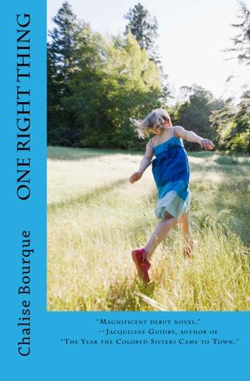
    Sometimes we do something so “right” in the setup of a story but we couldn’t say why—until later, in that rear view mirror of life. I’m talking about getting lucky with the “what” “where” and “a candy bar” in marketing my new YA novel, One Right Thing. I’ll explain.

    I knew my book’s title (any book’s title) was important. I just hadn’t focused on the reasons why. So, I hadn’t thought how helpful my title choice would be. One Right Thing is a character driven “family drama” that includes teen pregnancy and sexual abuse. A few months ago, in a fit of absentee-agent-desperation, when my beloved book hit my deemed quota of rejections (Can we say 4 X 10, everyone?) I considered changing One Right Thing to “Sex 101.”

    Why?

    Must you ask?

    Put “sex” in anything, probably even a picture book, or a recipe, and you’ll double your hits! Swapping out One Right Thing for “Sex 101” would have been a sell-out. Worse, it wouldn’t have held the marketing magic One Right Thing offers.

    You want your title to be memorable and unique. And not overused! Run a check to see what other books, and on what other subjects, already have “your” title!  And you want your title to give away a bit of what your book is about. Even though mine is about pregnancy, it’s almost, not at all, about sex. And you want your title to issue a kind of invitation, a “Come take me off this shelf!” plea. One reason I think One Right Thing works is people instantly want to argue with anything so one dimensional and dogmatic. “Who says only one?” “Why only one? Why not two?” “What’s this author’s one right thing, anyway?”

    NPR had an essay contest a few years ago called “This I Believe.” Their entrants were mostly adults. With the similarity between “This I Believe,” and “One Right Thing,” I decided to sponsor a national contest for the 12-20 age group. This contest will keep many in my target audience saying and thinking my book’s title over and over: “Hey, Joe, what’s your one right thing?” “I dunno, man; I’m deciding. What’s your one right thing?”

    We want, our readers thinking about our titles—pondering them, looking through the pages, figuring out what the titles mean. Make your title work for you. My book also looks at abortion and adoption. The idea isn’t to proclaim “one right thing,” but to get people talking about what’s right. For them.

    Can you make your title into a contest? Can yours get mileage by lining up with a product? Something going on in the news? Something people know, maybe want, before they even know they want your book?

    The next stroke of genius… okay, luck… is the “where” in my story. Books with a firm locale, that name streets you could go and stand on, intrigue me. Don’t they you? So, without seeing what a coop this would be, I set my novel in the town where I grew up. I now find that I have a natural and eager audience in the readers in this area. And it gives me a launching pad for my book and contest with the teens in Manhattan and Junction City, Kansas, where I started out. I’m beginning my book tour there because many local readers will be already interested in buying it. They’ll want to see if they can decide where, exactly, Maggie and her father lived, with all his broken down cars in the drive. Which hill is it where Skylar takes Maggie the first night they stand beneath the harvest moon and kiss? Do you have a place that burns with memories for you? Might it be a setting for a book?

    The third marketing coop is, again, pure luck! Now, fun! Skylar, my hunky, male protagonist, devours Score candy bars. Get the double meaning? In football, and in life, Skylar is a jock, a risk taker, a boy with a appetite. He’s always hungry and… he always wants to score. How am I making use of this food item in marketing? And how might you put something like this, on purpose, into a piece of writing? Everyone likes getting a free book. Even better if it comes with a candy bar!

    One Right Thing is a “print on demand.” I jumped in the first day and bought 100 “seed” books, books that—often—I send out, gratis, upon the waters of the reading world. I also bought, on sale, a huge box of Scores. When I give a librarian, or a teacher, or a teenager, a copy of One Right Thing with a goal or request—“Might you review this for me?” “Can you “like” this on your Facebook?” I also give them a Score candy bar. “Why the Score?” they ask. I smile and say, “Read the book; you’ll know!”

    Bonus marketing creativity… I ordered new business cards that have the book’s cover on one side and my picture and how to reach me on the other. I give out five cards a day, to five different people, even if that means, as night nears, I give one to my neighbor, walking his poodle. If spreading the word about One Right Thing does nothing else, it’s increasing neighborliness. Poodle and I are getting to be great pals.

    Last: always—like your purse or wallet—carry your new book everywhere you go, every time you leave home. Studies show that the first time you see something (i.e. my book jacket) you only “see” it.  “Okay,”your eyes report, “that’s a book.” The second time you see something (again, my book) the information becomes: “There’s a book and I’ve seen it before.” The third time you see my book, your brain makes a leap. It says: “I see this book all the time. Maybe I should read this book!” And, of course, you should!

    Good luck when it’s your turn to take on marketing.  Write and share with Lisa and me your creative marketing ideas. Lisa will, and I will, be excited to hear from you. I thank my generous friend, Lisa, for sharing her blog space with me this month.

    For you Kansas City readers, you are invited to a book party for One Right Thing on Thursday, Oct. 18, at the party room of Sulgrave-Regency condominiums from 6:30-8 p.m. Please come!

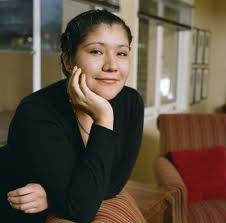
    Chalise grew up in Manhattan, KS, and graduated from Kansas State Univ. She freelanced for 20 years, but her two favorite works are: Rain Forest Girl, a nonfiction children’s book about adopting from Brazil, and her most recent work: One Right Thing, a fiction YA on sexual abuse and teen pregnancy. You can reach Chalise – and she welcomes being reached – on her website: www.chalisebourque.com

  • Interview with Hakim Bellamy, Albuquerque’s first Poet Laureate

    Most Albuquerque-ans are familiar with  Hakim’s contribution to the Albuquerque creative community, and, of course, his great success as a slam poet. I hope that this interview, done before his appointment as city poet Laureate, will provide a small glimpse of Hakim’s generous character and his approach to creativity. As always, a poem and a brief biography follow the interview.

    1. Tell me about your current projects and what they mean to you.

    Lately, it’s been about experimenting and putting what I do (poetry and performance) in “unsafe” spaces. Beyond the typical criticisms of the poetry slam scene from which I come, it is oddly a very safe space (in regards to artistic risk). Once you figure out your performative voice, you will be hard pressed to be challenged beyond it. Beyond the measure of the slam (i.e. wins, losses, teams made, championships won, etc.), you want to be challenged as a writer/performer to do something innovative. I prefer to measure success by how diverse is your repertoire of work, or how many different people who would NEVER go to a slam, have heard and appreciated your work. The risk is not in preaching to the choir, it’s preaching on the street corner to atheists, who walk away contemplating believing in something…even if that something is belief in another human being or humanity itself. To that end, I’ve been shape-shifting my poetry into music lyrics, my performance into theater and my events into jazz/hip-hop hybrids at Jazzbah ABQ on the 1st Tuesday of every month. I am working with my creative brothers Carlos Contreras and Colin Diles Hazelbaker on putting together a tour of Urban Verbs: Hip Hop Conservatory and Theater for the college/music/theater festival circuit in the spring of 2012. The Urban Verbs outfit recently became officially represented by 1680PR and is a format that allows us to put poetic dialogue in front of non-poetry audiences. But poetry will always be my ground, and right now I am preparing pieces for the new year, which really means MLK Day and Black History Month, for my 4th year at Amy Biehl High School’s Day of Service and the NAACP MLK Ceremony at the Roundhouse in Santa Fe. Writing poems about the #Occupy movement has been fun and easy lately, because it is easy to write about something you are passionate about.

    2. How do you “cultivate creativity?”

    By living with reckless abandon. You have to fall, and hurt, and get up and fall again to be able to write. I’ve been falling my entire life. Falling in love, falling for bullshit, falling up and learning from it all…and then writing about it. I immerse myself in other arts. As a writer, I need to hear music, see a show (theater), watch documentaries (I am a documentary junkie), play with my son in the park, take in an art exhibit…creativity begets creativity. That’s why movements like the Harlem Renaissance, Black Arts Movement, Beat Movement, are contagious. Viral paradigm shifts that permeated everything from film and music to cooking and architecture…I think that creativity is a context, not a construct and it can be created rather than waited on…like a strike of lightning.

    3. Is poetry important to community? How and were do these concepts intersect for you?

    Poetry IS community. When we start talking AND listening to each other, becoming aware of one another, and ultimately, are forced to acknowledge and perceive each other, we have a relationship. A community is a web of relationships. Poetry fosters community. Buying a book by a local poet supports the local economy. That’s community on a small scale. However, going to a slam where 12 poets read beside the feature (perhaps the author of said book), allows 13 voices into the fray, with the requisite attendance and participation of the studio audience, and voila, people are feelin’ other people. Community is what most people’s poetry is about, with all of it’s marvelous imperfections, profundity and absurdity.

    4. How do you protect your creative space, both literally and figuratively?

    I don’t. I leave my creative space exposed. That works for me. Doesn’t work for most people. Most people feel like there is some sort of decorum or maturation in the masquerade of public/private life. They pretend that someone who, as I like to say, lives their life out loud is either obnoxious, egotistical or immature. They think the teen that tweets their every emotion, relationship failure or heroic moment is vain or juvenile. I look at them as brave and transparent. Yes, my poetry is like my Facebook status or my Twitter feed (and soon Google+, so lemme show them some love here!). I will show you my self-righteous, save the world side (probably too much as my critics say), however will also show you my flawed, petulant, hurt and scared sides…there’s no need to pretend I always act 33 and positive when I do not. So expose my closet of skeletons in my poetry and my social media. However, that door to that closet has to be as open to air dirty laundry as it has to be open to shine some light and import some creativity in as well. The open wound has always been attractive to poetry audiences. Being open to failing in front of an audience increases the possibility of succeeding in front of an audience…even if it is audience of self, an audience of one. Everyone wants to look like they have the answer in the public eye, or like they have it together. We know from some of our greatest artistic geniuses that there is nothing “together” about brilliance. And though I certainly do not yet conceptualize myself as brilliant, I’m a fan of NOT having the answer. I’m a fan of thinking out loud. Thinking in public should be just as valued as always having the answer in public. As a matter of fact people should think in public more often. Unlike thinking in private, it rarely gets mistaken for not thinking at all.

    5. Discuss the interdependence among performance art, performance poetry, and written poetry (or poetry on the page).

    I think I touched on that. They are all part of a paradigm, the waves of influence in an artistic movement all dance in the same ocean. They move ships on the surface and in that regard, they shape our reality. They are the varying axes of a Cartesian coordinate system. The x, y, and z axes correspond to performance art, performance poetry and written poetry. Together they locate an object in a specific place, time, era, generation…like three people looking at a glass on coffee table from different angles and providing data on where that glass actually exists in time and space and what it looks like. We need them all to have an accurate description of reality, however subjective that is.

    Preamble: It is quite an honor to be asked to sort of, interpret, in a way, Kathleen Ryan’s compositions. 3 pieces, I was given, Tangle Release & Bless. Around 3 and a half,  three and 2 and a half minutes, respectively. I fell in love with them all because they series…Tangle, Release and Bless, mimic the cyclical nature of life…fight, let go or flow, and reward…whether that be in experience, understanding, prosperity, or just the satisfaction of getting past it…whatever it was. It felt complete…and before I interpret Kathleen into Hakim-speak…I must say, “complete” is a great adjective to describe Kathleen’s work. My interpretation:

    Silent Sanctuary – by hakim bellamy

    The poet entered the sanctuary
    As a cynic not a sinner
    As a seer
    Not a sayer
    This time

    This time
    He was looking
    For the word

    This time
    He needed inspiration
    More than he needed
    To be inspiring

    And he was listening
    For once
    Maybe twice

    The poet entered the sanctuary
    As a sentencer
    But not like them
    Not a judge
    But one who strings words
    Into rosaries
    That protect us
    From not talking to each other
    That shackle us to communities
    For life

    The poet entered the sanctuary
    Stood in the doorway of silence
    Praying to be met with
    Music, mantra, melody
    or even magic

    He was met with none
    As he crossed the threshold
    Between craft and creation
    As he has learned
    On the street

    That science ain’t shit
    Without sanctimony
    That anyone can read the notes
    But it’s how you play’em
    Anyone can write and read
    A word
    But it’s how you lay’em
    How you say’em
    Anyone can read a holy book
    But it’s how you live it
    People sleep under sheet music
    All the time
    And don’t give a fuck

    It’s how you make love

    The poet entered the sanctuary
    To have his French pardoned
    Amongst other things

    But was disappointed
    Because there would be more French

    Disappointed
    That God’s people
    Were worshipping with mouths closed

    Disappointed
    That God’s people
    Were worshipping with asses still

    Disappointed
    That Heavenly people
    We’re afraid to love one another
    To touch one another
    To dance
    Together

    Confused
    That they could read
    A whole book
    And have nothing to say
    That they could read
    An entire hymnal
    And have nothing to sing
    Nothing to dance

    Who could read
    And entire volume
    Of divine poetry
    And then pray in silence?

    So the poet left the sanctuary
    Back to the curbside pulpit
    Where pain
    And worship
    Both have to be louder
    Than the traffic

    Where God is like a superhero
    And you only ever see her
    When your life’s in danger

    And unlike the church folk
    Cause of the nature of how he lives
    He sees God everyday
    Doesn’t even have to pray

    But when he does
    And when they do
    They have a novel on the tip of their tongues
    And God like stories
    A lot

    But what the poet forgot
    Is that their poetry
    Comes from silence
    Not from sounds

    And such poetry
    If its good
    Leads back
    To silence
    Again.

    Amen.
    (c) Hakim Bellamy August 20, 2011

    Hakim Bellamy is a national and regional Poetry Slam Champion and holds three consecutive collegiate poetry slam titles at the University of New Mexico. His poetry has been published in Albuquerque inner-city buses and various anthologies. Bellamy was recognized as an honorable mention for the University of New Mexico Paul Bartlett Re Peace Prize for his work as a community organizer and journalist and was recently bestowed the populist honor of “Best Poet” by Local iQ (“Smart List 2010 & 2011”) and Alibi (“Best of Burque 2010 & 2011”).He is the co-creator of the multi-media Hip Hop theater production Urban Verbs: Hip-Hop Conservatory & Theater that has been staged in throughout the country. He facilitates youth writing workshops for schools and community organizations in New Mexico and beyond. Currently, Hakim is the Strategic Communication Director at Media Literacy Project. You can also read poetry by Hakim at 200 New Mexico Poems: http://200newmexicopoems.wordpress.com/category/hakim-bellamy/
  • From Icebreaker to Poem Prompt

    This week’s prompt is an adaptation of a great ice-breaker activity in which many of you may have participated at some point in your lives; but  instead of getting to know your peers, you get to write a poem.

    Write three statements, two of which are true and one which COULD be true, but is not. Use the premise of these statements as a basis for a poem in which the reader cannot easily discern if the speaker is reliable. This may feel like a perfect prompt for a narrative poem, but experiment and see what develops.

    Most of all, have fun!

  • Interview with Poet and Editor, Tanaya Winder

    Upon our nearly simultaneous returns to Albuquerque after adventures took us afar,  I had the opportunity to catch up with friend, fellow poet and former work-shop peer Tanaya Winder. She has been busy  in the most worthwhile of ways since our days of collaborating poetry in Joy Harjo’s poetry class, and clearly understands the challenges of an emerging writer. I am happy  to share tales of Tanaya’s experience and strength in today’s interview. Please enjoy Tanaya’s lovely poem, which is followed by our interview.

    —–

    measure by measure: the body begs  
    by Tanaya Winder

    at the soul’s release please do not leave.
    The last crescendo – breathing and
    the body intertwined, two hands
    offered as a gesture like grasping at butterflies,
    longing to hold something precious.
    The legatos of trying –
    hear the search in continuous acts,
    the staccatoed beats.
    Dal capo al coda,
    go back to the beginning
    in the music of being human,
    the final score and the counterpoint:
    hands outstretched as if
    to say I cannot stay

    —-
    You have accomplished quite a lot since we attended a Joy’s  poetry workshop at UNM together. Tell me more about what you have been up to.

    Since Joy’s workshop in 2008, I’ve been writing as much as I can. Entering the MFA world was quite different than I expected. I imagined entering a community of fellow writers who were all so passionate about writing that they’d discuss it continuously, and through that discussion inspire each other. This isn’t to say that I didn’t find any inspiration at UNM, I did. I met fellow writers who enjoyed writing and even some who felt it was their life’s calling; but still, I felt something was lacking. Fortunately, Joy Harjo took me under her wing and agreed to let me take an independent study with her the semester after our poetry workshop. That independent study ended up helping me get involved in my biggest and most influential project so far, “Soul Talk, Song Language: Conversations with Joy Harjo.”

    Joy mentioned wanting to put together another collection of interviews. We ended up really connecting in our views. I read her work and she read mine, so it made sense for us to collaborate. I spent the next two years assisting her with her book and was credited as co-editor of the collection. During those two years, I also ended up taking time off from the MFA program. I felt inundated with the teaching load and coursework. I wanted space for clarity and time to read what I wanted to read, to write what I wanted to write. I moved to Boulder, Colorado to work as the Assistant Director for the University of Colorado at Boulder’s Upward Bound Program. It was a good move for me physically and mentally.

    In Boulder I started training for my 1st half-marathon and since then have completed 4 half-marathons. I also was able to take classes in CU’s MFA program, which offered a variety of courses and subjects that weren’t available at UNM. One month in my lyric poetry class gave me the inspiration and insight I needed to view poetry in a completely different way. Inspired by the coursework, I wrote the poem “The Impermanence of Human Sculptures” in an eight-hour sitting. I went on to edit the poem twice and submitted it for the “A Room of Her Own Foundation’s Spring 2010 Orlando Prize in Poetry” and ended up winning a $1000 first prize. I took that as I sign that I was where I needed to be.

    You’d be surprised how much writing/work you can get done with a steady 8 to 5, 40 hour a week job. I read what I wanted to in the evenings, jotted notes, and even started a writing schedule. I’d wake up at 6AM every morning to write for at least 30 minutes, even if it was just stream of consciousness writing. On weekends I didn’t have any “homework” that I was required to do, no grading, or prepping for classes – all I had was time and I was grateful for it. I found a writing partner who recently moved to Boulder after completing her MFA in screenwriting. We met at coffee shops on Saturdays and Sundays to write and chat about writing. It was then that I realized – I am, indeed, a writer. I didn’t need a program to write, I didn’t need a teaching assistantship and I didn’t need a “workshop.” All I needed was determination to write. A poet-mentor of mine told me that the hardest part of finishing the MFA is continuing to write; he told me he believed I’d make it if I kept up with the writing I was doing. In my time away from UNM and my MFA program, I published 12 poems, 1 interview, 1 essay, and got the book deal with Joy Harjo through Wesleyan University Press.

    I did realize that while I don’t need a MFA to be a writer, I do need it if I want to teach. As someone who absolutely believes that poetry is important to the community, I want to be able to teach in both university and community settings. In my first year at UNM, I felt the intersection between community and poetry was somewhat lacking, so I decided to drive home to my reservation once a month to teach a writing workshop at our local library. I loved it. It fed my soul and people enjoyed it. They kept coming back each month.

    I think it’s important for poetry and writing to have presence in the community because it reminds you why you’re doing what you’re doing. Sometimes writing can be so solitary. You write, research, write, edit, revise, and write some more. You submit, get rejected, submit again, and again until (hopefully) acceptance. Aside from the occasional reading/performance we writers rarely get to see and interact with our readers, but in community work you get to interact with readers and help others learn how to render their own experiences through story and words. I am a person who hopes my own writing and poetry reflects the times and the needs of society; without interacting with the community the poetry cannot attempt to reflect communities and so I believe poetry must intersect with community. Poetry has the potential to create community for people who are searching for it by providing a space to interact and share experiences on the page.

    But finding balance between teaching, community work, and writing can be difficult. I try to think of writing like working out: you don’t find the time for it – you make it. Like exercise, I find that poetry is necessary for me to maintain my health. Now that I am back teaching at UNM and finishing up my MFA I don’t wake up at 6AM to write. Coursework and all that is involved in teaching takes up a lot of time, but I still make sure that I put in at least an hour of “writing work,” which means researching or revising if I am not creating something new. I use goals to help force me to write by looking up special calls for submissions and tell myself that I am going to apply to them. I find deadlines and use a planner to fill in dates where I tell myself that I will submit to at least 3-5 magazines/journals a month. Even if I don’t have something “ready” I send it anyway to keep myself in the habit of writing and submitting. All of these, of course, are small goals in terms of the big plans I have.

    It’s important to dream big. In the back of my mind I tell myself I want to have collections of poetry published and one day even have my 1st collection win a 1st book prize. I want to be a Stegner Fellow and dream of becoming a U.S Poet Laureate. I’m well aware of the odds of some of these things actually happening but that doesn’t keep me from dreaming because the dreaming pushes me to work harder. I know I have a lot of work to do before I get to where I want to be with my writing, but that’s the fun of it. You don’t get to where you want to be without putting in the work, and that’s true of both life and writing. Sometimes you sit there and re-work a poem revising lines, individual words, and structures until it seems like a big mess and then…clarity. The funny thing is you wouldn’t have gotten to a point of clarity without diving into the wreck and coming out on the other side. And hey, that’s life, that’s writing.

    “Soul Talk, Song Language” by Joy Harjo and Tanay Winder are available at Wesleyan University Press  through their website at http://www.upne.com/0-8195-7150-4.html

    —-

    Biography:

    Tanaya Winder is from the Southern Ute and Duckwater Shoshone Nations. She graduated from Stanford University in 2008 with a BA in English. Tanaya was a finalist in the 2009 Joy Harjo Poetry Competition and a winner of the “A Room of Her Own Foundation’s Spring 2010 Orlando Prize in Poetry.” Her poems have appeared in Cutthroat magazine, Yellow Medicine Review, Adobe Walls, and Superstition Review, amongst others and are forthcoming in Drunken Boat magazine. She teaches Composition and Introduction to Creative Writing at the University of New Mexico where she is currently pursuing her MFA in poetry. She is currently the Assistant Director for the University of Colorado-Boulder’s Upward Bound Program – a college prep program for over 85 Native American high school students from different reservations all across the country. In her free time she enjoys coffee, karaoke, and teaching a monthly writer’s workshop at the local library in her hometown, Ignacio, CO.

    Tanaya also writes a blog “Letters from a Young Poet” at  http://tanayawinder.wordpress.com/

  • Help Yourself Prompt

    Here is my version of an exercise that’s been floating around the writing world for some time. It’s simple, straight-forward and pretty powerful. Please complete each step before moving on to the next.

    —–

    First, list the things in life that get between you and your writing and creativity – even those things that are legitimate, like taking care of the kids and washing the dishes. Include on this list any pesky internal obstructions and voices, like “I can’t write about that, it would hurt ____.” Make the list as long as you have time for – you can return to it for future writing exercises.

    Second, read over your list and select one or two things that are particularly vexing for you at this very moment. It might be different the next time you approach this exercise – that’s fine. For now, go with your instinct and choose one or two items from your list that are really giving you a tough time or bogging you down in some way today.

    Third, imagine yourself in a private sanctuary or someplace like Superman’s fortress of solitude. You are safe and everything you say is completely protected and will never be heard by another living soul. Spend the next 20 or so minutes writing, in first person, a detailed description of a specific time you wrestled with one of the challenges on your list. Where did it happen? When? How? It’s important that you don’t generalize here. Be as specific as you possibly can.

    Fourth, reread the story you’ve just written but change the voice and perspective from first to third person (that is, change every I to a she/he or to a proper noun – like Joe). You may need to adjust verbs while you’re at it.

    Fifth, do not continue until you’ve completed step three.

    Sixth, read and listen to yourself as you read the new story (aloud or silently in your fortress of solitude). Put yourself in the role of sympathetic advisor and offer some useful, helpful and empathetic words of support and advice for the person (that’s you) in the new story. Notice how you feel a little lighter and more empowered?

    You can use these steps as a kind of template with which you can experiment in order to overcome writing or any creativity block. It is adjustable and can be made to fit any circumstance.

    Happy writing!

  • Night Owl by Ann Neelon

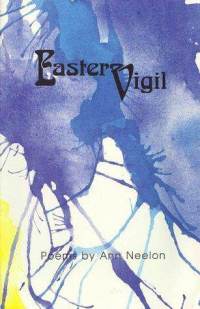
    This poem comes from Ann Neelon’s first collection of poetry, “Easter Vigil,” which won the 1995 Anhinga Prize for Poetry. Joy Harjo, judge of that year’s contest, say’s this about Ann Neelon’s collection:

    It is rare to come upon a poet with such a wide ranging vision as Ann Neelon. She’s a risk taker with heart, a poet who in in the world as a compassionate observer. The poem’s deserve your attention.

    Night Owl by Ann Neelon

    From you, I inherited this starry flesh, The night is young, the night is young — my voice is your voice in endless mimicry. Thirty years ago, sleepless and hungry for quarry, I caught you drinking milk of magnesia, staring into the kitchen sink as into a deep well, Father, if you had jumped in, I would have had to follow. How many times I space-walked toward you across the pock- marked moonfloor, triumphant in my pajamas before the less courageous world, Gravity was your unfailing argument: just what, young lady, do you think you’re doing up? Tonight, bills unopened, heart too in arrears, I remember how the muscles in your face relaxed. To ease your cares, it was enough for you to know that I didn’t have any. And so we discussed kindergarten, the moon and the stars. — Ann Neelon is a native of Boston and a graduate of the MFA program at the University of Massachusetts, Amherst, and of Holy Cross College. She has been a Peace Corps Volunteer in West Africa, as well as a Stegner Fellow and Jones Lecturer at Stanford Univeristy.

  • Interview with Kansas Poet Laureate Denise Low

    This week’s interview with Denise Low marks the beginning of the new Poet Laureate Series here at ZingaraPoet. Check back frequently for future interviews with Laureates from all over the U.S.

    I first became familiar with Denise Low when I was an undergraduate student at Washburn University and was given a copy of “Kansas Poems of William Stafford,” which she edited. I read the collection, found legitimacy in its pages and figured anyone who put together a collection like that was all right by me.

    Later, I discovered and read Low’s early collection of poetry, “Spring Geese.”  I think it resonated with me because, like the poems I write, this collection contains poems about that Kansas environment and natural history.

    Fast forward to November 2010. I’m living in Kansas City  and learn that Denise Low, second Poet Laureate of Kansas, will be reading at The Writers Place to promote her latest collection,  “Ghost Stories of the New West.”  Nothing could make me miss it.

    The reading that night was well attended  and Low did not disappoint. She is a dynamic reader and a gracious poet. I was thrilled to get a few minutes of her time to discuss poetry news and brag about my Alma Mater – home to Kansas’ first poet Laureate, Jonathan Holden. I did not know then that I would someday be asking her for an interview, but when the idea for a poet laureate series nudged my imagination, she was the first person I thought of (and, consequently, the first I asked).
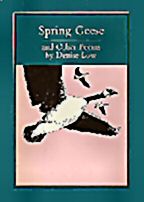
    In this interview, directly following Pocahontas, Denise discusses her revision process, the current state of the arts in Kansas, and encourages poets who may be questioning their dedication to their craft. Her biography follows the interview as do links to her blog and website.

    Emjoy!

    Pocahontas: A Portrait

                                    In memory of Paula Gunn Allen

    Oval face     eyes turned aside    

    high collar, ruffled.     Once: a favored child              
    cartwheeler      envoy between camps
    student of  English      daughter of Powhatan           

     wife of Kocoum      political gamepiece          

    kidnap victim of Argall      forced bride
    converted wife of Rolfe      lady in wooden rooms
    awaiting a child           mother of Thomas

    literate Christian      forest Madonna

    tobacco cultivator     London celebrity
    ailing martyr.      Her words “Everyone must die.”
    and “It is enough that     the child lives.”

    Oil portrait filigree    tatting on a stamp

    lace-wreath collar     the woman named Matoaka
    narrowed-eyes look     a few days before the grave
    frozen obliqueness      now the last oval face.

    ——

    What did you take away from your experience as second Kansas Poet Laureate?
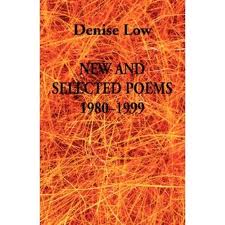
    Being poet laureate of Kansas was a great honor, and it helped me appreciate the educators, writers, arts administrators, and librarians across the state. Sometimes in a capitalist society the arts, especially poetry, can seem frivolous, but I came to understand how word arts connect to most skilled fluency with language. Literary uses of language impel readers to learn history and context. This is not a time in history when superficial reading will suffice. Poetry trains its readers to read closely and with a mind open to unexpected associations. It is essential to understand multi-layered communications in the public, social media, and private realms.

    How does poetry bring or add meaning to your life?

    1. First, I became involved with poetry so young, that it is hard to tease out how it, among other experiences, add meaning to my life. It’s a spiritual practice—I do believe that learning the discipline of language is one of many paths to enlightenment. It requires engagement with reality, not neuroses. Observation and reflection are the polarity, and syntax the means along the way. So poetry keeps me connected to immediate experience, and it makes historic tradition collapse into the present moment. We use ancient words, and each use reinvigorates them. I cannot imagine my life without poetry.

    2. Also, poetry helps me understand my multidimensional identity. It connects emotion, ideas, and spirit to the locus of body. And so it helps sort out the chaos—with grammar, syntax, image, and sound all coordinated into coherence. If a person visualizes a crystal, that sense of order is soothing. Likewise, and on more levels, poetry creates serenity—even poetry about hard truths.

    How do you protect your mental and physical creative space?

    I have arranged my days to create writing time—easier now that my child- and elder-caring years are behind me. The importance of my writing is an essential understanding in my marriage. I’ve claimed a small but nice room in the house for an office—it has a great view of the back yard—which is critical to my writing. My family, especially my husband, understands this is my calling. That support is invaluable.

    Tell me how you approach revising your work.

    Often. I write and rewrite. I have blind spots and repeat obvious words or miss opportunities. Once in a long while a poem comes out in one piece, but not often. To me, the editing is also very creative, and it gives me the opportunity to make better crafted writing. I’ve often been in a writers group, and I’ve worked with editors, so I’ve become impersonal about trying to improve work rather than treat it as a precious emanation from the great-poet-cosmos. Like William Stafford used to say, “Editors are our friends.”

    In your 2006 interview with Miranda Ericsson, you mentioned you were thrown lifelines at crucial moments in your life. Can you elaborate on these lifelines? How did they manifest and how did they help?

    I was about to abandon poetry and commit to developing prose projects when I won the Kansas Arts Commission Literary Arts Fellowship in Poetry, in 1991. That program was one award every two years to a poet in Kansas, and it was $5000. That was summer support plus a computer. Then in 2007 I became poet laureate for Kansas through the KAC, again. Of course, all those programs are suspended because of politics right now. These awards really helped me have the time needed to write and publish. I have been so fortunate to see so many aspects of the writing process and how it connects to audience. My next mission is to help restore these essential programs.

    Currently, I am president of the board of directors for the Associated Writing Programs, and through this role I’ve been able to see a wide range of programs that serve poets and other writers. All these experiences deepen my understanding of how crucial creativity is to being a conscious, contributing citizen. Creative writing is, I believe, the deepest form of literacy. If you can write a poem, you can assemble your children’s toys, maintain your car, troubleshoot your computer, write grant applications, and select factual information from the bovine excrement in the news media.

    How does keeping a blog fit in with your overall creative endeavors?

    I’ve had some illness this summer, so I’m very behind on my blog. I want to use it as a forum for book and reading reviews, because my region and my literary genres are so underserved. Some fabulous writers get overlooked because of poor distribution and poor publicity. Blogging helps me feel empowered to present writers of merit. For starters, I’m thinking of Robert Day’s terrific book of essays The Committee to Save the World, Jo McDougall’s memoir, and William Trowbridge’s amazing Ship of Fool. These are terrific, first-rate works that will not be in the New York media. But the internet blogosphere is democratic, and I hope to take advantage of its strengths to promote some good writing.
    Have you any advice to share with writers who may be struggling to continue their craft?

    1. Yes—first, be professional. The novelist David Bradley told me this at a critical period in my life. A few people are able to work at other jobs all their lives and keep a parallel writer’s life going. These are few. Commit yourself to taking classes, being involved in a writer’s group, and other faster ways to learn than trial and error. I see many people who put off writing during their most productive years, retire, and then expect to have writing skills in a few weeks. My mentor Carolyn Doty told me it takes ten years to learn how to write a novel. I believe her. Putting off writing for practical reasons is the most risky choice—for example, your health may not hold up, and when you retire, you may not be able to write.

    2. The second bit of advice is to get up early in the morning and write—you have some good hours before work schedules. Go to bed early, skip TV, and use those early hours.

    3. Third, read as much as you can of writing that you admire and that relates to your field. One of the great paradoxes is people want to write poetry in great numbers, but they don’t want to read others’ poetry, even the greats. Trust me. Reading great poetry will not stifle your own originality.

    4. Write about topics that matter. Reynolds Price did a great presentation at AWP one year about looking for material that will make a difference rather than self-centered cleverness. Hundreds of thousands of books are published and self-published every year. As a writer, what contribution can you make? I find myself impelled to document as much as I can of suppressed histories and voices. This led to the Langston Hughes in Lawrence project and many others.

    What’s next?

    Oh, so many projects. I have a number of articles that need revising. A book of essays about Midwestern literature—Natural Theologies—is coming out from The Backwaters Press of Nebraska later this year. I believe this is the first critical book entirely about contemporary literature of this region. I’m finishing a grant on Cheyenne ledger art, which is amazing conjoining of image and glyphic text. I’m trying to write a memoir about my grandfather who was of American Indian background. I want to get back to some research on Langston Hughes’s family. More.

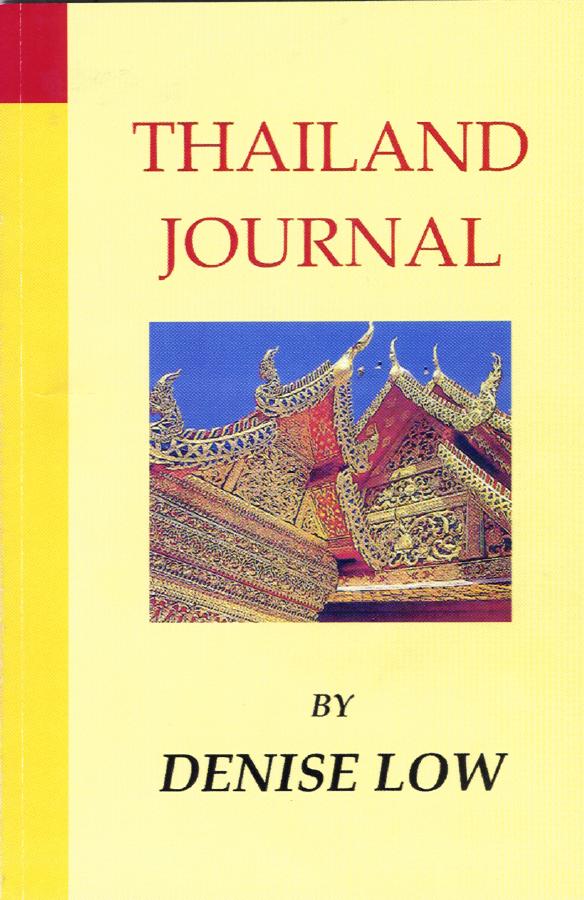
    Denise Low, Kansas Poet Laureate 2007-2009, has 20 books of poetry and essays, including Ghost Stories of the New West (Woodley), named one of the best Native American Books of 2010 by The Circle of Minneapolis and a Notable Book by the Kansas State Library & Center for the Book. Other books are To the Stars: Poets of the Kansas Ad Astra Project (Mammoth/Washburn University Center for Ks. Studies) and Words of a Prairie Alchemist (Ice Cube Press), both Kansas Notable Books; and Thailand Journal: Poems, a Kansas City Star notable book (Woodley). She has taught creative writing and literature at Haskell Indian Nations University, the University of Kansas, and the University of Richmond. She is 2010-2011 president of the board of directors for the Associated Writers and Writing Programs, and she has served that organization as vice president and conference chair. Awards are from the Academy of American Poets, The Newberry Library, Lannan Foundation, National Endowment for the Humanities, Kansas Arts Council, and Kansas Center for the Book. Her MFA is from Wichita State University and her PhD is from the University of Kansas. Her blog is http://deniselow.blogspot.com and website is www.deniselow.com

  • Write With Joy Prompt

    Today’s writing exercise is adapted from Rebecca McClanahan’s “Write Your Heart Out. ”

    We find it relatively easy to write when times are tying or when we experience grief, sadness or anger. We are, after all, encouraged to use our journals to vent about difficult situations so that we might work through them. Experience may have even taught us that this approach to our discomfort and confusion is preferable to sitting with these frustrations for an inordinate amount of time. McClanahan refers to this tendency to write only when in pain as the “foxhole syndrome: writing as desperate prayer.” When happiness returns, we suddenly have nothing to say.

    Perhaps this is because happiness so absorbs us that we don’t stop to think about writing. Maybe we fear writing about our happiness is tantamount to testing the fates. McCallahan writes that:

    French theologian Francois Mauriac called happiness the most dangerous of all experiences, ‘because all the happiness possible increases our thirst and the voice of love makes an emptiness, a solitude reverberate.’ Seen this way, happiness is a scary proposition. As our capacity for joy increases, so does our capacity to feel all emotions. So won’t we be sadder than ever when the happiness ends?(98)

    Or maybe we just forget to notice the small things that do make us happy. Our brains are finely tuned to notice the dangers that surround us and dismiss that which cannot immediately hurt us. If it is not a threat, we do not make note of it.

    Take some time this week to notice things that bring you joy, no matter how small, and make a daily list. Start with yourself – your eyes, hands, ears, nose, etc. From there, take in your surroundings and note that which bring you joy – music, books, a warm blanket and a comfy couch.

    This exercise only takes minutes a day and will result in a more joyful you.

    Good luck, and happy writing.

  • Merry, Happy, Poetry Prompt

    November drags major American holidays to the forefront of everyone’s attention. Christmas is close on the heels of Thanksgiving, though more and more, Thanksgiving barely gets its due these days. Less time to be thankful, more time for consumerism.

    But these are not the only Holidays that mark the end of the year. Really, year-end consists of at least four months in which several holidays occur. They include Labor Day, Autumnal Equinox, Halloween, All Saints Day, Dias de los Muertos, Veterans Day, Election Day, Winter Solstice, Chaunakkah, Kwanza, and New Year’s Eve. Oh yes, and let’s not forget the biggest of all, Festivus.

    For this week’s prompt, write a story, poems or essay about an end-of-year holiday, real or imagined, American or international, uplifting or depressing.

    Good luck, and happy writing.

  • Automatic Writing Prompt

    This exercise involves writing “automatically” for five to ten minutes at a time when the mind is in a slightly altered (but unimpaired) state. Ideal times for automatic writing include first thing in the morning, when tired, emotionally charged, cranky, elated, physically drained, late at night or anytime synapses are firing a little randomly. Ever wake up in the middle of the night to see a lunar eclipse or a meteor shower? Engage the same enthusiasm and devotion for your writing by setting your alarm for 3:00 am to write for ten minutes before going back to sleep. You don’t even have to leave your bed.

    Focus (or attempt to focus) on concrete images and sensory details. When your five or ten minutes are up, save the document and close it. Do not read what you’ve written.

    Try this approach a few times a day and/or for several days in a row. Once you have ten pages of automatic writing (doesn’t matter how many days it takes), read through them for passages containing images or ideas that seem interesting, weird, fresh, irreverent, inventive, astonishing or whatever. Underline or cut and paste them into a new document. Trust your instincts as you choose what seems right for keeping. You may discover that you don’t remember writing most of it.

    Finally, select fragments and ideas which seem to belong together or perhaps juxtapose in a particularly significant manner, and use them for the basis of a story, poem or essay.

    Good luck, and happy writing.

  • Interview with Poet Amy Beeder

    Amy Beeder is the author of Burn the Field (Carnegie Mellon University Press, 2006). Her next book, Now Make An Altar, will appear from the same press in early 2012. Her work has appeared in POETRY, Ploughshares, The Nation, The Kenyon Review, The Southern Review and other journals. She lives in Albuquerque and teaches poetry at the University of New Mexico. Amy has lived and/or worked in France (student), Mauritania (Peace Corps teacher), Suriname (elections) and Haiti (elections and human rights observation). Before teaching, she was was also a sous-chef, a freelance writer, and a political asylum specialist. She has been teaching at the University of New Mexico for ten years, is married and has two daughters.

    1, Tell me a little bit about your history with poetry – the when, why and how of your experience.

    A. Like most writers/poets, I started writing when I was in grade school: mostly poetry. I also took poetry workshops in college, but I never even thought of trying to publish anywhere beyond the small departmental magazine.

    I spent a lot of time after college (and then after graduate school) working overseas or in DC . I never wrote anything but journals during those years

    Basically, poetry remained an occasional hobby until I went to graduate school. There, even though my major was literature, I started taking workshops with a poet named Gerald Barrax. That’s when I started writing seriously.  A few years later (after another stint in Haiti), I decided I wanted to publish−a sudden mania!−and started sending out to magazines and contests. My big break came when I won the “Discovery”/The Nation Award in 2011. On the strength of that I was hired as an adjunct to teach poetry at UNM, which I’ve been doing ever since.

    2. Many writers have regular writing schedules and rituals which contribute to their writing and creative product. How about you?

    On mornings I don’t teach, and after my kids go to school, I sit at my desk with coffee and a sharpened pencil (which is only for fiddling around with or scribbling notes, I actually write on the computer). Often I spend awhile looking at other people’s poems, usually from whatever journals I’ve received in the last month, looking for a word I like, or looking through books on other subjects for an idea or interesting phrase.  I keep telling myself I need to write on a laptop at the coffee shop like everyone else. But I haven’t done it yet.

    3. How do you maintain mental creative space when you can’t be at your work?

    I talk to myself a lot.

    4. In your experience, how do writing and teaching influence each other?

    I love teaching poetry, but the influence it has on my own work is mostly to keep me from it.  I think most writers, if they’re being honest, would admit this. Both writing and teaching require considerable time and dedication, and both are kind of intoxicating when things are going well. It’s easy to let teaching push writing out of the way.

    There’s a great essay by Stephen Dunn called “The Poet as Teacher: Virtues and Vices,” in which he says that teaching can’t hurt your writing as long as you remain more of a poet than a teacher.  I try to keep this in mind. If a poem is going well and I need to keep writing, the lesson plan, critique, grading, etc., can wait a day or two.

    5. Tell me about any current or upcoming projects you are working one or hope to begin working on. How do your early creative dreams guide and inform these projects?

    My second book, Now Make An Altar, will come out either late this year or in January 2012.  I am working on the third book, which will probably take a few years. I write slowly.

    Read more about Amy Beeder at The Poetry Foundation. “The Sunday Poem” by Amy can be read at Duke City Fix

    A copy of Amy’s book Burn the Field can be purchased at Amazon.com

  • Write Despite Distraction

    Even writers with a room of their own have to deal with distractions. Family members, loved ones, and friends all quickly figure out how to encroach on whatever protected time or space a writer manages to carve out for herself. Fight fire with fire by desensitizing yourself to distractions. Set an alarm clock or kitchen timer to go off in increments of varying length, ten minutes for the fist session, fifteen or twenty for the second, five for the third, or whatever combination suites your needs. Try this exercise for a period of sixty full minutes if possible. Each time the alarm sounds, take just enough time to reset it, then get right back to writing.

    If it is difficult at first to shift your focus from alarm to page, and it probably will, try taking a few deep breaths and center yourself mentally by repeating the following incantation before returning to your writing: inhale and say,  “I am…” exhale and say “writing right now.”

    Remember, learning to regain your writing focus after a distraction is the goal of this exercise. It will likely feel uncomfortable and difficult at first, but will become easier with practice.Completing this exercise will give your brain a point of reference – a successful experience of dealing with distractions – that it can recall when more pressing distractions arise. It’s not possible to eliminate all distractions from life, but it is possible to learn to write despite them.

    Good luck, and happy writing.

  • Epistolary Prompt

    This past July I participated in an email based “poem-a-thon”  activity facilitated by my good friend Juan Morales. The following prompt is one I particularly enjoyed and am now passing on to you (with Juan’s blessings).

    Write An Epistle to Someone Who Inspires

    Below, is a description of the epistle form from the PoeWar website (http://www.poewar.com/poetry-in-forms-series-epistle/):

    Epistle (pronounced e-PISS-ul) is a poetic form that dates back to ancient Rome and to the Bible. It is a poem written in the form of a letter. The term epistle comes from the Latin word epistola, which means letter. It was used to express love, philosophy, religion and
    morality.

    Most people who think of epistles think of the Bible. Many of the books in the New Testament are epistles, especially the Epistles of St. Paul. The poet Robert Burns also frequently wrote epistles, as did Alexander Pope.

    Over the past hundred years, as the telephone took over for letter writing, letters became less personal and more formal or business related. The concept of writing letters to relatives, friends,colleagues and lovers went out of fashion. In the last few years,
    however, letter writing has had a rebirth of sorts as the Internet grew in prominence and people began to send e-mail to each other.

    There are no meter or rhyme requirements for an epistle. Epistle is more a form of voice and persona. A poet can address their epistle to a real or imaginary person and express their views or take on the character of a different writer. The wonderful quality of an epistle is that it can be such a freeing form. The tone can be formal or use very personalized voices. The poems can be many pages long or as short as a post card.

    Some things you should keep in mind when writing the epistle are who is writing the letter, who is the letter being written to, and how you would address that person. What would interest the writer and the recipient? How formal or informal would the writer be when addressing that person?

    Share your epistle in the comments section below.

  • Rites of Spring by Donna Vorreyer

    I discovered this week’s poignant poem honoring woman’s best friend in the first issue of the new online literary magazine, Mixed Fruit, published June 1, 2011. It is a bi-monthly periodical and the second issue, published August 2st, is now available. Enjoy!

    Rites of Spring
    by Donna Vorreyer

    Gardening, I come to the place
    where we buried our first dog, the dirt
    now sprouted with daylillies and sprigs
    of weedy thistle. My husband dug the hole
    in early fall when her hips began to fail,
    before the ground became unbreakable.
    She lasted until March, the plot
    covered in plywood and late snow.

    I pull the thistle’s gangly roots, hoping
    for orange blossoms instead of burrs,
    I try not to think of her bones beneath,
    the beetles that pick her carcass clean
    of the sleek, black fur that once velveted
    my hand. Ghost ants haunt the undersides
    of upturned rocks and branches, scribble
    their white calligraphy of industry.

    Our golden retriever limps up, nudges
    her grey muzzle at my elbow, collapses
    her own crooked hips beside me. She does
    not rise until I do, her front legs bearing
    the slow bones of her backside. I stoop to bury
    my face in her neck as if love could keep her
    from this dirt. As if love could fail as easily
    as flesh, as flower. As if it were that frail.

    Donna Vorreyer spends her days convincing middle-schoolers that words matter. Her work as appeared in many journals including Weave, Cider Press Review, qarrtsiluni, and Rhino. She is a contributor to the blog Voice Alpha, and you can also find her online at her own blog, Put Words Together. Make Meaning

  • Poet Interview: Colleen Maynard

    I met Colleen Maynard in Kansas City when I attended a poetry group at the Writers Place for which Colleen was facilitator. I felt an immediate affinity for Colleen and her style for approaching poetry, which is both perceptive and intuitive. We became friends outside of the group and though she is now in Illinois and I in New Mexico, we remain in correspondence and feel certain our paths will cross again some day. Colleen is among the kindest, gentlest people I’ve ever known and one of the many friends I am happy to have made during my eleven-month stay in Kansas City. I love what Colleen shares in her interview about living the artist’s life

    Here is Colleen’s poem, Kindling Walk, followed by our interview together. I’ve also included Colleen’s professional bio.

    Enjoy!

    Kindling Walk
    by Colleen Maynard

    1.
    After several blocks
    the welts from the sticks
    began to sear our cheeks.
    So we decided we had gathered
    enough kindling from the front lawns.
    The red door loomed around the bend
    just as
    one stick pierced Nora’s stockings.

    2.
    He took injured and dying things with him
    in the space underneath the scraggly pine trees.
    The way he spoke to them,
    there was a certain prodding in his voice
    that inspired shy kids to speak.
    Coming outside from the warm house,
    it was so dark he felt like whispering.

    Other of Colleen’s writings can be found at Fiction 365

    I know that you are a visual artist in addition to being a poet. Discuss how visual art and poetry intersect or synthesize for you. 

    As both writer and visual artist, words, images and ideas fuel my interest in the world. As a writer, my training as a visual artist remains firm, and as an artist I return to words and collecting. Growing up I burrowed into books and invented movie sets for their protagonists, i.e. re-fabricating a babysitter’s house as the creepy mansion in Nancy Drew and the Hidden Staircase, or the local Detroit Art Institute as the Metropolitan Museum of Art in From the Mixed up Files of Basil E. Frankweiler. I also inherited my parents’ love of old movies; by nine, my siblings and I were creating our own scripts, songs and choreography to perform and film. These performances had a gloss of imagination I applied to my life. I began noticing richness in place and site. I started writing poetry, where my characters lived in these exaggerated worlds yet held fast to some sort of transcendence or escape. My visual work focuses on technique and process, drawing attention to things like landscape and language. Lately I have been working on a body of work using tiny, accumulative pinpricks to create short, prose-like sentences upon paper. The writing and art-making play nice together. I cannot do one without the other and having two loves makes me feel less limited.

    Do you have any practices or rituals which help inspire you to work on your art?

    I wish I could say I’ve got down a morning routine–the writer in me most appeals to mornings–but my visual artist side tends to be more nocturnal, so I’m a little bipolar in my practice. Overall though, when I need to write or make something with my hands I react as quickly to it as possible–usually giving myself a 24 or 48 hour period to do it in. I find to get that extra surge of motivation I often need to write or create, I have to do something physical–a hard bike ride or short run helps without fail. It gets me out of the house, into a density of experience, and thinking in concise, fast terms.

    How do you make certain to spend time on your art or writing on a regular basis?

    It’s important to balance out research/inspiration and actually doing the work. When I’m strapped for time or low on energy I allow myself to hibernate, using the time to read, take notes, look up artists and materials, reconnect with any friends I may have neglected, etc… it’s important to have real-life experience from which to reflect your work. It’s easy to get lost in the big picture thinking at times– “in order to be the writer/artist I want to be, I have to work harder, be there more often”–but let’s face it, it’s crippling to put yourself and your work on such a pedestal. By breaking it into steps– “today, I’m going to spend 40 minutes in studio, edit one poem, and send it off to one journal” –it feels more fluid and honest–not to mention doable and tactile, which, I have to remind myself at times, is the main reason I create; to get messy, to get to carry it over to another day as an integral part of my life. Living a real artist’s life, I think, is much more heroic than creating a masterpiece that hangs in a museum.

    While most poetry doesn’t fit into any specific genre or adhere to any one description, there are useful ways to describe its aesthetics. Can you describe the aesthetic that your poems speak to or exemplify?

    Much like children that grew up idolizing books and movies, the characters in my bodies of work constantly confront their expectancy for larger-than-life physicality and emotions, and the alternating euphoria and discrepancies that emerge from this expectancy. I’m attracted to human vulnerability and moments of violence counteracted by calm narratives. My work comes off soft-spoken and not developed to shock the eye, yet once read, precise and unforgiving.

    Tell me about your future projects.

    As well as continuing the pin-prick on paper series, I’m doing a lot of fine-line drawings using pen, ink and collage that center around the idea of a child’s version of a fictional landscape (i.e. miniature dollhouse and plastic toys amongst items a bird might scavenge in an urban setting for its nest). I’m lately drawn to cast-off toys that I grew up with  and re-examining the relationships I had to them (toy as child, toy as talisman, toy as obligation, etc.). I’m also working on more narratives in the same vein as my 2010 self-published chapbook, Tiny Things, with its various girls and their ways of experiencing that adults often do not.

    ——-

    Bio:

    Colleen Maynard is a poet and visual artist. She is a 2007 graduate of the Kansas City Art Institute and has taught visual and language arts at the Mattie Rhodes Art Center in Kansas City. Her writing has previously been published in such places as the Australian-based Ceramic Art and Perception, and she is currently making a chapbook containing prose and drawings.