Author: Lisa Hase-Jackson

  • Three-Window Perspectives by Ellen Chia

    (The Blue Violinist by Marc Chagall)

    I.

    Your odes to love
    Have galvanized the birds
    From their slumber.
    Even the moon blooms
    With pleasure –
    Finally, a worthy mate to
    Breathe the blue air with.

    II.

    You drifted out of the window,
    Took the chair with you.
    Is it me you’re serenading to?
    You’re way too high up,
    Your fiddling’s lost on me.
    Tonight, the moon glows with
    A bouquet before her.
    Wait a minute –
    Isn’t that the same bouquet
    You bought me this afternoon?
    What’s with this love-flushed face?
    How about quitting this frivolity
    Before the window of opportunity
    Closes on you. For good.

    III.

    Swing by, Fiddler,
    Wash us grimy, dust-obscured
    Fragile things with
    A ditty of poetic bliss
    Before the city awakes to
    Taint us again, lulling us
    With its numbing mantra humming
    Money, productivity and more money.

    Ellen Chia enjoys going on solitary walks in woodlands and along beaches where  Nature’s treasure trove impels her to  document her findings and impressions using the language of poetry. Her works  have recently been published in The Ekphrastic Review, NatureWriting and
    forthcoming in The Honest Ulsterman, The Pangolin Review, and The Tiger Moth Review.

  • Bonfire of the Virtues by Jim Kotowski

    What if Hope were to nose-dive from the highest sky,
    Straight at a razor-sharp mountain ridge?
    Would She give up on the way down—could She?

    What if Faith entered that place
    Where 9 out of 10 lay, sick.  dying.  rotting alive….?
    The ruthless machinations behind?
    Would She abandon her belief—could She?

    What if Love faced
    The hate of the helpless,
    The hell of the heartless,
    Ill will run riot?
    Would She stop loving—could She?

    What if Patience looked on as my greedy soul
    Bullies one smaller and meeker to its will,
    Piles food on food, and need on need?
    Would She lose her patience with me—could She?

    What if Peace stood witness
    While gold-plated men
    Butchered and spattered the red-hearted people?
    Would She make war—make holy, righteous, gruesome war
    On War—could she?

    Should She?

    Jim Kotowski has been writing poems and songs since his teenage years, and mostly squirreling them away in notebooks and computer files.  Sometimes, he ventures out to read/sing them in front of an audience, which is always wonderful.  His latest chap book is called Honing Sanity.

  • Interview with Caroline Goodwin

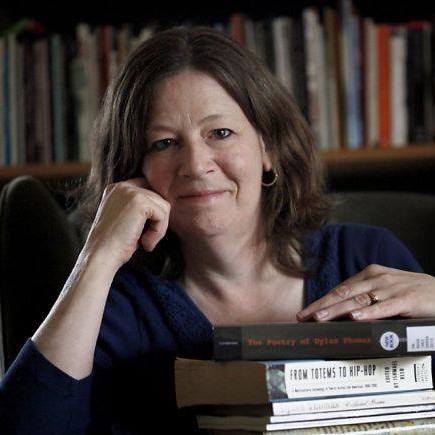
    I am very excited to share this interview with poet and memoir-ist Caroline Goodwin, whom I have known for a couple of years now. We met through OneRoom, a coaching service for creative writers, and I worked closely with her for a combination of 12 months, first when completing my poetry manuscript and now while working on my own memoir.  Please enjoy this enlightening conversation:

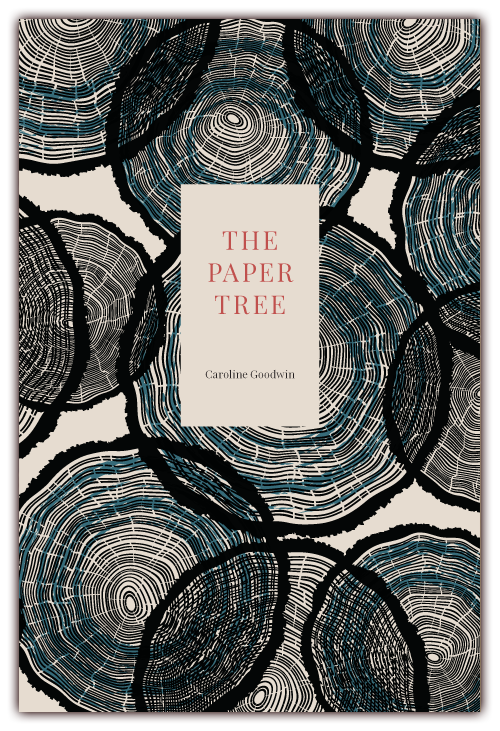
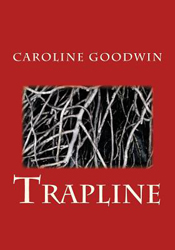
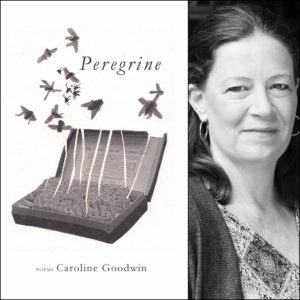
    Caroline Goodwin moved to the San Francisco Bay Area in 1999 from Sitka, Alaska to attend Stanford’s creative writing program as a Wallace Stegner Fellow. Her books are Trapline (2013), Peregrine (2015) and The Paper Tree (2017). She teaches at California College of the Arts and the Stanford Writer’s Studio; from 2014 – 16 she served as the first Poet Laureate of San Mateo County.

    The writing process often seems mysterious, even to writers who practice consistently. Tell me a little about your writing practice and how you keep yourself returning to the page. 

    I like to see it as an adventure, a process of discovery. When I’m connected to the work (and this has definitely come and gone over the years — I have gone through long and painful “dry” periods), I look forward to seeing what might occur. I find that if I make it a priority to at least look at the work early in the day, then often the rest of the day is at least partially spent connected with the developing poem. For example, I have two texts set up in my kitchen next to the stove, and my laptop opened to the previous day’s work. I make this a part of my nightly routine, like taking my meds. The texts are: Common Plants of Nunavut and Li: Dynamic Form in Nature. I am working on a series of poems that explores the environmental degradation of our precious Arctic region, infused with my grief journey after losing my husband in August 2016. I think of them as a series of love poems, both for Nick and for the Arctic. I have rules: every poem must be seven lines (I am modeling this after my friend Hugh Behm-Steinberg’s wonderful collection Shy Green Fields). I make my tea and stand at the counter until I have seven lines. I love seeing what comes out in each piece, and I look forward to seeing what the next challenge might be. It’s kind of a puzzle, and it feels like a spiritual practice to me because I depend on a lot of serendipity. I am aiming for a full-length collection of these little guys. They are really weird.

    I see that you have published two collections of poetry, one with Finishing Line Press and one with Big Yes Press. It’s easy to assume that once a poet gets a book published, it suddenly becomes easy to publish other works. How would you compare your experiences between your first publication and your second? Do you find it easier to publish now than before your first collection? 

    Actually I also published with JackLeg Press in 2013 — a print-on-demand book entitled Trapline. So each of my books has been a different experience. Publishing has changed so much in the last twenty years, as we all know, and there are lots of small presses making terrific books. So I wouldn’t say it’s gotten easier, because the creative work itself is the same (VERY hard). It’s a matter of hanging in there, networking, staying grateful and showing up, staying committed to the art form and putting your hand out to fellow poets. I’ve found each of the presses lovely to work with and most days I can’t actually believe I have 3 books in the world! I also have a tiny chapbook called Text Me, Ishmael, handmade by the Literary Pocketbook series in Wales, UK. Oh, and two more self-published chapbooks, Kodiak Herbal and Gora Verstovia. I sewed these books up myself, punching the holes for the spines with a push pin. It was fun.

    Since you are also a writer of non-fiction, tell me how the two genres dovetail for you. 

    Great question. I recently carved out a writing retreat for myself in Yellowknife, Northwest Territories, Canada. My goal was to finish a memoir about my daughter Josephine’s life and death (I’ve been working on this for more than ten years). However, I went to the Yellowknife bookstore and found a book by the poet Roo Borson. Well, before I knew it, my writing retreat was overtaken by a long poem that was exciting to me, that spun out from a line I found in her book: “unreadable book that will not close.” That line seemed, to me, to speak to the experience of grief. Poetry “won” and I stayed with that poem and the memoir was not completed.

    I also have three pieces of nonfiction published now. One is about my daughter Josephine and Sitka, Alaska (entitled ROY) and another recent piece entitled AMARANTH. This one surprised me because I finished it six days before my husband died, and it’s full of these crazy premonitions. And I just published an essay in the South Dakota Review entitled “What They Do”. Currently, I’m working on an essay about online dating. So I think I’d say poetry and nonfiction dovetail and help each other, distract from each other, feed and deplete each other, if that makes sense. At the end of the day, they simply help me to figure out what I really want to say about something. The prose is slow for me, but I do hope to finish that memoir someday, I just have to let my mind wander where and when it will. 
    What other creative practices do you pursue? 

    I knit and crochet (I love Granny squares) and hang out with my pug, Jimi Hendrix. I also like to go boogie boarding in the ocean whenever I can and I’m working on my home garden.

    I know that you are a writing coach with OneRoom in addition to teaching, writing, and publishing. How do you juggle it all? 

    Very, very, very, very, very chaotically and with a whole lot of help from the Universe. My motto is “slow and steady wins the race” and to give myself lots of slack. If I show up for my own creative work, even if I just look at it briefly, that’s a good day for me.

    Would you recommend writers get an MFA in creative writing? 

    I have always seen the MFA as a gift to the self. I went to the University of British Columbia partly because needed to get out of a relationship, so I didn’t apply anywhere else. I just knew I needed to leave, but still be close to Alaska. Luckily I had the resources to do so. It was one of the best things I ever did for myself. I still am in touch with and admire the poets in my workshop from grad school. It’s a privilege to have an MFA and I remain grateful for the experience and all it taught me about how to be a poet in the world.

    Are you working on any projects now? 

    Yes, the manuscript is temporarily called Common Plants of Nunavut. Nunavut is the newest, largest and northernmost territory of Canada. I like the name, and the fact that it was nearly named “Bob” (true story). I love the Arctic; each poem’s title is the common name of a plant. 

    When I was in Yellowknife I learned that the city is sitting on 237,000 tonnes of arsenic, the byproduct of a shut-down gold mine, the Giant Mine. That’s enough to kill every human on earth. The landscape is incredibly beautiful, and fragile, lots of colorful rocks and lichens. Many of my childhood weekends were spent on a lake north of Anchorage, and these experiences were profound for me. Going to Yellowknife was a spiritual journey back to the landscape of my childhood, so I’m writing about that. I started another manuscript entitled Old Snow, White Sun, which takes its title from a song by the Japanese acid rock group Kikagaku Moyo (Geometric Designs) and is about a recent love affair among other things. I also hope that my writing might play a small part in valuing and preserving this beautiful earth. I studied biology as an undergrad, so I love plant names. Plants are magical. They are the producers, really the only living thing that MAKES something helpful. They give us everything, really. So when I write I let the sounds of the names and also the ideas and emotions evoked come onto the page, interact, be weird, and possibly add up to a poem.

    Can you share one of your poems with ZPR readers?

    In a Time of Mourning
  • Manumission: A Codependent Romance by KJ Hannah Greenberg

    I gladly waived the earring ritual.

    In order to watch the dust puff up
    As your footfall took you away.

    In affranchisement of beloveds,
    Releasing damaging ownership,
    Is letting go confining outcomes.

    Never did I mean to enslave. Rather,
    You clung like bubblegum requiring
    Scraping, ice cubes, other surgeries.

    Stitching, yoking, enthralling’s
    The stuff of mixed-up partnering.
    I’m about liberation, unfettering.

    All the same, only jagged words,
    Chilled hugs, groupings of sorrow
    Unshackled your elect possession.

    These days, I think on past events,
    Question ever talking again among
    People, fear repeating our rapport.

    In the end, I determined vending
    Seized my dependence, realized
    Proprietorship thieved my power.

    KJ Hannah Greenberg captures the world in words and images. Her latest photography portfolio is 20/20: KJ Hannah Greenberg Eye on Israel. Her most recent poetry collection is Mothers Ought to Utter Only Niceties (Unbound CONTENT, 2017). Her most recent fiction collection is the omnibus, Concatenation (Bards & Sages Publishing, 2018).

  • Postcards from the Knife-Thrower’s Wife by Alex Stolis

    August 2 – Woodstock, N.B. Canada

    I’m a girl on a dragon-fly on the back of a horse heading
    straight into the wind under an unbreakable sky. You are
    not here. You are made-up words in an invented language
    spoken in whispers. I remember every detail of the world
    we created from scratch. I remember that day the moon
    eclipsed the sun and for a moment the earth turned cold.
    The sky turned deep green no stars in sight. You wrote me
    of a dream you had; lost, afraid and miles away from home.
    You heard the low beat of wings. You felt the steady pound
    of hooves and I readied myself for flight.

    Alex Stolis lives in Minneapolis; he has had poems published in numerous journals. Recent chapbooks include Justice for all, published by Conversation Paperpress (UK) based on the last words of Texas Death Row inmates. Also, Without Dorothy, There is No Going Home from ELJ Publications. Other releases include an e-chapbook, From an iPod found in Canal Park; Duluth, MN, from Right Hand Pointing and Left of the Dial from corrupt press. The full length collection, Postcards from the Knife Thrower was runner up for the Moon City Poetry Prize in 2017. His chapbook, Perspectives on a Crime Scene was recently released by Grey Border books and a full length collection Pop. 1280, is forthcoming from Grey Border books in 2019. 

    http://greybordersbooks.jigsy.com/alex-stolhttp://greybordersbooks.jigsy.com/alex-stolisis

  • City of Bread by Marc Janssen

    It was a gray day,

    Unrelenting gravel clouds shouldered past Mt. Shasta and filled the sky with its dirty dishwater color when the whistle sounded.

    And the mill closed to the shout of the first gobbed flakes slinking down.

    Now the rusting bulk of former buildings provide the resting place of discarded beams inside wind battered walls and crumbling roofs only briefly made invisible by the smothering blanket.

    On the streets everyone is gone like the jobs before them, and snow has come to salve your wounds.

    Marc Janssen is an internationally published poet and poetic activist. His work has appeared haphazardly in printed journals and anthologies such as Off the Coast, Cirque Journal, Penumbra, The Ottawa Arts Review and Manifest West. He also coordinates poetry events in the Willamette Valley of Oregon including the Salem Poetry Project, a weekly reading, and the Salem Poetry Festival.

  • Clemens Kalischer by Mark Jackley

    In his pictures of people arriving from Europe after the war,
    his subjects are bone tired.
    Some are slumped like luggage,

    a few of them fast asleep. They are watchful in their dreams.
    Most look to be as ancient
    as an elephant’s eyes.

    They too escaped the hunter’s gun and will never forget.
    They are dressed for the occasion
    in suits and ties, dresses.

    Two girls on the dock are
    whispering and laughing, beaming like the secrets
    of a morning star.

    Mark Jackley’s poems have appeared in Sugar House Review, Fifth Wednesday, Talking River, and other journals. His latest book is On the Edge of a Very Small Town. He lives in Purcellville, VA.

  • To the Mother of the Suicide Bomber by Tricia Knoll

    To the Mother of the Suicide Bomber –

    Our eyes may never meet. I don’t know whether you cover your head, veil your face – what catches the free fall of your hair. Perhaps you think now of the toddler who squirmed his toes in sand. The child that pulled your fingers and asked for more, for more and yet again more. Sometimes with eyes, sometimes lips and fingertips, you gave him more.

    This way we mother. His itchy spot on his shoulder blade you scratched telling a story of how he lost his wings. Now you face less. The less of pieces you bury, along with lullabies you wove as you soothed his cowlicks.

    Does a wind in your ear suggest you should have done something? Or haunt you? The video clips over and over and over again? All how bombs twist into smoke? You still see him whole, don’t you?

    We are the world’s mothers. Had it been in your power, would his life have exploded into sirens, ambulances, funeral after funeral? Do you hide? From our neighbors? Yourself?

    We expect our children will bury us. I would touch your hand. Or sit outside the locks on your door if touch is too much. You would not need to look me in the eye.

    Your door slammed shut to those who come to question you about the fragments you buried.  The door you never open without looking to see who is there.

    I feel you inside and respect the door you’ve closed.

    Bio:  Tricia Knoll is a Vermont poet whose work has appeared in numerous journals and anthologies, earning 7 Pushcart prize nominations. Her most recent collection, How I Learned To Be White (Antrim House) focuses on how education, childhood and ancestry contributed to the her sense of white privilege in a multicultural world. Website: triciaknoll.com

  • A Body Found by Will Reger

    The last snow mantle
    drapes your shoulders,
    covers your dark readiness.

    Secretly,
    as I drive past along
    my corridor of labor,
    I love you.

    Secretly,
    white-laced,
    wet and open.

    You are the field
    I will lie down in, to wait.
    Crops will grow up around me.
    They will scrape you bare again,
    leave you bleeding, confused,
    your ditches still unmown,

    and there I will be.

    Will Reger is a founding member of the CU (Champaign-Urbana) Poetry Group (cupoetry.com), has a Ph.D. from UIUC, teaches at Illinois State University in Normal, and has published most recently with Front Porch Review, Chiron Review, and the Paterson Literary Review. His first chapbook is Cruel with Eagles. He is found at https://twitter.com/wmreger — or wandering in the woods playing his flute.

  • Overheard at the Women’s Shelter by Susan Weaver

    Beyond thin office wall
    two voices stop me
    as I unfold the futon. I almost see them:
    in jeans and backwards baseball cap,
    honey-hued Rita, her shy, gap-toothed smile;
    and Lynn, slender, chiseled face, at 17 a mother,
    herself unmothered foster kid.
    A week ago – on New Year’s Eve –
    Rita turned 21.
    No talk of resolutions, but a cake,
    a pink and white confection Lynn had bought,
    one side damaged on its ride
    to shelter in the stroller.
    I smoothed the icing best I could
    and found three candles.
    “Two plus one make 21,” we giggled.
    By chance tonight I eavesdrop.
    Remembering why they’re here,
    I crave to know what new beginnings bring.
    In the next room Rita’s gentle voice recalls,
    “He says, ‘Think about the good times, not the bad.’”
    I hold my breath.
    Over Lynn’s wistful sigh, Rita’s tone has steel in it.
    “I say, ‘I got to think about the bad.’”
    I turn out the light, wait sleep, and pray.
    Susan Weaver assisted shelter residents for twelve years on staff at an agency for victims of domestic abuse. She writes free verse, tanka, and tanka prose, and is tanka prose editor for Ribbons, journal of the Tanka Society of America. She lives in Allentown, Pennsylvania.
  • Strange But True by Bruce McRae

    If you put your ear to a stone
    you can hear the earth being born.
    If you eat a tree
    your breath smells like houses.
    (weep, willow, weep)
    When winking at a clock
    you travel in time;
    but you have to really want it,
    like sitting on an egg.

    Please, bear with me . . .
    An astronomer is someone
    snooping through the stars’ curtains.
    Snow is like an unread newspaper.
    (blow, wind, blow)
    Sunshine is an eyeful of planets.
    Dancing bears destroyed life’s tapestry.
    No two people drink water alike.
    And I’ve an umbrella made of fishes.

    Yes, this very spot, under that nickel,
    is where we’ll establish
    an irrefutable calm.
    This is where the ouroborous
    of malcontents
    becomes a green, keen
    thinking machine.
    Here’s where we turn
    flowers into men,
    gasps into groans,
    pillows into pillboxes.

    There’s a spike in a punchbowl.
    A hurricane with a black eye.
    An old tomcat hissing at a bitch.
    (I couldn’t write this fast enough)
    You need to turn three times
    and rub spit in your hair.
    When a galaxy implodes
    an angel dies in its sleep.
    When a telephone rings
    certain creatures in the Caspian Sea
    weep unsalted butter.
    The town of Dum Dum is in India.
    And I have my very own
    personal thunderhead.

    It’s true, if you drink lightning
    you’ll piss sparks.
    A hog is our governor!
    A letter arrived,
    addressed simply to ‘You’.
    The infamous thinking-cap
    is listed as for sale:
    still in its original packaging.

    And leastwise, but not lately:
    A witch weighs less than a bible.

    Bruce McRae, a Canadian musician currently residing on Salt Spring Island BC, is a multiple Pushcart nominee with well over a thousand poems published internationally in magazines such as Poetry, Rattle and the North American Review. His books are ‘The So-Called Sonnets (Silenced Press), ‘An Unbecoming Fit Of Frenzy’ (Cawing Crow Press) and ‘Like As If” (Pskis Porch), Hearsay (The Poet’s Haven).


  • Annual Self-Preservation Scrutinization by M. Kaat Toy

    Checking our revered account balances, we see if last year’s resolutions have been cost effective or has their security been breached by the contorted cycles of our junkie brains that love to rob while renouncing free offerings as too repressive? Though it’s hard to climb the ladder of satisfaction with the tractor treads of military tanks, our logic brains persistently denounce actions unacceptable to their wills such as polishing the auras of all the mystical animals, raising their knavish energy and opening doorways to the higher realms. Because the practical alone is dangerous and the spiritual alone is ineffective, the twin clowns of war and thunder mock our arrogance and our wrath, tossing watermelons down on us from their rainy mountain where the fastidious knights we dispatch to guard the holy grail of the rigid little goals we set for ourselves corrode in the clouds.

    M. Kaat Toy (Katherine Toy Miller) of Taos, New Mexico, has published a prose poem chapbook, In a Cosmic Egg (2012), at Finishing Line Press, a flash fiction book, Disturbed Sleep (2013), at FutureCycle Press, novel selections, short stories, flash fiction, prose poetry, creative nonfiction, journalism, and scholarly work.
  • Last Summer by Diane Unterweger

    Your journal of daily intention was veiled like wisteria
    in a thin warm rain. It seems forever sometimes—

    the Trail of Seven Bridges, pink tulle.
    We posed en pointe on the stairs.
    I wish I could have known how ordinary grace
    –the patio garden, our peeled willow swing—
    is circumstantial and measured as a saline drip.

    Dance the sky with me, sister—did we forget?
    Not behind me now, not alone.
    You wrote the body teaches
    that form is fate, that luck keeps count,
    our dreams between us past.

    Only now is ours, this gauze and shadow June,
    how a lesion blooms an answer—
    Lemon honey. A blue ceramic sun.

    Diane Unterweger lives on the east shore of a small lake in Wisconsin. Her poems have appeared most recently in Gingerbread House, Not One of Us, and Naugatuck River Review.

  • On the Occasion of 50 Years of Poems by Alan Perry

    In this season of remembering
    what came before us,
    I think of snow.

    Kaleidoscopes of flakes
    that blanket bare spots,
    gently fill footsteps

    of trails to follow,
    and groove the streets
    to guide me home.

    As each crystal melts,
    it leaves a vanishing mark–
    a point of clarity condensed

    on skin–its final essence
    blessing me with a tap,
    comforting me with a presence.

    But this poem doesn’t adore snow.
    It loves the people who stepped
    in and out of stanzas,

    forming verses and images
    of lives between the lines.
    Each one’s unique countenance,

    like a snowflake found
    nowhere else, coming down
    to touch the earth

    and become it.

    Alan Perry is a Minnesota native whose poems have appeared in Heron Tree, Right Hand Pointing, Sleet Magazine, Gyroscope Review, Riddled with Arrows, and elsewhere, and in a forthcoming anthology. He is an Associate Poetry Editor for Typehouse Literary Magazine, and was nominated for a 2018 Best of the Net.

  • Houston Snow by Deborah Phelps

    Before dawn, snow tips the loden
    Magnolias, the pin oaks, the dying palms.
    Frost lies pristine in the ribs
    Of the pines.

    At daybreak the whiteness recedes
    With children out of school
    Scraping it off the car hoods
    Into dirty snowmen.

    This half-inch is the first ever
    Seen by these children, and even
    Some of their parents, who try
    To take as many photos as possible

    For future, warmer generations.
    Afternoon, the coastal Gulf Stream
    Bumps the temperature
    Until snow is only barely
    Visible on hedge-tops

    A lace tablecloth kept for best.


    Deborah Phelps teaches at Sam Houston State University. She has published a chapbook, Deep East, and in journals such as Gulf Coast, Comstock Review, and Red Coyote. She lives in Huntsville, Texas.