Tag: Zingara Poetry Review: Poetry Picks

  • I Get to Race by Frederick Foote

    I get to race
    I get to run

    Three times
    Around the
    Oval cross

    Five of us
    On a
    Hard packed
    Dirt track

    Coursing hounds
    Chasing time

    First lap
    Speed to burn
    Records to set

    Second lap
    Stretch it out
    Take the lead

    Third lap
    Legs dead
    Lungs afire

    Nothing left
    On empty
    Falling across
    The finish line

    Snot and spit
    Covered face
    Lips peeled back

    Eyes rolled up
    Gasping to death

    The most beautiful
    I have ever been

    Frederick K. Foote, Jr. was born in Sacramento, California and educated in Vienna, Virginia and northern California. He started writing short stories and poetry in 2013.

    He has published numerous stories and poems and will have a collection of his short stories published this year by Blue Nile Press.


  • Belongings by Richard King Perkins II

    It’s too late to gather your clothes
    about you;

    the morning light has already found you naked
    just before his eyes of acid rain—

    working the last half day in reverse
    without the sun’s spirant assistance.

    An intimate world collapsing

    swans in a cesspool
    branches of brine
    hands barricading your clouded face

    if there was a chance out
    it wasn’t beneath the lost demure of these sheets—

    flailing gestures only bind you tighter
    to a bed that was never yours.

    Richard King Perkins II is a state-sponsored advocate for residents in long-term care facilities. He lives in Crystal Lake, IL, USA with his wife, Vickie and daughter, Sage. He is a three-time Pushcart nominee and a Best of the Net nominee whose work has appeared in more than a thousand publications.

  • Rest Stop by Allyson Whipple

    ~For Harrison Porobil

    You’ve survived worse odds
    than this: childhood,
    hurricanes, homelessness.
    This time it’s just a broken
    lock that has you stuck
    here, taking stock
    of misfortune. What a way
    to spend Christmas
    morning, trapped on I-10.
    Gas station toilet a stinking
    pen. But no matter
    how you turn and pull
    and push until your muscles
    burn you’re stuck with stale
    air and stink and more time
    than you’d like to think
    about the turning of the year.

    There’s sweat upon your brow
    from fighting with the force
    that holds you in. As it’s always been:
    you’re a man of motion. Kick
    the door open, get in the car.

    Allyson Whipple has an M.A. in English and a black belt in Kung Fu. She is currently studying poetry through the UT-El Paso Online MFA Program. Allyson serves as co-editor of the Texas Poetry Calendar, and is the author of the chapbook We’re Smaller Than We Think We Are. She teaches at Austin Community College.

    Texas Poetry Calendar 2016

  • Submissions Open Today

    Zingara Poetry Picks seeks submissions of previously unpublished poems (on-line or in print) of 40 lines or fewer for 2016 picks. New, emerging, and established poets are encouraged to submit and all submissions will be given careful consideration.

    Please keep the following in mind when submitting your best poems:

    • Reading period for Zingara Poetry Picks is from August 15 to December 31st. Unless the deadline is extended, submissions received outside of this time period will not be acknowledged or considered. In fact, they will be deleted.
    • There is no fee to submit
    • Title of poem(s) should appear in the email subject line. Poems should be attached as word documents and mailed to zingarapoet@gmail.com
    • The body of the email should include a cover letter and a professional biography of 50 words or fewer written in the third person
    • Attach a word document with no more than three poems of 40 or fewer lines
    • Only one submission at a time (please wait to hear back before submitting more poems)
    • Simultaneous submissions are fine, but please let ZingraPoet know immediately if submitted work is accepted elsewhere
    • ZingaraPoet does not accept previously published work
    • Published poets receive bragging rights and the chance to share their work with a diverse audience
    • Poets who are published on Zingara Poetry Pick should wait 24 months before submitting again
    • Do not submit if you have had a poem featured on Zingara Poetry Picks in the last 24 months.
    • Submissions which do not follow these guidelines will be deleted without acknowledgement
    • If accepted work is later published elsewhere, please acknowledge that the piece first appeared as a Zingara Poetry Pick.

    What I look for in a poem:

    Like all editors, I like to see interesting poems that do what they do well. Whether traditional, conceptual, lyrical, or formal, they should exhibit the poet’s clear understanding of craft and, just as importantly, revision. Very elemental poems that have not undergone effective revision will probably not make the cut. Likewise, poems which are contrived, sacrifice meaning for the sake of rhyme, feel incomplete, do not risk sentimentality (or are too sentimental), or lack tension when tension is needed, will also be dismissed. Finally, poems which perpetuate harmful stereotypes of gender, race, or class will most certainly not be considered.

    For a very good discussion on the elements of effective poetry, take a look at Slushpile Musings by James Swingle, publisher and editor of Noneucildean Cafe’

    A note on formatting: poems that contain lines which are flush with the left margin are more conducive to publication on a blog site than those which have unconventional indention or unusual margin settings. Likewise, poems which feature long lines may require additional line breaks or may require the right-scrolling function to be viewed in full.

    Response time is 6 months.

  • Pier Park by Becca Yenser

    Mother,
    how did they
    destroy the neighborhood
    soul by soul
    on the street
    of children’s chalk
    I am still
    remembering the trees
    I guess it was a forest That one guy went missing
    and then the other guy got shot
    Oh my stars
    My mom
    My poor dog
    Who believes
    every word I say:
    I’ll report what I can,
    just as soon as I know.

    Becca Yenser works and writes in Portland, Oregon. Her words have appeared in: kill author, Knee-Jerk Magazine, and Filter Literary Journal. Forthcoming is a semi-fictional, quasi-tour guide of Ms. Pac Man machines in Portland. She likes paying attention.

  • Letters From Home by Steven Hamp

    Sometimes,
    the routine is broken,
    allowing room
    to understand
    the creativity
    that shows itself
    in brilliant style.

    Often,
    the information provides
    a sense of time
    to discover
    the caring
    that is celebrated
    in grateful joy.

    Always,
    the expression is open,
    giving insight
    to recognize
    the courage
    that is measured
    in personal strength.

    Steven Hamp is a photographer, writer, and poet who has resided in New Mexico since 1981.  He has been published in various local publications.  His poetry was recently selected as part of the 200 New Mexico Poems on-line collection, and has appeared on-line at the Duke City Fix. He currently lives in Albuquerque.

  • Phoenix by Odarka Polanskyj Stockert

    on the cusp of morning
    a new day a new
    beginning

    cleared of fog and snow
    you rise
    a phoenix
    renewed and recreated

    the winds blow across your wings
    ruffling you feathers
    and the sleet
    taps out your name

    you rise above the trees
    see clearly for the first time and survey
    the whole of your world
    finally alight upon a
    barren branch

    and sleep
    and dream
    what words
    will not portray

    Odarka Polanskyj Stockert is a New Jersey native poet and and long time member of South Mountain Poets. She is also a long time collaborator of the Yara Arts Group, resident at the La  Mama, etc. in New York City and has performed in many Yara poetry and experimental theater events and productions. Odarka is a harpist, poet and songwriter, an engineer and inventor.  She lives in Millburn, with her family.  Visit her Website: http://www.myspace.com/odarkasharp.

  • The Baltimore Catechism – Unrequited Love by Roy Beckemeyer

    The granite girl stands to recite.

    Catechism quotes limn the inside
    of her eyelids.

    Her fingernails
    spike her hands to her thighs.

    She prays for Rorschach stigmata
    to stain her virginal palms.

    Her insatiable need
    is for the sainthood of white doves.

    Her face aches
    for the crescent moon purity
    of wimple and coif.

    The desire for God is written
    in the human heart,” she intones,
    thinking all the while
    I am a good Catholic girl,
    I am God’s innocent girl,
    I am the girl of the incised granite heart.

    Roy Beckemeyer of Wichita, Kansas has most recently had poems accepted by the periodicals America, The Lyric, and The Journal of Civic Leadership and the anthology To The Stars Through Difficulties.

  • Inception by Joanne Bodin

    It’s a tiny drop of dew on a blade of grass after a rainstorm
    that won’t let you shift your focus until it burrows into your subconscious
    with tangled images that call out to you
    then it disappears for awhile
    but you know it’s still there,  the melancholy thoughts
    still disjointed pulling at you to give them life
    to tell their story untill they weigh you down with abandon
    you try to convince yourself that it’s not your story
    but then the tidal wave, no longer a tiny drop of dew
    envelopes your subconscious and debris of human suffering wash along
    the shore of your mind and interrupt your every day routine
    then it disappears for awhile
    until you are sitting at the Sixth Street Cafe with your writing pad, pen
    cup of Moroccan dark roast coffee
    the sound of rain pellets on the picture window
    in the corner of your wooden booth
    the drone of a train whistle tunnels into your subconscious
    and synapses begin firing away
    a train roars by
    rain mixed with snow blurs your vision and you look out of the window
    see the ghostly shadow of the red caboose as it disappears into the mist
    suddenly the fog lifts
    you see distant sun drenched fields of poppies and columbine
    the entire story now unfolds and you know everyone so well
    their stature, their favorite foods, their deepest secrets
    and your hand begins to write- you dribble words onto
    paper like creamy butterscotch candy in metaphors of longing
    of pain and  euphoria that dance with you in a
    tango of sentences and the floodgates open
    you stay with them until the finish, not to win the race
    but to honor their presence, and the heaviness lifts
    your muse gives you a creative wink
    and runs off to romp in her fields of glory.

    Joanne Bodin is a retired teacher of the gifted in New Mexico. She received her Ph.D. in Curriculum Instruction and Multi-Cultural Teacher Education. Her latest novel, Orchid of the Night, is a dark psychological thriller about a man running from his troubled past who finds solace in the gay community of Ixtlan. It won the 2017 New York City Big Book Award as “distinguished favorite” in GBLT fiction. It also won the 2017 New Mexico/Arizona Book Award in GBLT fiction and placed as “favorite” in three other categories.
    Visit her website at http://www.joannebodin.com for updates

  • The Good Wife by Allison Elrod (Cave Wall)

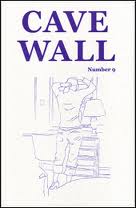
    This week’s poetry pick is from the Winter/Spring 2011 issue of Cave Wall, to which I recently subscribed. Cave wall is published bi-annually and, according to their website, is dedicated to publishing the best in contemporary poetry. Follow this link to find out more about their publication and submission guidelines: Cave Wall

    The Good Wife
    by Allison Elrod

    On the day she knew for sure
    she walked through her quiet house
    admiring its lovely bones.
    She loved the light
    that filled the place,
    the view from every window.

    She went upstairs and lay down
    on her boy’s small bed.
    Lying very still, she made herself
    small — watched the paper dragon
    hanging by a tread above her, watched
    it turn and turn in endless circles.

    Later,
    she folded shirts
    and started dinner.
    She went out to meet the school bus right on time.

    From the contributors notes: Allison Elrod is a poet and essayist whose recent work appears in or is forthcoming in Iodine Magazine, Kakalak, The Mom Egg, and The Sound of Poets Cooking. She is Associate Editor at Lorimer Press in Davidson, NC.

  • In the Field by Rebecca Aronson

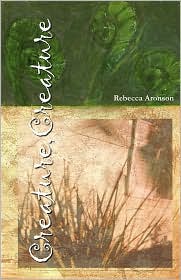
    This week’s Poetry Pick comes from Rebecca Aronson’s 2007 collection of poetry Creature, Creature, which holds the honor of first recipient of the Main-Traveled Roads Poetry prize. This first collection of poetry reflects the author’s familiarity with the landscape and inhabitants of both the Midwest and southwest regions of the US. They juxtapose picturesque scenes with honest appraisals of the people which inhabit them, and provide the weight of truth and a measure of clarity. In the following poem, Aronson effectively captures a culmination of images and notions leading up to the kind of moment many a Midwesterner would recognize as genuine:

    In the Field

    Where cows graze
    among mud and stones
    and their own droppings
    we spread our blanket
    and sit close
    for the first time
    this whole week spent
    in your mother’s house,
    we put our hands
    on each other and slide
    quiet under the enormous eyes
    of cows, fogging up as I
    spread my skirt (your mother said
    as skirt for walking? yes I said
    it’s a walking skirt), and we
    are moving together, the skirt
    around us so the cows might wonder
    but not the ruddy-faced man
    bobbing suddenly over a hedge
    or the one with him who
    tipped his hat, later introduces
    as your mother’s favorite
    neighbor at the market where
    he shook your hand
    a long time.

    Formerly with Northwest Missouri State University, Rebecca Aronson continues to act as contributing editor to the Laurel Review. She currently teaches and resides in the Albuquerque area.

    “Creature, Creature” is available at Barnes and Nobel online

  • Zingara’s Poetry Pick: Manzano Sunflowers by Dale Harris

    Dale Harris is an Albuquerque potter, poet and author of this week’s Poetry Pick. Her poem can be found in “A Bigger Boat” anthology as published by the University of New Mexico Press. I met Dale and heard her read Manzano Sunflowers at the volume’s book release in the summer of 2008.

    Because this poem evokes images of sunflowers, which are as common in the Midwest as they are in the Southwest, it calls forth the character of both regions while yet focusing on the New Mexican landscape. Harris’ sunflowers, therefore, capture more than place and image, but the very essence of sunflower-ness. And while a Midwesterner may not fully appreciate the significance of the arroyo’s image, or never attend the Indian Market, or discern the difference between Manzano or Sandia, she does understand the way sunflowers amass – has seen them take the place of prairie grass – and can appreciate the truth of sunflowers as offered in this poem:

    Manzano Sunflowers by Dale Harris

    You missed Indian Market and of course, the sunflowers.
    As usual they swept across August,
    at first a few, a yellow trickle along the fence line;
    then more, making pools in the pasture
    and splashing down into the arroyo;
    then incredibly many more,
    dappling the distance as though
    a giant hand had buttered the land.

     Yet with the entire prairie to expand into
    they prefer crowds of themselves.
    They mass along the roadsides line up
    as though a parade were about to pass.
    Here and there one stands alone but not for long.
    Soon his kin will come and there will be
    sunflower squalor, a floral slum.

     Once out they will not be ignored.
    Stretching their skinny stalks, they top our roofline,
    press against the window screens, peep in a the door.
    Familiar footpaths to the outbuildings are obscured
    and from the road we seem afloat,
    our cabin an odd tin boat in a sea of sunflower faces.

     They are the most staccato of flowers.
    I catch them humming snatches of polkas
    and John Philip Sousa marches,
    bobbing in the breeze to the Boogaloo,
    the Boogie-woogie and the Lindy Hop.
    I call their names, Clem, Clarissa, Sara Jane
    to try and tame them.

    My neighbor comes by, she has a field full.
    They’re useless, she complains;
    her horses won’t eat them.
    I should hope not, I exclaim after she’s gone.

    I don’t remember if you even liked sunflowers
    but you like life and they are all about that.
    Today I wrote to your family finally.
    I expect they are occupying themselves
    with beautiful gestures
    in order to get over the grief  of you.
    As for me, I have sunflowers.

    Read more of Dale’s poetry and learn about her pottery skills at Dale Harris Pottery.

    A copy of “A Bigger Boat” anthology is available from The University of New Mexico Press


  • The Name of a Tree by Catherine Anderson

    Today’s Poetry Pick comes from Catherine Anderson’s second book  of poetry titled “The Work of Hands,” published in 2000 by Perugia Press, whose mission it is “to produce beautiful books that interest long-time readers of poetry and welcome those new to poetry.”

    THE NAME OF A TREE

    Right here on Ash Street, Ana says, she used to stagger
    up the stairs like a drunk.
    There was no light, so she patted the wall,
    following hardened gum and kick marks.
    Those were crazy days she tells me –
    two kids, no money, no job –
    when English made the sound of click, swish,
    money gliding from a cash drawer,
    and the only words she knew were numbers –
    seventy-five cents ringing down the throat
    of a soda machine, her soapy fingers counting quarters
    to feed the dryer.

    Some days I am Ana’s teacher, some days she is mine.
    This morning we look through her kitchen window,
    The one she can’t get clean, cobwebs massed
    between sash and pane. The sky is blue-gold, almost
    the color of home. Ana, I say, each winter
    I get more lonely. Both of us would like the sun
    to linger as that round fruit in June, but Ana says
    it’s better to forget what you used to know:
    the taste of fish cooked in banana leaves,
    the rose color of sea waves at dusk,
    the names for clouds and wild storms, and a tree
    that grows, she says, as full
    as a flame in the heart of all countries
    south of here.

    Catherine’s book is informed by her work with immigrants and refugees and explores the pathos involved in such work. Her poem “Womanhood,” which was chosen by Billy Collins’ “Poetry 180” project, can be read at poets.org

  • How My Father Learned English by Juan J. Morales

    Cover by Oswaldo Guayasmin

    This next Poetry Pick is pulled from Juan Morales’ book of poems “FRIDAY and the Year That Followed,” winner of the 2005 Rhea & Seymour Gorsline Poetry Competition.

    HOW MY FATHER LEARNED ENGLISH
    382nd Hospital, Japan 1952

    The wounded who could not speak English
    congregated around the bedridden every morning.
    Manuel, the nurse from some other ward,
    taught my father and others English
    word by word. Sometimes, phrases, the sloppy
    repeated English made sense — Because es porque.
    Yo soy es I am.  I am.  Otra vez, diganme.–
    Bee cause.  Pain.  I am in pain.

    English moved my father’s tongue unlike Spanish.
    It stuck in his mouth, stumbled past his teeth.
    He dreamed he forgot Spanish and his tongue
    withered away.  My father never told anyone
    about this or the scratching fear of his legs,
    under bandages and scars, never walking again.
    He didn’t have words in English yet.

    From its initial lines to its closing stanza, Morales’ book of poems are nothing short of compelling. Sometimes surreal, other times magical, these poems evoke moods akin to the visual art of Frida Kahlo. It is a staple for any lover of the arts.

    Juan J. Morales is currently the Director of Creative Writing  and Assistant Professor at Colorado State University-Pueblo. He is curator of the Southern Colorado Reading Series as wells as the student literary magazine, Tempered Steel.

    “Friday and the Year That Followed” (ISBN 9780977197354) is available for purchase at Amazon

  • Ground Waters by Alison Apotheker

    This second poem in Zingara’s Poetry Picks made it into the “notebook of favorites” for the same reason many poems do – I like it. I like it because I relate to it and identify with the speaker, whom I find believable and authoritative. And while these reasons may not be critically sound, they are nonetheless the primary reasons I chose  to write it down in my book of favorite poems and  include it here. A brief commentary of some of the poem’s strengths follows.

    Ground Waters

    by Alison Apotheker

    from (Slim Margin)

    Yesterday, in snow’s rare visit to this city,
    my son and I raised his first snowman.
    As we rolled the white boulders of its body
    my pregnant belly nudged up against them like kin.

    By evening, its body leaned to the left so impossibly
    I kept checking the window for its collapse.
    In the morning, even more so, the body straining
    groundward as if to grasp the carrot nose
    that had fallen and lay now half-covered in slush.

    My son, who hasn’t yet been around the block
    with gravity, suspects nothing. I remember
    last summer when he skinned his shin on the sidewalk.
    I watched his eyes register the body’s betrayal.
    Yet he seems not to notice the snowman’s state,
    the degree of recline, how little it would take
    to return it to an idea of itself.

    All over the neighborhood,
    snowmen assume such inspired angles,
    splayed skywards as if in appeal to their place of origin,
    kneeling for their own beheadings,
    canted in prayer, tipsy
    with the song of their own slow-going.

    The relief obvious in their frozen hulking masses
    to rejoin the fluid grace of ground waters.
    The truth is: before I became a mother,
    I knew the body’s longing to be lost.
    An untrustworthy lover bound
    to forsake us, I’d rather do the leaving
    than be left.

    But now, as we walk home in the dusk,
    my two-year old riding my hip,
    patting my cheeks with his mittened hands,
    I never want to leave this earth.
    Inside the baby tumbles and reels,
    already knowing where the body will take us,
    that we have no choice but to follow its lead.

    *Excerpted from Garrion Keillor’s Writers Almanac

    In addition the speaker’s repeatability, there are in fact a number of poetic techniques that contribute to the poem’s effectiveness. The first stanza, for example, provides the reader with a appropriately subtle set-up for the poem. Instead of writing “I built a snowman with my two-year-old son,” the poet opens the topic with an observation of the rarity of snow, suggesting preciousness, and does not reveal the age of the child until later in the poem, when the reader has become truly curious about it.

    The word “raised” in the second line is a powerful choice and connotes a process more complex  than the simple act of packing and rolling snow to create a shape suggestive of a human being, and further broadens the significance of the event to include the complex experience of raising a family.

    Imagery plays a huge role in poetry and is wielded with expertise here in such observations as “the white boulder of its body / my pregnant belly nudged up against them like kin” and “as if to grasp the carrot nose / that had fallen” add animation and whimsy despite the underlying seriousness (mortality) of the poem’s tone.

    The meandering thoughts of skinned knees and the longings of youth present in the poem do not distract from the narrative because they reaffirm the overall theme that our to bodies seem always to betray us, or at least resist our desire, forcing us into an internal life and landscape where our bodies matter less. Adding these meanderings in just this way illustrates a lovely mastery of language.

    Finally, the extended metaphor pairing the human body and its biological changes with that of the slowly melting snowman is particularly poignant.