Look through someone else’s old photo albums for photos of people and places you know little to nothing about. Old black-and-white-turned-sepia photos work well for this exercise. The less information you have about the context and the people in the photos, the less likely you are to just retell the “true” story leading up to the moment the photo was taken; the less information you have, the more your imagination can fill in.
Not sure where to find old photographs? Consider asking your grandmother, or your aunt, or even your friend’s brother’s mother-in-law for a gander at their old albums. They will likely be thrilled that you are interested in looking at something that is personally important to them, and in fact took pains to preserve over the years. If this is not an option for you, consider cruising antique shops in your area for boxes of old photographs. In many ways, these are the best. You can develop full characters and entire histories for the individuals whose likenesses appear on these little squares of photo-finished paper.
Post your resulting character sketch, narrative, poem or paragraph in the comments section below.
May is host to a number of holidays, and in keeping with April’s first poetry prompt, this week’s poetry prompt also suggests you write a poem inspired by a holiday – any one that occurs this month. There are, of course, the American holidays of May Day, Mother’s Day and Memorial Day. Then there is Cinco de Mayo, as celebrated in Mexico, and Children’s Day, as celebrated in South Korea. Or you could opt for a lesser-known holiday, such as Bird Day, which is May 4th (and rather established in certain circles) or the even more obscure Twilight Zone Day, which is celebrated on the 11th (for no obvious reason). Whatever holiday you choose, celebrate it with style and honor it with a poem.
*Today’s featured photo is by Moriah Beagel. Learn more about Moriah from the contributors page.
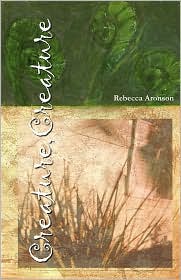
This week’s Poetry Pick comes from Rebecca Aronson’s 2007 collection of poetry Creature, Creature, which holds the honor of first recipient of the Main-Traveled Roads Poetry prize. This first collection of poetry reflects the author’s familiarity with the landscape and inhabitants of both the Midwest and southwest regions of the US. They juxtapose picturesque scenes with honest appraisals of the people which inhabit them, and provide the weight of truth and a measure of clarity. In the following poem, Aronson effectively captures a culmination of images and notions leading up to the kind of moment many a Midwesterner would recognize as genuine:
In the Field
Where cows graze among mud and stones and their own droppings we spread our blanket and sit close for the first time this whole week spent in your mother’s house, we put our hands on each other and slide quiet under the enormous eyes of cows, fogging up as I spread my skirt (your mother said as skirt for walking? yes I said it’s a walking skirt), and we are moving together, the skirt around us so the cows might wonder but not the ruddy-faced man bobbing suddenly over a hedge or the one with him who tipped his hat, later introduces as your mother’s favorite neighbor at the market where he shook your hand a long time.
Formerly with Northwest Missouri State University, Rebecca Aronson continues to act as contributing editor to the Laurel Review. She currently teaches and resides in the Albuquerque area.
For this week’s writing exercise, keep a pad of paper and a pen or pencil next to your bed and use them to capture the vestiges of your most recent dream upon waking. If you find the act of writing in the mornings a difficult task (or your eyes simply don’t focus that quickly in the morning) you can dictate your dreams into a tape or digital recorder and transcribe them later. After a few nights of recording the images, themes and emotional texture of your dreams, try synthesizing them into a poem. Don’t worry about remembering every detail correctly. Instead, just make up the parts that are “missing.” No one will accuse you of getting the facts wrong.
Feel free to post your poem in the comments section below.
A Rondeau is a poem consisting of fifteen lines arranged in a quintet (five-line stanza), a quatrain (four-line stanza) and a sestet (six-line stanza). The first few words of the first line act as a refrain in lines 9 and 15. These refrain lines do not rhyme, but repeating the fragments seems to imply the rest of the line, including the rhyme. The rhyme, therefore, acts invisibly. The roundeau’s usual rhyme scheme is aabba, aab Refrain. An eight-syllable line is traditional:
Here’s an example:
DEATH OF A VERMONT FARM WOMAN
(Barbara Howes, 1914-)
It is time now to go away? July is nearly over; hayt winter lingered; it was May Fattens the barn, the herds are strong Our old fields prosper; these long Green evening will keep death at bay.
Last winter lingered; it was May Before a flowering lilac spray Barred cold for ever. I was wrong. Is it time now?
Six decades vanished in a day! I bore four sons: one lives; they Were all good men; three dying young Was hard on us. I have looked long For these hills to show me where peace lay . . . Is it time now?
This week’s exercise requires the writer venture away from home and the writing desk to find an interesting public venue in which to work.
Find a comfortable spot in a busy location where you can to sit and listen to conversations of others around you. Naturally, restaurants and coffee shops can provide such a setting, but try to broaden your search to less obvious locals. For example, a classroom fits the bill well, especially if you happen to be student or a teacher. So does a work environment, the park, a long line or the waiting room at the tax preparer ‘s office. Be sure to bring your notebook with you.
As snippets of conversation float your way, take selective dictation in long-hand in your notebook. While there is no rule against using a lap-top computer for this exercise, the key here is to be selective in your dictation and try not to write down every detail – long-hand will lessen that temptation.
Alternately, and particularly if you are a techy, you could use a voice recorder of some sort, transcribing selectively when you later listen. This approach allows you to listen closely in the moment and focus on the texture of the conversation rather than the details of the words. Your note-taking can focus on intonation and other non-linguistic details that might help animate your later (selective) transcription.
Instead of returning to your transcribed notes right away, let time lapse and events intervene with your memory. When finally you return to your notes, it will be with fresh eyes (and ears). Hopefully you will have forgotten some of what you heard and your subconscious will have already begun to make up alternate explanations for the notes you have taken. Let your imagination fill in the parts you don’t remember accurately, or, better yet, let your imagination rearrange everything contained in your notes.
Create a poem from this experience and share it in the comments area below.
The subject of my first poet interview is Alarie Tennille, a Kansas City poet whom I met at a fund-raising event for The Writers Place late in 2010. Our initial conversation was everything you might expect in such a social situation, but beyond our words was an instant affection and respect for each other as poets. I frequently run into Alarie at area poetry readings and other events and always make it a point to seek her out and have a conversation with her. It is my pleasure to feature her in this, my inaugural interview. Please sit back and enjoy this lively conversation.
—–
Alarie Tennille was born and raised in Portsmouth, Virginia with a genius older brother destined for N.A.S.A, a ghost, and a yard full of cats. A Phi Beta Kappa, she graduated from the University of Virginia in the first class that admitted women. She has spent most of her career as a professional writer and editor. Alarie met her husband, graphic artist Chris Purcell, in college. They moved to Kansas City in the early 1980s.
A Pushcart nominee, Alarie serves on the Board of Directors of The Writers Place. Her poems have appeared in numerous journals, including Poetry East, Margie, ByLine Magazine, English Journal, Coal City Review, Kansas City Voices, I-70 Review, TheMid-America Poetry Review, Little Balkans Review, Rusty Truck, and The Kansas City Star.
Featured poem:
How to Get an Unusual Name
Pick ancestors from a foreign-speaking land. Begin with a name that is little heard even there.
Now stir up some rebellion. Politics and religion work best. But first make sure you’ve chosen visionary or stubborn stock. Neighbors must wish them dead, must drag ancient uncles from their beds to execution by gallows or guillotine. This culls the family tree, makes those who stay change their names.
Send the few remaining branches to different countries, where spelling will be changed and more cousins lost. Your name will trip the new native tongue, and you’ll spend a lifetime correcting it.
Now for the first name. Choose parents who crave the exotic. Hippies and Southerners work well. They’ll take care of the rest.
—-
What drew you to writing, or more specifically, writing poetry?
My earliest writing was an extension of make believe. I was in the second or third grade when I wrote “The Mouse Family Christmas.” I read it to my mother as she washed dishes, and she thought I was reading from a book. That was a very proud moment! In the fifth grade, I made friends in a new school when I wrote a wildly exaggerated, five-page essay on “Why I Shouldn’t Talk in Class.” I later wrote for school papers, but didn’t care for journalism the way I enjoy writing fiction. I was first drawn to writing because I enjoy creativity and because it’s a thrill to be able to entertain and move readers.
When I decided at 17 that I wanted to be a writer and an English major, poetry was the last thing on my mind. I wrote short stories and plays in college along with the long stream of required critical papers. I read mostly novels and drama. I think my lack of interest in poetry then had a lot to do with not reading the right poets. I was in the first co-ed class at the University of Virginia. Almost all the literature in the curriculum was written by dead white men. But I think it was the archaic language and formal verse, rather than who wrote it, that made me feel poetry wasn’t for me. Later, poets like Jane Kenyon, Ted Kooser, and Nikki Giovanni helped me see that I could write about the small, everyday moments in my own life rather than war, politics, and epic heroes.
I’ve been fortunate enough to support myself with my English degree, working as an editor or writer since college. Frankly, it’s tiring and hard on the eyes to do that much paperwork every day, so for years I didn’t have enough passion or interest to write for myself when I got home from work. A friend kept urging me to write my family stories, a project I was planning for retirement. Then one day those stories started arriving in poems. I was hooked, and I started devoting myself to writing poetry in my spare time.
How long have you been writing poetry?
I’ve been writing a poem here or there since elementary school. But I only got serious about writing poetry about seven years ago. I’m a poet!
That’s still a surprise to me. Getting involved with The Writers Place, where I’m on the Board of Directors, helped me make connections and learn more about the craft. So I suppose I’m either an overnight success or a late bloomer, depending on whether one sees the glass as half full or half empty.
Tell me a little bit about your writing process. Feel free to discuss your writing space, the time of day you write or any rituals or visuals you might utilize to help you with your process.
Poetry doesn’t pay my bills. I spend my work week writing and editing, so I try not to pressure myself with a tight writing schedule at home. If I’m tired and force myself to write, it shows. I spend much more time reading poetry, which is a vital part of the process. When a few weeks go by without a poem, I begin to fret, but looking at artwork can usually jumpstart my writing. I’m a night owl, so I most often write when I get my second wind—after 10:00 or 11:00 p.m. Or I may just turn ideas over in my head all through the day–or several days–before sitting down to work on them. I have a cheerful, red study, full of books and my computer. But I prefer writing first drafts in my family room, sitting on a sofa with an afghan, tablet, and maybe a cat on my lap. Then I type the poems into my computer upstairs and begin the work of polishing. The most structured part of my writing process is my writing group. We try to meet about every six weeks. Because there are only three of us, we can critique quite a few poems in an hour. ANT (Alarie, Nancy, Tina) meetings give me the deadlines I need to make sure I keep writing. And I believe every writer benefits from constructive criticism.
Tell me about your first major publication.
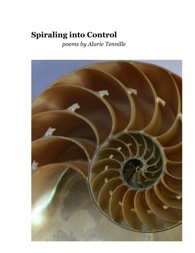
Maybe it’s because I’m still new to poetry, but every publication is a thrill…and I’ve had about 50. My first poems appeared in The Kansas City Star, when John Mark Eberhart ran a poetry column in the Sunday paper. Not only did that give me real confidence to submit to literary journals, but I was read and complimented by people I know who wouldn’t have seen the poems in journals. I then branched into the local literary magazines, and we’re fortunate the Kansas City area is rich with them: Kansas City Voices, I-70 Review, Mid-America Poetry Review, Coal City Review, Little Balkans Review. I like submitting to local journals because of the opportunities to give readings and mingle with the other authors. It was a thrill when I had a poem published in Poetry East, because I was able to see my poem at Barnes & Noble. My poems have also appeared in Margie, English Journal, and ByLine Magazine. But, while It’s exciting to be in a volume beside poets I’ve admired for years, sending to little known journals can also have advantages. Finding a fledgling review, Touch:The Journal of Healing, on duotrope.com, gave me the opportunity to publish my first chapbook through their publishing branch, The Lives You Touch Publications. Spiraling into Control came out in July 2010 and is available on Amazon.
What are your creative goals, plans, or dreams for the immediate future?
I try to keep poems in circulation to publishers. If I’m waiting to hear from at least three editors, I find I’m less discouraged when a rejection notice rolls in. Often an okay will follow right behind it. Another chapbook would be nice, but publishing a full-length poetry book is my dream.
Lift an image from this stanza of the poem To a Young Poet by Mahmoud Darwish, as translated from the Arabic by Fady Joudah, and use it as the basis for a poem of your own.
Alternately, chose a line from the given stanza with which to begin a poem, craft the poem, then omit the borrowed line in your revision.
Be strong as a bull when you’re angry weak as an almond blossom when you love, and nothing, nothing when you serenade yourself in a closed room.
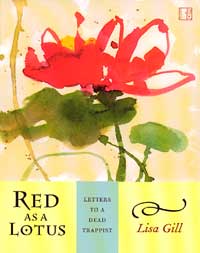
Red as a Lotus by Lisa Gill, La Alameda Press, Cover by J.B. Bryan
The third poem in my Poetry Picks Series, which celebrates poetry and honors poets, is from Lisa Gill’s first book of poetry titled “Red as a Lotus,” a collection of approximately 110 fourteen-lined epistolary poems addressed to Thomas Merton.
Many poems in this collection read as contemplative meditations while others provide voice to spiritual and existential questions whose answers are often ephemeral. Described by La Alameda press as a collection “with an eye which stays true to the bone,” and by others alternately as a mystery and a revelation, Lisa Gill’s first book of poetry is a worthy read and one every serious poet should have on his or her bookshelf.
viii
I watched the lunar eclipse. Ever so gradually the shadow
of the earth crept across the surface of the moon until nothing
but an infinitely fine sliver remained. And standing under
a street lamp, I realized I’m part of what blocks the light,
just another person on this planet spinning about, following
one dizzying pattern after another, rarely bothering to calculate
the ramifications of my orbit. Perhaps despite every attempt
to move in good faith, I’ll always end up coming between the sun
and the place it should shine. When the moon started waxing,
people spilled back into buildings. I held out, thinking how
fifteen minutes ago, the bars emptied onto the street an
for a while, we all stood still and looked up, past any neon,
to the moon — as if were new, as if it were last call. Heading
back into the bar I prayed my shadow sheds such light.
Check back here for a future interview with Lisa Gill and learn about the many projects she has been, and continues to be, involved in since the publication of her first book.
There aren’t many people who would argue that walking isn’t good for you, and that certainly holds true for the poet. What better way to clear the cobwebs from the mind and lubricate joints that are aching from too long sitting at the writing desk than to take a stroll around the block or through the park. Make a conscious effort this week to take a walk, paying close attention to the world around you when you do. Leave pen and paper behind and really, truly use your five senses to take in the environment you encounter. Trust your senses to store your experience to write about when you return home, for nothing triggers memories better than strong sensory associations. No need to limit yourself to walking in your neighborhood, though that can be an adventure if done with an attitude of a foreigner. Consider taking a slightly bigger adventure and try walking a trail in the woods you’ve been thinking about since Autumn and didn’t get around to exploring before winter set in. If you are a fair weather walker, then check the forecast and make a concrete plan to engage with the outdoors on the nicest day this week. Better yet, use April showers as an excuse to don raincoat and goulashes for a child-like stomp in the rain to get in touch with your inner youngster (just let your inner parent keep the inner child from catching cold in the process.) Or perhaps the best way to approach this week’s writing “exercise” is to simply drop what your doing and take that walk right now!
This second poem in Zingara’s Poetry Picks made it into the “notebook of favorites” for the same reason many poems do – I like it. I like it because I relate to it and identify with the speaker, whom I find believable and authoritative. And while these reasons may not be critically sound, they are nonetheless the primary reasons I chose to write it down in my book of favorite poems and include it here. A brief commentary of some of the poem’s strengths follows.
Yesterday, in snow’s rare visit to this city,
my son and I raised his first snowman.
As we rolled the white boulders of its body
my pregnant belly nudged up against them like kin.
By evening, its body leaned to the left so impossibly
I kept checking the window for its collapse.
In the morning, even more so, the body straining
groundward as if to grasp the carrot nose
that had fallen and lay now half-covered in slush.
My son, who hasn’t yet been around the block
with gravity, suspects nothing. I remember
last summer when he skinned his shin on the sidewalk.
I watched his eyes register the body’s betrayal.
Yet he seems not to notice the snowman’s state,
the degree of recline, how little it would take
to return it to an idea of itself.
All over the neighborhood,
snowmen assume such inspired angles,
splayed skywards as if in appeal to their place of origin,
kneeling for their own beheadings,
canted in prayer, tipsy
with the song of their own slow-going.
The relief obvious in their frozen hulking masses
to rejoin the fluid grace of ground waters.
The truth is: before I became a mother,
I knew the body’s longing to be lost.
An untrustworthy lover bound
to forsake us, I’d rather do the leaving
than be left.
But now, as we walk home in the dusk,
my two-year old riding my hip,
patting my cheeks with his mittened hands,
I never want to leave this earth.
Inside the baby tumbles and reels,
already knowing where the body will take us,
that we have no choice but to follow its lead.
In addition the speaker’s repeatability, there are in fact a number of poetic techniques that contribute to the poem’s effectiveness. The first stanza, for example, provides the reader with a appropriately subtle set-up for the poem. Instead of writing “I built a snowman with my two-year-old son,” the poet opens the topic with an observation of the rarity of snow, suggesting preciousness, and does not reveal the age of the child until later in the poem, when the reader has become truly curious about it.
The word “raised” in the second line is a powerful choice and connotes a process more complex than the simple act of packing and rolling snow to create a shape suggestive of a human being, and further broadens the significance of the event to include the complex experience of raising a family.
Imagery plays a huge role in poetry and is wielded with expertise here in such observations as “the white boulder of its body / my pregnant belly nudged up against them like kin” and “as if to grasp the carrot nose / that had fallen” add animation and whimsy despite the underlying seriousness (mortality) of the poem’s tone.
The meandering thoughts of skinned knees and the longings of youth present in the poem do not distract from the narrative because they reaffirm the overall theme that our to bodies seem always to betray us, or at least resist our desire, forcing us into an internal life and landscape where our bodies matter less. Adding these meanderings in just this way illustrates a lovely mastery of language.
Finally, the extended metaphor pairing the human body and its biological changes with that of the slowly melting snowman is particularly poignant.
In order to celebrate my love of poetry and ensure that I have plenty of it available to read, I subscribe to many periodicals of both the physical and electronic varieties. Sometimes when reading these periodicals and email subscriptions, I discover a poem that is, in my subjective opinion, beautiful. Other times I am intrigued by a poem’s complexity and marvel at its mystery. When I find such poetry, I want to share it with the world, and say “Hey! Look at this great poem!” Whether or not the poem resonates with another person is not within my power, but the possibility that it will is thrilling, as is the way disconnection evaporates when kindred souls recognize each other through a poem. In any case, blogging allows me not only to share the poem but to promote quality poetry while discovering, or rediscovering, great poets.
Here, then, to share my love and fascination with poetry is the first of many future installments of “Lisa’s Poetry Picks.” I don’t intend at this stage to explicate or comment over-much on any of this poetry, though I suspect some poems I post will insist on some response from me. That is, I might share whatever it is about the poem that drew me to it and caused me to want replicate here. Above all, I wish to fully appreciate each poem as well as its poet. Please feel free to make comments and constructive observations about these poems if so moved.
While in Anyang, I’ve had the opportunity and great joy to work with a small group of Expatriate writers who, from January to August 2010, met bi-weekly in Pyeongchon coffee shops, office-tels and restaurants to share stories, frustrations, goals, and best of all, creative writings. Some of our work consisted of old stories and poems we hoped to revive while others were inspired by our experiences in S. Korea. On August 22nd, we held a reading at the home of one of our members to share with the world a few of the more significant fruits of our labor. In addition to reading some of our work, we assembled collection of our pieces in a small chapbook to share with attendees and friends. Both the reading and the chapbook were well received.
Pyeongchon Writers’ Group 2010
Author Bios (from left to right):
Gary Jackson is the winner of the 2009 Cave Canem Poetry Prize for his first book Missing You, Metropolis. He was born and raised in Topeka, Kansas, and received his Master of Fine Arts degree in poetry from the University of New Mexico in 2008.
Lisa M. Hase (back row) holds a Master’s Degree in English with an emphasis in writing from Kansas State University. Her poems have appeared in such literary magazines as Susquehanna Review, Midwest Quarter and Sub-scribe Online Magazine.
Derrika Hunt (back row) was born and raised in South Florida and much of her writing is inspired by the many challenges she faced growing up there. She writes for all of those voices that have been silenced.
Chau Nguyen was born in Stockton and raised in Pomona, CA, and educated by worldly travels and her folks. She is a graduate of the University of California, Berkeley.
Members not shown: Sonali Maulik and Cereba Barrios








 The Zingara Project