Tag: #NationalPoetryMonth

  • Maybe It was Spring by Luanne Castle

    or winter
    and there were nine girls or seven.
    Certainly it was overnight church camp
    when we formed a second
    skin around Lacy
    with our fingertips.
    What happened wasn’t a dream unless
    a mass dream dreamed en masse.
    We were one organism,
    the skin we made stretched
    tautly like a drumhead, lifting
    up the girl Lacy, a musical offering.
    Our song flowed in and from us,
    all seven or nine, with Lacy the melody.
    But one of us must have felt an itch
    and discovered she was separate
    and, doing so, withdrew her touch.
    An epidemic followed
    from this undoing until Lacy’s body
    shared many points
    of contact with the floor.
    I remember looking under her
    just before and noting
    her two inches above it all
    though of course that is ridiculous
    because it wasn’t a dream.


    Luanne Castle’s Kin Types (Finishing Line), a chapbook of poetry and flash nonfiction, was a finalist for the 2018 Eric Hoffer Award.  Her first poetry collection, Doll God (Aldrich), was winner of the 2015 New Mexico-Arizona Book Award. A Pushcart and Best of the Net nominee, she studied at University of California, Riverside (PhD); Western Michigan University (MFA); and Stanford University.  Her writing has appeared in Copper Nickel, TAB, Glass, Verse Daily, and other journals.
  • Hurt Friends by Max Reese

    this body of mine used to be
    all papercuts and scraped knees,
    beestung summers clinging to our heels and sunburn blushing
    across our cheeks;
    you showed up to the picnic with bruises and I thought nothing
    of it – clumsy boys will fall
    as they please.
    I never knew a home could be a gravesite until
    you moved away and the grass overgrew
    the porch steps.
    I wish I could have saved you,
    back then,
    but we were both so far away and so hurt
    we could never go back to our new skin,
    to the blackberry stained mornings
    when there were no broken bones,
    or hearts —
    only fireflies and cherry coke.

    Max Reese is from Reno, Nevada, and currently attends the University of Nevada, Las Vegas as a sophomore. Max is long-time, self-taught poet whose mother instilled a love of poetry in him from a young age.

  • Listening To Poetry That I Don’t Understand by John F. McMullen

    I sit in the audience
    and listen attentively
    trying to make sense
    of what the poet
    is reading.

    I wonder whether there is anyone
    who doesn’t understand what I write
    I think not because I write very
    clearly (or so I think).

    Others may write about important
    issues but in such unclear poetry that
    I am not able to grasp their meaning.
    Why is that, do you think?

    Is my lack of comprehension
    the fault of the writer or of me?
    Whatever?
    I clap anyhow.

    After all
    they clap for me.

    John F. McMullen is a writer, poet, college professor and radio host. Links to other writings, Podcasts, & Radio Broadcasts at his web home, www.johnmac13.com, his books are available on Amazon (bit.ly/johnmac), he may be found on Facebook, LinkedIn & Skype as johnmac13 and he blogs at Medium — https://medium.com/@johnmac13. He is also a member of ACM, American Academy of Poets, and Freelancers Union

  • Today the dog is tired of me by DS Maolalai

    Today the dog is tired of me

    and all my writing
    poems. she comes
    and sits in the kitchen,
    with her tail banging
    and a growling cough. she doesn’t like it; my writing
    these poems in the kitchen – she likes walking
    and going to the garden sometimes. she’d be ok, I think,
    if for just once
    I’d write on the sofa. she could sit up
    next to me, curl her head
    in. I get my hands under
    and place her on the table,
    hoping for some inspiration,
    and go back. she grumbles to get down again
    and goes to bed grumbling.
    I look at her;
    look at the poems
    I’ve wrote, look out the window.
    perhaps
    we are both
    diminishing.

    DS Maolalai has been nominated for Best of the Web and twice for the Pushcart Prize. His poetry has been released in two collections, Love is Breaking Plates in the Garden” (Encircle Press, 2016) and “Sad Havoc Among the Birds” (Turas Press, 2019)

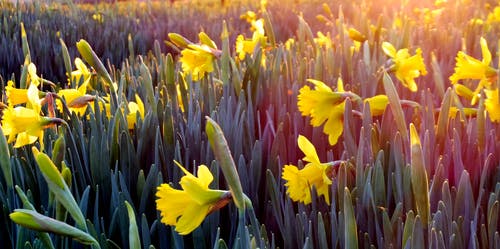
  • Above Asphalt by Carol Hamilton

    Filigrees of rosy purple reach out
    on slender arms of redbud
    below the lettuce-and-grass-green heads
    of newly-leafed trees.
    Now my drive on pocked pavement,
    huddled in with too many cars
    and too much exhaust, is graced
    with a quickly-passing revelation
    of startling new life.
    I never quite remember
    to look and look, take heart
    and watch the fleet hours
    of jonquils, violets, lilies,
    purple iris and daffodil.
    It is the only time we can
    breathe swift spring.

    Carol Hamilton has published 17 books: children’s novels, legends and poetry, most recently, SUCH DEATHS from Virtual Arts Cooperative Press Purple Flag Series. She is a former Poet Laureate of Oklahoma and has been nominated seven times for a Pushcart Prize.

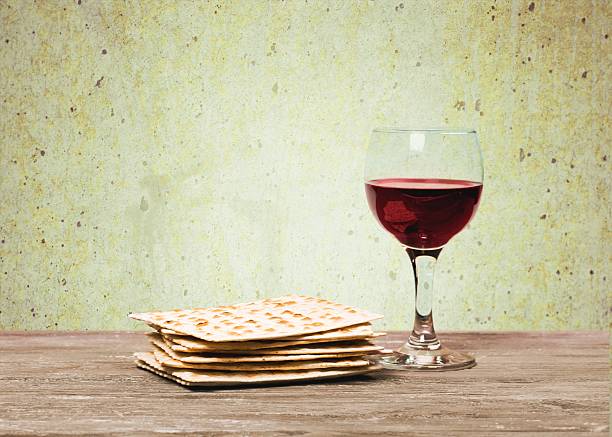
  • Chaninah by Steve Pollack

    On feather filled pillows
    he reclines easy as evening
    crowned by a Cantor’s tower
    castle shadows on sable hair,
    white robe billowing
    as if a cumulus cloud.

    In sundown sky he presides
    over minyan of five sons and wives
    who sip sweet wine four times
    with stained glass blessings,
    children on shins a threshold
    away, ask why in four questions.

    Each year on the same full moon
    he appears with Elijah, cloaked
    in melodies at mystery’s doorway,
    a virtual choir of crystal vibration
    stirring psalms and folksongs,
    midnight verses accelerando.

    Like ten plagues passing over
    a violent sea split in two, forty years
    wandering to a land promised,
    this family around that table
    on a night different from all others
    nothing less, a quiet miracle.

    Steve Pollack hit half-balls with broomsticks and rode the Frankford El to Drexel University. He advised governments, directed a community housing corporation, built hospitals and public schools.

    Poetry found him later. He serves on the advisory board of the Montgomery County Poet Laureate program and sings bass with Nashirah.

  • Safe Way to Go? by Gerard Sarnat

    i. Sally Swinggood’s

    With 1335 stores in the US alone,
    the grocery chain appears to have set an upward looking
    policy of equality in gender-hiring
    which maybe is reflected in my statistically insignificant
    sample size of a passel of 5 tall
    clerks seeming to identify as She who are able to reach
    the previously unreachable top
    shelf to grab me a handful of packets of transfat popcorn.

    ii. TransIt 

    Closet
    pried
    ajar

    gender
    dissidence
    unbound

    post-op
    posit
    appellations.

    HAIKU

    iii. High School 

    She tries to boysex
    gay away — but it don’t work
    — so then avoids them.

    iv. Not a Mr., Mrs., Miss or Ms.?

    Then Mx.-match fluid
    trans, a or non-conforming
    gender honorifics.

    Gerard Sarnat is a physician who’s built and staffed homeless and prison clinics as well as a Stanford professor and healthcare CEO. He won the Poetry in the Arts First Place Award plus the Dorfman Prize, and has been nominated for Pushcarts plus Best of the Net Awards. Gerry is published in numerous academic-related journals.

  • Intravenous Nutrition by Elise Barker

    A tube runs through his nose, down his throat, and into his stomach,
    Pulling out anything he puts in.
    He’s hungry but he can’t eat.
    He dreams of blueberries and cherries.

    I see blueberries at the hospital cafeteria. I leave them there.

    I go home, to Dad’s house.
    Laundry. Life goes on. Dishes. Life goes on. Feed the cat. Life goes on.
    He has blueberries in the refrigerator.
    Should I smuggle them into the hospital?
    I leave them there.

    In Dad’s dream of cherries,
    He takes down a colander, sets it in the sink, and pours them in.
    They thud and bounce into an uneven pile.

    He turns on the faucet. The cool water rushes over their shiny, red skin.
    The morning sunlight streams through the kitchen window,
    Gleaming on their purple veins.

    He picks up one of the cherries that had fallen into the sink,
    A straggler. He dangles it by the stem.
    It’s softer and darker than the others, almost black.
    “This one’ll go soon. Better eat it now,” he thinks, greedily.

    He drops the cherry in the hollow under his tongue then
    Pops off the stem with his front teeth.
    He holds the cool fruit in his mouth,
    Feeling the taut, cool skin on his warm tongue.
    Finally he bites through the casing,
    Landing his incisors solidly on the pit.
    His teeth scrape the stone, separating the sweet, fibrous flesh from the bony pit.
    He spits the pit into a bowl, splattering purple blood on the counter.
    Flecks of meat hang from its bones.
    His mouth waters as he grinds the flesh to a juicy pulp.
    He swallows, and the fruit slides down his throat, solidly.
    Such satisfaction, to swallow food. Such joy. Such ecstasy.

    He wakes to the beeping of his IV machine.
    His intravenous nutrition bag is empty again.

    Elise Barker is an adjunct instructor of English at Idaho State University, where she earned her Ph.D. in English and the Teaching of English in 2014. Her academic work has been published in Critical Insights on Little Women and Global Jane Austen. She also has published narrative non-fiction in IDAHO Magazine.

  • A Flower Rests by Jerry Wemple

    Daisy rose later in the morning each
    day until she barely rose at all. Ark
    was left to get his own breakfast: peanut
    butter smeared on doughy bread; a pale
    apple in a paper bag to take for school
    lunch. He would shuffle down the slate sidewalks
    parallel to the river street doing his
    best to slow time and the inevitable.
    After school, the return trip home and sometimes
    there deposited on the couch in front of
    a blurred television his mother
    like a monument to a forgotten
    whatever. Sometimes she would cook supper and
    sometimes not. And sometimes the old neighbor
    woman would stop by and say mind if I
    borrow you boy for a while and then sit
    him at her kitchen table and stuff him full
    on greasy hamburger and potatoes
    and sometimes apple pie that was not too bad.

    Jerry Wemple is the author of three poetry collections: You Can See It from Here (winner of the Naomi Long Madgett Poetry Award), The Civil War in Baltimore, and The Artemas Poems. His poems and essays have been published in numerous journal and anthologies. He teaches in the creative writing program at Bloomsburg University of Pennsylvania.


  • as dandelions popped by Nanette Rayman

    Tonight, from a distance, I saw my real life
    smiling and walking across the avenue with bells
    on, a sound sweet—for her—like the birds chirping
    at the last moment of Layla. And without a sound
    the blue-green brush strokes of sad altostratus
    clouds crosshatched the whole sky. A cassowary
    lost its quillish feathers in New Guinea, feet left
    to kick anyone in its path and a fortune-teller
    heavy with turquoise in a long flowing skirt looked
    at me for a long moment. On the other side
    of the Atlantic,  the Isle of Hebrides took
    on sun and people cried, weathered houses
    tilting in the wind, and eyes hooded by hands
    ready to caress wives and husbands as I sat
    down floppily on an old bench as dandelions
    popped, as pink pansies blossomed fuchsia,
    resigned and overwhelmed as the human soul.

    Nanette Rayman, author of Shana Linda, Pretty Pretty and Project: Butterflies—Foothills Publishing. Winner of the Glass Woman Prize, included in Best of the Net 2007, DZANC Best of the Web 2010 is published in Stirring’s Steamiest Six, featured in Up the Staircase Quarterly. Other publications include: Sugar House Review, Worcester Review, Berkeley Fiction Review, Little Rose Magazine, Rain, Poetry & Disaster Society, Pedestal, DMQ, carte blanche, Oranges & Sardines, Sundog, and Melusine. 

  • Post- by Joshua Allen

    Swamp grass and muck rot
    shelter a vibrant community.

    Brown-speckled wren eggs crack
    in six-pack nests beneath

    black bag tarpaulins.
    Aluminum can abodes dwell

     on shaded confetti lawns.
    Insects scurry on tire tread highways;

     reptiles retire to Coke bottle brothels.
    Father says, the lost architecture is the most tragic part.

    Glossy magazines woven into webs
    bridge trees as a canopy

    of dates and events. The focused sun
    illuminates the particular histories

    we have tried to leave behind
    during our marsh walk.

    Instead, we think of the cooking fire,
    the roasting meat, the hum of voices,

     which quiet as we approach, guns drawn.

    Joshua Allen is a somewhat wayward soul who is soon to be mercilessly ejected from Indiana University Bloomington into the larger world. He has been published in Gravel, Origami Journal, Lime Hawk, Tributaries (forthcoming), and The Long Island Literary Journal (forthcoming). 

  • Porch by Martina Reisz Newberry

    We cast curses at the moon,
    watch its face travel over     then behind     clouds,
    then come to the fore
    as if beckoned
    when it most certainly was not.
    Booze and blackberries on the front porch
    and the cries of dead beasts and warriors out there.

    Imagine it                     Hold it in your head
    as you do song lyrics and prayers.
    The strange scents of late nights
    call us to remember our weaknesses
    and the ill will we’ve encountered in others.
    We talk of these things     bring them closer.

    And oh the madness of this porch        how it dares to receive
    our complaints and our compliances             how it
    rests under our flip-flops and naked toes     how it
    shifts under spilled sweet tea     and dripped foam
    off cans of Bud Light

    Does it make you grin that I’ve said this?

    So, the moon hovers and we here below
    pull it over us, imagine it soft when            in truth
    it’s dense as a mango dum dum.

    Inside, we look for rest knowing our mendacity
    could pull down the stars                  knowing our joys
    are simple masks for grudges
    the way they jibe

    My God                     The way we consume bitterness
    fill our plates, pour on gravies
    and sauces of fear and then
    dare to sleep on that repletion.

    Martina Reisz Newberry’s recent books: NEVER COMPLETELY AWAKE (Deerbrook Editions), and TAKE THE LONG WAY HOME (Unsolicited Press).Widely published, she was awarded residencies at Yaddo Colony for the Arts, Djerassi Colony for the Arts, and Anderson Center for Disciplinary Arts.

    Martina lives in Los Angeles with her husband, Brian.

  • Absence by Inference by Duane L. Herrmann

    A row of cedar trees
    native to the plains
    and nearly indestructible,
    with a shed behind,
    old, ruined,
    indicate the absence
    of a home
    once in the space
    the trees protected.
    What happened
    to this farm?
    The missing family?
    The tragedy afflicted
    on their lives?
    And, the children?
    What did they feel,
    uprooted, scattered,
    with the wind?

    Duane L. Herrmann is a survivor who lived to tell; a prairie poet with a global conscience.  Recipient of the Robert Hayden Poetry Fellowship, he is published in print and online in several languages and various countries. His collections of poetry include: Prairies of Possibilities, Ichnographical:173 and Praise the King of Glory.

  • Wanting by Diana Raab

    Wanting
    I
    Rainbow

    The rain trickles
    down my paned window
    as I stand up to hunt the sky
    for the stripes of my childhood.
    The more I want to touch
    that rainbow, the more it drifts away.

    II

    Persuasion

    When you wonder about
    what you want anew
    try persuading yourself
    and the answer will come to you.

    III

    Wishing Well

    Yesterday I released a penny
    in that deepest tunnel
    of darkness, crossing my fingers
    and begging for wellness.

    Diana Raab, Ph.D. is an award-winning poet, memoirist, blogger, essayist and speaker.  Her book, “Writing for Bliss: A Seven-Step Plan for Telling Your Story and Transforming Your Life” was published in 2017.  Raab is a regular blogger for Psychology Today, Huff50 (The Huffington Post), and PsychAlive. More at dianaraab.com.


  • Night by Jerry Wemple

    Night falls suddenly when the sun declines
    behind these granite hills. The boy sits on
    the river side of the flood wall, his back
    to the town. He smokes a cigarette, counts
    the cars and tractor trucks on the state road
    across the water. Wonders where they’re bound.
    The boy would like a car, some way, any way
    to leave the town, to drive past the farms
    until the hills grow and the woods thicken
    and sit beside the tiny stream that is the start
    of this half-mile wide river. The boy rises,
    heads into town. He walks past the little park,
    a few blocks up Market, enters a tiny hot
    dog restaurant, nods to Old Sam, who started
    the place after the war. Sam knows, fixes
    one with everything, uncaps a blue birch
    from the old dinged metal floor cooler,
    while the boy fingers the lone coin in
    his pocket. Outside the wind rises and shifts.

    Jerry Wemple is the author of three poetry collections: You Can See It from Here (winner of the Naomi Long Madgett Poetry Award), The Civil War in Baltimore, and The Artemas Poems. His poems and essays have been published in numerous journal and anthologies. He teaches in the creative writing program at Bloomsburg University of Pennsylvania.