Winter in Pittsburgh, PA (not quite the Northeast, not quite the Midwest, but dark and cold nonetheless) is for building fires, reading epic novels, streaming new movies and old, knitting and embroidery, dreaming of spring–and spirits, completing jigsaw puzzles and, this year especially, playing Shadowdark with friends.
My husband and I joined a Shadowdark game back in April when a good friend from a previous life texted an invitation. He’d been running this old school revival table top RPG for a group of friends and family and thought we, along with a few other friends, might like to try playing.
After some discussion and trepidation on my part (a person who vacillates between being deeply competitive and not competitive at all) and a promise that the group would be open and friendly, we agreed to give Shadowdark a try.
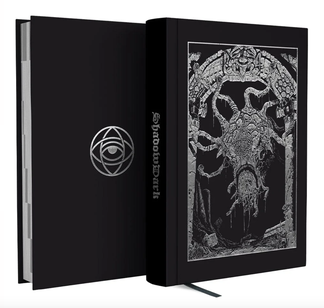
Not only did we enjoy playing that first round and spending time with good friends but we were hooked and eager to play again.
Our friend created an online interface on Foundry for us, complete with maps and tokens and inventory sheets which allows us to play from our various locations across the US. We use discord voice chat to talk to each other in real time.
For that first adventure, we explored the Secret of the Lost Citadel of the Scarlet Minotaur wherein we gathered treasure and had encounters will all manner of beings, from Beastmen and Ettercaps to the fierce Scarlet Minotaur who dwells within the Citadel’s confines.
That was 15 sessions and six months ago. Since then, our friend the game master has further developed the interface with greater detail and imagery and our group has grown from three to five (sometimes six) players.
Environments we’ve explored include the aforementioned Lost Citadel, the town of Orlene and it’s suspicious temple, the wilds of the forest and the mystery of the swamp and a labyrinthine world of underground tunnels.
We’ve encountered everything from subservient Beastmen, giant spiders, putrid lizard men (Troglodytes), hypnotized cultists, magical elves, a wizard-type hermit, kind inn keepers, surly constable, wild animals like bear, a wolf, a trio of slug creatures, crocodiles and rats. On our last adventure, we even managed to secure a trio of horses after defeating bandits on the road.
Having wanted to learn Dungeons and Dragons since high school but never quite finding the right opportunity or group to join, Shadowdark, which is every bit as involving but quicker paced, provides precisely the right mix of action and character development for the utmost fun.
To say that I eagerly look forward to game night hardly captures my enthusiasm. Each one is another unique opportunity to stretch my imagination in new and surprising ways.
Whether creating and developing a backstory for my character or improvising dialogue on the fly, I am challenged (in the best possible way) to think and act in an ever evolving world. Sort of like creative cross-training: consistent, engaging, builds ancillary skills, and most certainly keeps creative despondency at bay.
Working collaboratively as a team also cultivates a sense of belonging for me, an only child and writer who has always preferred solitude, books, and staying at home. And, this winter, a couple of our team members are coming to visit so we can all attend the Philly Gaming Expo together.
It will be epic.