Blog

  • Interview with poet Devreaux Baker

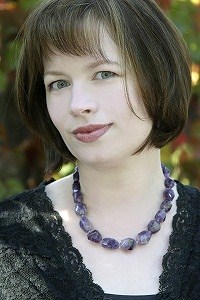
    DevreauxIt is with genuine honor and pleasure that I introduce today’s featured poet, Devreaux Baker. Devreaux’s poetry came into my life when she submitted a poem for the “200 New Mexico Poems” project last year. Her poem “Red Willow People” is number 93 in the collection and was posted on June 8, 2012. In addition, it will be included in the upcoming print anthology.

    Not long after posting her poem, I received a copy of Devreaux’s 2011 collection of poetry of the title. It didn’t take long for me to appreciate and understand why it was selected for the 2011 PEN Oakland Award.  Please enjoy today’s interview with Deveraux immediately following her poem.
    ***
    Recipe for Lorca’s Chocolate Cake 

    I worked all night on a chocolate cake for Lorca,
    filled with light that does not know what it wants,

    created from chocolate so dark it sears hearts
    and fills minds with dreams of moon and water.

    I used cocoa so pure it causes policemen to weep.
    I filled the layers with white linen afternoons,

    a hint of ginger and essence of rose creating a dancestep
    that wakes your spirit to enter the souls of your feet as a whisper

    and fill your body with duende, passion of the first kiss,
    becoming a river of fire that ignites your thighs,

    and sets loose love reflected in all the eyes of men,
    women, children and dogs,

    so that one bite of chocolate will rest in your belly
    like the tender edge of dawn,

    lifting your voice out of the dark rooms of earth
    where you sleep, rising up like wind or stars

    to encircle my body once again
    with your words.

    ***

    How long have you been writing poetry and what set you in motion?I have been writing poetry my entire life. Some of my earliest memories are of writing poems as a child and making small books of poetry. I was raised in a home where story telling was a huge part of our family tradition and poems were freely recited to us by our grandmother. I remember taking long car trips with my family and being entertained by many poetry recitations from my grandmother. I also remember being shown hand bound notebooks that had been passed down from ancestors that were filled with stories and poems and this made a huge impression on me as to the importance of poetry as well as stories within a family.—

    DBaker_Red_Willow_Front (2)Tell me about the inspiration behind your collection of poetry, “Red Willow People.”

    When I received the HeleneWurlitzer Writing Fellowship I thought I would concentrate on editing an existing manuscript which I took with me to Taos.  It became clear after I had been in residence for the first week that I was there to write a book of poems which reflected the inspiration of the land and the many diverse people who live there.  I did not have a car while in residence which was a huge benefit as I walked everywhere and had an opportunity to more directly engage with the environment. Early on I had the good fortune to meet Jocelyn Martinez who is an incredibly talented artist from the Taos Pueblo. I shared some poetry with her and she offered to supply the cover illustration for the book. My connection with Jocelyn was a huge impetus for bringing the book to completion. A year later I was awarded a PEN/Oakland Josephine Miles Literary Award for that book.
    What, in your opinion,  is the most difficult aspect of getting a book published?I feel very lucky in finding a publisher who believes in my work and is so supportive of my vision. I think one of the hardest things about getting published is not becoming discouraged by rejection. It is so competitive and hard to get anything published these days that I think if a writer finds a small independent press that is a right match for them, they should consider themselves fortunate.

    What other creative activities do you purusue?

    Some other creative outlets include performance art, radio work, and of course anything to do with being out in nature. For several years I produced a radio program of original student writing for public radio titled The Voyagers Show. Working with students of all ages to produce that show was some of the most gratifying work I have done.  I also enjoy performing poetry readings which incorporate music and have recently staged shows which use live music and masks. I will be returning to Taos      in September for a second Wurlitzer fellowship and am looking forward to producing a new book and a multi media show with several other artists (as yet unknown) from New Mexico. I love the idea of collaborating on a piece that incorporates visual art with the spoken word.
    ***
    Devreaux Baker is a Pushcart Prize nominee and winner of the 2011 PEN Oakland Josephine Miles Poetry Prize for her book, Red Willow People. She is the recipient of the 2012 Hawaii Council of Humanities International Poetry Prize, and the Women’s Global Leadership Initiative Poetry Award. Her poetry fellowships include a MacDowell Fellowship, the Hawthornden Castle International Fellowship, three California Arts Council Awards and two Helene Wurlitzer Foundation Fellowships. She has published three books of poetry; Red Willow People, Beyond the Circumstance of Sight, and Light at the Edge and conducted poetry workshops in France and Mexico. She has taught poetry in the schools with the CPITS Program and produced the Voyagers Radio Program of original student writing for KZYX Public Radio.

  • Fleeting Life by Lola Eagle

    Our days are bounded by our dream as night is bounded by the stars;
    Our world expands or shrinks in size as it is seen through hopeful eyes.

    Each hour of Life begins and ends in minutes that so soon are gone;
    To capture one and hold it fast is but a whim and cannot last.

    The golden minutes we would keep are fleeting just as all the rest;
    The mournful minutes stretch and grow; yet sixty seconds each they hold.

    When nighttime flees we come awake to find another chance awaits;
    The morning brings us hours to use; how they are filled is ours to choose.

    With hopeful hearts our days evolve from black of night to bloom of day;
    And whether such is gold or bleak depends on how we act and speak.

    Thus, form your day howe’er you will, for what we do reflects our soul;
    Giving to others what we seek returns to us a Life unique.

    Lola R. Eagle is a free-lance writer, author and poet living in Albuquerque, New Mexico.  Her work has been published in national magazines, anthologies, and on-line sites, as well as her own books — From the Eye of an Eagle and More Visions in Verse.”

  • Thoughts While Reading Kierkegaard (The Cupboard, 1841) by Katherine DeBlassie

    His coat hangs, Regine,
    like a cassock and hides his wooden leg.
    The clock sounds; the sign of his father
    he carries on his back—

    He loved the cupboard. Wanted your
    body inside it more than you did.
    Acknowledge the things inside it (agony, pseudonyms . . .)
    but have the opposite in mind.

    He quakes underneath his umbrella,
    pushing against the tic-toc, the daily
    calendar, the other darker days.
    The little hand goes up the body.

    The big great big hand is paralyzed.
    He is the earth, you give him a glance, a nod,
    at Vespers on Easter Sunday,
    and he is struck by losing you (by looking at you),

    weighted by the gravity that pulls him to a higher order—
    sun, moon, planets, palisander box with no shelves;
    precursor to a casket. Vellum manuscript: one for him and
    one for you. Let him turn you into something else—

    Katherine DeBlassie’s work has appeared in or is forthcoming in B O D Y, Inch, Zone 3, Tidal Basin, Court Green, Boxcar Poetry Review, Verse Daily and Cutthroat among others. She earned her MFA from the University of Maryland. She received an honorable mention for the 2011 Rita Dove Poetry Prize, was a finalist for the 2009 Joy Harjo Poetry Prize and received Work-Study Scholarships for the Bread Loaf Writers’ Conference.


  • Interview with Kansas Poet Laureate Caryn Merriam-Goldberg

    CarynCaryn Mirriam-Goldberg is the 2009-2013 Kansas poet laureate, which has not been an easy feat when one realized the Kansas Arts Commission was eliminated in mid-2011. Despite lack of the state’s support as epitomized by this gesture, Caryn has  managed to successfully put together two different anthologies, Begin Again: 150 Kansas Poems, which celebrates Kansas’ Sesquicentennial,  and the subsequent To the Stars Through Difficulties: A Kansas Renga in 150 Voices, both of which began as daily blog postings. Caryn is the third Kansas Poet Laureate and continues to serve as the state continues its search for the next its next distinguished poet to serve in this office.

    Please enjoy today’s interview which immediately follows the poem by Caryn:

    ***

    Supercell     

    Did you think your life was straight as this road,
    something that could be time-lapsed into a predictable gait?
    Did you ever try to map lightning, predict when
    the thunderhead would pause and fold in on itself?
    Have you pointed to a place in the clouds and said,
    “there” just before a ghost cloud twisted briefly into form?
    It is all nothing, then supercell, multiple stikes through
    the clouds while the tips of the grass shimmer awake.
    From the deep blue that narrates your life
    comes the pouring upward of white curves and blossoms.
    From the dark, comes the thunder. Then the violet flash.
    From the panorama of what you think you know
    comes the collapse of sky, falling on you right now
    whether you’re watching the weather or not.
    The world dissolves, reforms. What comes surprises,
    motion moving all directions simultaneously, like the
    losses you carry, talismans strung through your days, singing
    of those you’ve loved deep as the blue framing the storm.
    It rains for a moment in the field, in your heart,
    then the weather stretches open its hand of life and says,
    here, this whole sky is for giving.
    ***

     begin againTell me how you felt the moment you learned you were chosen to serve as the third Poet Laureate of Kansas.

    I was thrilled and honored. After working for so many years as an activist poet, helping others find their voices and use those    voices to effect change and bring great meaning and healing to their lives, I had spent a lot of my work life lifting up other writers (which I still feel is a sacred calling). But to be recognized for my work in the community and also for my poetry was one of the greatest honors in my life.

    Have you worked with previous Kansas Poet Laureates?

    Yes, I worked very closely with the previous poet laureate, Denise Low, and also with Jonathan Holden, our first poet laureate. I also have worked and am still collaborating with poets laureate of other states, especially since I organized a national convergence of poets laureates that brought 20 poets laureate to Kansas for two days of readings, workshops and visiting. I’m about to go to New Hampshire for another such gathering, this one focused on poetry and politics, and I’m looking forward to more generative projects coming out of my time with other state poets laureate.

    You mention on your website that when you were very young,  you told your Grandfather that you were going to live in Kansas someday. Can you recall your early impressions of Kansas before you ctually visited? What did Kansas represent to you or how did you imagine it?

    All I really knew about Kansas was from the Wizard of Oz movie. When I first got on a plane to go to Missouri — I lived in Columbia, MO and then Kansas City, MO for a total of 4.5 years before I moved to Kansas — I didn’t really know where the Midwest was even, and certainly didn’t know anything about Kansas.

    There is often a deep connection to place for Kansas poets. Can you tell me a little bit more about the relationships you are building with“the particulars” of Kansas?

    renga-cover-rough-darkI think many poets many places have deep connections to the earth and sky where they live because what better way to get    inspiration? With Kansas, the beauty of this place is far more subtle than in Colorado, where the Rockies blow your mind, or the shores of Lake Superior in Minnesota, which dazzles just about anyone. Here, the main attraction is as much the sky as the land because the weather is astonishing, big-hearted, subject to rapid change, vivid and dramatic, and always happening. I also love the land here — the tallgrass prairies of eastern Kansas (where I live) where the grasses turn red each fall and need to be burned each spring; the Flint Hills and further west, Smoky Hills; the rock formations way out west and wide valleys throughout the state. Kansas is very varied, and the more I live here, the more I see the variety and also the patterns of who migrates through and what tilts each season.

    How do poetry, teaching, and community interconnect for you?

    All three are woven together so tightly that it’s hard for me to see the separate strands at time. I write, and because I write, I have a writer’s point-of-view when I teach: I can help students revise and strengthen their work, find overall patterns, clear away what keeps them from hearing the calling of the piece of writing. Because I also do a lot of community facilitation –workshops, meetings, etc. — I’m often hearing, in one ear, what my writing and teaching has to do with making community and making positive change in the world while, in the other ear, I’m in tune with what the words we write want to say and how we can best help them.

    What role does revision play in writing and how do you approach revising your own work?

    Sometimes revision is everything and sometimes not. This is to say that I have revised some writing for years. My novel, THE    DIVORCE GIRL, about to be published is something I started in 1997 after writing it in my head for decades. I spent over a decade simply revising it to the point that I feel like I have sections of it memorized at this point. I have books of poetry I’ve worked on for over a decade, revising some poems dozens of times. I also have things I write and just put out — like most of my blog posts and    some poems — that just come, and that’s that. But I think they tend to “just come” because I’ve written like a maniac since I was about 14, so those trails in my mind lead easily to writing on the page.

    You are involved in numerous wonderful projects. Tell me how you maintain balance and protect your writing time while also keeping up with these projects? How do you prioritize?

    FrontCoverWebPromosI struggle with this at times, and at times, I feel the    balance. It’s an ongoing practice Today, for example, I had a    meeting with the program director of the Individualized MA program    (in which I teach) about ways to help starting graduate students,    then had lunch with the former poet laureate, Denise Low, to catch    up on writing projects an talk over a contract I was offered on my    book on the Holocaust — NEEDLE IN THE BONE: HOW A HOLOCAUST SURVIVOR AND POLISH RESISTANCE FIGHTER BEAT THE ODDS AND FOUND EACH OTHER. I’m answering emails now, then finishing a letter to a Goddard student, then working on a book proposal for another book before going to teach a writing and yoga workshop. That’s today, and tomorrow will be very different – I’m meeting Kelley Hunt to write some songs, and working on some poetry or fiction (depending on my inclination at the time). I try to do something physical for an hour each day: yoga, walking, going to the gym. I’ve also been sleeping outside on a futon bed on our screened-in porch lately, which is only possible with ease during a handful of days each year (when it’s not too hot or too cold), and being outside helps me most of all to keep balance. I also talk with my husband daily, sharing all kinds of moments from our lives, and I see my friends and kids and other family a lot. It all helps. How I prioritize is to balance the work I need to do (workshops, work with my students, etc.) that’s bound to deadlines with the work I need to do for my soul (my own writing), making room for both. If I feel off kilter, I’ll switch things up a bit.

    What’s next?

    The Kansas Poet Laureate program is now part of the Kansas Humanities Council, which will be announcing a new poet laureate later this month.

    I’m also working on two writing projects which will probably take me over the next year or two: revising a novel on the story of Miriam, from the bible, but set in the U.S. from the 1960s to the present; and writing poetry to go with photos from Stephen Locke, a weather chaser and brilliant photographer (www.tempestgallery.com) for a book on storms and wild weather that we’re pitching through my agent to various publishers.

    Caryn Mirriam-Goldberg is the Poet Laureate of Kansas, and the author of 16 books, including four collections of poetry, most recently Begin Again: 150 Kansas Poems (editor, Woodley Press); Landed; The Sky Begins At Your Feet: A Memoir on Cancer, Community & Coming Home to the Body (Ice Cube Books); a forthcoming novel, The Divorce Girl (Ice Cube Books); a non-fiction book, Needle in the Bone: How a Holocaust Survivor and Polish Resistance Fighter Beat the Odds and Found Each Other (Potomac Books); a beloved writing guide, Write Where You Are (Free Spirit Press); and several anthologies. She co-edited An Endless Skyway: Poetry of the State Poets Laureate (Ice Cube Books) with Marilyn L. Taylor, Denise Low and Walter Bargen. Founder of Transformative Language Arts – a master’s program in social and personal transformation through the written, spoken and sung word – at Goddard College where she teaches, Mirriam-Goldberg also leads writing workshops widely. With singer Kelley Hunt, she co-writes songs, offers collaborative performances, and leads writing and singing Brave Voice retreats. She writes columns and serves as poet-in-residence for http://www.TheMagazineOfYoga.com. Here daily blog posts, “Everyday Magic,” plus occasional podcasts and writing exercises are at http://www.CarynMirriamGoldberg.wordpress.com, and her websites are http://bravevoice.com/ and www.CarynMirriamGoldberg.com.

  • Walt Whitman’s House in Camden, New Jersey by Frank Higgins

    Searching down the burnt out streets
    as if driving through World War II Dresden,
    we pull up to the curb to ask a man directions,
    but he calls us dead meat and we speed away
    past hookers and kids who throw rocks,
    and finally we find Walt Whitman’s house
    like a war-time safe house behind the lines,
    but the door’s locked; we ring the bell
    and wait in the locked car
    till a woman opens the door and welcomes us
    and we try to ignore her knife scar from cheek to chin
    as she guides us to the guest book
    where we notice we’re the first guests in three days,
    and she leads us from room to room
    and shows us his desk, and says,
    “This is where he wrote,”
    and we stand staring at Whitman’s desk
    and recite our favorite lines:
    “Afoot and lighthearted, I take to the open road,”
    “I hear America singing,”
    “I sing the body electric,”
    “And now conceive and show to the world
    what your children en-masse really are,
    (for who except myself has yet conceiv’d
    what your children en-masse really are?)”
    but we’re interrupted by excited voices
    and we look out to see kids kicking our car
    and without a word our guide calls the cops
    and after the kids run from the siren
    we run to our car and take to the open road,
    crossing the Delaware in full retreat
    in a way Washington or Whitman
    or even Jack Kerouac could not conceive:
    a huddled mass yearning to breathe free
    by gunning our engine behind locked doors,
    and with the cops on speed dial.

    Frank Higgins has had plays produced across the country.  He is also the author of two books of poetry and two books of haiku.
  • My Son’s Renaissance By Melissa Zamites

    After the illness
    Years of night
    Only flashes of dawn

    My son’s joys re-emerge
    Dandelions through cracked concrete

    I’m giddy and laughing like a drunk and weeping
    Stumbling through town with a slap happy grin
    Because nobody knows the troubles I’ve seen
    And Lordy troubles don’t last always!

    God’s turned back the clock
    My son’s twelve on the outside
    And maybe four on the inside
    It’s back to story time with the preschoolers
    And learning conversation

    Stare if you want
    But my son is back in the land of the living
    Tickled and giggling
    Swinging in the park
    Running through the zoo

    Sometimes nightmares
    Strike again by day
    My son’s terror returns
    He is lost in a tunnel
    My eyes reach in and pull him up
    My arms are his tree to climb out

    Snowflakes streak the sky
    But in our house
    The floor is fertile green ground
    The eggshell is breaking
    The foal is shaking and standing
    And the lamb of merciful sunrise
    Has turned the lion back into a house cat

  • Pier Park by Becca Yenser

    Mother,
    how did they
    destroy the neighborhood
    soul by soul
    on the street
    of children’s chalk
    I am still
    remembering the trees
    I guess it was a forest That one guy went missing
    and then the other guy got shot
    Oh my stars
    My mom
    My poor dog
    Who believes
    every word I say:
    I’ll report what I can,
    just as soon as I know.

    Becca Yenser works and writes in Portland, Oregon. Her words have appeared in: kill author, Knee-Jerk Magazine, and Filter Literary Journal. Forthcoming is a semi-fictional, quasi-tour guide of Ms. Pac Man machines in Portland. She likes paying attention.

  • Letters From Home by Steven Hamp

    Sometimes,
    the routine is broken,
    allowing room
    to understand
    the creativity
    that shows itself
    in brilliant style.

    Often,
    the information provides
    a sense of time
    to discover
    the caring
    that is celebrated
    in grateful joy.

    Always,
    the expression is open,
    giving insight
    to recognize
    the courage
    that is measured
    in personal strength.

    Steven Hamp is a photographer, writer, and poet who has resided in New Mexico since 1981.  He has been published in various local publications.  His poetry was recently selected as part of the 200 New Mexico Poems on-line collection, and has appeared on-line at the Duke City Fix. He currently lives in Albuquerque.

  • Phoenix by Odarka Polanskyj Stockert

    on the cusp of morning
    a new day a new
    beginning

    cleared of fog and snow
    you rise
    a phoenix
    renewed and recreated

    the winds blow across your wings
    ruffling you feathers
    and the sleet
    taps out your name

    you rise above the trees
    see clearly for the first time and survey
    the whole of your world
    finally alight upon a
    barren branch

    and sleep
    and dream
    what words
    will not portray

    Odarka Polanskyj Stockert is a New Jersey native poet and and long time member of South Mountain Poets. She is also a long time collaborator of the Yara Arts Group, resident at the La  Mama, etc. in New York City and has performed in many Yara poetry and experimental theater events and productions. Odarka is a harpist, poet and songwriter, an engineer and inventor.  She lives in Millburn, with her family.  Visit her Website: http://www.myspace.com/odarkasharp.

  • Similes Poetry Prompt

    A great big Thank You to Juan Morales for another awesome poetry prompt:

    Fun with Similes

    We all know metaphor and simile and sometimes take them for granted, but it does not change their obvious importance. Kim Addonizio writes “Metaphor speaks of one thing in terms of others, creating a kind of energy field, what I think of as “the shimmer….Simile does the same thing, only a bit more obviously: to say that a grain of sand is like a world would make the comparison explicit.” I can’t speak for most poets, but I usually go for the easy simile and uncover a comparison too close to the poem’s established world. Good simile and metaphor embrace the departing nature of the simile more so readers can access the grain of sand and the world simultaneously. Here’s a poem from Major Jackson’s book Holding Company that does an amazing job with simile.

    How You Love by Major Jackson

    Like the injured laid down at the scene of an accident
    before cars collide, like cloud striations over
    Fairyland Loop, like a kid’s carnival balloon
    diminishing and lost to the great blue,
    like bright jewels scattered in some secret cave, like two
    scissor blades breaking apart, like after-party guacamole
    with drips of salsa, like diamonds of light rotating over
    an empty dance floor, like priests at night staring
    in store windows at half-nude mannequins,
    like dark earwax , like unscented candles, like Janus.

    Jackson uses eleven similes in a ten-line poem with so many surprises and turns in his rendering the act of love. Even if the use of “like”softens the comparison, it works so well. The line breaks, and length of the lines, and listing also help reinforce the unpredictability too.

    For today’s exercise, I want you to work with the comparison explicit. Write a poem with a seemingly simplistic title and use as many similes as possible to help establish an emotional connection. Another approach to this exercise is to start with as many random similes as possible and then select a title as the unifier.

    Feel free to participate in the poetic conversation here at ZingaraPoet by adding your poetic response to this prompt in the comments section below. Go ahead, don’t be shy – make the conversation interesting!

  • Small Circles by Colleen Maynard

    The fog has shellacked
    over the warmth felt this morning.
    Mist turns to rain.
    Along the vinyl canopies
    a strip of raised drops form,
    solid as brass-studs
    on the seams of fancy
    upholstered chairs.

    I might sew
    the torn seams of my coat.
    I will not go swimming.
    I may take a small nap,
    and work on either
    my life or my art.

    When there is nothing else to do,
    I lock the door to pace.
    I recall Jesse,
    the way he’d walk small circles
    in the center of his studio,
    head down,
    glaring at the wood
    as though it might
    loosen the floorboards
    and release some
    slight sigh.

    Colleen Maynard is a writer and visual artist. She holds a degree from the Kansas City Art Institute and has publications in Monkeybicycle, The Same magazine, and Ceramics: Art and Perception.”

  • Interview with Texas Poet Laureate, Larry Thomas

    Larry Head ShotI learned about Larry Thomas by way of “200 New Mexico Poems” when I accepted and subsequently posted his poem, An Aged Navajo Artisan” (#57, April 17, 2012). When I discovered that he is a former poet laureate of Texas, of course I had to interview him. I am impressed with Larry’s hard work and dedication as a poet and find his approach to writing poetry sound. We also share a few favorite prose writers.
    Please enjoy this conversation with Larry immediately following his poem, Tide Pool Touch Tank. You will also find Larry’s professional bio directly after the  interview.
    ***
    Tide Pool Touch Tank
    for Frank

    The dank air
    of the Maine State Aquarium
    is pungent with brine
    and the nostril-flaring
    smell of fresh fish.

    Little children huddle
    around a tank
    like primitives in a ritual.
    Their heads swim
    with flashbacks

    of moonless, blue-black skies,
    of luminous bodies
    sparkling through the slats
    of their cribs
    beside the windows,

    ever beyond the reach
    of their fat, groping fingers.
    Wide-eyed, entranced
    by the miracle beneath them,
    they take deep breaths,

    ease their hands into the black-
    green holiness of seawater,
    and, with the fingers of gods
    trembling in the heavens,
    stroke the spiny skin of stars.

    (from The Lobsterman’s Dream; first published in The Texas Review)

    ***

    Tell me about your experience as Texas Poet Laureate. What sort of outreach projects did you initiate or further during your term?

    My one-year term as the 2008 Texas Poet Laureate began in April 2008 and ended in April 2009.  As soon as my appointment was announced, in April 2007 (my appointment occurred one year prior to the commencement of my one-year term), I received a flood of requests for interviews and invitations to speak/read my poetry to schools, community colleges, universities, and civic organizations such as the Rotary Club, historical societies, poetry societies, and numerous other groups.  I did my best to honor each invitation I received, from throughout the large state of Texas, and only on a couple of occasions had to decline an invitation due to a scheduling conflict, etc.  I never required a speaker’s fee for a presentation; only reimbursement for travel expenses and lodging at a modest motel.  Many schools, especially public institutions, don’t have ample funds available for this sort of activity, so I wanted to make it as financially reasonable for them as possible.  I was privileged to receive a $2,000.00 grant from the Ron Stone Foundation for the Enhancement and Study of Texas History (based in Houston), and I used the entire grant for travel/lodging expenses to venues which didn’t have funds available for such activities.

    As to outreach projects, I particularly enjoyed my visits to public schools and college/university creative writing classes.  Many public schools, most unfortunately, have dropped poetry from their basic curriculum, and I really enjoyed the opportunity to talk to the students about the importance of poetry in their lives and share with them examples of my own work.

    Another outreach project, which I initiated, was to set aside time from my busy schedule to work one-on-one with young poets of promise.  I met with them primarily in coffee shops (such as Starbucks), critiqued their work, and answered any questions they had about my own creative process.  I charged no fee for my services, and feel that these young poets benefitted greatly from the time I spent with them and were encouraged to keep reading and writing.  My opinion of their work and the time I spent with them seemed to significantly enhance their confidence as young poets of seriousness.

    Does poetry need community?

    I feel very strongly that poetry needs community.  Poets spend countless hours crafting and revising their poems for hopeful publication in a distinguished journal or a collection, and do so to share their work with a “community” of appreciative readers.  Otherwise, they would just stash their work in diaries for their eyes alone!

    Secondly, although I personally have never been one to join writers’ groups or participate in workshops, I am very much in the minority as a poet in this regard.  Virtually all of the serious poets with whom I am acquainted aggressively seek out and participate in quality workshops, and are members of writers’ groups which meet regularly.  This gives them a chance to present their work to and receive honest feedback from others whose work they respect, and to have their work seriously critiqued for necessary revision.  They feel that their participation in such a group is critical to their own artistic development.

    Tell me a little bit about your writing process. Feel free to discuss your writing space, the time of day you write or any rituals you have which help you with your process?

    I write in a small study on a rustic Mexican table which I regard as my desk.  My desk sits beneath a window overlooking the Davis Mountains of the Great Chihuahuan Desert.  For years, I composed first drafts on the back side of used computer paper secured in a clipboard, and I always wrote with a cartridge fountain pen.  During the past couple of years, however, I have composed on my laptop.  I generally write in the mornings, and I almost always write to the music of Beethoven which I play at a rather loud although not uncomfortable volume.When I begin my writing process, I often have no conscious idea of what I will write about that morning.  I often start with an image around which I feel I can construct a first draft, and I pay little attention to syntax, line or stanza integrity, or any other sense of “crafting” the poem.  I think that “play with language” is a critical part of the writing process, and that I should “let the words flow” before I begin the strenuous and critical revision process.  After the “play” has ended, I start shaping the amorphous mass of words I have before me, and begin what will be an extensive revision process.  I first start shaping the words into poetic lines and then see if the lines cohere in some manner into stanzas.  Most of my first drafts undergo twenty-five to thirty revisions during my initial writing session before I am reasonably comfortable with them.  I then return to the finished draft for several days, fine-tuning it, until I get the poem where I think it should be.  My “gut” lets me know when it is time to move on to another composition.

    How do you approach the large task of putting together and arranging a manuscript? 

    Before I even think about putting together a manuscript, I make sure that I have a very large body of published or “publishable” poems of thematic unity, well over one hundred, from which I can select fifty or so for the first draft of the manuscript.  I then approach the shaping of the manuscript in much the same manner I shape an individual poem, placing careful emphasis on theme, tone, consistency of syntax, etc.  I believe that a manuscript should be as seamless as possible, and that each poem in the manuscript should effectively serve the collection as a whole.


    What non-writing activities do you practice that inspire creativity and fuel your writing?

    Non-writing activities which I feel inspire my creativity are art museum/art gallery attendance, music listening (especially classical), and serious reading.  I spend a lot of time reading the collections of numerous contemporary poets of noteworthy achievement, and short story collections by distinguished fiction writers.  I believe that the short story is the “poetry of prose,” in compression, use of imagery, heightened use of language, etc., and I find a number of literary techniques in well-written short stories which are certainly transferable to the composition of poetry.  Among the contemporary short story masters whom I have found helpful to my development as a poet are Raymond Carver, Breece “DJ” Pancake, Joyce Carol Oates, and Tobias Wolff.

    When people ask you what you write about or what your poetry is about, how do you respond?

    The subjects of my poems are quite multifarious. I have published complete collections of poetry about the Texas Gulf Coast (The Lighthouse Keeper), the backwoods denizens of deep East Texas (The Woodlanders), the flora, fauna and denizens of far West Texas where I was born and reared (Amazing Grace, Where Skulls Speak Wind, and Stark Beauty), outlaw bikers (The Fraternity of Oblivion), paintings and the properties of color (The Skin of Light), the bird or avian world (A Murder of Crows), wolves (Wolves), and quicksilver (mercury) miners (The Red, Candle-lit Darkness).  When people ask me what my poetry is about, I often reply that it is heavily inspired by the natural world, but also by anything which captures my interest at any given time.  A poem, at least to me, is first the artistic use of language, and secondly a means of transporting the reader to the heart of the mystery, beauty and terror of existence.

    What projects are you working on or planning now?

    I just completed a chapbook of poems set on the coast of Maine (The Lobsterman’s Dream), forthcoming from El Grito del Lobo Press in a handset letterpress edition with original woodcut illustrations, tentatively scheduled for publication in late spring/early summer 2013.  I also have a book-length collection, Uncle Ernest, forthcoming from the Virtual Artists Collective (Chicago).

    ***

    Professional Bio:

    Larry D. Thomas, a member of the Texas Institute of Letters and the 2008 Texas Poet Laureate, has published nineteen collections of poetry, his most recent book-length collection of which is A Murder of Crows (Virtual Artists Collective, Chicago, 2011.  He has two additional books of poetry forthcoming: The Lobsterman’s Dream (El Grito del Lobo Press, Fulton, MO) and Uncle Ernest (Virtual Artists Collective, Chicago).  Among the publications in which his poetry has recently appeared or is forthcoming are 200 New Mexico Poems, The Texas Review, Valparaiso Poetry Review, Sugar House Review, Borderlands: Texas Poetry Review, and Southwestern American Literature.  His New and Selected Poems (TCU Press 2008) was long-listed for the National Book Award.

    Web site: www.LarryDThomas.com

  • Old Drafts Prompt

    Riffle through your old poems and pull from them a poem that has yet to find a home. Perhaps it isn’t quite finished or perhaps it is different thematically from your other work. Experiment with this poem in one, or all, of the following ways:

    Write a “part two” to the poem.

    Arbitrarily rearrange the words, lines and stanzas on the field of the page based on some principle that you invent. For example, perhaps words beginning with a particular letter are flush with the left margin while words beginning with a different letter are always indented so many spaces from the left margin. Maybe nouns contain extra spaces or are centered. Use your imagination.

    Cut your poem up and rearrange its words. Paste the new onto a colorful piece of paper.

    Most of all, enjoy the process. And feel free to post your results in the comments area below.

  • Valentine by Caryn Mirriam-Goldberg

    Valentine

    It’s all a matter of seeing what is right here:
    the face of the beloved, the eyes closed,
    graying lashes on the cheekbone. The eyes
    open, blue washed into green, changing
    in light and time. It is all necessary as
    time or how remembering changes
    the face, looking to see what comes
    turns the head. It is all a matter of thinking,
    What are you thinking? When did it start,
    how can it end when the weight, the lightness
    of this seeing makes the familiar new,
    the unknown an old friend? It is all right
    on the cusp of the horizon: deepening
    blue folding back into orange behind the tree
    behind you. It is all a matter of seeing
    in the delicate and wild space between us
    that isn’t really space at all, how whatever
    we know can be erased and remade with the other.
    How our time is not a force rushed through us,
    but a kind of valentine we can open right now,
    in the eyes of the other.

    Caryn Mirriam-Goldberg is the Poet Laureate of Kansas, and the author or editor of 16 books, including a novel, The Divorce Girl (Ice Cube Books); a non-fiction book, Needle in the Bone: How a Holocaust Survivor and Polish Resistance Fighter Beat the Odds and Found Each Other (Potomac Books); The Sky Begins At Your Feet: A Memoir on Cancer, Community & Coming Home to the Body (Ice Cube Books); the anthologies An Endless Skyway: Poetry from the State Poets Laureate (co-editor, Ice Cube Books) and Begin Again: 150 Kansas Poems (editor, Woodley Press); and four poetry collections. Founder of Transformative Language Arts – a master’s program in social and personal transformation through the written, spoken and sung word – at Goddard College where she teaches, Mirriam-Goldberg also leads writing workshops widely, and with singer Kelley Hunt, writing and singing retreats. www.CarynMirriamGoldberg.com

  • Intereview with Poet/Editor, Leah Sewell

    Leah SewellI am finding it very difficult to write an adequate introduction for today’s interview guest, Leah Sewell, whom I know from my undergraduate years at Washburn University. Since our years in the English program at W.U., where our paths crossed frequently in writing circles and workshops, Leah has found inventive ways to resuscitate, and in some cases create, an arts and literary culture in Topeka. The many worthwhile projects she has begun or contributed to are crucial to a small city like Topeka and qualifies her for grand accolades, though I know that Leah’s efforts come from a place of conviction, her love of  the creative process, and her dedication to her home town; not from a desire to be recognized. I’ve always known Leah to be exceptionally talented and the writer of great poetry and am thrilled whenever I hear about her accomplishments, whether they be a recent publication or the continued success of her lovely family. Topeka is fortunate to count Leah among it citizens, and I feel equally fortunate to count her among my friends.

    Please enjoy Lea’s interview immediately following her poem, “Marionette.”

    ***

    Marionette

    I dreamed I returned from the bar to find you
    holding chopsticks & fresh-rolled sushi, only
    they were really crochet hooks that dipped sharp heads
    in apology at my ovaries round as dumplings.

    I flapped like a stuck moth against the wall.
    All my accoutrements — hairpins, false eyelashes, earrings —
    sloughed off my body like dust. I unfurled my proboscis
    to speak but the voice was a pastel feather. Out in blue night,

    our friends saw shadows on shades.
    Your limbs chopped like a marionette. They applauded
    because you are a scientist who slips pills
    into their drinks. I can’t remember why the wall

    gulped open like a bruised esophagus to swallow —
    maybe I tickled it apart when I shuddered. Your arm
    clamped on my waist woke me next morning. On your breath,
    evidence—sawdust. I rose & unrolled my plaster tongue.

    (forthcoming in Stone Highway Review)

    ***

    Tell me about your involvement in publishing in Kansas?

    When I was a junior at Washburn University, a good friend and fellow English major Ande Davis convinced me to join the university’s newspaper staff. I eventually became an editor and had to learn to design the entertainment section and a monthly entertainment magazine. After I left Washburn, I still wanted to be involved in magazine publication, and I searched out Kerrice Mapes, who was a few issues into publishing this little glossy arts and entertainment magazine called seveneightfive. I went from being a staff writer to a copy editor to managing editor and ultimately the editor-in-chief. During my time there, I learned a lot about Topeka and came to love it and have strong feelings toward it and wanted to help improve it in many ways. I became involved in organizing poetry and art events and doing volunteer work in several organizations. I also wanted to make sure that local writing and writers were given due space in seveneightfive’s pages. Today, the poetry spread is still going strong under the editorship of Topeka poet Dennis Etzel Jr. who publishes work by local authors, interviews and reviews. Nearly seven years later, seveneightfive continues to have a huge presence in the city, a massive following of readers, and does great work with community arts activism. When my family grew with the arrival of my daughter, Sylvia, and my son, Oliver, I gradually became aware that the city could benefit from a family A&E magazine that emphasizes art, reading and community involvement for parents and children. With Kerrice’s enthusiasm and support, we created XYZ Magazine, and I shifted my focus to editing XYZ while Kerrice stayed over at seveneightfive. When I started grad school, I handed the reigns of the EIC position over to Janice Watkins, fellow Washburn English grad (English majors make great editors!) and I’m currently still involved as the art director. All of this experience in publishing led me to designing books, which I get to do now on a freelance basis, producing titles in poetry and prose for Kansas presses like Woodley, Coal City and Mammoth. I’ve also begun an assistant editorship with Coconut Poetry Press based in Atlanta, Georgia, founded by publisher Bruce Covey. My first book design project with Coconut is the book, of the mismatched teacups, of the single-serving spoon by Chicago poet Jenny Boully, which is set to be released this month.

    You are also involved with the Topeka Writer’s Workshop. Tell me more about this organization and your role in it.

    About four years ago, I realized that I lacked a generative atmosphere, a scene like the one I’d found at college where other writers were sharing their work, talking about poetry, and offering insights to my own work. I saw that the Lawrence Arts Center had a writers workshop, and every Tuesday, I’d hand my colicky newborn son over to my husband, go out into the freezing night and drive down the highway to Lawrence, where I found a group of writers who were welcoming and helpful, but they also seemed like an already cohesive community. I didn’t feel like I could fully enter that community because of the physical distance. I knew a handful of writers in Topeka, and decided to round them up for a Topeka writers workshop. By July of 2009, and with help getting the word out through seveneightfive, I had a group of nearly twenty people, both friends and strangers, who met bi-weekly in the sweltering back room of a furniture warehouse and gallery in Topeka where bats swooped in the rafters and the writing dialogue thrived and bloomed. The numbers eventually dwindled, and rightly so (I think of those first days and wonder how we were able to get everyone’s work looked over), and today the 10-12 regular members of the Topeka Writers Workshop participate in more of a collective model. We each bring a little money to the group for copy costs, reading promotions and the like. We’re an eclectic group, composed of a stay-at-home dad, a painter, a federal judge, a pastor, a couple who live and breathe poetry when they’re not slogging through their day jobs, an adjunct English professor, a graphic artist, a PhD candidate in English, a railroader, mothers and fathers and musicians, and myself, the facilitator. The diversity of the group is perhaps its best characteristic. No one snubs anyone else; all forms, styles and “levels” of writing are welcome. We’re also great friends who support each other but aren’t afraid to offer the occasional gutting critique. Ultimately, our goal is to help each other move forward with our writing and to give unpublished work its first chance to be read and appreciated. We also hold readings twice a year and have put out print materials in the past and plan to do more. We often discuss ways we can engage in community activism, and if I can get everyone in alliance with me, I’m hoping to begin to do just that in 2013 by bringing writing into areas of the community that could benefit from this incredibly gratifying form of expression.

    Outside of editing and the Topeka Writer’s Workshop, what writing projects are you engaged in – writing projects for you, I mean?

    I’m currently participating in my second semester of the low-residency MFA program at the University of Nebraska, which will culminate in a full-length poetry manuscript, so I’m amassing reams of poems at the rate of up to thirty per semester. I have a chapbook-length manuscript that is sort of languishing and gathering dust while I’m creating all this new work, and in my spare time I’ll go in and do some revisions on that to further its path to eventual publication. My minor as an undergrad was women’s studies, and I’m very interested in exploring themes of feminism and women’s issues in my work. I love to write in persona, and I’m also incredibly interested in the back-stories of women made famous by their boldness; the women of blues and jazz, women notorious as heartbreakers, criminals, or blatantly lustful women. I can feel the stirrings of a uniting theme among my poems in this way, and my eventual full-length collection will most definitely contain a few of the voices of these “wild women,” as my poetry mentor Teri Grimm calls them.

    What techniques have you found to help you juggle work life, family life, and writing?

    I have this awful tendency to say “yes” to everything. My daughter often tells people that her mom has five jobs (not the least of which is being a mother to her and her brother). But I’ve learned over the past year to begin occasionally saying “no.” I’ve scaled back my involvement in volunteering with community organizations, which hurts me to do, but I have to tell myself that there will be time for that after – after my kids are both in school full time, after I complete grad school, etc. I’ve turned down book design projects when I feel my plate is already full. I really have to prioritize, and the two most important things for me are, of course, my family and my writing. If I’m needed in any way beyond that, I have to ask myself if it benefits one or the other – my family or my writing. It also helps that I’m married to a poet, Matt Porubsky. Matt understands when I need poem-time and will scoop the kids up to let me be alone to focus. It’s possible to write when a baby sleeps nearby or lies on the carpet gumming a rattle. But it’s utterly impossible—at least for me—to write with a 4- and 6-year-old nearby. He understands this and is almost always willing to lend a hand. Another thing that I’ve found helpful is to always keep a pad of paper handy, and no matter what I’m doing, if an idea or a line or a string of words pops into my head, to write it down. My poetry mentor from my first semester of grad school, the amazing author Allison Adelle Hedge Coke, urged me to write at least an hour a day. When I bemoaned the difficulty of finding a solid hour in a day to write, she said, “Then write in 15-minute increments.” While I still struggle to achieve this on some days, for the most part, I can say that I find myself writing, whether it’s journaling or free writing or trying to compose an agonizing villanelle, for close to an hour a day. It’s a pretty attainable goal.

    How do you cultivate creativity?

    I’m blessed to be immersed in creative endeavors—I get to work on things like magazine and book design, creating recipes in my part-time job as a vegan chef, and even building block towers or coloring with my kids. There really isn’t too much in my life beyond the mundane everyday stuff that doesn’t involve a creative mindset. So this allows me to remain open, to receive ideas and slip into imaginative threads of thought. I never censor my thoughts or push poem-think into the back of my mind for later, when I can utilize the ideas on the page. I’m an incessant daydreamer, and I’m content with that. When the time comes to write, all that daydreaming will be put to good use.


    Leah Sewell is the art director of XYZ Magazine (Topeka, KS), assistant editor at Coconut Poetry Press (Atlanta, GA), founder and facilitator of the Topeka Writers Workshop and a part-time vegan chef and mother to two youngsters. Her poetry has appeared in [PANK] Magazine, Rufous City Review, Weave Magazine, Flint Hills Review, Midwestern Gothic, Mochila and other journals, and was nominated for a Pushcart Prize in 2012. She is a freelance graphic designer whose work has created over a dozen poetry and prose books and countless magazine editions. She won the 2010 Women Making Headlines Award in the media category from the Topeka Chapter of the Association of Women in Communications and has been a recipient of the PenWomen Award for Letters. She is a graduate of Washburn University in English with a minor in Women’s Studies and is currently a candidate for a Masters of Fine Arts in Poetry from the University of Nebraska.