Category: Zingara Poetry Review: Poetry Picks

  • Pier Park by Becca Yenser

    Mother,
    how did they
    destroy the neighborhood
    soul by soul
    on the street
    of children’s chalk
    I am still
    remembering the trees
    I guess it was a forest That one guy went missing
    and then the other guy got shot
    Oh my stars
    My mom
    My poor dog
    Who believes
    every word I say:
    I’ll report what I can,
    just as soon as I know.

    Becca Yenser works and writes in Portland, Oregon. Her words have appeared in: kill author, Knee-Jerk Magazine, and Filter Literary Journal. Forthcoming is a semi-fictional, quasi-tour guide of Ms. Pac Man machines in Portland. She likes paying attention.

  • Letters From Home by Steven Hamp

    Sometimes,
    the routine is broken,
    allowing room
    to understand
    the creativity
    that shows itself
    in brilliant style.

    Often,
    the information provides
    a sense of time
    to discover
    the caring
    that is celebrated
    in grateful joy.

    Always,
    the expression is open,
    giving insight
    to recognize
    the courage
    that is measured
    in personal strength.

    Steven Hamp is a photographer, writer, and poet who has resided in New Mexico since 1981.  He has been published in various local publications.  His poetry was recently selected as part of the 200 New Mexico Poems on-line collection, and has appeared on-line at the Duke City Fix. He currently lives in Albuquerque.

  • Phoenix by Odarka Polanskyj Stockert

    on the cusp of morning
    a new day a new
    beginning

    cleared of fog and snow
    you rise
    a phoenix
    renewed and recreated

    the winds blow across your wings
    ruffling you feathers
    and the sleet
    taps out your name

    you rise above the trees
    see clearly for the first time and survey
    the whole of your world
    finally alight upon a
    barren branch

    and sleep
    and dream
    what words
    will not portray

    Odarka Polanskyj Stockert is a New Jersey native poet and and long time member of South Mountain Poets. She is also a long time collaborator of the Yara Arts Group, resident at the La  Mama, etc. in New York City and has performed in many Yara poetry and experimental theater events and productions. Odarka is a harpist, poet and songwriter, an engineer and inventor.  She lives in Millburn, with her family.  Visit her Website: http://www.myspace.com/odarkasharp.

  • Small Circles by Colleen Maynard

    The fog has shellacked
    over the warmth felt this morning.
    Mist turns to rain.
    Along the vinyl canopies
    a strip of raised drops form,
    solid as brass-studs
    on the seams of fancy
    upholstered chairs.

    I might sew
    the torn seams of my coat.
    I will not go swimming.
    I may take a small nap,
    and work on either
    my life or my art.

    When there is nothing else to do,
    I lock the door to pace.
    I recall Jesse,
    the way he’d walk small circles
    in the center of his studio,
    head down,
    glaring at the wood
    as though it might
    loosen the floorboards
    and release some
    slight sigh.

    Colleen Maynard is a writer and visual artist. She holds a degree from the Kansas City Art Institute and has publications in Monkeybicycle, The Same magazine, and Ceramics: Art and Perception.”

  • Valentine by Caryn Mirriam-Goldberg

    Valentine

    It’s all a matter of seeing what is right here:
    the face of the beloved, the eyes closed,
    graying lashes on the cheekbone. The eyes
    open, blue washed into green, changing
    in light and time. It is all necessary as
    time or how remembering changes
    the face, looking to see what comes
    turns the head. It is all a matter of thinking,
    What are you thinking? When did it start,
    how can it end when the weight, the lightness
    of this seeing makes the familiar new,
    the unknown an old friend? It is all right
    on the cusp of the horizon: deepening
    blue folding back into orange behind the tree
    behind you. It is all a matter of seeing
    in the delicate and wild space between us
    that isn’t really space at all, how whatever
    we know can be erased and remade with the other.
    How our time is not a force rushed through us,
    but a kind of valentine we can open right now,
    in the eyes of the other.

    Caryn Mirriam-Goldberg is the Poet Laureate of Kansas, and the author or editor of 16 books, including a novel, The Divorce Girl (Ice Cube Books); a non-fiction book, Needle in the Bone: How a Holocaust Survivor and Polish Resistance Fighter Beat the Odds and Found Each Other (Potomac Books); The Sky Begins At Your Feet: A Memoir on Cancer, Community & Coming Home to the Body (Ice Cube Books); the anthologies An Endless Skyway: Poetry from the State Poets Laureate (co-editor, Ice Cube Books) and Begin Again: 150 Kansas Poems (editor, Woodley Press); and four poetry collections. Founder of Transformative Language Arts – a master’s program in social and personal transformation through the written, spoken and sung word – at Goddard College where she teaches, Mirriam-Goldberg also leads writing workshops widely, and with singer Kelley Hunt, writing and singing retreats. www.CarynMirriamGoldberg.com

  • The Baltimore Catechism – Unrequited Love by Roy Beckemeyer

    The granite girl stands to recite.

    Catechism quotes limn the inside
    of her eyelids.

    Her fingernails
    spike her hands to her thighs.

    She prays for Rorschach stigmata
    to stain her virginal palms.

    Her insatiable need
    is for the sainthood of white doves.

    Her face aches
    for the crescent moon purity
    of wimple and coif.

    The desire for God is written
    in the human heart,” she intones,
    thinking all the while
    I am a good Catholic girl,
    I am God’s innocent girl,
    I am the girl of the incised granite heart.

    Roy Beckemeyer of Wichita, Kansas has most recently had poems accepted by the periodicals America, The Lyric, and The Journal of Civic Leadership and the anthology To The Stars Through Difficulties.

  • January haiku by Frank Higgins

    past the gorging gulls,
    a few more baby turtles
    hurry to the sea

    Frank Higgins has had productions of his plays across the country.   He is the author of two books of poetry, and two books of haiku.  He lives in Kansas City, Mo.

  • January Photographs by Mary Dudley

    January looms large-
    a huge floe on the sea
    of the early year.
    Thick, translucent ice
    under which the crocus sleep.

    January mornings dawn
    as a pink blush in a crystalline sky.
    The sun warms as hours pass
    but noon still glares, brilliantly cold.

    January’s dusk descends early
    and its sun burns orange and red
    setting behind the bare-branched tangle
    of the back-yard trees.

    January’s cold thickens
    as the world darkens:
    It seeps under the door frame,
    pushes us into the circle of
    the warmest room,
    hangs over the haven of our bed
    like a cold fog
    that morning won’t burn off.

    January looms large—
    a month to reckon with.

    Mary Dudley has written poems since childhood. She studied poetry before moving to NM in 1968, and changing her professional focus to family and child development. She’s published two chapbooks and her work has been included in the Rag, the NM Center for Peace & Justice Newsletter and calendar, la LloronaSin Fronteras, and 200 New Mexic Poems.

  • Song for Aishan by Wayne Lee

    Red candles, red roses around you now—
    scatter of petals across the floor, on your coat
    like paw prints against the snow, curl
    of birch bark, bed of fox fur under your head.

    Aishan, Kirgi for Moon Heart, grandson
    of the wind and moon—we sing your crossing
    on a renegade gust.

    Shanadii—shaman granddaughter of Geronimo—
    named you stonecarrier of her Earth circle,
    gifted the stone in a medicine pouch,
    placed it on your chest as you lay in repose.

    Today in this circle of stone, this cycle of wind
    and moon, we sing Ohila—Apache crossing song—
    sing it to the six directions.

    You crouched at the edge, waited for your two-legged
    to let you go, so you could cross
    from her arms, a Bodhisattva in wolf body—
    carried on the wind, gray legs twitching as in dreamtime.

    ***

    Wayne Lee (wayneleepoet.com) is an educator/journalist living in Santa Fe, NM. Lee’s poems have appeared in Tupelo Press, The New Guard, Sliver of Stone, Slipstream, and other publications.

  • Inception by Joanne Bodin

    It’s a tiny drop of dew on a blade of grass after a rainstorm
    that won’t let you shift your focus until it burrows into your subconscious
    with tangled images that call out to you
    then it disappears for awhile
    but you know it’s still there,  the melancholy thoughts
    still disjointed pulling at you to give them life
    to tell their story untill they weigh you down with abandon
    you try to convince yourself that it’s not your story
    but then the tidal wave, no longer a tiny drop of dew
    envelopes your subconscious and debris of human suffering wash along
    the shore of your mind and interrupt your every day routine
    then it disappears for awhile
    until you are sitting at the Sixth Street Cafe with your writing pad, pen
    cup of Moroccan dark roast coffee
    the sound of rain pellets on the picture window
    in the corner of your wooden booth
    the drone of a train whistle tunnels into your subconscious
    and synapses begin firing away
    a train roars by
    rain mixed with snow blurs your vision and you look out of the window
    see the ghostly shadow of the red caboose as it disappears into the mist
    suddenly the fog lifts
    you see distant sun drenched fields of poppies and columbine
    the entire story now unfolds and you know everyone so well
    their stature, their favorite foods, their deepest secrets
    and your hand begins to write- you dribble words onto
    paper like creamy butterscotch candy in metaphors of longing
    of pain and  euphoria that dance with you in a
    tango of sentences and the floodgates open
    you stay with them until the finish, not to win the race
    but to honor their presence, and the heaviness lifts
    your muse gives you a creative wink
    and runs off to romp in her fields of glory.

    Joanne Bodin is a retired teacher of the gifted in New Mexico. She received her Ph.D. in Curriculum Instruction and Multi-Cultural Teacher Education. Her latest novel, Orchid of the Night, is a dark psychological thriller about a man running from his troubled past who finds solace in the gay community of Ixtlan. It won the 2017 New York City Big Book Award as “distinguished favorite” in GBLT fiction. It also won the 2017 New Mexico/Arizona Book Award in GBLT fiction and placed as “favorite” in three other categories.
    Visit her website at http://www.joannebodin.com for updates

  • Night Owl by Ann Neelon

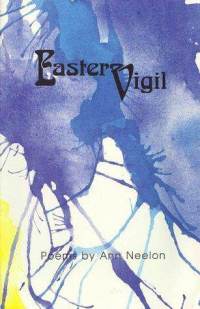
    This poem comes from Ann Neelon’s first collection of poetry, “Easter Vigil,” which won the 1995 Anhinga Prize for Poetry. Joy Harjo, judge of that year’s contest, say’s this about Ann Neelon’s collection:

    It is rare to come upon a poet with such a wide ranging vision as Ann Neelon. She’s a risk taker with heart, a poet who in in the world as a compassionate observer. The poem’s deserve your attention.

    Night Owl by Ann Neelon

    From you, I inherited this starry flesh, The night is young, the night is young — my voice is your voice in endless mimicry. Thirty years ago, sleepless and hungry for quarry, I caught you drinking milk of magnesia, staring into the kitchen sink as into a deep well, Father, if you had jumped in, I would have had to follow. How many times I space-walked toward you across the pock- marked moonfloor, triumphant in my pajamas before the less courageous world, Gravity was your unfailing argument: just what, young lady, do you think you’re doing up? Tonight, bills unopened, heart too in arrears, I remember how the muscles in your face relaxed. To ease your cares, it was enough for you to know that I didn’t have any. And so we discussed kindergarten, the moon and the stars. — Ann Neelon is a native of Boston and a graduate of the MFA program at the University of Massachusetts, Amherst, and of Holy Cross College. She has been a Peace Corps Volunteer in West Africa, as well as a Stegner Fellow and Jones Lecturer at Stanford Univeristy.

  • The Good Wife by Allison Elrod (Cave Wall)

    This week’s poetry pick is from the Winter/Spring 2011 issue of Cave Wall, to which I recently subscribed. Cave wall is published bi-annually and, according to their website, is dedicated to publishing the best in contemporary poetry. Follow this link to find out more about their publication and submission guidelines: Cave Wall

    The Good Wife
    by Allison Elrod

    On the day she knew for sure
    she walked through her quiet house
    admiring its lovely bones.
    She loved the light
    that filled the place,
    the view from every window.

    She went upstairs and lay down
    on her boy’s small bed.
    Lying very still, she made herself
    small — watched the paper dragon
    hanging by a tread above her, watched
    it turn and turn in endless circles.

    Later,
    she folded shirts
    and started dinner.
    She went out to meet the school bus right on time.

    From the contributors notes: Allison Elrod is a poet and essayist whose recent work appears in or is forthcoming in Iodine Magazine, Kakalak, The Mom Egg, and The Sound of Poets Cooking. She is Associate Editor at Lorimer Press in Davidson, NC.

  • My Stepmother, Having Returned to This Earth, Becomes Hannya, by Tara McDaniel

    Culling through the Winter/Spring 2010 volume of the Crab Orchard Review, published twice yearly by the Department of English, Southern Illinois University in Carbondale, I found this darkly whimsical play on Japanese imagery and knew I had found this week’s poetry pick.

    According to the Contributors’ Notes at the time publication, the author of this poem – Tara McDaniel –  is a student at the Bennington Writing Seminars. Her previous work has been featured in Cimarron Review, Marginalia: The Journal of Innovative Literature and Gloom Cupboard.

    My Stepmother, Having Returned
    to This Earth, Becomes Hannya

    When my stepmother unzips her body bags and snaps
    The rubber tag from her toes, I know
    She’ll creep into the kitchen and slake her immortal
    Thirst with 6 bottles of beer. She’ll sucker at the glass
    Greedily to get at its yeasty fizz, remembering – quite
    Exactly – where they keys to my gate are. Down
    Into the basement she’ll trundle, her tail
    Growing long beneath her pile of dressings,
    Making a hollow sound
    Where her serpent-belly slaps at the stone. A likely darkness:
    Black cabinet, squeaky doors, stale air, and Hannya
    On a bed of velvet. A little key behind one eye.
    Her claw will lift this wooden mask
    To her face: slavering jaw, hard-boiled egg eyes
    Cheekbones shaped like mallets,
    Crescent horns rising from the wild hair
    Weeping over her forehead and shoulders
    Like spilled Japanese ink. She’ll put the key
    Deep inside her throat, for safekeeping. Tomorrow,
    When the sun rises again over my back garden,
    She’ll wait out the morning till I’ve returned dozing
    To cough up the key, graze her claw over my door.

    Note: Hannya is a mythological Japanese character, a vengeful and jealous female demon. She is represented in traditional Noh theater by a horned mask.

    For more information regarding Crab Orchard Review, including submission guideline, contests, and awards, follow this link: Crab Orchard Review

  • In the Field by Rebecca Aronson

    This week’s Poetry Pick comes from Rebecca Aronson’s 2007 collection of poetry Creature, Creature, which holds the honor of first recipient of the Main-Traveled Roads Poetry prize. This first collection of poetry reflects the author’s familiarity with the landscape and inhabitants of both the Midwest and southwest regions of the US. They juxtapose picturesque scenes with honest appraisals of the people which inhabit them, and provide the weight of truth and a measure of clarity. In the following poem, Aronson effectively captures a culmination of images and notions leading up to the kind of moment many a Midwesterner would recognize as genuine:

    In the Field

    Where cows graze
    among mud and stones
    and their own droppings
    we spread our blanket
    and sit close
    for the first time
    this whole week spent
    in your mother’s house,
    we put our hands
    on each other and slide
    quiet under the enormous eyes
    of cows, fogging up as I
    spread my skirt (your mother said
    as skirt for walking? yes I said
    it’s a walking skirt), and we
    are moving together, the skirt
    around us so the cows might wonder
    but not the ruddy-faced man
    bobbing suddenly over a hedge
    or the one with him who
    tipped his hat, later introduces
    as your mother’s favorite
    neighbor at the market where
    he shook your hand
    a long time.

    Formerly with Northwest Missouri State University, Rebecca Aronson continues to act as contributing editor to the Laurel Review. She currently teaches and resides in the Albuquerque area.

    “Creature, Creature” is available at Barnes and Nobel online

  • Zingara’s Poetry Pick: Manzano Sunflowers by Dale Harris

    Dale Harris is an Albuquerque potter, poet and author of this week’s Poetry Pick. Her poem can be found in “A Bigger Boat” anthology as published by the University of New Mexico Press. I met Dale and heard her read Manzano Sunflowers at the volume’s book release in the summer of 2008.

    Because this poem evokes images of sunflowers, which are as common in the Midwest as they are in the Southwest, it calls forth the character of both regions while yet focusing on the New Mexican landscape. Harris’ sunflowers, therefore, capture more than place and image, but the very essence of sunflower-ness. And while a Midwesterner may not fully appreciate the significance of the arroyo’s image, or never attend the Indian Market, or discern the difference between Manzano or Sandia, she does understand the way sunflowers amass – has seen them take the place of prairie grass – and can appreciate the truth of sunflowers as offered in this poem:

    Manzano Sunflowers by Dale Harris

    You missed Indian Market and of course, the sunflowers.
    As usual they swept across August,
    at first a few, a yellow trickle along the fence line;
    then more, making pools in the pasture
    and splashing down into the arroyo;
    then incredibly many more,
    dappling the distance as though
    a giant hand had buttered the land.

     Yet with the entire prairie to expand into
    they prefer crowds of themselves.
    They mass along the roadsides line up
    as though a parade were about to pass.
    Here and there one stands alone but not for long.
    Soon his kin will come and there will be
    sunflower squalor, a floral slum.

     Once out they will not be ignored.
    Stretching their skinny stalks, they top our roofline,
    press against the window screens, peep in a the door.
    Familiar footpaths to the outbuildings are obscured
    and from the road we seem afloat,
    our cabin an odd tin boat in a sea of sunflower faces.

     They are the most staccato of flowers.
    I catch them humming snatches of polkas
    and John Philip Sousa marches,
    bobbing in the breeze to the Boogaloo,
    the Boogie-woogie and the Lindy Hop.
    I call their names, Clem, Clarissa, Sara Jane
    to try and tame them.

    My neighbor comes by, she has a field full.
    They’re useless, she complains;
    her horses won’t eat them.
    I should hope not, I exclaim after she’s gone.

    I don’t remember if you even liked sunflowers
    but you like life and they are all about that.
    Today I wrote to your family finally.
    I expect they are occupying themselves
    with beautiful gestures
    in order to get over the grief  of you.
    As for me, I have sunflowers.

    Read more of Dale’s poetry and learn about her pottery skills at Dale Harris Pottery.

    A copy of “A Bigger Boat” anthology is available from The University of New Mexico Press