Category: Missives and Meditations

  • The Magic of Spring: Celebrating Art, Literature, and Community

    The Magic of Spring: Celebrating Art, Literature, and Community

    Hosting breakfast for friends Sunday before St. Patrick’s: It’s been a long time since I had such easy, compatible, generous, and gracious friends to spend my time with. For breakfast, my husband and I made fruit salad, quiche (and failed Irish Soda Bread) and our guests brought flowers, loose leaf tea from Abeille Voyante Tea Co., sweet and savory pastries, and homemade short bread cookies. A perfect way to begin the week.


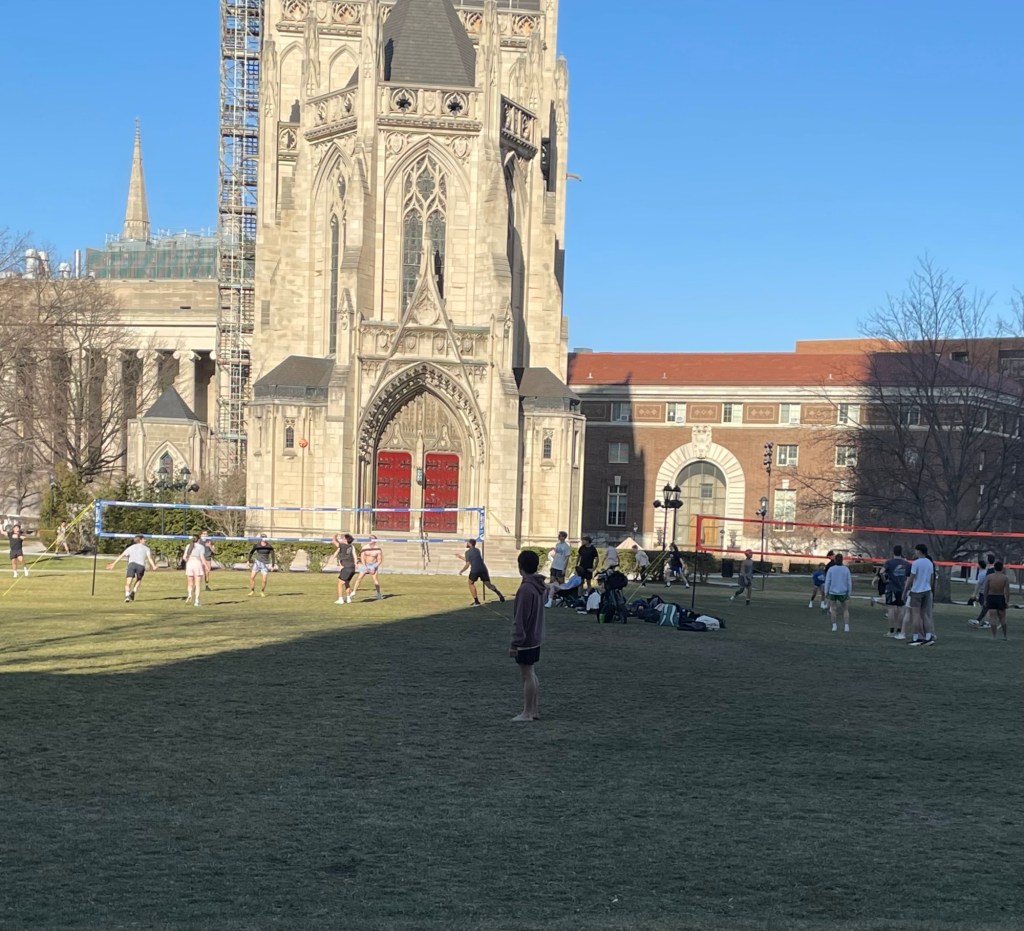
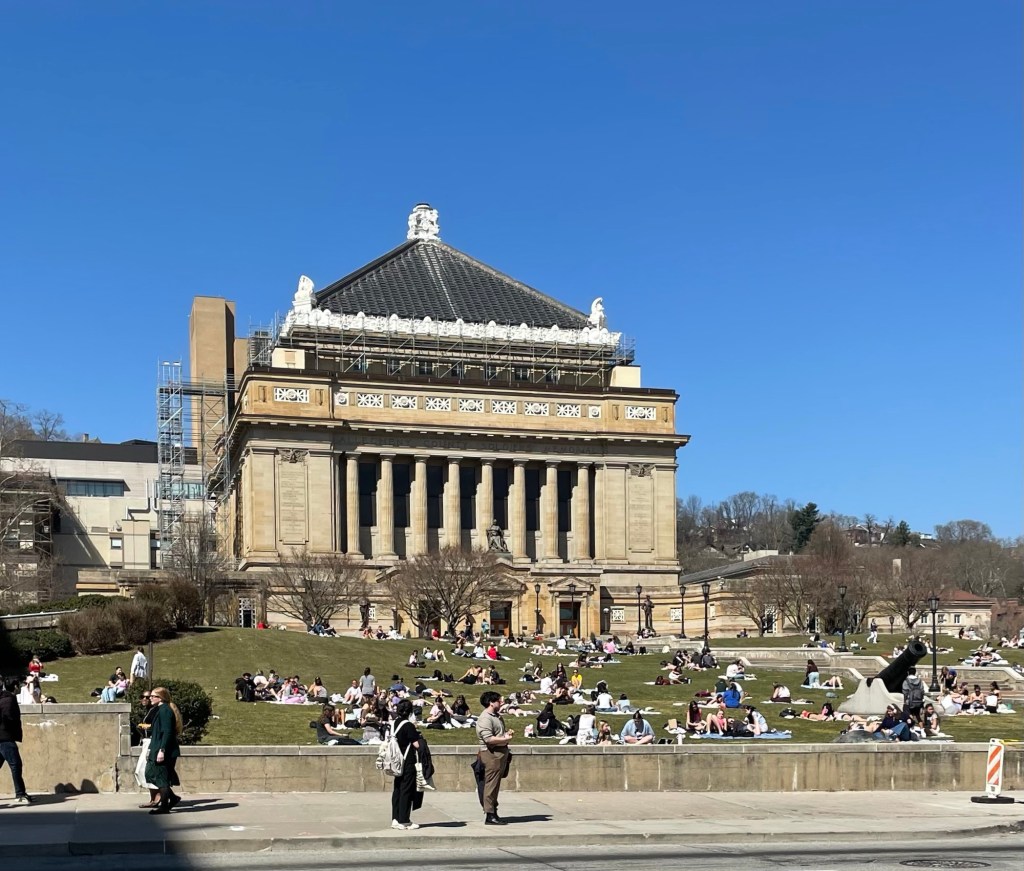
    Spring day on campus after an extra cold, snowy winter that wouldn’t let go. Students spread out their blankets in the sun all across campus, picnicked, read, studied and played volley ball lending a festive air to the afternoon. Too bad the nice weather didn’t linger longer. Even so, spring is near.
    The return of astronauts Suni Williams and Butch Wilmore, whose extended time in space was both impressive and anxiety provoking. Splashing down off the Gulf Coast of Florida March 18, they have been busy with their 45 day recovery process involving myriad measurements, tests, and re-acclimation to earth’s atmosphere. According to BBC, dolphins surrounded the Dragon space capsule after the splashdown making for a magical homecoming.


    Release of Sunrise on the Reaping, prequel to the Hunger Games trilogy by Suzanne Collins. I’d forgotten all about it’s forthcoming release until announced earlier this month. Regardless of literary merit, I enjoyed reading the original trilogy and relished the movie adaptations, which, in this case, were as good if not better than the books (rare as that is), at least in my opinion. It may not be exactly the escape I am looking for, but timely and relatable nonetheless. First I need to finish reading the half-dozen books in progress laying open in various rooms of my house!

    Madama Butterfly at Benedum Center, Pittsburgh. A groundbreaking new production created by an all Japanese and Japanese American creative team, Madama Butterfly’s story is transported to a fantastical realm where reality and dreams intersect. The production and performance were simply PHENOMENAL, and I can’t recommend it enough (except that March 30 is the last performance). I sat in for pre-performance opera notes for extra insight into decisions made around updating the story and cultural representation for the 21st century. This adaptation has a a surprise ending, which I would never reveal here. After many, MANY years of absence from professionally produced opera, this experience was like an oasis in the desert of my soul.

    img_7334

    Preparing for National Poetry Month: After several years navigating hurricanes, a pandemic, several job changes, and working on a competing project, Zingara Poetry Review is coming out of hiatus with a poetry prompt every day in April for National Poetry Month. Poets are invited to write a poem in response to as many or as few prompts as they like over the course of the month. Then, beginning June 1, Zingara Poetry Review will open for submissions for poems inspired by one of the prompts offered in April. Submissions may be overtly related to a prompt, or have only a thread of connection. If you wrote a poem in response to a prompt and threw out all but one line during revision, that counts.So come back each day in April for a new poetry prompt, spend some time in May revising your best drafts, and send 1-2 poems our way beginning in June.

  • 13 More Ways to Sabotage Your Writing Practice

    1. Believing you are of the wrong age, weight, gender, race, nationality, religion or anything else other or not other.
    2. Always attending conferences.
    3. Never attending conferences.
    4. Only reading Facebook and Twitter posts.
    5. Only reading what you like and or that which doesn’t challenge your sensibilities.
    6. Reading only the genre in which you write.
    7. Sacrificing your health, family, values, and quality of writing for the sake of getting published.
    8. Believing you don’t have a story to share.
    9. Not locking your office door (or otherwise protecting your writing time and space) when you write.
    10. Saying no when you should say yes.
    11. Saying yes when you really mean no.
    12. Never doing research.
    13. Doing too much research.
  • 13 Ways to Sabotage Your Writing Practice

    1. Waiting for someone to tell you it’s ok to write.
    2. Put off writing until after the dishes are done, the bills are paid, the lawn is mowed, Game of Thrones is over, you’ve re-watched all nine seasons of Seinfeld.
    3. Use your writing space for grading papers, planning lessons, paying bills, doing taxes, repairing your motorcycle.
    4. Never jotting down your good ideas.
    5. Believing your good ideas are rubbish.
    6. Judging what you write.
    7. Judging what others write.
    8. Comparing your writing with that of others.
    9. Berating yourself for not writing more.
    10. Repeating the familiar instead of exploring the unknown.
    11. Never asking questions.
    12. Assuming you don’t know how to write well.
    13. Assuming you do know how to write well.
  • September Digest for Zingara Poetry Review, Including News and Events

    Milestones: School began two weeks ago on August 21st with a Monday morning College Convocation and an afternoon viewing of the eclipse from the backyard of a neighbor’s home. We spent most of the afternoon and early evening visiting with friends old and new and enjoying a variety of delicious foods. We also had the unique opportunity to observe the behavior of backyard chickens as well as a growing hive of bees. As you might guess, the chickens were just beginning to settling down to roost at totality and seemed a little confused that it was time to get back to hunting bugs only a few minutes later. The bees, only slightly befuddled, went into their hive one minute then popped back out the next.

    None of the resident or neighborhood dogs seemed to notice anything different about the moment, except, perhaps, that their silly pet parents seemed awfully preoccupied with the sky.

    Tuesday, August 22nd marked the first day of classes, and like many other first year writing instructors, I found my English 110 classrooms filled with eager deer-eyed students ready to prove they are ready handle a college workload (in most cases), a spirit that was dampened by Thursday afternoon when an active shooter and hostage situation developed in a restaurant near campus.

    In fact, two of my students were confined to their dorms, located adjacent to the restaurant, and sent emails notifying me they would not be able to attend their 1:40 PM class. Because police contained the situation rather quickly, and it did not technically happen on campus (though we have an open campus), the president did not cancel classes, a choice that has resulted in a great deal of flack and general outcry from parents. At no point did the alert messages sent by campus security mention that there was an active shooter, only that there was an” incident” on King Street and to avoid the area.

    Needless to say, with so many charged events, the first week of classes was both exciting and exhausting; busy and disheartening. Fortunately, and thankfully, the second week of classes was much closer to normal, though I fear my freshmen students are already a little worn out. As you can imagine, their parents have become extra vigilant and are demanding frequent updates.

    During these same two weeks in my Intro to Poetry class, we discussed Gregory Orr’s “Four Temperaments and the Forms of Poetry” as well as completed several in-class writing prompts. Out-of-class poetry assignments have included writing an Abecedarian poem, a question poem, and a student choice poem, so my Labor Day weekend plans includes reading and responding to new poems by new poets.

    Now, for this month’s digest.

    Editorial Busy-ness: 
    • Poetry Picks have been filled until March and there are still submissions to consider. I even selected a few extra poems to publish on Holidays – that’s how great this year’s submissions have been.
    • Submissions closed on August 31 for this reading period. They will reopen in December.
    • I am reviewing poems published between July 1, 2016 and September 30, 2017 with an eye for six to submit to the Best of the Net awards.
    • I have selected six poems that were published, or slated to be published, on Zingara Poetry Review in 2017 for submission to the Orison Books 2018 Anthology of Spiritually Engaging Poetry. I am awaiting releases from their authors and will post a notice on the site with the poem titles once I have them.
    Of Interest and Inspiration:
     
    I lifted the following Phillip Larkin quote from the August 9th Edition of Garrison Keillor’s The Writer’s Almanac and share it here because it nicely encapsulates the spirit practicing poets try most to maintain:
    When asked how a young poet could know if his or her work was any good, Larkin answered: “I think a young poet, or an old poet, for that matter, should try to produce something that pleases himself personally, not only when he’s written it but a couple of weeks later. Then he should see if it pleases anyone else, by sending it to the kind of magazine he likes reading. But if it doesn’t, he shouldn’t be discouraged. I mean, in the 17th century every educated man could turn a verse and play the lute. Supposing no one played tennis because they wouldn’t make Wimbledon? First and foremost, writing poems should be a pleasure. So should reading them, by God.”
     
    The Writing Life:
     
    Music for Writing from the Internet Archive (Jackpot!), a website of archived works, including thousands of 78 RPM recordings (thanks to friend Erik K. for the tip).
     
    In Review:


    August Poetry Picks:


    August Monday Minutes:


    and one prompt: 

     
    Looking Ahead: 
    September Poetry Picks:
     
    “A Glass of Wine Near Birds” by Judith Bader Jones (9/6)
    “Inches” by Jamie Lynn Heller (9/13)
    “The Artist as Her Own Model” by Andres Rodriguez (9/20)
    “The Girl in the Cornfield” by Natalie Crick (9/27)


    Monday Minutes (that I know of):

    “13 Ways to Sabotage Your Writing”
    AND the return of poet interviews!!

    Readings and Workshops:
     

    Save the Date
    : Gary Jackson, Elizabeth Powell, and I will be reading at The Writer’s Place, 3607 Pennsylvania Avenue in Kansas City, MO on Friday, October 20th beginning at 7:00 PM.
    I will also lead a workshop the following morning, Saturday, October 21st (details to follow).
     
    Hope to see all you Kansas City area poets! 


  • Solar Eclipse: This Post Is About You

    After all, I am living in the path of totality.

    A location that is very attractive to people for hundreds of miles around who have been trickling into town for the last 48 hours.

    Some estimates predict Charleston’s population will swell by approximately 1 million people, which is over double its normal population. I don’t know where everyone will stay, now that the hotels, Air B&Bs and campsites are filled to capacity.

    And I can’t even  imagine what’s going to happen with our already congested traffic Monday afternoon through Tuesday morning when people try to leave. I am imagining something akin to the evacuation traffic I witnessed during Hurricane Matthew last October, except I doubt the Governor will reverse lanes.

    Though you never know.

    In anticipation of this century’s total solar eclipse, folks around here have been preparing the way I used to prepare for a Kansas ice storm; that is, by running lots of errands and stocking up on food and water. Only this time, shopping lists include a pair of eclipse glasses.

    Now, the day is here, and though I have plans to attend a backyard BBQ and viewing party, the sky is in fact overcast and the weather app on my phone has that little cloud/lightning bolt/rain icon thingy for the hours of 1:00-4:00 PM.

    Precisely the hours the solar eclipse is to take place.

    Oh, we will still notice the darkening sky, still raise a beer to toast another 100 years (talk about auld lang syne!), still appreciate the afternoon off and the strange ways the eclipse has been commodified.

    But I don’t know if we’ll actually get to see it.

    So, to pass the time, I’ve compiled this entertaining list of eclipse related media, the most bizarre (in my opinion) being the Chiquita Banana Eclipse Commercial below.

    (And look – the sun is peeking out now,  so there’s still a chance we’ll see the eclipse after all.)

    Enjoy.

    How the Solar Eclipse Works (great visuals): Sure, you know the basics, but why not enjoy this refresher?

    Eclipse Extravaganza at Caw Caw Interpretive Center: Usually closed on Monday’s, Caw Caw is open today  for the eclipse event and interpreters will be on duty to observe the behavior of wildlife (though I don’t expect alligators will jump in their cars to sit in line for a Krispy Kreme Eclipse Donut). Viewing glasses will be provided to visitors.

    Astrological Significance of the Eclipse: “An interesting observation about the coming eclipse is that 5 major planets (Sun, Moon, Rahu, Mars, and Mercury) will be in close proximity within 20° and will also be under Ketu’s aspect. This planetary amalgamation is likely to make the full solar eclipse even more potent.”

    Chiquita Banana Sun: Something purely silly and ridiculous that makes me hate advertising a little less.

    Krispy Kreme Eclipse Donut: This will tie up traffic on Savannah Highway all day. The last time Krispy Kreme had a donut deal, we needed traffic cops!

  • Yellow Jackets and the Demons of Indecision

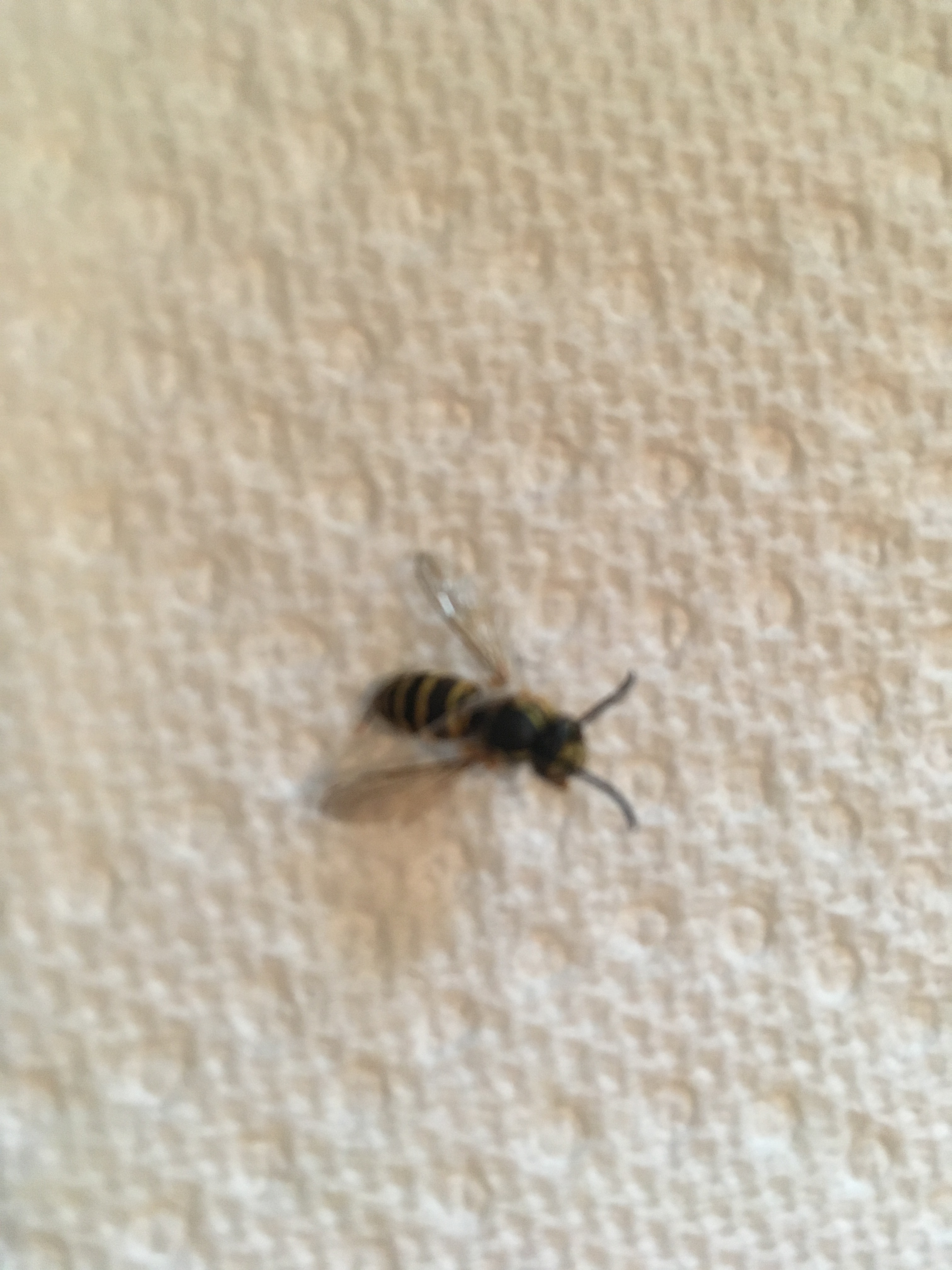
    By the time this post appears, it will have been a week since the exterminator came and took care of the yellow jacket problem in my back yard.

    I didn’t know the exterminator had even arrived until my husband called me around mid-morning to say he’d received an invoice for the exterminator’s services via email. My husband was in San Diego at the time, attending the Comic Con.

    I was surprised because the appointment had been scheduled for 2:00 PM., and  because it was raining cats and dogs when I’d left the house at around 8:20 AM. I was attending a conference in town.

    Of course, it makes much more sense to extract a wasp’s nest first thing in the morning. That’s when the nest is most occupied by wasps.

    I just hadn’t thought of it.

    Still, I was in doubt. I couldn’t  fathom that the heavy rain and wet conditions wouldn’t interfere with the extermination. Honestly, I half-expected the phone call was to cancel.

    But my husband confirmed that, yes, according to the exterminator, the wasps had in fact been “augmented” from the yard. It was a sizable nest, my husband quoted the exterminator as saying, probably 500 wasps or more. There is a chance that a few are still buzzing around looking for their home, but they won’t last long without their nest,” my husband continued.

    Something about this last observation made me feel cold-hearted.

    I’m not confessing a secret love for yellow jackets here, or anything like that, but I have to admit to experiencing some residual feelings of guilt over creating a situation that caused the death of hundreds of innocent creatures. Those yellow jackets were, after all, only behaving as yellow jackets do: making and protecting their home, creating more yellow jackets, and generally building an existence.

    It just so happened that their existence was interfering greatly with ours.

    Specifically, they made it impossible to mow the yard, first by attacking my husband when tried mowing the back yard before we left town, then attacking a friend, who tried to mow just the front yard while we were gone.

    They simply had to go.

    Still, I couldn’t help imagining those few surviving wasps, stunned and confused, hovering around the hole in the ground that was once their nest. Couldn’t help but sense their groundlessness.

    Such are the thoughts of a writer.

    But then I realized that, since the extermination had been taken care of, my afternoon was free.I felt cheered, then, and shifted my thoughts to how to spend the rest of my day.

    And this, dear reader, is precisely the moment that the demons of indecision appeared.

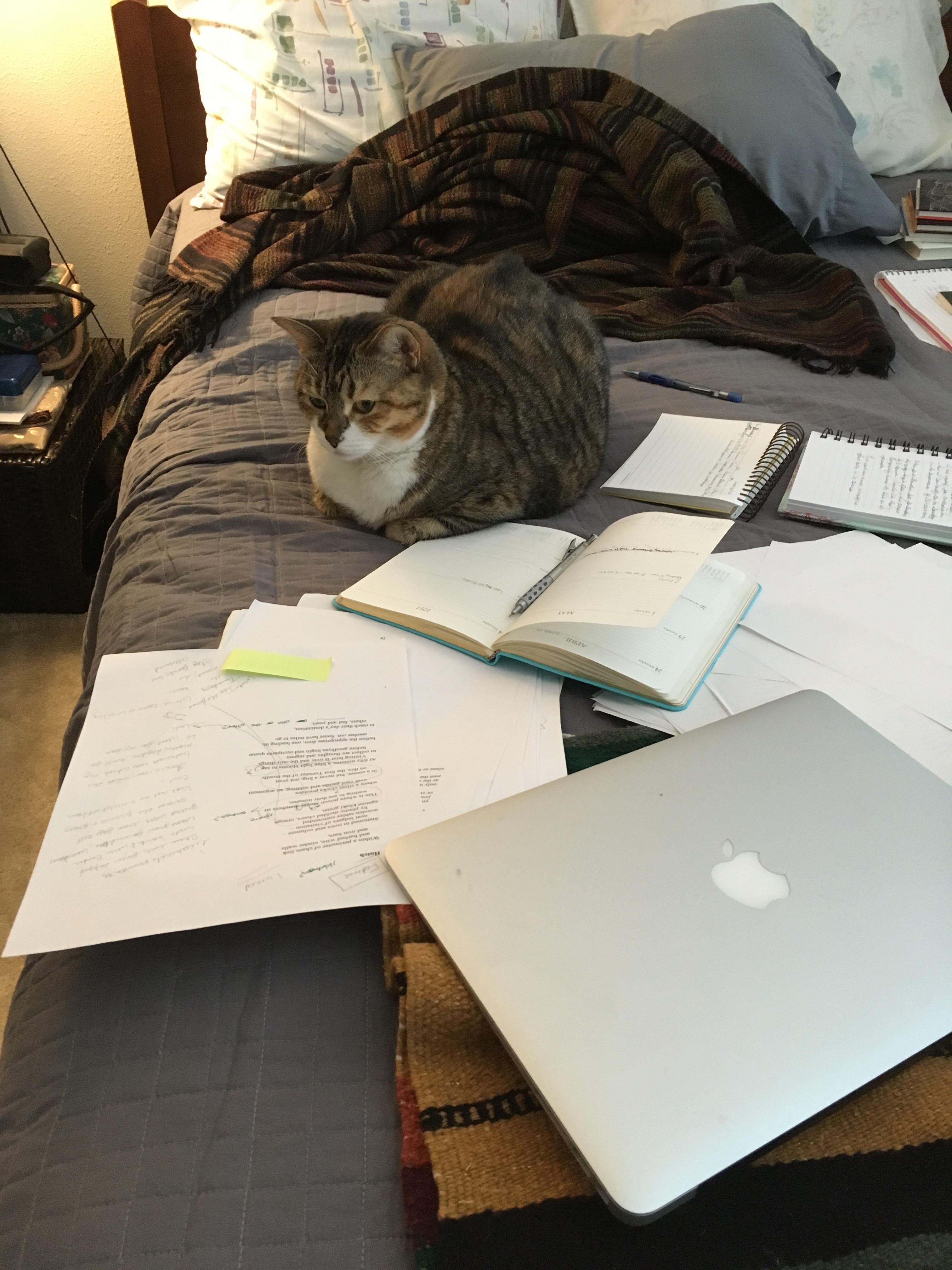
    A virtual drop-down list of options, including everything from doing homework for the conference to editing my manuscript, finishing a quilt I’ve been sewing to taking a nap with the cat, to going to the gym or staying on campus to work on my syllabus, all popped into my mind.

    Good options, all. But together, potentially overwhelming.

    Especially since I am apt to paralyze myself with indecision in these moments.  I mean, just making the decision to eat out, for example, can evolve into a mental debate of what and where to eat.

    Choosing to write opens an even wider array of menu options: should I write poetry or prose, something formal or informal, personal, creative or academic?  Should I write something new or revise something old? Should I catch up my correspondence by sending cards or composing emails?

    Really, the list is endless.

    The point is, I tend to put too much pressure on myself when it comes to decisions. I feel I must make the absolute best decision and fear that making the “wrong” decision will result in drastic, long-lasting consequences which I neither wanted nor intended.

    Even though this has never happened.

    Still, it is true that no matter what I choose to do, I am choosing NOT to do a whole host of other things. If I write, I am not exercising. If I do homework, I am not working on my poetry manuscript. If I work on my blog at Starbucks, I am not working on my quilt at home.

    And of course, making no decision at all is a decision in itself.

    So it is that with every choice I make, I feel a little bit of grief and a smidgen of sorrow. Like those stunned wasps unhoused by the exterminator, my unchosen options hang around searching for a home – a place into which to burrow and build an existence.

    But such are the thoughts of a writer.

  • Summer Writing and Revision is Easy

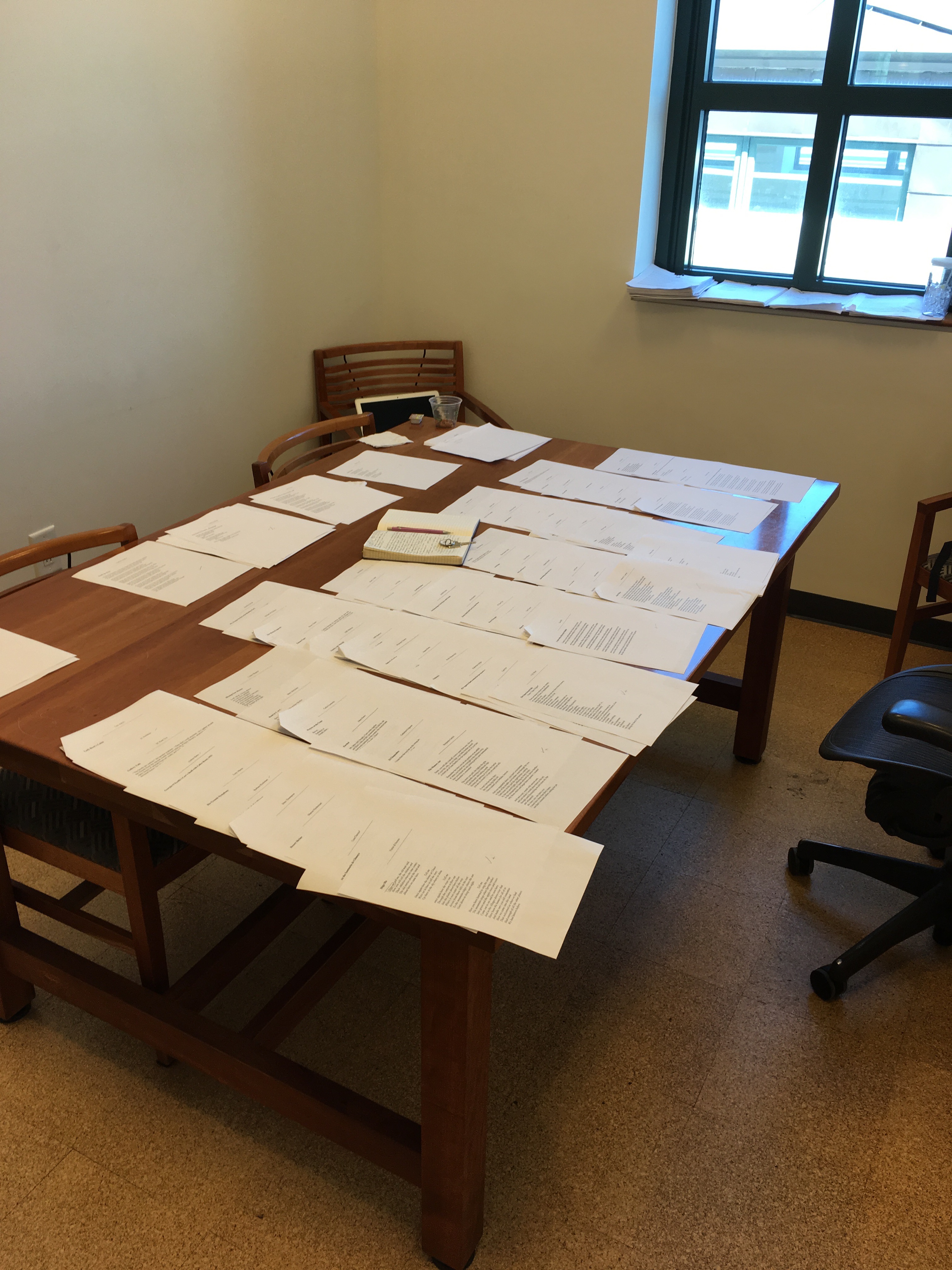
    This summer, I have been availing myself of the use of the College of Charleston’s Addlestone Library’s study rooms to focus on several writing projects.

    This is the first summer that the library has offered reserved study rooms to faculty, and it all came about in response to popular demand and the advocacy of the Faculty Writer’s Retreat facilitator, Lynn Cherry.

    The retreat itself, held during most school breaks, is quite a boon and one that I participate in every chance I get, which has been four times thus far. Unlike a writing conference, which usually involves craft lectures, panels, readings, seminars, and, perhaps, workshops, the College of Charleston’s Faculty Writers Retreat simply provides a distraction-free study room, daily lunches, afternoon snacks, and a sense of accountability. Faculty can apply for a 2, 3, or 5-day stint and available spots fill quickly. Participants agree that they will not use the time to prep for classes, grade or browse social media. Most everyone finds they get a lot done during their selected time period, and even when there are struggles or blocks, most faculty are glad to have had the time to deal with those, too, as it actually helps them  move forward.

    Though I come away from the Faculty Writer’s Retreat with a different kind of same kind of high that a conference might generate, I always come away feeling productive, and centered and with plenty of evidence of my hard work. The difference is subtle but important.

    This year, after a number of participants expressed just how useful it was having access to a study room, myself included, the retreat facilitator inquired into the matter on our behalf. Thanks to her initiative the good folks at Addlestone agreed to set aside three rooms for faculty to reserve for up to three days at a time during any given week this summer, up until the week that classes begin.

    And I have been in one of them every week that I’ve been in town.

    The first several weeks of the summer I worked almost entirely on the New Mexico Poem anthology, since that was my focus during the retreat in May, and more or less wallowed in rereading every contribution and reconsidering the organization and title of the sections. What I found interesting about the process was how I paired some of the same poems together in the revision as I had paired in the first collection, which I discovered after reviewing both manuscripts. In other instances, and maybe because of the new section titles and focus, poems wound up in very different locations.

    I’m sure I’ve spent over 100 hours reconsidering the collection in detail, not including the breaks I took to remain as fresh and as objective as possible. It’s no lie that being hungry, angry, lonely, or tired will drastically affect one’s judgment, so I made sure not to deliberate while experiencing any of those states.

    I sent the manuscript off to my co-editor in mid-June, right before taking off for Kansas City to visit family.  As is usually the case, I found it very difficult to shift my mental state from contemplating poetry to focusing on family for those few days but finally let go and shifted my focus to the present moment and to enjoying my time away from Charleston. Now that I have returned home, the opposite is more true and I struggle to ease myself back into a life groove.

    To help with my re-entry, and in the spirit of easy does it, I “suited up and showed up” to my reserved study room on Wednesday, after three weeks away, determined to work on something. I set no specific goal or objective – just brought with me a hard copy of my own manuscript and my computer. After getting settled in, I was able to revise a few poems, rearrange my MS into sections, and, eventually, assemble and submit a six-page manuscript for a literary magazine In which I would very much like to have my poems appear. I think the day was more productive than it would have been had I fallen into either of the two habits that are most common to me: 1) overwhelm myself with a list of a dozen possible projects on which I might focus, or 2) frustrate myself with an improbable goal. It is much better, I am learning, to have an open mind as I approach one small project at a time.

    I did wind up canceling my Thursday study room reservation, however,  to meet with an exterminator regarding the Yellow Jackets that have taken residence in my yard, most likely as a result of our neglecting yard work those seven months we were living in an apartment while repairs were being made to the house after Hurricane Matthew. (Yes, I can find a way to drop that bit of info into most conversations.) Yellow Jackets, I decided, are just a little more pressing than having a study room for the afternoon.

    The week ahead is a busy one. I am to attend a Writing Across the Curriculum conference and have about a half-dozen appointments to see to. I was tempted to cancel my study room reservations for the week, seeing how I will only get a few hours here and there to utilize the space, but decided against it, for when things are especially busy it is especially important to hold space open for my writing. I may not get as much time as I would prefer, but any time I do capture will go under the column for successes this week.


  • Protests at AWP in DC 2017

    Usually around this time of year my Facebook and Twitter feeds are overrun with cheerful posts about the various AWP events that my friends and colleagues are planning to attend, but with all the attention-grabbing, anxiety-ridden news that has daily shocked social media these last few weeks, it’s almost as if everyone has forgotten.

    They haven’t, of course. There are still shouts out among fellow writers and acquaintances trying to connect with each other, tips for first time attendees and, because this year’s conference is in DC, some encouraging chatter about several politically centered events.

    Maybe what’s really happening here is that posts about AWP are just getting buried by all the fearful factoids and scary statistics swirling around all forms of media right now. Or maybe, and this is probably more likely, those are the posts I allow to capture and hold my attention.

    I am struck, nonetheless, by the auspiciousness of AWP, a conference that attracts a wide range of diverse writers, taking place in DC just weeks after the inauguration and subsequent Women’s March and the more recent protests against the Muslim Travel Ban, and how this confluence of events adds gravity and weight to such typical pre-AWP activities as making travel arrangements, sending ahead boxes of books, making plans to see friends and, most importantly, contemplating what it means to be a writer in “Trump’s America.”

    This year, in addition to looking forward to the book fair, after-hours parties, and copping a frenetic high from mixing adrenaline with too much alcohol and too little sleep, some conference-goers are looking forward to converging on Capitol Hill the afternoon of Friday, February 10th to “make a case against the Trump Agenda”(flavorwire.com) while others will be participating in Split this Rock’s  Saturday vigil and speakout on the White House lawn. There is also word of a Cave Canem protest-reading at Howard University and, no doubt,there will be numerous other off-site politically motivated events that are evolving even as I write this post.

    It is my hope that these events are heavily promoted and heartily attended and that each receives ample news coverage and sets itself forth as stellar model for a successful, effective demonstrations by which others can emulate. Most of all, I hope these events will encourage other groups and individuals to speak out, to become active in whatever capacity makes sense for their circumstances, and that professionals who have the power and ability to make changes in Washington view these gatherings as encouragement for their continued vigilance in the resistance against tyranny. Most of all, I hope that writers and artists around the globe feel bolstered not to “keep their moths shut” as Steve Bannon would admonish, but to respectfully continue doing what they do best, which, of course, is to write on.


  • Life After Hurricane Matthew

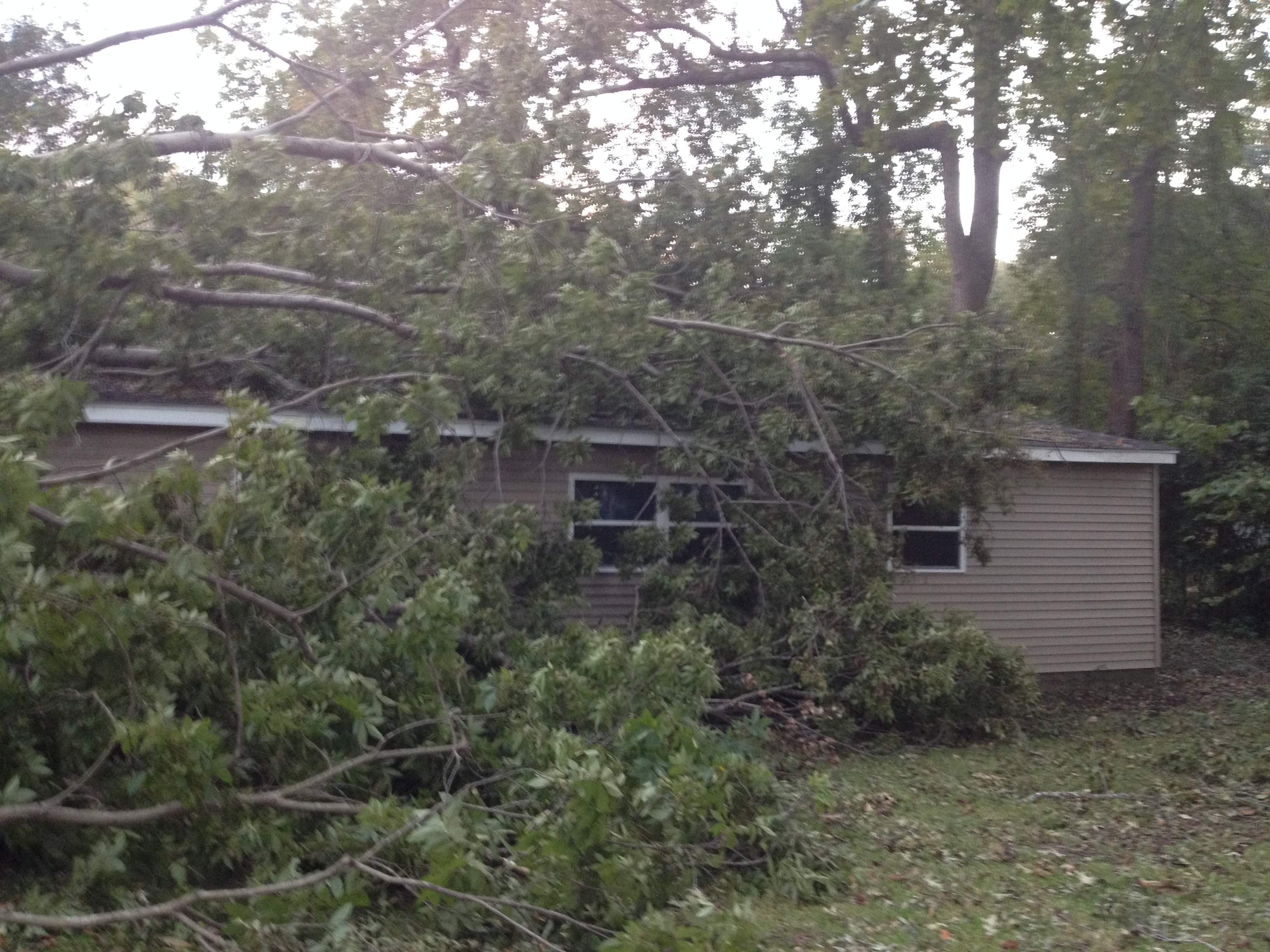
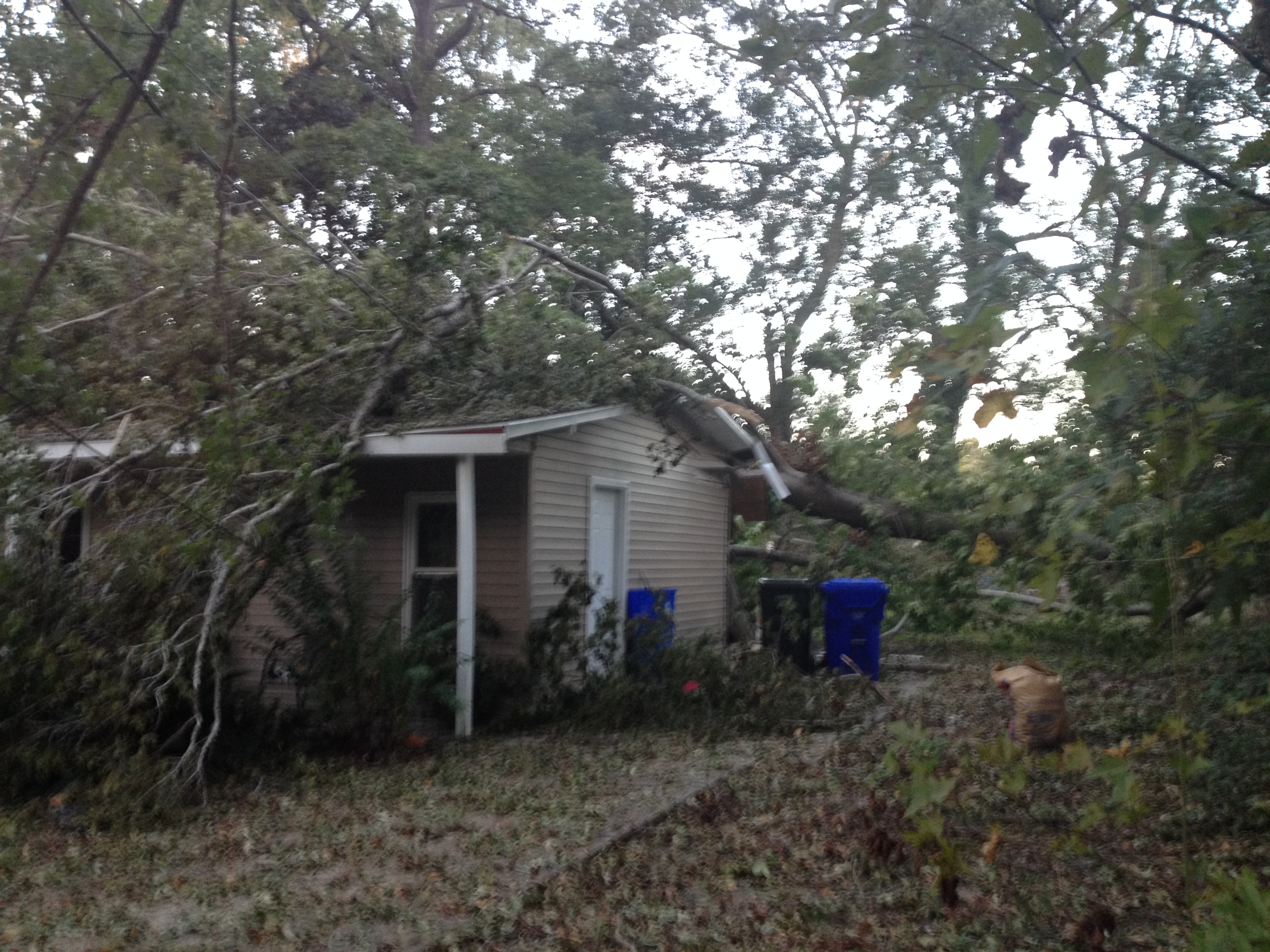
    When Hurricane Matthew swept through Charleston last October, saturating the ground with rain water and whipping up high winds, the roots of the large hickory tree in our neighbor’s yard loosened their grasp on the soil beneath them. Like any tree in high wind, especially ones with compromised roots, the hickory thrashed back and forth in the storm until, at last, it fell.

    My husband and I, along with our cat, had evacuated to Kansas City and were safe and sound in my mother’s living room, enjoying her company and a sense of being “home.”  We would not know for another day or two that that hickory tree landed on and crushed the back corner of our house, taking the power line and electric meter with it.

    file_004The news came via phone from friends who live nearby and who had, when learning we’d evacuated, offered to drive by and check on our house. They sent pictures by text and we cast them onto my mother’s television. The tree, as long as our house is wide, appeared to be swallowing our new home, and though we could see that the roof had been crushed where the tree had hit, we couldn’t tell how much damage was sustained or how far back it went. We wondered if the entire roof wasn’t compromised.

    The drive home was somber and tense, our minds full of worst case scenarios. We drove until dark the first day, then checked into a hotel for the night. No sense in driving all the way to Charleston where there were no hotel vacancies, we’d reasoned.

    As directed by our insurance company after filing our online insurance claim, I called the file_000mitigation company we’d been referred to as soon we arrived at the house the next evening. The sun was just setting, the sky was blue, and the wind was still. The man on the other end of the line, Lorne, asked me to describe the damage to him. I tried to be as specific as I could as I walked through and around the house verbally noting how large the hole in the roof, how flooded the laundry room, how wet the ceilings and walls, how damaged the flooring throughout…..at the end of our conversation Lorne asked me if the house was habitable.

    Well, there’s a gaping hole in the roof and no power, I told him. So, no, I don’t think it is habitable. 

    That was four months ago. Since then my husband and I have been shuffled from hotel room (where we lived for over six weeks) to two-bedroom apartment  (into which we fit three additional family members over the holidays). I cannot begin to list all the untruths and delaying tactics we have been subjected to or the patience we’ve had to tap into each time someone asks us for our claim number (they know damn well who we are!) or tells us “everything’s behind schedule because of the hurricane.”

    It took over a week for both the field adjuster and the tree removal people to arrive. When they showed up the same morning, they got into each other’s way and the field adjuster was unable to make a complete inspection. It took another two or three weeks for the City Building Inspector to look at the property, and that was only because our general contractor waited for him outside his office every morning for a week. More recently, the building permit was delayed because there is no plat for the house and the plat surveyor is behind and won’t be out for another three weeks. New trusses for the roof, which will have to be ordered, are on a four week delay. And even before all of this, it took 30 days for the desk adjuster to provide the (ridiculously low) initial estimate; another 30 for him to respond to the (much higher) estimate our GC provided.

    Meanwhile my husband and I are juggling phone calls with insurance agents, adjusters, and contractors, packing our belongings in boxes to be moved out of the house and into we don’t know where (there were no storage pods left in the city), maintaining our teaching duties, preparing for the holidays, checking on our cat housed at friends’, and explaining over and over again to our family and colleagues what had happened. At times, it felt impossible to keep up with all the demands of the situation much less basic needs, like healthy food and quality, anxious-free sleep.

    My husband and I are still in the apartment the insurance company arranged for us and while things are generally calmer and we have found a workable rhythm to life, reconstruction has yet to begin on the house and we don’t really know when it will. There’s still a slew of paperwork to wade through and dependence on the cooperation of a couple of other bureaucratic entities to secure. So while the rest of the city has pretty much recovered and moved on from Hurricane Matthew, we continue to wait for resolution.

    It was not until this week that I was able to put my full attention on Zingara Poet. I could see my pet project listing on the waves, submissions and emails neglected since late September despite every intention, even the hiring of an intern, to respond to submissions in a more speedy manner this year. Yet I did not want to bring my anxious energy to my poetry reading. I’ve leaned that the two just don’t mix — so kept putting it off until I was in better spirits.

    I am glad to say that, as of this writing, most of the October and November submissions have been reviewed and responded to. In the week to come, I will be looking over the rest of December submissions and sending out my decisions. Likewise, poems for most of the first half of 2017 have been chosen and their dates of publication scheduled (only a few spots left). With luck, I will be able to enter the new submission period (later this year) caught up and, I am keeping my fingers crossed here, from the comfort of my own home.

    Thanks to all the poets out there who have waited patiently for a response. As always, I am impressed by the quality and breadth of the selection.

  • Organ of the Soul

    Iphone Pics and Videos 007It’s cloudy and wet in Charleston today, the air swampy and pungent as is typical of August in this region. While I am still not used to it, I am less unused to it than I was three years ago when I moved here from Albuquerque. This morning, instead of taking my usual stroll around the neighborhood and down the bike path that runs through West Ashley, I opted for the treadmill at the gym where the air is at least somewhat controlled. I even followed up with 30 minutes of yoga before making a quick visit to the chiropractor for some therapeutic attention to what some call my “boulder shoulders”. I am blessed with a Tuesday/Thursday teaching schedule this semester so can look forward to spending my Mondays much in this way — at least until Midterms when grading papers will take precedence over feeling good.

    Last week marked the beginning of the fall semester and was filled with last-minute revisions to class syllabi, office hours, and lesson plans. The early semester juxtaposition of high energy and intense focus sometimes makes me feel a little schizophrenic. Though I felt exhausted by the time Friday rolled around, I was charged from meeting this year’s new crop of students. I can already tell it’s going to be a great semester.

    I opted to teach two classes this semester so that I might focus on other projects, namely submitting poems and poetry manuscript to suitable markets. Though it means tightening my belt and cutting out quite a few extras (and not so extras), I think that the trade-off will be worth it, even if it’s just more time to write and submit. Up until this year, my submission activity has been pretty light. I will be buckling down this semester and getting my work out into the world.

    Meanwhile, poems for the 2017 Zingara Poetry Picks are streaming in at a nice pace and my community Creative Writing classes are going well. It’s great to be back in full-swing again.

    I want to share with you a few of the thoughts that are running through my mind grapes this day; little odds and ends – snippets that might deserve further development or investigation:

    1. I think it is Borges who is credited with the theory that the soul is contained in the voice, at least that is what David Isay, founder of Story Corps, said in an interview by Krista Tippet in the May 12, 2016 “On Being” Podcast. When I google the phrase, I also get “the human voice is the organ of the soul” from Henry Wadsworth Longfellow. I like both of these ideas, especially when  thinking about, and writing, poetry. I’m going to ponder it all this week.
    2. The law of attraction suggests that like things are attracted to one another. In the physical world, this phenomenon is observable in H20 wherein polar molecules are attracted to one another like magnets: water molecules actually glob on to other water molecules. In the world of human constructs, it also seems that wealth attracts wealth, privilege attracts privilege, and power attracts more power. From these observations our culture has developed the theory that positive thinking can attract positive experiences and lifestyles; that we can manifest the life we want. It makes sense that this theory is not confined to what we consider desirable circumstances. Isn’t it also true that poverty attracts more poverty, addiction more addition, and violence more violence? Manifesting something other than what one is experiencing in these circumstances, while possible, is no easy feat. The move from poverty to wealth, for example, or violence to peace, requires nothing less than Herculean effort.
    3. And finally, this : able-bodied-ness is a temporary state for pretty much everyone.

    That’s it for this Monday Minute. Leave your comments below and have an interesting, curiosity-filled week.

    Z-Poet

  • Exploring Coastal Carolina: Caw Caw Interpretive Center

    DSC03133Today I purchased a Charleston County Parks “Gold Pass” membership that provides the holder with “unlimited admission to 11 county parks” for a full year from date of purchase. While I will certainly enjoy visiting Charleston County parks without having to pay the buck or so admission fee every time, I am most excited about the early morning bird walks offered twice a week at the Caw Caw Interpretive Center, also free to pass holders. Located just off South Highway 17, the Caw Caw, which boasts six miles of hiking trails as well as numerous elevated boardwalks, is considered the birding hot-spot of coastal South Carolina, an impressive boast considering South Carolina is itself host to multitudes of bird species.Awendaw

    The appeal of the Caw Caw bird walks for me is that they combine at least three of the activities that I love: walking, appreciating nature, and learning the specifics of the environment in which I live. The Eco-tours I’ve participated in since moving here two years ago have included two guided walks on the Tibwin Plantation near Awendaw, a day exploring Bulls Island, an afternoon singing with dolphins on the Edisto River, and a morning hunting for fossils on Edisto Beach. Edisto Beach ShotEach tour has provided insight into the area’s eco-diversity and brought me face to face with such wonders as the ancient shell rings of the Sewee, the hard to find blue indigo bunting, and literally dozens of alligators sunning on a wetland bank (through which I had to walk), each time impressing upon me the fact that I have only barely begun to see, or understand, just how unique Coastal South Carolina ecology is.

    Though I am excited to add these bird walks to my dossier of SC adventures, it will be several days yet before my new Gold Pass arrives in the mail — adding about a week to my anticipation. I will bide my time patiently, however,Bulls Island Shot looking through the “Birds of South Carolina” field guide I bought last year and drooling over digital camera equipment on the internet in hopes that, some day, I can add photography to my birding experience. For now, I’ll satisfy myself contemplating the wonder of how the hobby I’d given up pursuing years ago has returned to me just in time for the cooler, drier days of another Charleston October.

  • Voice and Technology: A Brief Meditation

    Vocal communication is one of the most ancient modes of technology still utilized in modern times. It is the mode by which we first learn to persuade others to see our point of view and call them to act, and it still holds great power and rhetorical value today. More than engaging the intellect through well-chosen words, the voice is the body’s singular channel for connecting with others and conveying emotional meaning through intonation, stressed syllables, meter, rhyme, and volume. Poetry, with its attention to sound and sensuous appeal, naturally evolved from the human need to remember and convey oral histories. Combining the technology of written expression with the oral tradition of story-telling, poetry expands the limits of language to engage the listener’s soul. We can say, then, that poetry is a technology older than the iPad, the laptop or the analog phone. Older still than cave-dwelling drawings or the written word; older even perhaps than prose.

    While poetry continues to evolve in response to new theories on form and function and even in response to historical upheaval that would require it to conform, it still resists and overcomes language barriers, gender perception, and political influence. Read or spoken aloud, poetry continues to be one of the most effective means of conveying emotional truth today.

  • The Problem with the Perfect Space

    The characteristics of a perfect creative space are as varied and subjective as are the myriad individuals who utilize them. What makes an ideal space for one may be abhorrent for another. One writer may prefer the solitude of a quiet room with a closed door while another prefers the white noise and human bustle typical of the neighborhood café. One painter may prefer En plein air while another longs for the consistency of the indoor studio. Too, such preferences alter in response to related personal needs and emotional states.  Perhaps yesterday the objective was to get out of the house and away from the dirty dishes, making the coffee shop, where the dishes are someone else’s concern, more conducive to working. Tomorrow the concern may be reducing caffeine intake and limiting sugary snacks, making the library a more attractive choice. Artists intuit this about themselves and constantly adjust to get their creative work done.

    Artists also know that physicality of space is important to the creative process. The painter/sculptor must be able to make a mess; the musician must make noise without raising the ire of neighbors; the photographer must have space to store and use specialty equipment; and the writer must have something hard on which to write or a place to set the computer upon which she types. In developing one’s place of creativity, it may be useful to know that quiet is generally considered more conducive to creating than noise, that large spaces dissipate energy and small spaces channel it, that distractions can prove homicidal to focus. But more importantly is intention to create.

    One of the ways artists undermine their intentions to create is to focus on acquiring a perfect creative space – even waiting to create until everything about a space is perfect. Manuscripts are postponed until the perfect house on the perfect lane with the perfect view are purchased, occupied and decorated. Musical arrangements delayed until the ideal music studio secured. Great paintings left imaginary until just the right cooperative opens up. Then, once the perfect space is acquired, the artist becomes paralyzed by that very perfection. The writer is so stunned by the view beyond the windows of their dream writing space they never write a word. The painter becomes afraid to make a mess in their newly built studio with its hardwood floors. The sculptor becomes distracted by loft-mates and other artists in the cooperative she joined. The perfect space, then, is just another way perfectionism can thwart an artist’s efforts.

    The intention to create, then, is at least as important as one’s creative space.  Is it really the thought of those dirty dishes that interferes with creating, or is it fear of facing the blank page, empty canvas or block of stone? Is it fear of success? Or is the thought of those dirty dishes a distraction meant to delay the creative process and temporarily keep the ego comfortable? Will the perfect creative space really make you better at creating, or will the act of creating make you better at creating?

    Take into consideration other professions in which lack of distractions is crucial to success. You would not want your dentist to be distracted by a stunning view while performing your root canal. Give the same level of focus to your creative work by providing your creative process with as much consideration as a surgeon gives the patient beneath his scalpel.

  • The Perfect Creative Space

    The characteristics of the perfect creative space are as varied and subjective as the myriad individuals who utilize such spaces. What makes an ideal space for one may be abhorrent to another. One writer, for example, may prefer the solitude of a quiet room with a closed door while another prefers the white noise and human bustle typical of the neighborhood café. One painter may prefer En plein air while another longs for the consistency of the indoor studio. Time and mood, too, play roles in an artist’s preferences.  Perhaps yesterday the objective was to get out of the house and away from the dirty dishes, making the coffee shop, where the dishes are another’s concern, more conducive to working. Tomorrow the concern may be reducing caffeine intake and limiting sugary snacks, making the library a more attractive choice. Artists intuit this about themselves and constantly adjust in order to get their creative work done.

    Artists also know that physicality of space is important to the creative process. The painter/sculptor must be able to make a mess; the musician must make noise without raising the ire of neighbors; the photographer must have space to store and use specialty equipment; and the writer must have a surface upon which to write or to place the computer upon which she types. In considering creative space, it is certainly useful to know that quiet is generally more conducive to creating than noise, that large spaces dissipate energy while small spaces concentrate it, and that distractions can prove homicidal to focus. But most important for creating is having the intention to create.

    One of the ways artists undermine their intention to create is to focus on acquiring the perfect creative space – even waiting to create until everything about a space is perfect. Manuscripts are postponed until the perfect house on the perfect lane with the perfect view are purchased, occupied and decorated. Musical arrangements delayed until the ideal music studio secured. Great paintings left imaginary until just the right cooperative opens up. Then, once the perfect space is acquired, the artist becomes paralyzed by that very perfection. The writer is so stunned by the view beyond the windows of their dream writing space they never write a word. The painter becomes afraid to make a mess in their newly built studio with its hardwood floors. The sculptor becomes distracted by loft-mates or other artists member of the cooperative she has joined. The perfect space, then, is just another way perfectionism can thwart an artist’s efforts.

    The intention to create, then, is every bit as important as the physicality of the space.  The artist must ask – Is it really the thought of those dirty dishes that interferes with creating, or are those dirty dishes a convenient way to avoid facing the blank page, empty canvas or block of stone? Will the perfect creative space really improve the creative process, or will the act of creating improve the creative process?

    Take into consideration other professions in which focus is crucial to success. The surgeon, the dentist, even the chef. None work in luxurious open spaces or demand astonishing views. They do not entertain distracting thoughts of inadequacy or images of failure while practicing their craft. They do not worry about the dishes.

    Artists can take a note from the pages of the professional practice book and learn to focus just as intently to give the creative process as much consideration as a surgeon gives the patient beneath his scalpel.

    Set an intention to create today and get to it.