Author: Lisa Hase-Jackson

  • New Picks for the New Year

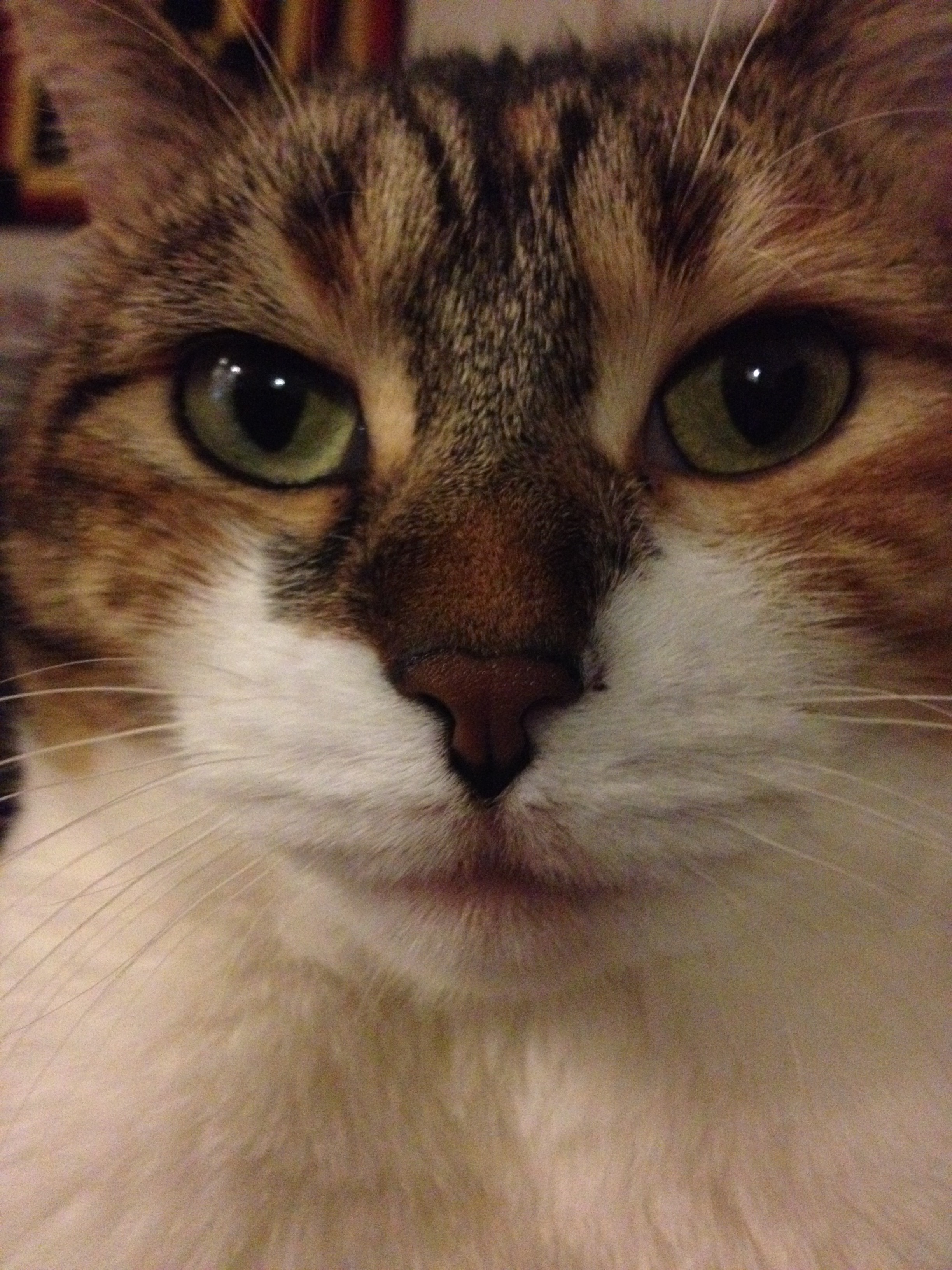
    Misc iPhone 2015 025Welcome to 2016, y’all.

    It feels great to have Zingara Poet back in rotation of this juggling act called the poet’s life. The last two and a half years have witnessed my move from the High Desert to the Low Country and finally, after years of agonizing over the decision, the completion of an MFA program; two major events that have taken a bit of a toll on the consistency of the publication of poetry picks.

    Now I’m looking forward to a poetry-filled 2016 that will see the publication of a number of wonderful poems to Zingara’s Poetry Picks. Readers should look forward to a cadre of new poetry prompts designed to generate inspired writing, several new poet interviews, and, time permitting (in my schedule, I mean), a number few book reviews.

    This year’s picks are seriously good and I’m forever amazed at the quality of poems submitted — I can’t even begin to express how much enjoyment I get out of reading them. If you haven’t heard, the deadline for 2016 has been extended until the last day of January, so if you didn’t get around to submitting your poems yet, there’s still time.

    Remember to subscribe to the blog or follow me on twitter to keep up with poetry picks, prompts, and other related poetry news.

    Thanks for your support and HAPPY WRITING!

  • Belongings by Richard King Perkins II

    It’s too late to gather your clothes
    about you;

    the morning light has already found you naked
    just before his eyes of acid rain—

    working the last half day in reverse
    without the sun’s spirant assistance.

    An intimate world collapsing

    swans in a cesspool
    branches of brine
    hands barricading your clouded face

    if there was a chance out
    it wasn’t beneath the lost demure of these sheets—

    flailing gestures only bind you tighter
    to a bed that was never yours.

    Richard King Perkins II is a state-sponsored advocate for residents in long-term care facilities. He lives in Crystal Lake, IL, USA with his wife, Vickie and daughter, Sage. He is a three-time Pushcart nominee and a Best of the Net nominee whose work has appeared in more than a thousand publications.

  • the shaman sees the Dread Unless by Wayne-Daniel Berard

     didn't need them this time
     White Bear Eagle Sea Turtle
     Ivory Dove
     just directly to the motel room
     himself  sitting at the foot of the bed
     finished and finished and
     entirely seized
     (Merlin and Morgana)
     and you standing to the right
     behind him in
     your black bra and slip
     never looking so lost
     possessed
     by all that losing
        he snapped to
        like a slap
        a mystic
        rear end collision
     lost your number
     and has passed
     you by every day since
     his dearest friend
     quizzical hurt saved
    
    ---
    
    Wayne-Daniel Berard, an adoptee who found and embraced his 
    Jewishness, teaches English and Humanities at Nichols College, 
    Dudley, MA. He is an interfaith clergy person, and co-founding 
    editor of Soul-Lit, an online journal of spiritual poetry. He 
    lives in Mansfield, MA with his wife, The Lovely Christine.
  • Rest Stop by Allyson Whipple

    ~For Harrison Porobil

    You’ve survived worse odds
    than this: childhood,
    hurricanes, homelessness.
    This time it’s just a broken
    lock that has you stuck
    here, taking stock
    of misfortune. What a way
    to spend Christmas
    morning, trapped on I-10.
    Gas station toilet a stinking
    pen. But no matter
    how you turn and pull
    and push until your muscles
    burn you’re stuck with stale
    air and stink and more time
    than you’d like to think
    about the turning of the year.

    There’s sweat upon your brow
    from fighting with the force
    that holds you in. As it’s always been:
    you’re a man of motion. Kick
    the door open, get in the car.

    Allyson Whipple has an M.A. in English and a black belt in Kung Fu. She is currently studying poetry through the UT-El Paso Online MFA Program. Allyson serves as co-editor of the Texas Poetry Calendar, and is the author of the chapbook We’re Smaller Than We Think We Are. She teaches at Austin Community College.

    Texas Poetry Calendar 2016

  • Exploring Coastal Carolina: Caw Caw Interpretive Center

    DSC03133Today I purchased a Charleston County Parks “Gold Pass” membership that provides the holder with “unlimited admission to 11 county parks” for a full year from date of purchase. While I will certainly enjoy visiting Charleston County parks without having to pay the buck or so admission fee every time, I am most excited about the early morning bird walks offered twice a week at the Caw Caw Interpretive Center, also free to pass holders. Located just off South Highway 17, the Caw Caw, which boasts six miles of hiking trails as well as numerous elevated boardwalks, is considered the birding hot-spot of coastal South Carolina, an impressive boast considering South Carolina is itself host to multitudes of bird species.Awendaw

    The appeal of the Caw Caw bird walks for me is that they combine at least three of the activities that I love: walking, appreciating nature, and learning the specifics of the environment in which I live. The Eco-tours I’ve participated in since moving here two years ago have included two guided walks on the Tibwin Plantation near Awendaw, a day exploring Bulls Island, an afternoon singing with dolphins on the Edisto River, and a morning hunting for fossils on Edisto Beach. Edisto Beach ShotEach tour has provided insight into the area’s eco-diversity and brought me face to face with such wonders as the ancient shell rings of the Sewee, the hard to find blue indigo bunting, and literally dozens of alligators sunning on a wetland bank (through which I had to walk), each time impressing upon me the fact that I have only barely begun to see, or understand, just how unique Coastal South Carolina ecology is.

    Though I am excited to add these bird walks to my dossier of SC adventures, it will be several days yet before my new Gold Pass arrives in the mail — adding about a week to my anticipation. I will bide my time patiently, however,Bulls Island Shot looking through the “Birds of South Carolina” field guide I bought last year and drooling over digital camera equipment on the internet in hopes that, some day, I can add photography to my birding experience. For now, I’ll satisfy myself contemplating the wonder of how the hobby I’d given up pursuing years ago has returned to me just in time for the cooler, drier days of another Charleston October.

  • Submissions Open Today

    Zingara Poetry Picks seeks submissions of previously unpublished poems (on-line or in print) of 40 lines or fewer for 2016 picks. New, emerging, and established poets are encouraged to submit and all submissions will be given careful consideration.

    Please keep the following in mind when submitting your best poems:

    • Reading period for Zingara Poetry Picks is from August 15 to December 31st. Unless the deadline is extended, submissions received outside of this time period will not be acknowledged or considered. In fact, they will be deleted.
    • There is no fee to submit
    • Title of poem(s) should appear in the email subject line. Poems should be attached as word documents and mailed to zingarapoet@gmail.com
    • The body of the email should include a cover letter and a professional biography of 50 words or fewer written in the third person
    • Attach a word document with no more than three poems of 40 or fewer lines
    • Only one submission at a time (please wait to hear back before submitting more poems)
    • Simultaneous submissions are fine, but please let ZingraPoet know immediately if submitted work is accepted elsewhere
    • ZingaraPoet does not accept previously published work
    • Published poets receive bragging rights and the chance to share their work with a diverse audience
    • Poets who are published on Zingara Poetry Pick should wait 24 months before submitting again
    • Do not submit if you have had a poem featured on Zingara Poetry Picks in the last 24 months.
    • Submissions which do not follow these guidelines will be deleted without acknowledgement
    • If accepted work is later published elsewhere, please acknowledge that the piece first appeared as a Zingara Poetry Pick.

    What I look for in a poem:

    Like all editors, I like to see interesting poems that do what they do well. Whether traditional, conceptual, lyrical, or formal, they should exhibit the poet’s clear understanding of craft and, just as importantly, revision. Very elemental poems that have not undergone effective revision will probably not make the cut. Likewise, poems which are contrived, sacrifice meaning for the sake of rhyme, feel incomplete, do not risk sentimentality (or are too sentimental), or lack tension when tension is needed, will also be dismissed. Finally, poems which perpetuate harmful stereotypes of gender, race, or class will most certainly not be considered.

    For a very good discussion on the elements of effective poetry, take a look at Slushpile Musings by James Swingle, publisher and editor of Noneucildean Cafe’

    A note on formatting: poems that contain lines which are flush with the left margin are more conducive to publication on a blog site than those which have unconventional indention or unusual margin settings. Likewise, poems which feature long lines may require additional line breaks or may require the right-scrolling function to be viewed in full.

    Response time is 6 months.

  • Five Weird Ways to Get Writing Done

    Just a reminder:

    Lisa Hase-Jackson's avatarA Writer's March

    IMG_0059Towards the end of any month-long writing challenge, the average writer finds herself grabbing at straws for inspiration to keep writing. All the great ideas that had been incubating up until the beginning of the journey are exhausted and she’s left with either a lengthy, cumbersome tome or yet another blank page of reticence representing the next poem or short story. All of the conventional approaches to consistent writing   adamantly advocated by leading writer’s magazines, websites, and blogs are likewise worn thin and their effectiveness called into question under the scrutinizing gaze of the inner wild-child — who simply wishes to create with abandon.

    If your wild child has grown bored with the carefully arranged, safety-approved environment of adequately structured playground equipment designed to stimulate just the right amount of brain activity and instead is testing the parameters of the playground itself, here are a few ideas to consider:

    Honor…

    View original post 672 more words

  • Workspace Revision: What to do with old journals

    Waiting for the new bookshelves.

    With July coming to a close and a new semester hot on its heels, this weekend seemed like a good time to “revise” my workspace. This has involved: 1) moving my meditation and yoga accoutrements from my office to the bedroom, where there is more space for such activities, 2) ordering a couple of new bookshelves, and 3) boxing up the stacks of books that were lining the baseboard under the printer table.

    Though I’ll have to step around boxes of books until the new bookshelves arrive, I am happy with the shape this little project is taking, and particularly like having a meditation space that is separate from my work space. Once the books make their final migration to the living room, where the new bookshelves will be placed, I will have a reasonably clutter-free, dedicated workspace for freelance work and writing.

    I also went through a stack of notebooks stashed in the closet to see what was important enough to keep and what could possibly be recycled or re-purposed. There were a couple of half-filled notebooks whose pages were occupied with lists andIMG_0585[1] musings that I was willing to tear out and toss for the sake of using the last of the notebook paper. Other notebooks were filled with lesson plans and agendas from classes I’ve taught in the past, most of which have also found their way to the recycling bin. This leaves one and one-half smaller notebooks filled with favorite poems that I copied from various sources over the years that I will continue to use, and two daily planners marked with copious notes, task lists, and the names and phone numbers for people I barely remember. I’m pretty sure these are headed for the shredder.

    What remains are journals spanning the years from 2017 to the present which were written during the years I spent living in New Mexico, Korea, Kansas City, and, in the case of the the latest addition, Charleston.

    IMG_0586[1]The year 2008 is especially well represented with over two spiral-bound college-ruled notebooks dedicated to, well, mostly morning pages. That was the year I dedicated myself to the ideas in Julia Cameron’s “The Artist’s Way” and was writing three pages worth of thoughts every day. I was all about process over product and writing through the superficial stuff to get to the good stuff those days. The problem was that by the time I finished my morning pages, I had to get to work, so didn’t have time to work on the creative stuff. The other issue that I kept coming up against was that I was pretty much writing about the same crap every day, so much so that I felt like I was beginning to affirm the things in my character that I didn’t particularly want reaffirmed. I thought that writing about what worried me would help me get past them, but instead it seemed just to compound them. So, after about six months of devoting my early morning hours to morning pages, I revised my practice and started writing about other things, like ideas, images and poems. There is still plenty of complaining and fretting going on in these later notebooks, but at least a few of their entries are interesting. The rest, well, the rest was necessary, even if it doesn’t exactly show my best, most intelligent self. They were the crap I needed to write though to get to the good stuff.

    The most interesting notebooks are probably the ones I kept while living in Korea, a year in which the value of a journal became most obvious to me. I was very careful about documenting everything that happened to me and every activity I tried because I knew I would only be there for twelve months. Some of those entries spilled over into a scrapbook, which I am still putting together, and others developed into blog posts, like this one about Building 63. Still others served as inspiration for a number of poems written and will probably serve to inspire poems yet born. Of all the journals in my closet, these are probably the ones I most enjoy rereading.

    Journals I’ve kept since returning from Korea contain a lot of projects and plans. Their pages are filled with notes on how to IMG_0588[1]develop ZingaraPoet.net in 2011 and how to organize 200 New Mexico Poems posts and readings in 2012. Their pages are where I discuss the poems of poets I admire as well as the progress (or lack thereof) I experienced in the writing of my own poetry. Still peppered with concerns about my career, complaints about my environment, and commentary about my current mood, these journals were invaluable tools for deepening my relationship with self, leading me to understand that I could, and can, depend on my own inner resources rather than on externals.

    The most recent journal, added to the collection just this week, is mostly concerned with my transition to Charleston, and, having spent most of my life west of the Mississippi, this transition has been considerable. The despair, confusion, and hope for better days expressed in its early pages are still fresh, allowing me to bring only a small degree of perspective to these past two years. But, like the journal I kept in Korea, this one represents intense growth of the kind only available when living far outside one’s comfort zone. The kind of growth experienced when a person is determined to move from survival to efficacy.

    IMG_0589[1]So what will I do with this stack of water-stained, yellow-paged, dog-eared spiral notebooks and bound journals from the past? Well, appreciating these well-documented years is a worthy activity. I suppose, too, so is the sense of posterity I get in seeing the stack expand and grow.

    David Sedaris once said in an interview that he indexes his journals, a practice that I sort of tried — only I used multi-colored tabs to indicate which entries were poems and which entries had potential to become essays or memoirs.

    For now I am content reading through my notebooks and journal with no particular purpose or plan in mind – just an opportunity to cultivate a healthy relationship with myself and a way to spend my time —

    waiting for the new bookshelves to arrive.

  • Behind the Editor’s Desk: Reading Fees, Literary Citizenship and Doing it for the Love of Poetry – An Interview with Editor and Publisher, Molly Sutton Kiefer

    Tinderbox Poetry Journal announces fee-free submissions:

    womenwhosubmitlit's avatarWomen Who Submit


    216823_10150271293399379_918419_n
    Molly Sutton Kiefer, is an essayist and poet with numerous publications including the lyric essay, Nestuary (Ricochet Editions 2014) and two chapbooks. She edited for dislocate and Midway Journal before co-founding Tinderbox Poetry Journal with her friend, Brett Elizabeth Jenkins. She is now happily tackling the role of publisher for her newest project, Tinderbox Editions. In a submission call I picked up through the yahoo! listserv CRWROPPS (Creative Writing Opportunities List), Kiefer announced Tinderbox Editions’ latest open reading period will have a fee-free option until August 31st. As a poet who struggles with innumerable pay-to-play contests and open readings, I was excited to learn about reading fees from the publisher’s perspective and to hear more on running a journal and press. Here is what she had to share.

    by Xochitl-Julisa Bermejo

    WOMEN WHO SUBMIT: In Tinderbox’s most recent submission call, it stated, “Due to an enlightening conversation…

    View original post 1,640 more words

  • Day 17: The Power of Limited Choice

    Lisa Hase-Jackson's avatarA Writer's March

    By Lisa Hase-Jackson, guest blogger

    Fear is a familiar feeling to all artists, and writers are certainly not immune. Some of the more common triggers of fear include anticipated failure or, as is often the case, anticipated success. For writers in particular, fear is often triggered just by considering the likely ostracism that may occur from revealing family secrets, or by the realization that what was written in a passionate moment of active imagination will appear to be worthless drivel in the light of day.

    Perhaps the biggest fear faced by many writers on a daily basis it that of the blank page. Even assuming a writer can overcome the overwhelming number of possibilities represented by the blank page, there are still myriad choices to make – or choices to rule out – once the page is no longer blank and writing has begun in earnest. Let us posit, then…

    View original post 531 more words

  • Five Tips for Retrieving Memories

    Updating my CV and dossier today and rediscovered this article from 2012.

    Cate Macabe's avatarCate Macabe

    The following is an article by Lisa Hase-Jackson originally titled “Five Tips for Retrieving Memories and Developing Your Memoir” and published in the July 2012 issue of SouthWest Sage.

    footsteps 02Writing memoir is the ultimate in “writing what you know.” No one else has as much knowledge or authority on the memoirist’s life than the memoirist herself, and certainly no one else can fully understand or appreciate the complex nature of that life better. But along with this authority comes the challenge of collecting and effectively cultivating memories to create a comprehensive whole.

    But memories are intangible and fickle, not to mention ephemeral. Ask someone about what they were doing on a specific date in their past and, unless that date coincides with a significant historical event or personal episode, they will likely draw a blank. But ask a person to recall the time they learned to ride a bike…

    View original post 945 more words

  • Converse College Low-Residency MFA: A Program to Watch

    S.C.’s Only Low-Residency MFA in Creative Writing to Hold Open House May 31

    Spartanburg, S.C. — Discover why Publishers Weekly named the Converse College Low Residency MFA in Creative Writing “a program to watch” in 2015. Join us at our Open House information session on May 31, 2015 from 6:30-7:30 p.m. in the Barnet Room of the Montgomery Student Center on the Converse campus.

    Meet current students, published alumni, and faculty, including Robert Olmstead, Denise Duhamel, Marlin Barton, Leslie Pietrzyk, Susan Tekulve, Albert Goldbarth, C. Michael Curtis, Suzanne Cleary, and program director Rick Mulkey. Learn about the program’s new concentrations in Young Adult Fiction and Environmental Writing, plus scholarship and Teaching Assistantship opportunities, along with information on recent alumni successes in fiction, poetry and nonfiction. Then stay to mingle with current students who are on campus for their summer residency, enjoying live music with Nashville-based folk rock band The Hart Strings beginning at 8 p.m.

    More information on the Converse College Low-Residency MFA is available at www.converse.edu/mfa.

    About the Converse College Low-Residency MFAConverse Summer 2014 002

    As South Carolina’s only low residency MFA program in creative writing, the Converse College MFA offers students opportunities to focus in fiction, Y.A. fiction, poetry, nonfiction, and Environmental writing, plus opportunities to pursue internships in publishing and editing through our C. Michael Curtis Publishing Fellowship at Hub City Press. MFA students may also participate in editing opportunities with the program’s national online literary magazine, South 85 Journal, and pursue teaching opportunities with our Teaching Assistant program, a unique opportunity for low residency students.

    “One of the strengths of a low-residency format is how it introduces students to the real writing life,” said program director Rick Mulkey. “Most writers have family and career obligations in addition to their writing. While students spend part of each academic year on the Converse campus during the residencies, they continue work on their writing and academic projects during the rest of the year without disruption from their family and career.  Plus they study in a true mentor/apprentice relationship with a gifted writer. It provides both an intensive learning environment and the flexibility that most of us need.”

    Converse MFA faculty members include National Book Critic Circle Award winners, best-selling novelists, award winning short fiction writers and essayists, plus some of the top editors in the country. “In addition to being outstanding writers, our faculty are energetic and dedicated teachers who have been honored for their classroom instruction,” said Mulkey. “In some graduate programs, a student enrolls to discover that the writer she planned to work with only teaches one course a year, or is on leave while the student is in the program. Here you have the opportunity to work with a large number of writers, editors and agents in a very personal mentoring relationship.”

    In the last few years, Converse MFA graduates and current students have distinguished themselves with honors and awards including the AWP Intro Award, a Melbourne Independent Film Festival Award, and the South Carolina Poetry Initiative Prize, among many others. In addition, they have published work in a range of literary venues from Colorado ReviewShenandoahPloughshares, and Southern Review to such noted publishers as William Morrow/Harper Collins, Simon & Schuster, Random House, Negative Capability Press, Finishing Line Press, and others.

  • Remorse by Gary Beck

    Men of purpled cloisters
    I see your heavy robes of 3:00 a.m.
    guttered on Fifth Avenue
    as the long night passes
    to a woman’s frightened scream.
    O woman who I love
    whose gift is pain,
    in my midnight self
    I cry in secret horror
    at my abusive hands
    which give you hurt.
    If I could tear my granite chest,
    pluck my pulsing love,
    you would see my madness die,
    the marks of cruel fingers fade.

    Gary Beck has spent most of his adult life as a theater director. Published chapbooks include Remembrance, Origami Condom Press; The Conquest of Somalia, Cervena Barva Press; and The Dance of Hate, Calliope Nerve Media, among others. His novel Extreme Change was published by Cogwheel Press and his collection of short stories, A Glimpse of Youth was published by Sweatshoppe Publications. His original plays and translations of Moliere, Aristophanes and Sophocles have been produced Off Broadway. His poetry, fiction and essays have appeared in hundreds of literary magazines. He currently lives in New York City.

    .
  • Klee’s Angel by bz niditch

    Like moving
    the wings
    and cloudletsKlee's Angels
    of our history
    the futurists
    turn back to
    acknowledge
    the high art
    embodied
    in you,
    Angelus Novus
    speak to us
    of all possibilities
    on an unshaven
    earth time span
    where the voice
    of fern and grass
    belongs to us,
    the ocean is clear
    for salmon
    whale and dolphin,
    unpolluted city masks
    now familial
    be removed,
    for wheat and grains
    to again grow
    on threshing floors.


  • “When the Heart Waits” by Sue Monk Kidd

    When The Heart WaitsWhen the Heart Waits: Spiritual Direction for Life’s Sacred Questions
    By Sue Monk Kidd
    ISBN-13: 978-0061144899
    $10.21 Paperback

    More than simply relaying Kidd’s personal journey through the mid-life experience, this engaging piece of non-fiction work takes a closer look at the art of waiting. Rather than avoiding or rushing life experiences Kidd suggests entering and experiencing changes as we are faced with them, even and especially when it is uncomfortable or painful to do so.

    Kidd draws on myriad biblical parables and familiar childhood fairy tales and fables to illustrate her well-placed points. Additionally, she builds on philosophies developed by the likes of Jung, Erickson, Campbell and Eckhart and the theology of Merton, St. Teresa of Avila and Hildegard of Bingen. The book’s overarching metaphor is that of the metamorphosis of the butterfly, particularly the cocoon stage. More than any other symbol, the cocoon best illustrates the act of waiting while changing, all the while suspended in darkness – a position that requires neither foresight nor action.

    In the first of four parts, Entering the Question, Kidd defines midlife as a transitional period between morning, when we develop our relationships with the outer world through ego, and afternoon, when we investigate the inner world. The midlife experience is likened to a time of reinvention and reflection. But regardless of the relative discomfort these realizations may bring, Kidd invites us to view this developmental stage not as a time of burnout, but as a summoning to enter a spiritually deeper life; a difficult choice given our compulsion to keep up with society’s accelerated pace.

    In Passage of Separation, the book’s second, and perhaps most important section, Kidd introduces the idea of “diapause,” a concept she discovered while researching metamorphosis of butterflies. She learned that “…caterpillars don’t yield themselves to the cocoon at the same rate. When the moment to spin the chrysalis arrives, some of them actually resist and cling to their larval life. They put off entering the cocoon until the following spring, postponing their transformation for a year or more. This state of clinging has a name; it’s called the “diapause.” There’s a natural diapause in the human journey of transformation, too – a time when we hold onto the self we know. It seems that at the precise moment of greatest possibility, a desperate clinging rises up in us. We make a valiant attempt to “save” our old life.

    Section three, Transformation, explores the question, “How do we fashion an environment in which we become stripped and stilled, in which the ego patterns of a lifetime begin to move away from the center and our innermost spiritual life is [rebuilt]?” Kidd suggests we look to God by looking within and “weaving an environment of prayer.”

    The fourth and concluding section, Passage of Emergence marks the moment when the newly metamorphosed butterfly emerges from its cocoon; when the cocooned soul begins to attempt flight with new wings. Kidd advises that because this is a time of adjustment, continued patience with ourselves during this stage is crucial.

    Midlife is a waiting process and features three distinct phases: separation, transformation, and emergence. The life of the soul evolves and grows as we move through these three cycles and, as Kidd points out so eloquently, life is full of cocoons. “We die and are reborn again and again. By repeatedly entering the spiral of separation, transformation, and emergence, we’re brought closer each time to wholeness and the True Self.”

    Because of varying perceptions on life, no book can entirely capture a midlife experience or provide a definitive guide to any developmental stage of life. Yet I found in Kidd’s writing a kindred soul and found it holds if not answers, at least comfort in contemplating questions regarding the meaning of life. Certainly Kidd’s midlife experience is filtered by some distance and the objectiveness that arrives with writing about such an experience and I suspect that there are at least a few ugly scenes that have been polished or left out of her book entirely, giving some passages a feeling of romanticism. More than a just a helpful guide, Kidd’s book is a worthy companion.