Author: Lisa Hase-Jackson

  • Homage to the Horny Toad by Chuck Taylor

    Friend Montrose says Why don’t you play the lead
    in my next horror film? I’m filming in
    Junction where the motel rents are low. The
    Monster’s going to be the horny toad.

    I’ll film him close and blow the image up
    So on screen the horny toad looks large and
    Scary what with all that horny skin.

    That ought to work I say. We had them in
    The backyard down in Deadwood. They can squish
    Down flat or blow up big to scare away
    The wolves, the foxes, and the coyotes.

    You think you know these toads? Why they can squirt
    Bright red blood out of their eyes. That’s why I
    Am shooting the film in Technicolor.

    They’re tiny guys, but not scared of people.
    They’ll sit quiet on the palm of your hand.

    Carolyn’s said she’ll play the heroine. She’ll
    Be chased by what seems to be a giant
    Evil monster. Its sticky tongue will flick
    Out as if it’s going to swallow her
    Whole. A developer’s out to buy her
    Land and has trained the beast to chase her.
    Good thing you’re using the horn toad. No one

    Will recognize little guy made big on
    The screen. When I was a kid growing up
    I’d see them everywhere, but haven’t seen
    The horny toad in more than twenty years.

    Chuck Taylor’s first book of poems was published by Daisy Aldan’s Folder Press in 1975. He worked as a poet-in-the-schools and as Ceta Poet in Residence for Salt Lake City.

  • Michelle Renee Hoppe Launches “Capable,” Seeks Submissions

    I first met Michelle Renee Hoppe in 2009 when we were both teaching for the same company in South Korea.  Though our contact with one another has been casual since then, we have managed to keep tabs on each other through various social media. I was excited when she reached out to ask me to help get the word out about her new literary magazine, Capable, and am very happy to share the following interview wherein we learn what Michelle has been up to these last 10 years.

    Wow. It’s been a while since we last saw one another in person. Tell me what you have been up to since 2010.

    Almost a decade! I have been teaching special education in NYC public schools, earning an MSED in special education, and, as of three days ago, really started to develop Capable. I’ve been to Hong Kong, fallen in love, almost gotten married, not gotten married, and even had my first online publication about it all. I’m now dating a wonderful Mexican engineer who supports my writing like no one else I know.

    Tell me more about your current project, “Capable,” including the significance of the title. Do you have a mission statement? 

    Right now our mission is to raise awareness of the community of disabled and ill among universities and clinics to doctors, medical advocates, and professionals. We aim to help universities teach disability and illness through an arts lens. There is a substantial amount of research that supports that having empathy helps physicians practice better medicine, and that narrative medicine, including reading literature and viewing art, goes a long way in developing such empathy.

    Years ago, I brainstormed Capable with some friends from undergrad and they thought it was the best way to describe a zine that was dedicated to stories of disability and illness.

    We seek exceptional work, because people with disabilities make exceptional work. I don’t pull any punches about that.

    What kind of work are you seeking and where can people send their submissions? How many pieces can a writer submit? How many pages or poems? Are there any submission fees?

    I would say this is the best example I can muster about what we are looking for in nonfiction: https://magazine.nd.edu/stories/his-last-game/

    No submission fees for now, though after we launch, we’ll charge $3 to $5 per submission to cover the costs for Submittable. Until then, anyone can send me as much work as they like at michellehiphopp@gmail.com, but I cannot promise I’ll get through all of it in a month. I recommend sending two poems and up to 3,000 words of prose. I love long pieces of prose, but I do want to keep things tight for the launch. I have a soft spot for humor pieces. I think a lot of us use humor to cope and it’s its own art.

    What are some of your favorite literary journals?

    I’ve found a reading home at Catapult. I absolutely adore them. They have such a sense of community there, and it’s remarkable to be able to offer classes in addition to a publication. I’ve taken two amazing classes and I really recommend Allie Rowbottom as a teacher. I also read Luna Luna Magazine, as they have a section dedicated to stories of chronic illness, and their founder Lisa Marie really showed me by doing that a publication is possible. She’s a bright light, despite the fact that I think there is not any such thing as magic. She’s also built such as sense of community through her work. I really admire that.

    And, of course, Zingara Poetry Review. I love that you are able to teach. I still remember you were so kind in Korea. You and Gary were so welcoming, and you really spoke to the emerging author in me. Your warmth meant a lot.

    Are you the sole editor for this project or are you working with a team?

    I am not the sole editor, but I am kind of a one-woman show at the moment, as my editorial team is just getting together. I’m so impressed with them. I have to remind myself that I’m the manager of the talent and not the talent to keep going. I receive a resumes that are so impressive that I don’t know what to say to that person except, “Congratulations, I probably cannot afford you right now. I’m sorry.” I’m going to have to put together a team of all stars for the VC funding pitch, because these investors want a team they can believe in, and I am fully confident we have that through the #Binders group and others.

    There are also the wonderful emails from reeeeally established authors. They are like, “Call me when you can afford me. I’m in.”

    Honestly, I appreciate all the emails right now. This has been my baby for about three years now, ever since I recovered from my own illness and learned to cope with my own disabilities.

    What inspired you to start such a literary journal? Will this be solely online or do you plan to send out print copies as well?

    I have been “sick” my whole life. I’ve been misdiagnosed with leukemia and thyroid disorders, and I have celiac disease. It’s frustrating to be told again and again that I am making these things up when they are very real.  I also work with students with disabilities every day, and the disabled are the largest minority and the most underrepresented in the entertainment industry. I learned that from a friend of my cousin’s,  Maysoon Zayid. Everyone should see her TED talk.

    I would love for it to be a print publication, but that’s not something I can afford right now. We are just getting funding off the ground. Right now, I want to get everyone on my team and my authors paid as much as possible. They deserve it.

    What other projects are you working on?

    I’m working on Teach North Korean Refugees. TNKR is a nonprofit that doesn’t get enough attention in South Korea. They help rehabilitate North Korean refugees and teach them English. They also help them author their own lives for the first time, and it’s really inspiring work. Honestly, they’ve done more for my career than any other position I’ve taken. They’re that into advocacy that they even advocate for their team, and I’d like to be like that as a Founder. The founders are geniuses of the nonprofit world, and so kind.

    I’m writing a collection of essays about growing up in an espionage family. I probably never told you about that, but, yeah, both my parents were raised with spies. It’s tentatively titled We Don’t Talk About the Family. It includes many scenes with pinatas. My mother insisted on pinatas at every birthday. Gotta love being (kind of) Puerto Rican and raised in Japan. My work–I Can Make You Immortal, My Rapist Told Me–was recently endorsed by Donna Kaz and earlier Brian Doyle told me one of my essays was, “Damn fine, searing and layered work.” His words are something I turn to when I feel less alone, and the world really misses him. Like you guys, he was so kind to everyone.

    Michelle can be reached at michellehiphopp@gmail.com.


  • In the Era of Collective Thought by Gary Fincke

    From a hospital in Texas,
    one hundred brains have vanished
    and, as always, there are flurries
    of posts suggesting suspects
    from genius to sociopath.
    Still unaccounted for, the brains
    of the frequently concussed, those
    in early dementia, those
    whose last demand was suicide.
    Tonight, after we lock our doors,
    we speculate the thief lives
    surrounded by so many brains
    he cannot admit a guest.
    That he must master home repair
    or live among leaks and drafts
    and dangerous wiring. All day,
    we have seen nobody outside.
    As if our isolation has been
    perfected by the relentless work
    of the brain-eating zombies
    we are fond of discussing.
    Cerebrum, cerebellum–
    we recite our parts like beginners
    in anatomy, counting down to
    the constancy of medulla
    while the underworld’s weather
    loots the grid we rely upon.
    Drought has master-minded
    the overthrow of farming.
    Rain is a hostage whose ransom
    has been raised so high the sky
    is unable to pay. Shut-ins,
    we carry the memory of comfort
    like a congenital hump.
    Decisions made elsewhere are
    hurtling toward us in rented trucks,
    all of them explaining themselves
    in a gibberish of slogans.

    Gary Fincke’s latest collection, The Infinity Room, won the Wheelbarrow Books Prize for Established Poets (Michigan State, 2019). A collection of essays, The Darkness Call, won the Robert C. Jones Prize for Short Prose and was published by Pleiades Press in 2018.


  • The Impact of Unattractiveness: An Interview with Poet Camille-Yvette Welsch, Author of “The Four Ugliest Children in Chrstendom”

    I am very pleased to introduce poet Camille-Yvette Welsch to ZPR readers. I met Camille at this year’s AWP conference in Portland, OR and had the great pleasure of reading with her at the off-site reading for The Word Works. I was immensely engaged with her collection of poems and think you will be too.  To illustrate what I mean, here is a sample poem from her book, followed by our interview together.


    The Ugliest Girl in Christendom Goes to the Gynecologist

    When she asks the doctor what it looks like,
    the doctor hands the girl a small mirror.  The girl curls
    her knobby shoulders forward,  places
    the glass between her legs and gasps in fury.
    Here, at last, all the missing pigment, all
    the rich color, the plump curvature she longs for.

    Outside, her body glows white, Siberian hair,
    pale eyes, skin white as pneumatic froth.  And thin,
    so very thin.  When she swims in front
    of the pool light, her siblings see
    her every attenuated bone, the long fingers
    of ribs closing over her heart.  But here,
    between her legs, smiling lipstick.

    The doctor raises a questioning brow;
    the girl scowls more deeply, shimmies
    forward on the table and swings her legs down,
    the knock of her knees a dull sound.
    The doctor leaves, and the girl pulls
    on her bra and shirt, contemplates ways
    to wear very short skirts, to bend until people see
    her burst, the real rage of her body, this small strip.
    She pulls her bikinis up slowly, fuming.
    What good is a secret that can’t be told?

    Tell us about your book and the process of writing it. Where can readers find out more about your book and purchase it?

    The book follows the lives of four children who have been adopted by two anthropologists, bent on doing a longitudinal study on ugliness. They handpicked these four children and keep subject reports on each child, monitoring their mental, physical, and emotional lives, and the impact physical unattractiveness has on those lives. In addition to the subject reports, we hear from the children themselves, get a sense of their voices and what it means to live inside these strictures.

    The book got its start in some ways when my mother dragged my brothers and me to church as kids. I grew up Catholic and my mother loved the choir at one church in particular. One of the families at the church was led by a very angry woman who could not believe that she had not been invited to be a part of that choir. To make up for it, she screeched through all of the hymns as loudly as possible. When she and her children made their way up the aisle to accept the Eucharist, the kids looked dumpy and ashamed. I was talking to my parents about that as an adult, dubbing them the four ugliest children in Christendom. Immediately my mother said I should write a poem about that. When next faced with a blank page, I did exactly that.

    Still, in the course of writing, and even in that initial moment, I had sympathy for those kids. They were in a tough situation with their mother demanding a kind of negative attention. Loudly and in a church. When I started writing the book, all of the poems were in third person. The narrator was a sort of anthropological voice over, in the early 20th century tradition of staring and studying anyone who was not white, cis-normative heterosexual and Eurocentric. My husband has a doctorate in Anthropology and an extensive collection of anthropology books and the early ones are insanely racist and paternalistic. I found myself wondering if we had gotten away from that or if we were simply more subtly immersed.

    I submitted some of the poems to a workshop with Marilyn Nelson and she suggested writing from the children’s point of view. I really liked that idea a great deal, to give these charaters a voice would bring us a step closer to empathy rather than the more distant sympathy. Once I started writing in their voices, I felt I understood them much better and I started to see how the poems could become a novel in verse. Even then, I was in for more awakenings. My former student, Kayleb Rae Candrilli read a draft and told me that I had no climax, and they were right. Back to the drawing board again. I found joy in writing it as a novel in verse because there were lots of narrative, structural problems to solve, but because it was poetry, I didn’t have to do a huge amount of transition between time and place.

    The other thing that worked out beautifully for me was sending my manuscript to The Word Works. Should you get a finalist or semi-finalist position, they offer feedback. That feedback was key. I revised again, submitted again, and got the acceptance I wanted.

    For those interested in reading more, you can find the book at Small Press Distribution

    How did you come up with your book’s title?

    The titles all use some version of The Four Ugliest Children in Christendom do X. Because they are so visually marked, I wanted each poem, and the title, to also feel visually marked. The titles also gave me an entry point for each poem. I set up the plot and setting generally in the title, as in ‘The Ugliest Girl in Christendom Goes to the Gynecologist’ or ‘The Ugliest Boy in Christendom Attends the Star Wars Conference.’

    Who are you reading right now?

    I am all over the place, in part because I review books. I just read In My Own Moccasins, Helen Knott’s devastating memoir about violence against indigenous women, both by rapists and by the Canadian government. I was thrilled by Sarah Blake’s novel, Naamah that tells the story of Noah’s wife. She did all of the packing, the planning, the coordinating, the dealing with the in-laws—all of the mental load that plagues women today. It was a revelation. I am also diving into Lynda Barry to see if I can change up some of the ways that I write and teach.

    For poetry, I just re-read Denise Duhamel’s book about Barbie, Kinky. Her book is fearless and funny. She pivots in so many directions with Barbie always at the center. My favorite poem is actually the title poem, where Ken and Barbie switch heads. My students are so alarmed by that poem, but it does everything I want poetry to do—it is startling, inventive, funny, and powerful.

    What other creative activities do you take part in? What do you do to take a break from teaching, grading, writing, revising, etc?

    A break, you say? I am not sure that I take breaks exactly. I do a LOT of reviewing, but I am also learning how to teach children how to write poems. In two classes I am offering this summer, we are creating our own Rorschach blots and writing about them based on an essay by Scott Beal called “Brain Spelunking.” And, I am writing poems with senior citizens about their lives as a part of the Poems from Life project sponsored by the PA Center for the Book.

    I am also raising two children, so I find my creativity lit in that context—I designed an escape room style treasure hunt for my son’s birthday, and a series of ridiculous games for my daughter’s. We paint together and build things and make much of clouds and their shapes. Being with my kids helps me to pay more attention to little things as a caterpillar will stop them in their tracks, thus I am halted and returned to the world, breathless and awake.

    What projects are you working on now?

    Right now, I am working on poems about the body. Years ago, I wrote a poem entitled, “Ode to the Fat Woman at the Mutter Museum who, When Buried, Turned to Soap.” The alkaline in the soil reacted to the fat as it would to lanolin, thus turning it into soap. Crazy fascinating. The body has so much potential and is so very strange. We haul these bodies around but they are like a totally different galaxy inside with civilizations and outposts that we know nothing about. I find that compelling, and when these miraculous bodies don’t respond as we expected, we are at such a loss. Atul Gawande talks about bodies, or at least doctors’ perception of them, as being somewhere between the uniform melt of an ice cube, and the wildly divergent behavior of hurricanes. As a woman who experienced pregnancy, I know just how bizarre the body can be, the unexpected language attached to it, the ways in which it can suddenly and drastically change a life. The poems range from commentary on the Playboy Playmate who mocked a naked woman in a locker room to poems about being sliced open to reveal a face in your womb. I am both in awe and occasionally skeeved by the body and its manufacturings. I think that is a good place to be in a poem.

    Camille-Yvette Welsch is the author of The Four Ugliest Children in Christendom and FULL. She works at The Pennsylvania State University where she is a teaching professor of English and director of the High School Writing Day. For more information, go to www.camilleyvettewelsch.com.


  • Gleeful by Christina M. Rau

    The joy of cows
    roadside sitting
    standing together—
    as if I’d never seen cows.
    As if they are exotic.
    I suppose to some, they are.
    To others, sacred.
    Once at the Atlanta Zoo
    a keeper told me to think
    of giraffes as giant cows,
    head’s the same just a different height.

    Giraffes are roadside somewhere
    but not here. Down here there
    are the cows, the green green grasses,
    the flowers in blankets of maroon
    white purple yellow
    billowing blossoming blooming
    for miles stretched ahead.

    Christina M. Rau is the author of the sci-fi fem poetry collection, Liberating The Astronauts (Aqueduct Press, 2017), which won the SFPA 2018 Elgin Award, and the chapbooks WakeBreatheMove (Finishing Line Press, 2015) and For The Girls, I (Dancing Girl Press, 2014). She also writes for Book Riot about all things book-related. In her non-writing life, when she’s not teaching yoga, she’s watching the Game Show Network.  http://www.christinamrau.com

  • Portrait of My Mother by Kathy Nelson

    My mother sits in profile on the photographer’s stool,
    one arm draped over crossed knees, the other behind her.
    White crinoline and ruffles. Classic pose. Scuffed shoes.

    She is taking that single breath between girl and woman.
    The ripening plum of her mouth. The start of softness
    above the narrow velvet ribbon of her empire waist.

    Nights, she listens from her bed to slamming doors,
    the late thunder of tires on oyster shells in the drive.
    Or her mother rouses her from sleep, commands her

    to yell her father’s name from the car, embarrass him―
    he and his tart carousing at the open-air bar. She’s
    a conscript in her mother’s war. What she longs for―

    her father’s love. He’s bound to his pocket flask.
    Mornings, she sits at the piano, as her mother requires,
    plays scales and études. Duty over desire. I want to break

    the glass over the portrait, let her out. I want to tell her:
    set the house on fire, let them wonder if you drowned
    in the canal, run away to Kathmandu in your scuffed shoes,

    Kathy Nelson (Fairview, North Carolina) is the author of two chapbooks―Cattails (Main Street Rag, 2013) and Whose Names Have Slipped Away (Finishing Line Press, 2016). Her work has appeared or is forthcoming in Asheville Poetry Review, The Cortland Review, Tar River Poetry, Broad River Review, and Southern Poetry Review.

  • Depression by Doug Van Hooser

    I fail like a slogan. A frozen can of soda

                that cracks the pop-top, thaws and whispers

                            it’s carbonation. Flat as cold,

    I wander the sidewalks of suburbia,

                look through windows, see the unuttered invitation

                            of furniture. If only there was a message

    in the envelope addressed to me.

                It arrives with no return address.

                            The wind doesn’t yell or even sigh.

    No leaves to shake in the trees.

                A culvert runs under the road,

                            too small to fit through.

    The teeter-totter of chemical imbalance

                won’t shift its weight. Hibernation

                            a dreamless sleep,

    I grant myself custody of my aloneness.

    Doug Van Hooser’s poetry has appeared in Chariton Review, Split Rock Review, Sheila-Na-Gig, and Poetry Quarterly among other publications. His fiction can be found in Red Earth Review, Flash Fiction Magazine, and Bending Genres Journal. Doug is a playwright active at Three Cat Productions and Chicago Dramatists Theatre.

  • First Mother’s Day without Mom by Ginger Dehlinger

    It’s a sunny day in May
    and I’m pushing a wheeled cart
    through the aisles of the supermarket.

    Other Saturday shoppers are doing the same,
    and though I’m not usually interested
    I look in every basket I pass.
    Blind to the bread, lettuce and eggs,
    my eyes rest on balloons, cards,
    flowers and small beribboned packages.

    How paltry is my pantry;
    how blue and bereft my basket
    compared to theirs.

    I watch a store employee
    dip strawberries in melted chocolate
    then roll them in candy sprinkles.

    Mom loved those decadent treats,
    so I nestle a colorful dozen
    in my basket of gray merchandise.

    Ahead of me in the long checkout line
    a pink teddy bear sits atop a loaded cart.
    Avoiding his shiny stare I look away.

    To my right is a display of potted plants
    (orchids, mini roses, African violets)
    some large, others small and green.

    A shopper is picking up plants,
    looking at price labels, sniffing blossoms,
    debating which one to buy.

    “Take the roses,” I want to tell her.
    “Take the roses.”

    Ginger Dehlinger writes in multiple genres. Her poetry and short stories have appeared in several e-zines and anthologies. Most of her work is set in the West including two novels, Brute Heart (Oregon) and Never Done (Colorado). Ginger lives in Bend, OR with her husband and a cat, both spoiled.

  • Somebody Else’s Poetry by Ella Baum

    We’re always sorry,

    Our body’s architecture
    Is Syntactically off.
    We end poems on commas,
    And find sleeping with masks on
    Hard work.

    Because sh(hh) is half the syllable of she,
    The characters we play
    Are somebody else’s poetry.

    But text doesn’t have to be the driving force.
    Our bodies are as important as our voices –
    That’s what my ear told me.

    Identity stripped
    Of performance,
    Mythology,
    We are remodeled –
    The shadow that completes the window.

    Fences don’t protect from everything
    And trauma hides behind the beautiful

    It’s such a good line. I wish
    It lingered more,

    Ella Baum is currently a junior studying at Vassar college in Poughkeepsie, New York. She is an English major and photographer interested in the expressive potential of sister arts. Ella is a bilingual, dual citizen of America and Sweden and feels indebted to the New York City public school system which spurred her interest in poetry and the potential of language. 

  • Protection by F.I. Goldhaber

    True Pacific
    Northwesterners love
    our rain. We
    only dig
    out umbrellas to shelter
    us from summer’s sun.

    F.I. Goldhaber’s words capture people, places, and events with a photographer’s eye and a poet’s soul. Paper, electronic, and audio magazines, books, newspapers, calendars, and street signs display their poetry, fiction, and essays. More than 100 of their poems appear in fifty plus publications including four volumes of poetry. http://www.goldhaber.net/


  • Above Asphalt by Carol Hamilton

    Filigrees of rosy purple reach out
    on slender arms of redbud
    below the lettuce-and-grass-green heads
    of newly-leafed trees.
    Now my drive on pocked pavement,
    huddled in with too many cars
    and too much exhaust, is graced
    with a quickly-passing revelation
    of startling new life.
    I never quite remember
    to look and look, take heart
    and watch the fleet hours
    of jonquils, violets, lilies,
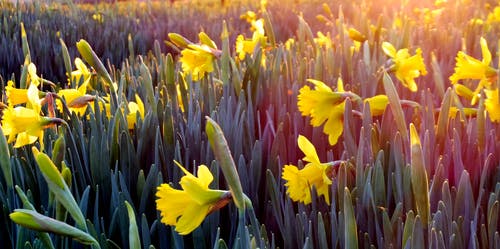
    purple iris and daffodil.
    It is the only time we can
    breathe swift spring.

    Carol Hamilton has published 17 books: children’s novels, legends and poetry, most recently, SUCH DEATHS from Virtual Arts Cooperative Press Purple Flag Series. She is a former Poet Laureate of Oklahoma and has been nominated seven times for a Pushcart Prize.

  • Chaninah by Steve Pollack

    On feather filled pillows
    he reclines easy as evening
    crowned by a Cantor’s tower
    castle shadows on sable hair,
    white robe billowing
    as if a cumulus cloud.

    In sundown sky he presides
    over minyan of five sons and wives
    who sip sweet wine four times
    with stained glass blessings,
    children on shins a threshold
    away, ask why in four questions.

    Each year on the same full moon
    he appears with Elijah, cloaked
    in melodies at mystery’s doorway,
    a virtual choir of crystal vibration
    stirring psalms and folksongs,
    midnight verses accelerando.

    Like ten plagues passing over
    a violent sea split in two, forty years
    wandering to a land promised,
    this family around that table
    on a night different from all others
    nothing less, a quiet miracle.

    Steve Pollack hit half-balls with broomsticks and rode the Frankford El to Drexel University. He advised governments, directed a community housing corporation, built hospitals and public schools.

    Poetry found him later. He serves on the advisory board of the Montgomery County Poet Laureate program and sings bass with Nashirah.

  • Safe Way to Go? by Gerard Sarnat

    i. Sally Swinggood’s

    With 1335 stores in the US alone,
    the grocery chain appears to have set an upward looking
    policy of equality in gender-hiring
    which maybe is reflected in my statistically insignificant
    sample size of a passel of 5 tall
    clerks seeming to identify as She who are able to reach
    the previously unreachable top
    shelf to grab me a handful of packets of transfat popcorn.

    ii. TransIt 

    Closet
    pried
    ajar

    gender
    dissidence
    unbound

    post-op
    posit
    appellations.

    HAIKU

    iii. High School 

    She tries to boysex
    gay away — but it don’t work
    — so then avoids them.

    iv. Not a Mr., Mrs., Miss or Ms.?

    Then Mx.-match fluid
    trans, a or non-conforming
    gender honorifics.

    Gerard Sarnat is a physician who’s built and staffed homeless and prison clinics as well as a Stanford professor and healthcare CEO. He won the Poetry in the Arts First Place Award plus the Dorfman Prize, and has been nominated for Pushcarts plus Best of the Net Awards. Gerry is published in numerous academic-related journals.

  • Embracing Earthen Roots, Book Review by Emily Wilson

    Requiem for an Orchard by Olvier de La Paz

    Manila-born and Oregon-raised poet Oliver de la Paz’s third collection of poetry, Requiem for the Orchard, reveals both his scientific understanding and literary interpretation of the world. Paz walks with the reader past sturdy apple trees of life’s orchard, literally and experientially. We are invited to stretch among the spring blossoms, to fall with the leaves as the seasons change – to remember that life, growth, death, and decay all give way to crisp apples weighing down branches for the harvest. We are asked to build an image of natural identity through a weaving requiem, studies of eschatology, and self-portraits of seemingly non-human circumstances (burning plains, taxidermy, what remains). Just shy of a decade old, this collection remains not only relevant but necessary; we share over half of our genetic makeup with our leaved brethren, and that matters.

    In the opening poem, “In Defense of Small Towns,” the speaker describes the sleepy reality of growing up in a rural farm town: “When I look at it, it’s simple really. I hated life there” (1). The reverence for the speaker’s experiences and the slow and quiet beauty of a natural landscape will never leave him,

    I shook loose, but that isn’t the whole story. The fact is
    I’m still in love. And when I wake up, I watch my son yawn,
    and my mind turns his upswept hair into cornstalks (26-8).

    Hindsight is not pure, but laced with sugarcane and steeped in nostalgia. Paz prepares the reader to enter this quieter world, for a moment, to work in the orchard for pocket change, to cause a ruckus and grow with him through the darkness.  The first words of the collection’s namesake poem instantly conjure a memory,

    The hours there, the spindled limbs and husks
    of dead insects. The powders and the unguent
    smells. What’s left now, of the orchards? (1-3)

    Instantly we are transported between the rows of trees. Once congruent, this poem is broken up and spread out amongst the entire collection. Here, it is important to acknowledge and understand the complicated nature of plant growth; most notably in the resilience of spreading roots. This is to liken the “Requiem” poem, weaving within and among the surrounding pieces, to the stretching and fluid movement of a tree’s underground network. The growth of the speaker is palpable through small memories recalled in the pastime between work – shooting pellet guns becomes stolen tobacco becomes stolen flasks and skin magazines. The innocent work of boys becomes how to cheat the boss, how to do the least, how to become men – “It was stupid and we knew it” (68). The work on the orchard was not glamorous, and reverence for nature was not evident in boyhood. However, as Paz reflects, his respect and connection to these slow, hot days is evident.

    Paz utilizes several eschatology poems to highlight the parallels between death and the human soul to nature and the cycle of growth. “Colony Collapse Disorder in Honey Bees as Eschatology” stands out in its spoken and unspoken iterations. The idea that honeybees are necessary in the aid of pollination, or growth, in the orchard is clear. Where the more interesting, and powerful message lies, is in the idea of the dispersal of the hive and the subsequent need for the apple trees to self-pollinate. Paz is able to strike the intricate balance of environmental and personal growth through this one eschatological discussion of the bees. Not to mention, the thought into where our human souls might disperse should we lose our personal ruler, “spreading over the landscape like oil” (31). Self-actualization and identity development are as much dependent on environmental circumstances as personal contribution.

    It is in his reflection, through self-portrait poetry, that we are able to deepen our understanding of the experience and identity of the speaker. Paz bridges connections between human and experience by relating himself to inanimate specifics within a memory. In “Self-Portrait as a Series of Non-Sequential Lessons” the speaker seems to take one heaving breath and sigh out this entire realization. He speaks of scattered moments of growth, knowledge and failure, unrequited love, wives’ tales that “don’t do a damn thing except make a lot of goddamn noise,” (30) and eventually lands on the thought: “how little I know, how much I have to fear” (40). Lessons, of course, form identity. Paz acknowledges that the more one experiences the more they have to fear. Stepping outside the safe boundaries and confines of a small-town can rock the innocent or invincible instilled sensibilities while simultaneously opening a world of possibilities.

    The collection ends with the “Self-Portrait with What Remains,” which opens with another recollection of the orchard. However, as the speaker continues, we are aware that this time, the remembering is weighted with a darker experience. This moment is tinted with the colorless and pungent memory of a hard time – an injured animal – and Paz uses the moment to call himself and the reader out, “the yellow birds stitched on his plush toy block / are not ghosts and that not everything is a metaphor” (29-30). There is something natural in the poet’s ability to call himself out without pulling himself out of the message. Of course everything is metaphor, this is a collection of poetry. Of course it is significant that he remembers this bird as he sees his son, as he recognizes the connection to earth in everything, as he realizes that “what remains are my son’s outstretched arms / wanting nothing more than to be held aloft” (41-2). This is the cycle alluded to throughout the collection, through death and experience is new life whether in physical blossoms or internal human growth.

    We grow increasingly more distant from our natural roots with each passing year. We no longer set our roots physically but in the virtual realm of our manufactured, technological realities. With reflection on his own childhood, Paz allows us to sink our toes into tilled soil, to feel our own roots stretch out and search for life, real life. We weave around the rocks, we grow amongst the weeds, there is life in death and there is beauty in understanding and accepting that which makes us suffer. Paz invites the reader to swim in nostalgia for a town they have never known, to love a time to which they cannot return. Most importantly, Paz asks us to remember that we were born from the earth, and we will live and die amongst the trees.

    Emily Wilson studied English at the College of Charleston. She now lives and writes in Jacksonville, driven by her passion for poetry and literary review.


  • Intravenous Nutrition by Elise Barker

    A tube runs through his nose, down his throat, and into his stomach,
    Pulling out anything he puts in.
    He’s hungry but he can’t eat.
    He dreams of blueberries and cherries.

    I see blueberries at the hospital cafeteria. I leave them there.

    I go home, to Dad’s house.
    Laundry. Life goes on. Dishes. Life goes on. Feed the cat. Life goes on.
    He has blueberries in the refrigerator.
    Should I smuggle them into the hospital?
    I leave them there.

    In Dad’s dream of cherries,
    He takes down a colander, sets it in the sink, and pours them in.
    They thud and bounce into an uneven pile.

    He turns on the faucet. The cool water rushes over their shiny, red skin.
    The morning sunlight streams through the kitchen window,
    Gleaming on their purple veins.

    He picks up one of the cherries that had fallen into the sink,
    A straggler. He dangles it by the stem.
    It’s softer and darker than the others, almost black.
    “This one’ll go soon. Better eat it now,” he thinks, greedily.

    He drops the cherry in the hollow under his tongue then
    Pops off the stem with his front teeth.
    He holds the cool fruit in his mouth,
    Feeling the taut, cool skin on his warm tongue.
    Finally he bites through the casing,
    Landing his incisors solidly on the pit.
    His teeth scrape the stone, separating the sweet, fibrous flesh from the bony pit.
    He spits the pit into a bowl, splattering purple blood on the counter.
    Flecks of meat hang from its bones.
    His mouth waters as he grinds the flesh to a juicy pulp.
    He swallows, and the fruit slides down his throat, solidly.
    Such satisfaction, to swallow food. Such joy. Such ecstasy.

    He wakes to the beeping of his IV machine.
    His intravenous nutrition bag is empty again.

    Elise Barker is an adjunct instructor of English at Idaho State University, where she earned her Ph.D. in English and the Teaching of English in 2014. Her academic work has been published in Critical Insights on Little Women and Global Jane Austen. She also has published narrative non-fiction in IDAHO Magazine.