Tag: What does a Poet Laureate do?

  • Interview with Texas Poet Laureate, Larry Thomas

    Larry Head ShotI learned about Larry Thomas by way of “200 New Mexico Poems” when I accepted and subsequently posted his poem, An Aged Navajo Artisan” (#57, April 17, 2012). When I discovered that he is a former poet laureate of Texas, of course I had to interview him. I am impressed with Larry’s hard work and dedication as a poet and find his approach to writing poetry sound. We also share a few favorite prose writers.
    Please enjoy this conversation with Larry immediately following his poem, Tide Pool Touch Tank. You will also find Larry’s professional bio directly after the  interview.
    ***
    Tide Pool Touch Tank
    for Frank

    The dank air
    of the Maine State Aquarium
    is pungent with brine
    and the nostril-flaring
    smell of fresh fish.

    Little children huddle
    around a tank
    like primitives in a ritual.
    Their heads swim
    with flashbacks

    of moonless, blue-black skies,
    of luminous bodies
    sparkling through the slats
    of their cribs
    beside the windows,

    ever beyond the reach
    of their fat, groping fingers.
    Wide-eyed, entranced
    by the miracle beneath them,
    they take deep breaths,

    ease their hands into the black-
    green holiness of seawater,
    and, with the fingers of gods
    trembling in the heavens,
    stroke the spiny skin of stars.

    (from The Lobsterman’s Dream; first published in The Texas Review)

    ***

    Tell me about your experience as Texas Poet Laureate. What sort of outreach projects did you initiate or further during your term?

    My one-year term as the 2008 Texas Poet Laureate began in April 2008 and ended in April 2009.  As soon as my appointment was announced, in April 2007 (my appointment occurred one year prior to the commencement of my one-year term), I received a flood of requests for interviews and invitations to speak/read my poetry to schools, community colleges, universities, and civic organizations such as the Rotary Club, historical societies, poetry societies, and numerous other groups.  I did my best to honor each invitation I received, from throughout the large state of Texas, and only on a couple of occasions had to decline an invitation due to a scheduling conflict, etc.  I never required a speaker’s fee for a presentation; only reimbursement for travel expenses and lodging at a modest motel.  Many schools, especially public institutions, don’t have ample funds available for this sort of activity, so I wanted to make it as financially reasonable for them as possible.  I was privileged to receive a $2,000.00 grant from the Ron Stone Foundation for the Enhancement and Study of Texas History (based in Houston), and I used the entire grant for travel/lodging expenses to venues which didn’t have funds available for such activities.

    As to outreach projects, I particularly enjoyed my visits to public schools and college/university creative writing classes.  Many public schools, most unfortunately, have dropped poetry from their basic curriculum, and I really enjoyed the opportunity to talk to the students about the importance of poetry in their lives and share with them examples of my own work.

    Another outreach project, which I initiated, was to set aside time from my busy schedule to work one-on-one with young poets of promise.  I met with them primarily in coffee shops (such as Starbucks), critiqued their work, and answered any questions they had about my own creative process.  I charged no fee for my services, and feel that these young poets benefitted greatly from the time I spent with them and were encouraged to keep reading and writing.  My opinion of their work and the time I spent with them seemed to significantly enhance their confidence as young poets of seriousness.

    Does poetry need community?

    I feel very strongly that poetry needs community.  Poets spend countless hours crafting and revising their poems for hopeful publication in a distinguished journal or a collection, and do so to share their work with a “community” of appreciative readers.  Otherwise, they would just stash their work in diaries for their eyes alone!

    Secondly, although I personally have never been one to join writers’ groups or participate in workshops, I am very much in the minority as a poet in this regard.  Virtually all of the serious poets with whom I am acquainted aggressively seek out and participate in quality workshops, and are members of writers’ groups which meet regularly.  This gives them a chance to present their work to and receive honest feedback from others whose work they respect, and to have their work seriously critiqued for necessary revision.  They feel that their participation in such a group is critical to their own artistic development.

    Tell me a little bit about your writing process. Feel free to discuss your writing space, the time of day you write or any rituals you have which help you with your process?

    I write in a small study on a rustic Mexican table which I regard as my desk.  My desk sits beneath a window overlooking the Davis Mountains of the Great Chihuahuan Desert.  For years, I composed first drafts on the back side of used computer paper secured in a clipboard, and I always wrote with a cartridge fountain pen.  During the past couple of years, however, I have composed on my laptop.  I generally write in the mornings, and I almost always write to the music of Beethoven which I play at a rather loud although not uncomfortable volume.When I begin my writing process, I often have no conscious idea of what I will write about that morning.  I often start with an image around which I feel I can construct a first draft, and I pay little attention to syntax, line or stanza integrity, or any other sense of “crafting” the poem.  I think that “play with language” is a critical part of the writing process, and that I should “let the words flow” before I begin the strenuous and critical revision process.  After the “play” has ended, I start shaping the amorphous mass of words I have before me, and begin what will be an extensive revision process.  I first start shaping the words into poetic lines and then see if the lines cohere in some manner into stanzas.  Most of my first drafts undergo twenty-five to thirty revisions during my initial writing session before I am reasonably comfortable with them.  I then return to the finished draft for several days, fine-tuning it, until I get the poem where I think it should be.  My “gut” lets me know when it is time to move on to another composition.

    How do you approach the large task of putting together and arranging a manuscript? 

    Before I even think about putting together a manuscript, I make sure that I have a very large body of published or “publishable” poems of thematic unity, well over one hundred, from which I can select fifty or so for the first draft of the manuscript.  I then approach the shaping of the manuscript in much the same manner I shape an individual poem, placing careful emphasis on theme, tone, consistency of syntax, etc.  I believe that a manuscript should be as seamless as possible, and that each poem in the manuscript should effectively serve the collection as a whole.


    What non-writing activities do you practice that inspire creativity and fuel your writing?

    Non-writing activities which I feel inspire my creativity are art museum/art gallery attendance, music listening (especially classical), and serious reading.  I spend a lot of time reading the collections of numerous contemporary poets of noteworthy achievement, and short story collections by distinguished fiction writers.  I believe that the short story is the “poetry of prose,” in compression, use of imagery, heightened use of language, etc., and I find a number of literary techniques in well-written short stories which are certainly transferable to the composition of poetry.  Among the contemporary short story masters whom I have found helpful to my development as a poet are Raymond Carver, Breece “DJ” Pancake, Joyce Carol Oates, and Tobias Wolff.

    When people ask you what you write about or what your poetry is about, how do you respond?

    The subjects of my poems are quite multifarious. I have published complete collections of poetry about the Texas Gulf Coast (The Lighthouse Keeper), the backwoods denizens of deep East Texas (The Woodlanders), the flora, fauna and denizens of far West Texas where I was born and reared (Amazing Grace, Where Skulls Speak Wind, and Stark Beauty), outlaw bikers (The Fraternity of Oblivion), paintings and the properties of color (The Skin of Light), the bird or avian world (A Murder of Crows), wolves (Wolves), and quicksilver (mercury) miners (The Red, Candle-lit Darkness).  When people ask me what my poetry is about, I often reply that it is heavily inspired by the natural world, but also by anything which captures my interest at any given time.  A poem, at least to me, is first the artistic use of language, and secondly a means of transporting the reader to the heart of the mystery, beauty and terror of existence.

    What projects are you working on or planning now?

    I just completed a chapbook of poems set on the coast of Maine (The Lobsterman’s Dream), forthcoming from El Grito del Lobo Press in a handset letterpress edition with original woodcut illustrations, tentatively scheduled for publication in late spring/early summer 2013.  I also have a book-length collection, Uncle Ernest, forthcoming from the Virtual Artists Collective (Chicago).

    ***

    Professional Bio:

    Larry D. Thomas, a member of the Texas Institute of Letters and the 2008 Texas Poet Laureate, has published nineteen collections of poetry, his most recent book-length collection of which is A Murder of Crows (Virtual Artists Collective, Chicago, 2011.  He has two additional books of poetry forthcoming: The Lobsterman’s Dream (El Grito del Lobo Press, Fulton, MO) and Uncle Ernest (Virtual Artists Collective, Chicago).  Among the publications in which his poetry has recently appeared or is forthcoming are 200 New Mexico Poems, The Texas Review, Valparaiso Poetry Review, Sugar House Review, Borderlands: Texas Poetry Review, and Southwestern American Literature.  His New and Selected Poems (TCU Press 2008) was long-listed for the National Book Award.

    Web site: www.LarryDThomas.com

  • Interview with Hakim Bellamy, Albuquerque’s first Poet Laureate

    Most Albuquerque-ans are familiar with  Hakim’s contribution to the Albuquerque creative community, and, of course, his great success as a slam poet. I hope that this interview, done before his appointment as city poet Laureate, will provide a small glimpse of Hakim’s generous character and his approach to creativity. As always, a poem and a brief biography follow the interview.

    1. Tell me about your current projects and what they mean to you.

    Lately, it’s been about experimenting and putting what I do (poetry and performance) in “unsafe” spaces. Beyond the typical criticisms of the poetry slam scene from which I come, it is oddly a very safe space (in regards to artistic risk). Once you figure out your performative voice, you will be hard pressed to be challenged beyond it. Beyond the measure of the slam (i.e. wins, losses, teams made, championships won, etc.), you want to be challenged as a writer/performer to do something innovative. I prefer to measure success by how diverse is your repertoire of work, or how many different people who would NEVER go to a slam, have heard and appreciated your work. The risk is not in preaching to the choir, it’s preaching on the street corner to atheists, who walk away contemplating believing in something…even if that something is belief in another human being or humanity itself. To that end, I’ve been shape-shifting my poetry into music lyrics, my performance into theater and my events into jazz/hip-hop hybrids at Jazzbah ABQ on the 1st Tuesday of every month. I am working with my creative brothers Carlos Contreras and Colin Diles Hazelbaker on putting together a tour of Urban Verbs: Hip Hop Conservatory and Theater for the college/music/theater festival circuit in the spring of 2012. The Urban Verbs outfit recently became officially represented by 1680PR and is a format that allows us to put poetic dialogue in front of non-poetry audiences. But poetry will always be my ground, and right now I am preparing pieces for the new year, which really means MLK Day and Black History Month, for my 4th year at Amy Biehl High School’s Day of Service and the NAACP MLK Ceremony at the Roundhouse in Santa Fe. Writing poems about the #Occupy movement has been fun and easy lately, because it is easy to write about something you are passionate about.

    2. How do you “cultivate creativity?”

    By living with reckless abandon. You have to fall, and hurt, and get up and fall again to be able to write. I’ve been falling my entire life. Falling in love, falling for bullshit, falling up and learning from it all…and then writing about it. I immerse myself in other arts. As a writer, I need to hear music, see a show (theater), watch documentaries (I am a documentary junkie), play with my son in the park, take in an art exhibit…creativity begets creativity. That’s why movements like the Harlem Renaissance, Black Arts Movement, Beat Movement, are contagious. Viral paradigm shifts that permeated everything from film and music to cooking and architecture…I think that creativity is a context, not a construct and it can be created rather than waited on…like a strike of lightning.

    3. Is poetry important to community? How and were do these concepts intersect for you?

    Poetry IS community. When we start talking AND listening to each other, becoming aware of one another, and ultimately, are forced to acknowledge and perceive each other, we have a relationship. A community is a web of relationships. Poetry fosters community. Buying a book by a local poet supports the local economy. That’s community on a small scale. However, going to a slam where 12 poets read beside the feature (perhaps the author of said book), allows 13 voices into the fray, with the requisite attendance and participation of the studio audience, and voila, people are feelin’ other people. Community is what most people’s poetry is about, with all of it’s marvelous imperfections, profundity and absurdity.

    4. How do you protect your creative space, both literally and figuratively?

    I don’t. I leave my creative space exposed. That works for me. Doesn’t work for most people. Most people feel like there is some sort of decorum or maturation in the masquerade of public/private life. They pretend that someone who, as I like to say, lives their life out loud is either obnoxious, egotistical or immature. They think the teen that tweets their every emotion, relationship failure or heroic moment is vain or juvenile. I look at them as brave and transparent. Yes, my poetry is like my Facebook status or my Twitter feed (and soon Google+, so lemme show them some love here!). I will show you my self-righteous, save the world side (probably too much as my critics say), however will also show you my flawed, petulant, hurt and scared sides…there’s no need to pretend I always act 33 and positive when I do not. So expose my closet of skeletons in my poetry and my social media. However, that door to that closet has to be as open to air dirty laundry as it has to be open to shine some light and import some creativity in as well. The open wound has always been attractive to poetry audiences. Being open to failing in front of an audience increases the possibility of succeeding in front of an audience…even if it is audience of self, an audience of one. Everyone wants to look like they have the answer in the public eye, or like they have it together. We know from some of our greatest artistic geniuses that there is nothing “together” about brilliance. And though I certainly do not yet conceptualize myself as brilliant, I’m a fan of NOT having the answer. I’m a fan of thinking out loud. Thinking in public should be just as valued as always having the answer in public. As a matter of fact people should think in public more often. Unlike thinking in private, it rarely gets mistaken for not thinking at all.

    5. Discuss the interdependence among performance art, performance poetry, and written poetry (or poetry on the page).

    I think I touched on that. They are all part of a paradigm, the waves of influence in an artistic movement all dance in the same ocean. They move ships on the surface and in that regard, they shape our reality. They are the varying axes of a Cartesian coordinate system. The x, y, and z axes correspond to performance art, performance poetry and written poetry. Together they locate an object in a specific place, time, era, generation…like three people looking at a glass on coffee table from different angles and providing data on where that glass actually exists in time and space and what it looks like. We need them all to have an accurate description of reality, however subjective that is.

    Preamble: It is quite an honor to be asked to sort of, interpret, in a way, Kathleen Ryan’s compositions. 3 pieces, I was given, Tangle Release & Bless. Around 3 and a half,  three and 2 and a half minutes, respectively. I fell in love with them all because they series…Tangle, Release and Bless, mimic the cyclical nature of life…fight, let go or flow, and reward…whether that be in experience, understanding, prosperity, or just the satisfaction of getting past it…whatever it was. It felt complete…and before I interpret Kathleen into Hakim-speak…I must say, “complete” is a great adjective to describe Kathleen’s work. My interpretation:

    Silent Sanctuary – by hakim bellamy

    The poet entered the sanctuary
    As a cynic not a sinner
    As a seer
    Not a sayer
    This time

    This time
    He was looking
    For the word

    This time
    He needed inspiration
    More than he needed
    To be inspiring

    And he was listening
    For once
    Maybe twice

    The poet entered the sanctuary
    As a sentencer
    But not like them
    Not a judge
    But one who strings words
    Into rosaries
    That protect us
    From not talking to each other
    That shackle us to communities
    For life

    The poet entered the sanctuary
    Stood in the doorway of silence
    Praying to be met with
    Music, mantra, melody
    or even magic

    He was met with none
    As he crossed the threshold
    Between craft and creation
    As he has learned
    On the street

    That science ain’t shit
    Without sanctimony
    That anyone can read the notes
    But it’s how you play’em
    Anyone can write and read
    A word
    But it’s how you lay’em
    How you say’em
    Anyone can read a holy book
    But it’s how you live it
    People sleep under sheet music
    All the time
    And don’t give a fuck

    It’s how you make love

    The poet entered the sanctuary
    To have his French pardoned
    Amongst other things

    But was disappointed
    Because there would be more French

    Disappointed
    That God’s people
    Were worshipping with mouths closed

    Disappointed
    That God’s people
    Were worshipping with asses still

    Disappointed
    That Heavenly people
    We’re afraid to love one another
    To touch one another
    To dance
    Together

    Confused
    That they could read
    A whole book
    And have nothing to say
    That they could read
    An entire hymnal
    And have nothing to sing
    Nothing to dance

    Who could read
    And entire volume
    Of divine poetry
    And then pray in silence?

    So the poet left the sanctuary
    Back to the curbside pulpit
    Where pain
    And worship
    Both have to be louder
    Than the traffic

    Where God is like a superhero
    And you only ever see her
    When your life’s in danger

    And unlike the church folk
    Cause of the nature of how he lives
    He sees God everyday
    Doesn’t even have to pray

    But when he does
    And when they do
    They have a novel on the tip of their tongues
    And God like stories
    A lot

    But what the poet forgot
    Is that their poetry
    Comes from silence
    Not from sounds

    And such poetry
    If its good
    Leads back
    To silence
    Again.

    Amen.
    (c) Hakim Bellamy August 20, 2011

    Hakim Bellamy is a national and regional Poetry Slam Champion and holds three consecutive collegiate poetry slam titles at the University of New Mexico. His poetry has been published in Albuquerque inner-city buses and various anthologies. Bellamy was recognized as an honorable mention for the University of New Mexico Paul Bartlett Re Peace Prize for his work as a community organizer and journalist and was recently bestowed the populist honor of “Best Poet” by Local iQ (“Smart List 2010 & 2011”) and Alibi (“Best of Burque 2010 & 2011”).He is the co-creator of the multi-media Hip Hop theater production Urban Verbs: Hip-Hop Conservatory & Theater that has been staged in throughout the country. He facilitates youth writing workshops for schools and community organizations in New Mexico and beyond. Currently, Hakim is the Strategic Communication Director at Media Literacy Project. You can also read poetry by Hakim at 200 New Mexico Poems: http://200newmexicopoems.wordpress.com/category/hakim-bellamy/
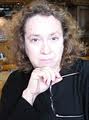
  • Interview with Kansas Poet Laureate Denise Low

    This week’s interview with Denise Low marks the beginning of the new Poet Laureate Series here at ZingaraPoet. Check back frequently for future interviews with Laureates from all over the U.S.

    I first became familiar with Denise Low when I was an undergraduate student at Washburn University and was given a copy of “Kansas Poems of William Stafford,” which she edited. I read the collection, found legitimacy in its pages and figured anyone who put together a collection like that was all right by me.

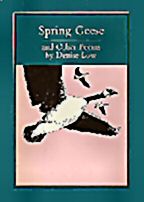
    Later, I discovered and read Low’s early collection of poetry, “Spring Geese.”  I think it resonated with me because, like the poems I write, this collection contains poems about that Kansas environment and natural history.

    Fast forward to November 2010. I’m living in Kansas City  and learn that Denise Low, second Poet Laureate of Kansas, will be reading at The Writers Place to promote her latest collection,  “Ghost Stories of the New West.”  Nothing could make me miss it.

    The reading that night was well attended  and Low did not disappoint. She is a dynamic reader and a gracious poet. I was thrilled to get a few minutes of her time to discuss poetry news and brag about my Alma Mater – home to Kansas’ first poet Laureate, Jonathan Holden. I did not know then that I would someday be asking her for an interview, but when the idea for a poet laureate series nudged my imagination, she was the first person I thought of (and, consequently, the first I asked).

    In this interview, directly following Pocahontas, Denise discusses her revision process, the current state of the arts in Kansas, and encourages poets who may be questioning their dedication to their craft. Her biography follows the interview as do links to her blog and website.

    Emjoy!

    Pocahontas: A Portrait

                                    In memory of Paula Gunn Allen

    Oval face     eyes turned aside    

    high collar, ruffled.     Once: a favored child              
    cartwheeler      envoy between camps
    student of  English      daughter of Powhatan           

     wife of Kocoum      political gamepiece          

    kidnap victim of Argall      forced bride
    converted wife of Rolfe      lady in wooden rooms
    awaiting a child           mother of Thomas

    literate Christian      forest Madonna

    tobacco cultivator     London celebrity
    ailing martyr.      Her words “Everyone must die.”
    and “It is enough that     the child lives.”

    Oil portrait filigree    tatting on a stamp

    lace-wreath collar     the woman named Matoaka
    narrowed-eyes look     a few days before the grave
    frozen obliqueness      now the last oval face.

    ——

    What did you take away from your experience as second Kansas Poet Laureate?

    Being poet laureate of Kansas was a great honor, and it helped me appreciate the educators, writers, arts administrators, and librarians across the state. Sometimes in a capitalist society the arts, especially poetry, can seem frivolous, but I came to understand how word arts connect to most skilled fluency with language. Literary uses of language impel readers to learn history and context. This is not a time in history when superficial reading will suffice. Poetry trains its readers to read closely and with a mind open to unexpected associations. It is essential to understand multi-layered communications in the public, social media, and private realms.

    How does poetry bring or add meaning to your life?

    1. First, I became involved with poetry so young, that it is hard to tease out how it, among other experiences, add meaning to my life. It’s a spiritual practice—I do believe that learning the discipline of language is one of many paths to enlightenment. It requires engagement with reality, not neuroses. Observation and reflection are the polarity, and syntax the means along the way. So poetry keeps me connected to immediate experience, and it makes historic tradition collapse into the present moment. We use ancient words, and each use reinvigorates them. I cannot imagine my life without poetry.

    2. Also, poetry helps me understand my multidimensional identity. It connects emotion, ideas, and spirit to the locus of body. And so it helps sort out the chaos—with grammar, syntax, image, and sound all coordinated into coherence. If a person visualizes a crystal, that sense of order is soothing. Likewise, and on more levels, poetry creates serenity—even poetry about hard truths.

    How do you protect your mental and physical creative space?

    I have arranged my days to create writing time—easier now that my child- and elder-caring years are behind me. The importance of my writing is an essential understanding in my marriage. I’ve claimed a small but nice room in the house for an office—it has a great view of the back yard—which is critical to my writing. My family, especially my husband, understands this is my calling. That support is invaluable.

    Tell me how you approach revising your work.

    Often. I write and rewrite. I have blind spots and repeat obvious words or miss opportunities. Once in a long while a poem comes out in one piece, but not often. To me, the editing is also very creative, and it gives me the opportunity to make better crafted writing. I’ve often been in a writers group, and I’ve worked with editors, so I’ve become impersonal about trying to improve work rather than treat it as a precious emanation from the great-poet-cosmos. Like William Stafford used to say, “Editors are our friends.”

    In your 2006 interview with Miranda Ericsson, you mentioned you were thrown lifelines at crucial moments in your life. Can you elaborate on these lifelines? How did they manifest and how did they help?

    I was about to abandon poetry and commit to developing prose projects when I won the Kansas Arts Commission Literary Arts Fellowship in Poetry, in 1991. That program was one award every two years to a poet in Kansas, and it was $5000. That was summer support plus a computer. Then in 2007 I became poet laureate for Kansas through the KAC, again. Of course, all those programs are suspended because of politics right now. These awards really helped me have the time needed to write and publish. I have been so fortunate to see so many aspects of the writing process and how it connects to audience. My next mission is to help restore these essential programs.

    Currently, I am president of the board of directors for the Associated Writing Programs, and through this role I’ve been able to see a wide range of programs that serve poets and other writers. All these experiences deepen my understanding of how crucial creativity is to being a conscious, contributing citizen. Creative writing is, I believe, the deepest form of literacy. If you can write a poem, you can assemble your children’s toys, maintain your car, troubleshoot your computer, write grant applications, and select factual information from the bovine excrement in the news media.

    How does keeping a blog fit in with your overall creative endeavors?

    I’ve had some illness this summer, so I’m very behind on my blog. I want to use it as a forum for book and reading reviews, because my region and my literary genres are so underserved. Some fabulous writers get overlooked because of poor distribution and poor publicity. Blogging helps me feel empowered to present writers of merit. For starters, I’m thinking of Robert Day’s terrific book of essays The Committee to Save the World, Jo McDougall’s memoir, and William Trowbridge’s amazing Ship of Fool. These are terrific, first-rate works that will not be in the New York media. But the internet blogosphere is democratic, and I hope to take advantage of its strengths to promote some good writing.

    Have you any advice to share with writers who may be struggling to continue their craft?

    1. Yes—first, be professional. The novelist David Bradley told me this at a critical period in my life. A few people are able to work at other jobs all their lives and keep a parallel writer’s life going. These are few. Commit yourself to taking classes, being involved in a writer’s group, and other faster ways to learn than trial and error. I see many people who put off writing during their most productive years, retire, and then expect to have writing skills in a few weeks. My mentor Carolyn Doty told me it takes ten years to learn how to write a novel. I believe her. Putting off writing for practical reasons is the most risky choice—for example, your health may not hold up, and when you retire, you may not be able to write.

    2. The second bit of advice is to get up early in the morning and write—you have some good hours before work schedules. Go to bed early, skip TV, and use those early hours.

    3. Third, read as much as you can of writing that you admire and that relates to your field. One of the great paradoxes is people want to write poetry in great numbers, but they don’t want to read others’ poetry, even the greats. Trust me. Reading great poetry will not stifle your own originality.

    4. Write about topics that matter. Reynolds Price did a great presentation at AWP one year about looking for material that will make a difference rather than self-centered cleverness. Hundreds of thousands of books are published and self-published every year. As a writer, what contribution can you make? I find myself impelled to document as much as I can of suppressed histories and voices. This led to the Langston Hughes in Lawrence project and many others.

    What’s next?

    Oh, so many projects. I have a number of articles that need revising. A book of essays about Midwestern literature—Natural Theologies—is coming out from The Backwaters Press of Nebraska later this year. I believe this is the first critical book entirely about contemporary literature of this region. I’m finishing a grant on Cheyenne ledger art, which is amazing conjoining of image and glyphic text. I’m trying to write a memoir about my grandfather who was of American Indian background. I want to get back to some research on Langston Hughes’s family. More.

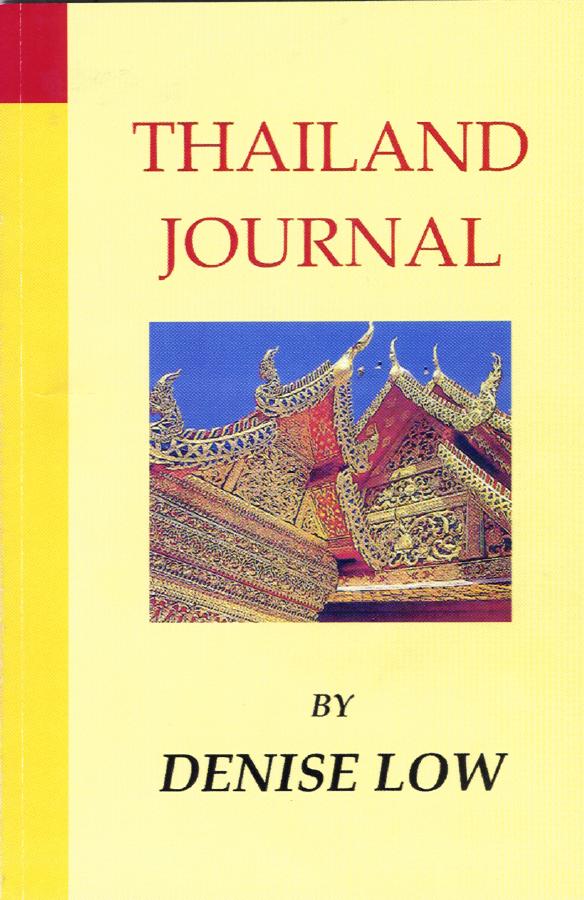
    Denise Low, Kansas Poet Laureate 2007-2009, has 20 books of poetry and essays, including Ghost Stories of the New West (Woodley), named one of the best Native American Books of 2010 by The Circle of Minneapolis and a Notable Book by the Kansas State Library & Center for the Book. Other books are To the Stars: Poets of the Kansas Ad Astra Project (Mammoth/Washburn University Center for Ks. Studies) and Words of a Prairie Alchemist (Ice Cube Press), both Kansas Notable Books; and Thailand Journal: Poems, a Kansas City Star notable book (Woodley). She has taught creative writing and literature at Haskell Indian Nations University, the University of Kansas, and the University of Richmond. She is 2010-2011 president of the board of directors for the Associated Writers and Writing Programs, and she has served that organization as vice president and conference chair. Awards are from the Academy of American Poets, The Newberry Library, Lannan Foundation, National Endowment for the Humanities, Kansas Arts Council, and Kansas Center for the Book. Her MFA is from Wichita State University and her PhD is from the University of Kansas. Her blog is http://deniselow.blogspot.com and website is www.deniselow.com