Category: Zingara Poetry Review: Poetry Picks

  • The Kiss by George Cassidy Payne

    (Inspired by Gustav Klimt)

    The kiss is nectar-filled
    skin wrapped over a corpse.

    It stands still in the mouth like
    a crouching tiger at a motionless
    midday stream.

    The kiss knows that figures are
    keeping watch. As tarantulas scuttle
    underfoot, it cracks apart like stepped on
    craw fish shells.

    Petite. Pink. Long and patient. Stingless
    and vaporizing. The difference between
    waiting and enduring.

    The kiss was never meant to be a hand
    shake or a goodbye. Like a moose, 5,343 feet
    below a canopy of charred balsam, scarfing wild
    shrooms, with instant knowing, The kiss bustles.

    Plunged into the minerals like an ice ax. Breaking them
    open upon a bed of prismatic sands. Submerged in
    asteroids. The kiss. Colliding intentions. Like the wind nudging
    two chimes. Existing together as they must.

    George Cassidy Payne is originally from the Adirondack Mountains of Upstate New York. He now lives and works in the City of Rochester, New York. George is a poet, photographer, essayist, professor of philosophy, and social worker. George’s poetry has been included in a variety of  journals and magazines, including Chronogram Magazine, Allegro Poetry Journal, Mojave Heart, the Red Porch Review, Albany Up the River Poets Journal, Teahouse, The Adirondack Almanac, The Mindful Word, Talker of the Town, Pulsar, Moria Poetry Journal, Ampersand Literary Review, and many others. 

  • Zingara Poetry Review – Call for Submissions

    Submissions are open for Zingara Poetry Review. 

    ZPR will feature particular groups of individuals in the upcoming months, so please take a look at the following preferences. If none of the categories below feel like a good fit for you, please submit your work for National Poetry Month when ZPR will be publishing a poem every day of the month.

    August: Work by undergraduate students who are currently enrolled in an undergraduate program (any discipline) or who have graduated within two years. CLOSED

    September: Work by graduate students currently in a writing-related graduate program, including MFA, MA in English, etc.

    October: Work by indigenous people, particularly Native Americans.

    November: International Writers (anyone who isn’t living, or wasn’t born, in the United States).

    December: Poets over 50

    January: New and unpublished poets (0-3 single publications, no books or chapbooks)

    February: African American/Black American Poets

    March: Women only please!

    April: Poetry Month – a poem will be published every day this month so send your best work early!

    May: Poets who live WEST OF THE MISSISSIPPI

    June: LGBTQ

    July: Editor Favorites

    Guidelines:

    • Send 1-3 previously unpublished poems of 40 lines of fewer in the body of an email, any style, any subject, to ZingaraPoet@gmail.com with the submission category (e.g. Undergraduate Student) as the subject of your email.
    • Include a cover letter and brief professional biography of 50 words or fewer, also in the body of your email.
    • Submissions are accepted year round.
    • Simultaneous submissions are fine, but please let me know immediately if submitted work is accepted elsewhere.
    • Published poets receive bragging rights and the chance to share their work with a diverse and ever-growing audience.
    • Submissions which do not follow these guidelines will be disregarded.
    • If accepted work is later published elsewhere, please acknowledge that the piece first appeared in Zingara Poetry Review.
    • There are no fees to submit, though you will be subscribed to the Zingara Poetry Review newsletter.
    • Check Zingara Poetry Review every week to read new poems, which are normally published by 9:00am Eastern Time.
    •  Zingara Poetry Review retains first digital rights, though rights revert back to the poet upon publication.

    What I look for in a poem:

    Like all editors, I like to see interesting poems that do what they do well. Whether traditional, conceptual, lyrical, or formal, they should exhibit the poet’s clear understanding of craft and, just as importantly, revision. Very elemental poems that have not undergone effective revision will probably not make the cut. Likewise, poems which are contrived, sacrifice meaning for the sake of rhyme, feel incomplete, do not risk sentimentality (or are too sentimental), or lack tension when tension is needed, will also be dismissed. I am a fan of rich, vivid imagery, cohesive discursiveness, and surprising metaphors. Finally, poems which perpetuate harmful stereotypes of gender, race, or class will most certainly not be considered.

    For a very good discussion on the elements of effective poetry, take a look at Slushpile Musings by James Swingle, publisher and editor of Noneucildean Cafe’

    Response time is 2 days to 6 months

  • Of the Palm by Toti O’Brien

    I admire the naivety
    How she stands among fellow trees
    sporting nothing
    but a scanty cluster of leaves
    in guise of a canopy
    as if going to a Victorian ball
    in flapper attire
    also wearing of course
    a feathered hat
    Of the palm
    I admire the frail nakedness
    delicately osé
    like a dancer’s shaved leg
    sheathed by nylon hoses
    If she dares
    intruding the arboreal crowd
    without blinking
    while so shamefully alien
    uncaring of uniforms
    she reveals
    among sister specimens
    exceptional
    skills of discipline
    How they march in orderly rows
    tracing parallels
    with their trunks
    fastening earth and sky
    with thin stitches
    How concertedly
    at the first puff of wind
    they tickle the horizon
    as if playing a keyboard
    with soft, even touch
    whole steps half steps
    hand in hand
    up and down the scale
    facilement


    Toti O’Brien is the Italian Accordionist with the Irish Last Name. She was born in Rome then moved to Los Angeles, where she makes a living as a self-employed artist, performing musician and professional dancer. Her work has most recently appeared in Gyroscope, Pebble Poetry, Independent Noise, and Lotus-eaters.


  • Elegy with Ice Cream by Kathy Nelson

                ―Travis Leon Hawk

    A man fits a contraption
    onto a wooden pail, fills it with ice.
    The child turns the handle as easily

    as her Jack-in-the-box but soon
    grows bored and runs to play
    in the dappled shade of July.

    This the man who, as a boy, teased
    white fluff from the knife-edges
    of cotton bolls under summer sun

    till his fingers bled. Once, he spied
    a rattler coiled between his feet.
    He wants her to understand how

    hardship built this good life, how
    readily dust could blow again, how
    quickly flak jackets could come back.

    He calls her to him, teaches―add salt
    to the ice, keep the drain clear, turn
    the crank without haste, without desire.

    Her small shoulder stiffens. He grips,
    labors with his own broad forearm,
    churns the peach-strewn cream.

    Kathy Nelson (Fairview, North Carolina) is the author of two chapbooks―Cattails (Main Street Rag, 2013) and Whose Names Have Slipped Away (Finishing Line Press, 2016). Her work has appeared or is forthcoming in Asheville Poetry Review, The Cortland Review, Tar River Poetry, Broad River Review, and Southern Poetry Review.

  • Homage to the Horny Toad by Chuck Taylor

    Friend Montrose says Why don’t you play the lead
    in my next horror film? I’m filming in
    Junction where the motel rents are low. The
    Monster’s going to be the horny toad.

    I’ll film him close and blow the image up
    So on screen the horny toad looks large and
    Scary what with all that horny skin.

    That ought to work I say. We had them in
    The backyard down in Deadwood. They can squish
    Down flat or blow up big to scare away
    The wolves, the foxes, and the coyotes.

    You think you know these toads? Why they can squirt
    Bright red blood out of their eyes. That’s why I
    Am shooting the film in Technicolor.

    They’re tiny guys, but not scared of people.
    They’ll sit quiet on the palm of your hand.

    Carolyn’s said she’ll play the heroine. She’ll
    Be chased by what seems to be a giant
    Evil monster. Its sticky tongue will flick
    Out as if it’s going to swallow her
    Whole. A developer’s out to buy her
    Land and has trained the beast to chase her.
    Good thing you’re using the horn toad. No one

    Will recognize little guy made big on
    The screen. When I was a kid growing up
    I’d see them everywhere, but haven’t seen
    The horny toad in more than twenty years.

    Chuck Taylor’s first book of poems was published by Daisy Aldan’s Folder Press in 1975. He worked as a poet-in-the-schools and as Ceta Poet in Residence for Salt Lake City.

  • In the Era of Collective Thought by Gary Fincke

    From a hospital in Texas,
    one hundred brains have vanished
    and, as always, there are flurries
    of posts suggesting suspects
    from genius to sociopath.
    Still unaccounted for, the brains
    of the frequently concussed, those
    in early dementia, those
    whose last demand was suicide.
    Tonight, after we lock our doors,
    we speculate the thief lives
    surrounded by so many brains
    he cannot admit a guest.
    That he must master home repair
    or live among leaks and drafts
    and dangerous wiring. All day,
    we have seen nobody outside.
    As if our isolation has been
    perfected by the relentless work
    of the brain-eating zombies
    we are fond of discussing.
    Cerebrum, cerebellum–
    we recite our parts like beginners
    in anatomy, counting down to
    the constancy of medulla
    while the underworld’s weather
    loots the grid we rely upon.
    Drought has master-minded
    the overthrow of farming.
    Rain is a hostage whose ransom
    has been raised so high the sky
    is unable to pay. Shut-ins,
    we carry the memory of comfort
    like a congenital hump.
    Decisions made elsewhere are
    hurtling toward us in rented trucks,
    all of them explaining themselves
    in a gibberish of slogans.

    Gary Fincke’s latest collection, The Infinity Room, won the Wheelbarrow Books Prize for Established Poets (Michigan State, 2019). A collection of essays, The Darkness Call, won the Robert C. Jones Prize for Short Prose and was published by Pleiades Press in 2018.


  • Gleeful by Christina M. Rau

    The joy of cows
    roadside sitting
    standing together—
    as if I’d never seen cows.
    As if they are exotic.
    I suppose to some, they are.
    To others, sacred.
    Once at the Atlanta Zoo
    a keeper told me to think
    of giraffes as giant cows,
    head’s the same just a different height.

    Giraffes are roadside somewhere
    but not here. Down here there
    are the cows, the green green grasses,
    the flowers in blankets of maroon
    white purple yellow
    billowing blossoming blooming
    for miles stretched ahead.

    Christina M. Rau is the author of the sci-fi fem poetry collection, Liberating The Astronauts (Aqueduct Press, 2017), which won the SFPA 2018 Elgin Award, and the chapbooks WakeBreatheMove (Finishing Line Press, 2015) and For The Girls, I (Dancing Girl Press, 2014). She also writes for Book Riot about all things book-related. In her non-writing life, when she’s not teaching yoga, she’s watching the Game Show Network.  http://www.christinamrau.com

  • Portrait of My Mother by Kathy Nelson

    My mother sits in profile on the photographer’s stool,
    one arm draped over crossed knees, the other behind her.
    White crinoline and ruffles. Classic pose. Scuffed shoes.

    She is taking that single breath between girl and woman.
    The ripening plum of her mouth. The start of softness
    above the narrow velvet ribbon of her empire waist.

    Nights, she listens from her bed to slamming doors,
    the late thunder of tires on oyster shells in the drive.
    Or her mother rouses her from sleep, commands her

    to yell her father’s name from the car, embarrass him―
    he and his tart carousing at the open-air bar. She’s
    a conscript in her mother’s war. What she longs for―

    her father’s love. He’s bound to his pocket flask.
    Mornings, she sits at the piano, as her mother requires,
    plays scales and études. Duty over desire. I want to break

    the glass over the portrait, let her out. I want to tell her:
    set the house on fire, let them wonder if you drowned
    in the canal, run away to Kathmandu in your scuffed shoes,

    Kathy Nelson (Fairview, North Carolina) is the author of two chapbooks―Cattails (Main Street Rag, 2013) and Whose Names Have Slipped Away (Finishing Line Press, 2016). Her work has appeared or is forthcoming in Asheville Poetry Review, The Cortland Review, Tar River Poetry, Broad River Review, and Southern Poetry Review.

  • Depression by Doug Van Hooser

    I fail like a slogan. A frozen can of soda

                that cracks the pop-top, thaws and whispers

                            it’s carbonation. Flat as cold,

    I wander the sidewalks of suburbia,

                look through windows, see the unuttered invitation

                            of furniture. If only there was a message

    in the envelope addressed to me.

                It arrives with no return address.

                            The wind doesn’t yell or even sigh.

    No leaves to shake in the trees.

                A culvert runs under the road,

                            too small to fit through.

    The teeter-totter of chemical imbalance

                won’t shift its weight. Hibernation

                            a dreamless sleep,

    I grant myself custody of my aloneness.

    Doug Van Hooser’s poetry has appeared in Chariton Review, Split Rock Review, Sheila-Na-Gig, and Poetry Quarterly among other publications. His fiction can be found in Red Earth Review, Flash Fiction Magazine, and Bending Genres Journal. Doug is a playwright active at Three Cat Productions and Chicago Dramatists Theatre.

  • First Mother’s Day without Mom by Ginger Dehlinger

    It’s a sunny day in May
    and I’m pushing a wheeled cart
    through the aisles of the supermarket.

    Other Saturday shoppers are doing the same,
    and though I’m not usually interested
    I look in every basket I pass.
    Blind to the bread, lettuce and eggs,
    my eyes rest on balloons, cards,
    flowers and small beribboned packages.

    How paltry is my pantry;
    how blue and bereft my basket
    compared to theirs.

    I watch a store employee
    dip strawberries in melted chocolate
    then roll them in candy sprinkles.

    Mom loved those decadent treats,
    so I nestle a colorful dozen
    in my basket of gray merchandise.

    Ahead of me in the long checkout line
    a pink teddy bear sits atop a loaded cart.
    Avoiding his shiny stare I look away.

    To my right is a display of potted plants
    (orchids, mini roses, African violets)
    some large, others small and green.

    A shopper is picking up plants,
    looking at price labels, sniffing blossoms,
    debating which one to buy.

    “Take the roses,” I want to tell her.
    “Take the roses.”

    Ginger Dehlinger writes in multiple genres. Her poetry and short stories have appeared in several e-zines and anthologies. Most of her work is set in the West including two novels, Brute Heart (Oregon) and Never Done (Colorado). Ginger lives in Bend, OR with her husband and a cat, both spoiled.

  • Somebody Else’s Poetry by Ella Baum

    We’re always sorry,

    Our body’s architecture
    Is Syntactically off.
    We end poems on commas,
    And find sleeping with masks on
    Hard work.

    Because sh(hh) is half the syllable of she,
    The characters we play
    Are somebody else’s poetry.

    But text doesn’t have to be the driving force.
    Our bodies are as important as our voices –
    That’s what my ear told me.

    Identity stripped
    Of performance,
    Mythology,
    We are remodeled –
    The shadow that completes the window.

    Fences don’t protect from everything
    And trauma hides behind the beautiful

    It’s such a good line. I wish
    It lingered more,

    Ella Baum is currently a junior studying at Vassar college in Poughkeepsie, New York. She is an English major and photographer interested in the expressive potential of sister arts. Ella is a bilingual, dual citizen of America and Sweden and feels indebted to the New York City public school system which spurred her interest in poetry and the potential of language. 

  • Protection by F.I. Goldhaber

    True Pacific
    Northwesterners love
    our rain. We
    only dig
    out umbrellas to shelter
    us from summer’s sun.

    F.I. Goldhaber’s words capture people, places, and events with a photographer’s eye and a poet’s soul. Paper, electronic, and audio magazines, books, newspapers, calendars, and street signs display their poetry, fiction, and essays. More than 100 of their poems appear in fifty plus publications including four volumes of poetry. http://www.goldhaber.net/


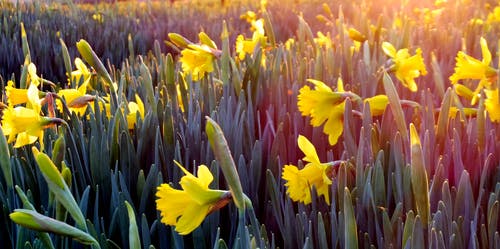
  • Above Asphalt by Carol Hamilton

    Filigrees of rosy purple reach out
    on slender arms of redbud
    below the lettuce-and-grass-green heads
    of newly-leafed trees.
    Now my drive on pocked pavement,
    huddled in with too many cars
    and too much exhaust, is graced
    with a quickly-passing revelation
    of startling new life.
    I never quite remember
    to look and look, take heart
    and watch the fleet hours
    of jonquils, violets, lilies,
    purple iris and daffodil.
    It is the only time we can
    breathe swift spring.

    Carol Hamilton has published 17 books: children’s novels, legends and poetry, most recently, SUCH DEATHS from Virtual Arts Cooperative Press Purple Flag Series. She is a former Poet Laureate of Oklahoma and has been nominated seven times for a Pushcart Prize.

  • Chaninah by Steve Pollack

    On feather filled pillows
    he reclines easy as evening
    crowned by a Cantor’s tower
    castle shadows on sable hair,
    white robe billowing
    as if a cumulus cloud.

    In sundown sky he presides
    over minyan of five sons and wives
    who sip sweet wine four times
    with stained glass blessings,
    children on shins a threshold
    away, ask why in four questions.

    Each year on the same full moon
    he appears with Elijah, cloaked
    in melodies at mystery’s doorway,
    a virtual choir of crystal vibration
    stirring psalms and folksongs,
    midnight verses accelerando.

    Like ten plagues passing over
    a violent sea split in two, forty years
    wandering to a land promised,
    this family around that table
    on a night different from all others
    nothing less, a quiet miracle.

    Steve Pollack hit half-balls with broomsticks and rode the Frankford El to Drexel University. He advised governments, directed a community housing corporation, built hospitals and public schools.

    Poetry found him later. He serves on the advisory board of the Montgomery County Poet Laureate program and sings bass with Nashirah.

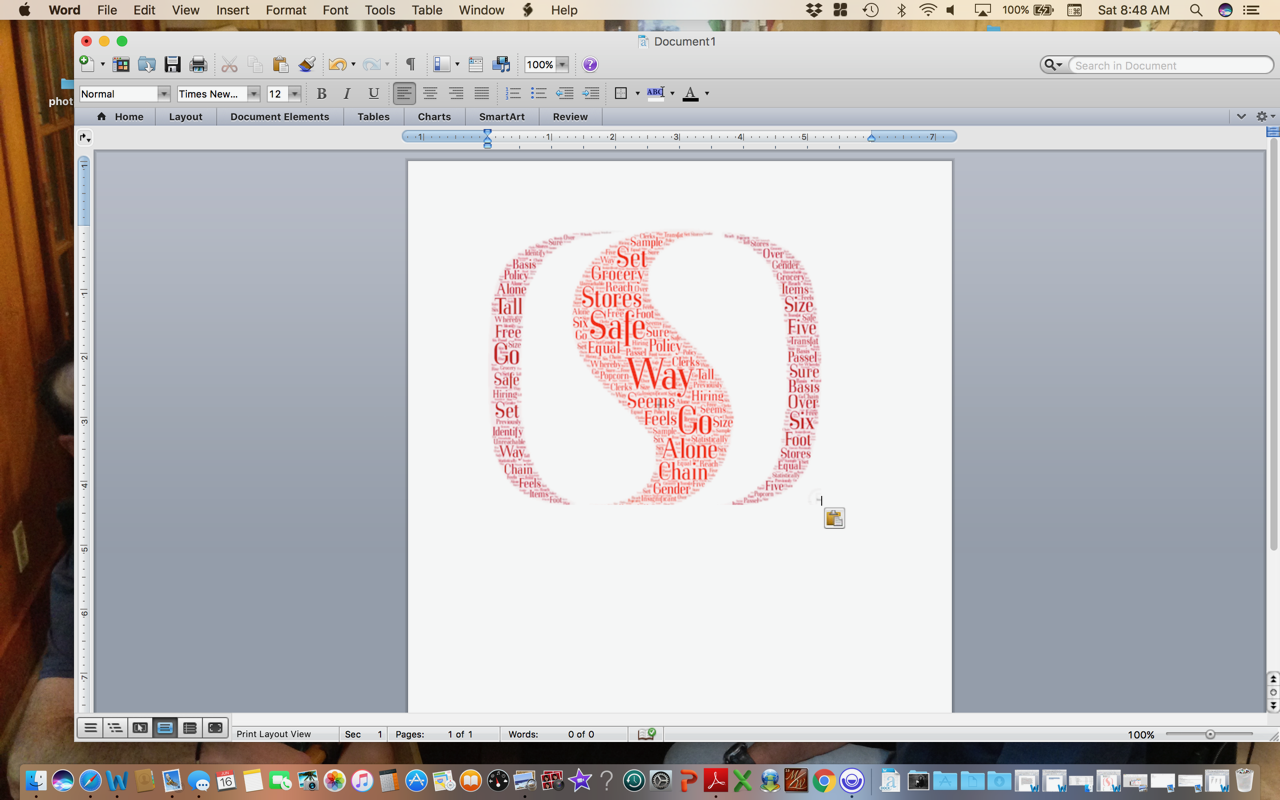
  • Safe Way to Go? by Gerard Sarnat

    i. Sally Swinggood’s

    With 1335 stores in the US alone,
    the grocery chain appears to have set an upward looking
    policy of equality in gender-hiring
    which maybe is reflected in my statistically insignificant
    sample size of a passel of 5 tall
    clerks seeming to identify as She who are able to reach
    the previously unreachable top
    shelf to grab me a handful of packets of transfat popcorn.

    ii. TransIt 

    Closet
    pried
    ajar

    gender
    dissidence
    unbound

    post-op
    posit
    appellations.

    HAIKU

    iii. High School 

    She tries to boysex
    gay away — but it don’t work
    — so then avoids them.

    iv. Not a Mr., Mrs., Miss or Ms.?

    Then Mx.-match fluid
    trans, a or non-conforming
    gender honorifics.

    Gerard Sarnat is a physician who’s built and staffed homeless and prison clinics as well as a Stanford professor and healthcare CEO. He won the Poetry in the Arts First Place Award plus the Dorfman Prize, and has been nominated for Pushcarts plus Best of the Net Awards. Gerry is published in numerous academic-related journals.