Category: Zingara Poetry Review: Poetry Picks

  • The Name of a Tree by Catherine Anderson

    Today’s Poetry Pick comes from Catherine Anderson’s second book  of poetry titled “The Work of Hands,” published in 2000 by Perugia Press, whose mission it is “to produce beautiful books that interest long-time readers of poetry and welcome those new to poetry.”

    THE NAME OF A TREE

    Right here on Ash Street, Ana says, she used to stagger
    up the stairs like a drunk.
    There was no light, so she patted the wall,
    following hardened gum and kick marks.
    Those were crazy days she tells me –
    two kids, no money, no job –
    when English made the sound of click, swish,
    money gliding from a cash drawer,
    and the only words she knew were numbers –
    seventy-five cents ringing down the throat
    of a soda machine, her soapy fingers counting quarters
    to feed the dryer.

    Some days I am Ana’s teacher, some days she is mine.
    This morning we look through her kitchen window,
    The one she can’t get clean, cobwebs massed
    between sash and pane. The sky is blue-gold, almost
    the color of home. Ana, I say, each winter
    I get more lonely. Both of us would like the sun
    to linger as that round fruit in June, but Ana says
    it’s better to forget what you used to know:
    the taste of fish cooked in banana leaves,
    the rose color of sea waves at dusk,
    the names for clouds and wild storms, and a tree
    that grows, she says, as full
    as a flame in the heart of all countries
    south of here.

    Catherine’s book is informed by her work with immigrants and refugees and explores the pathos involved in such work. Her poem “Womanhood,” which was chosen by Billy Collins’ “Poetry 180” project, can be read at poets.org

  • How My Father Learned English by Juan J. Morales

    Cover by Oswaldo Guayasmin

    This next Poetry Pick is pulled from Juan Morales’ book of poems “FRIDAY and the Year That Followed,” winner of the 2005 Rhea & Seymour Gorsline Poetry Competition.

    HOW MY FATHER LEARNED ENGLISH
    382nd Hospital, Japan 1952

    The wounded who could not speak English
    congregated around the bedridden every morning.
    Manuel, the nurse from some other ward,
    taught my father and others English
    word by word. Sometimes, phrases, the sloppy
    repeated English made sense — Because es porque.
    Yo soy es I am.  I am.  Otra vez, diganme.–
    Bee cause.  Pain.  I am in pain.

    English moved my father’s tongue unlike Spanish.
    It stuck in his mouth, stumbled past his teeth.
    He dreamed he forgot Spanish and his tongue
    withered away.  My father never told anyone
    about this or the scratching fear of his legs,
    under bandages and scars, never walking again.
    He didn’t have words in English yet.

    From its initial lines to its closing stanza, Morales’ book of poems are nothing short of compelling. Sometimes surreal, other times magical, these poems evoke moods akin to the visual art of Frida Kahlo. It is a staple for any lover of the arts.

    Juan J. Morales is currently the Director of Creative Writing  and Assistant Professor at Colorado State University-Pueblo. He is curator of the Southern Colorado Reading Series as wells as the student literary magazine, Tempered Steel.

    “Friday and the Year That Followed” (ISBN 9780977197354) is available for purchase at Amazon

  • “viii” by Lisa Gill

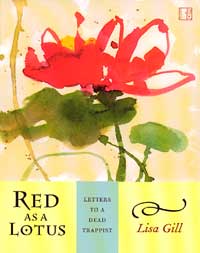
    Red as a Lotus by Lisa Gill, La Alameda Press, Cover by J.B. Bryan

    The third poem in my Poetry Picks Series, which celebrates poetry and honors poets, is from Lisa Gill’s first book of poetry titled “Red as a Lotus,” a collection of approximately 110  fourteen-lined epistolary poems addressed to Thomas Merton.

    Many poems in this collection read as contemplative meditations while others provide voice to spiritual and existential questions whose answers are often ephemeral. Described by La Alameda press as a collection “with an eye which stays true to the bone,” and by others alternately as a mystery and a revelation, Lisa Gill’s first book of poetry is a worthy read and one every serious poet should have on his or her bookshelf.

    viii

    I watched the lunar eclipse. Ever so gradually the shadow

    of the earth crept across the surface of the moon until nothing

    but an infinitely fine sliver remained. And standing under

    a street lamp, I realized I’m part of what blocks the light,

    just another person on this planet spinning about, following

    one dizzying pattern after another, rarely bothering to calculate

    the ramifications of my orbit. Perhaps despite every attempt

    to move in good faith, I’ll always end up coming between the sun

    and the place it should shine. When the moon started waxing,

    people spilled back into buildings. I held out, thinking how

    fifteen minutes ago, the bars emptied onto the street an

    for a while, we all stood still and looked up, past any neon,

    to the moon — as if were new, as if it were last call. Heading

    back into the bar I prayed my shadow sheds such light.

    – – – – – –

    “Red as  Lotus” is available from La Alameda Press, New Mexico (ISBN #1-888809-33-7)

    Check back here for a future interview with Lisa Gill and learn about the many projects she has been, and continues to be, involved in since the publication of her first book.

  • Ground Waters by Alison Apotheker

    This second poem in Zingara’s Poetry Picks made it into the “notebook of favorites” for the same reason many poems do – I like it. I like it because I relate to it and identify with the speaker, whom I find believable and authoritative. And while these reasons may not be critically sound, they are nonetheless the primary reasons I chose  to write it down in my book of favorite poems and  include it here. A brief commentary of some of the poem’s strengths follows.

    Ground Waters

    by Alison Apotheker

    from (Slim Margin)

    Yesterday, in snow’s rare visit to this city,
    my son and I raised his first snowman.
    As we rolled the white boulders of its body
    my pregnant belly nudged up against them like kin.

    By evening, its body leaned to the left so impossibly
    I kept checking the window for its collapse.
    In the morning, even more so, the body straining
    groundward as if to grasp the carrot nose
    that had fallen and lay now half-covered in slush.

    My son, who hasn’t yet been around the block
    with gravity, suspects nothing. I remember
    last summer when he skinned his shin on the sidewalk.
    I watched his eyes register the body’s betrayal.
    Yet he seems not to notice the snowman’s state,
    the degree of recline, how little it would take
    to return it to an idea of itself.

    All over the neighborhood,
    snowmen assume such inspired angles,
    splayed skywards as if in appeal to their place of origin,
    kneeling for their own beheadings,
    canted in prayer, tipsy
    with the song of their own slow-going.

    The relief obvious in their frozen hulking masses
    to rejoin the fluid grace of ground waters.
    The truth is: before I became a mother,
    I knew the body’s longing to be lost.
    An untrustworthy lover bound
    to forsake us, I’d rather do the leaving
    than be left.

    But now, as we walk home in the dusk,
    my two-year old riding my hip,
    patting my cheeks with his mittened hands,
    I never want to leave this earth.
    Inside the baby tumbles and reels,
    already knowing where the body will take us,
    that we have no choice but to follow its lead.

    *Excerpted from Garrion Keillor’s Writers Almanac

    In addition the speaker’s repeatability, there are in fact a number of poetic techniques that contribute to the poem’s effectiveness. The first stanza, for example, provides the reader with a appropriately subtle set-up for the poem. Instead of writing “I built a snowman with my two-year-old son,” the poet opens the topic with an observation of the rarity of snow, suggesting preciousness, and does not reveal the age of the child until later in the poem, when the reader has become truly curious about it.

    The word “raised” in the second line is a powerful choice and connotes a process more complex  than the simple act of packing and rolling snow to create a shape suggestive of a human being, and further broadens the significance of the event to include the complex experience of raising a family.

    Imagery plays a huge role in poetry and is wielded with expertise here in such observations as “the white boulder of its body / my pregnant belly nudged up against them like kin” and “as if to grasp the carrot nose / that had fallen” add animation and whimsy despite the underlying seriousness (mortality) of the poem’s tone.

    The meandering thoughts of skinned knees and the longings of youth present in the poem do not distract from the narrative because they reaffirm the overall theme that our to bodies seem always to betray us, or at least resist our desire, forcing us into an internal life and landscape where our bodies matter less. Adding these meanderings in just this way illustrates a lovely mastery of language.

    Finally, the extended metaphor pairing the human body and its biological changes with that of the slowly melting snowman is particularly poignant.
  • The Shadow by Carlo Betocchi

    In order to celebrate my love of poetry and ensure that I have plenty of it available to read, I subscribe to many periodicals of both the physical and electronic varieties. Sometimes when reading these periodicals and email subscriptions, I discover a poem that is, in my subjective opinion,  beautiful. Other times I am intrigued by a  poem’s complexity and marvel at its mystery. When I find such poetry, I want to share it with the world, and say “Hey! Look at this great poem!” Whether or not the poem resonates with another person is not within my power, but the possibility that it will is thrilling, as is the way disconnection evaporates when kindred souls recognize each other through a poem. In any case, blogging allows me not only to share the poem but to promote quality poetry while discovering, or rediscovering, great poets.

    Here, then, to share my love and fascination with poetry is the first of many future installments of “Lisa’s Poetry Picks.” I don’t intend at this stage to explicate or comment over-much on any of this poetry, though I suspect some poems I post will insist on some response from me. That is, I might share whatever it is about the poem that drew me to it and caused me to want replicate here. Above all, I wish to fully appreciate each poem as well as its poet. Please feel free to make comments and constructive observations about these poems if so moved.

    From the March 2010 issue of the “Poetry Foundation’s” Poetry magazine:

    The Shadow
    by Carlo Betocchi

    One spring day I saw
    the shadow of a strawberry tree
    lying on the moor
    like a shy lamb asleep.

    Its heart was far away,
    suspended in the sky,
    brown in a brown veil,
    in the sun’s eye.

    The shadow played in the wind,
    moving there alone
    to make the tree content.
    Here and there it shone.

    It knew no pain, no haste,
    wanting only to feel morning,
    then noon, then the slow-paced
    journey of evening.

    Among all the shadows always
    joining eternal shadow,
    shrouding the earth in falseness,
    I love this steady shadow.
    And thus, at times, it descends

    among us, this meek semblance,
    and lies down, as if drained,
    in grass and in patience.