Category: Writing, Revising, Blogging

  • What’s Shadowdark Got to Do With It?

    What’s Shadowdark Got to Do With It?

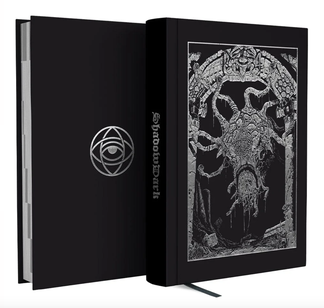
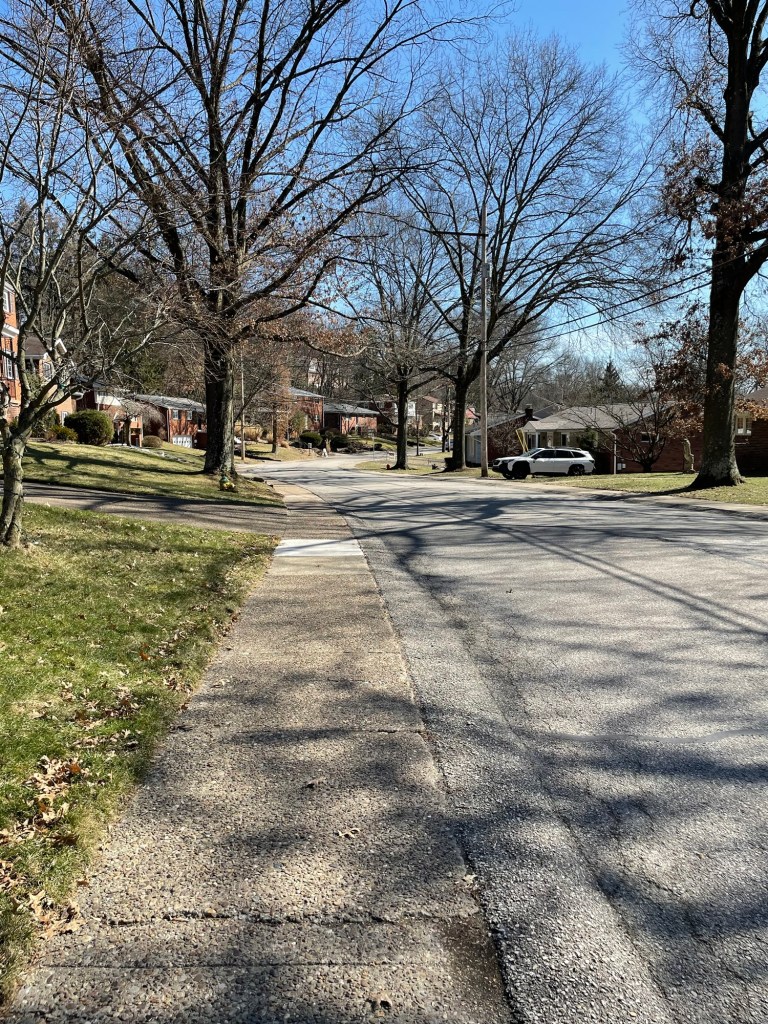
    Winter in Pittsburgh, PA (not quite the Northeast, not quite the Midwest, but dark and cold nonetheless) is for building fires, reading epic novels, streaming new movies and old, knitting and embroidery, dreaming of spring–and spirits, completing jigsaw puzzles and, this year especially, playing Shadowdark with friends.

    My husband and I joined a Shadowdark game back in April when a good friend from a previous life texted an invitation. He’d been running this old school revival table top RPG for a group of friends and family and thought we, along with a few other friends, might like to try playing.

    After some discussion and trepidation on my part (a person who vacillates between being deeply competitive and not competitive at all) and a promise that the group would be open and friendly, we agreed to give Shadowdark a try.

    Not only did we enjoy playing that first round and spending time with good friends but we were hooked and eager to play again.

    Our friend created an online interface on Foundry for us, complete with maps and tokens and inventory sheets which allows us to play from our various locations across the US. We use discord voice chat to talk to each other in real time.

    For that first adventure, we explored the Secret of the Lost Citadel of the Scarlet Minotaur wherein we gathered treasure and had encounters will all manner of beings, from Beastmen and Ettercaps to the fierce Scarlet Minotaur who dwells within the Citadel’s confines.

    That was 15 sessions and six months ago. Since then, our friend the game master has further developed the interface with greater detail and imagery and our group has grown from three to five (sometimes six) players.

    Environments we’ve explored include the aforementioned Lost Citadel, the town of Orlene and it’s suspicious temple, the wilds of the forest and the mystery of the swamp and a labyrinthine world of underground tunnels.

    We’ve encountered everything from subservient Beastmen, giant spiders, putrid lizard men (Troglodytes), hypnotized cultists, magical elves, a wizard-type hermit, kind inn keepers, surly constable, wild animals like bear, a wolf, a trio of slug creatures, crocodiles and rats. On our last adventure, we even managed to secure a trio of horses after defeating bandits on the road.

    Having wanted to learn Dungeons and Dragons since high school but never quite finding the right opportunity or group to join, Shadowdark, which is every bit as involving but quicker paced, provides precisely the right mix of action and character development for the utmost fun.

    To say that I eagerly look forward to game night hardly captures my enthusiasm. Each one is another unique opportunity to stretch my imagination in new and surprising ways.

    Whether creating and developing a backstory for my character or improvising dialogue on the fly, I am challenged (in the best possible way) to think and act in an ever evolving world. Sort of like creative cross-training: consistent, engaging, builds ancillary skills, and most certainly keeps creative despondency at bay.

    Working collaboratively as a team also cultivates a sense of belonging for me, an only child and writer who has always preferred solitude, books, and staying at home. And, this winter, a couple of our team members are coming to visit so we can all attend the Philly Gaming Expo together.

    It will be epic.

  • Calling For Frost

    Calling For Frost

    When the weather is particularly nice in the spring and summer and I can hardly keep myself indoors, writing and knitting give way to outdoor interests and the creative joy of yard work.

    Though the yard where I live now is modest compared to my last two properties, each of which sat on nearly a half an acre of land, and the growing season here is shorter than anywhere I’ve lived before, the temperatures more variable, the seasons more distinct, I still find ways to fit gardening into my life.

    In the spring, there was the delightful, hopeful work of landscaping the bed along the front walk where I planted a couple of hosta lilies, three knock-out rose bushes, a couple of lavender plants, two Astilbe, and a lung wort plant. I then added mulch to keep things moist and weed resistant.

    I also hung a number of potted petunias, impatiens and a couple of Boston ferns on shepherd hooks across the front of the house to enhance the what I had planted in the garden beds and also add a little privacy around the window. .

    On the back deck out of reach of dear, I planted a few container tomato plants and nurtured them along with attention, water, and organic supplements. I traveled at exactly the wrong times, so they grew tall and lanky, yet they still produced about a dozen delicious if oddly-shaped fruit. I can just imagine how much better they will do next year if I am more attentive.

    Fungus and blight became the main concern during the hot, wet summer (and this year was wet indeed) as was creating shade for the tomatoes on the deck.

    Other than that, there was a lot more sitting in the shade or the air conditioned house (more writing and knitting.)

    This fall brought a drought so even though the growing season was winding down I found myself out in the yard watering the hydrangeas and the elephant ears I’d planted in late June to keep them all from giving up entirely in the dry heat.

    November calls for trimming trees and shrubs, raking copious leaves and getting them to the curb for the street cleaners and, here in Northern Appalachia (a new environment for me), planting bulbs, hilling rose bushes, and mulching the heck out of delicate perennials to protect them from impending winter cold.

    The news of the season’s first frost sent me back out into the yard today after I returned home from teaching to bring in all the “free range” house plants I’d set around the sidewalk and the Boston Ferns hanging on the shepherd’s hooks are transitioning on the screened porch.

  • Bad Mouth, Good Friends

    Bad Mouth, Good Friends

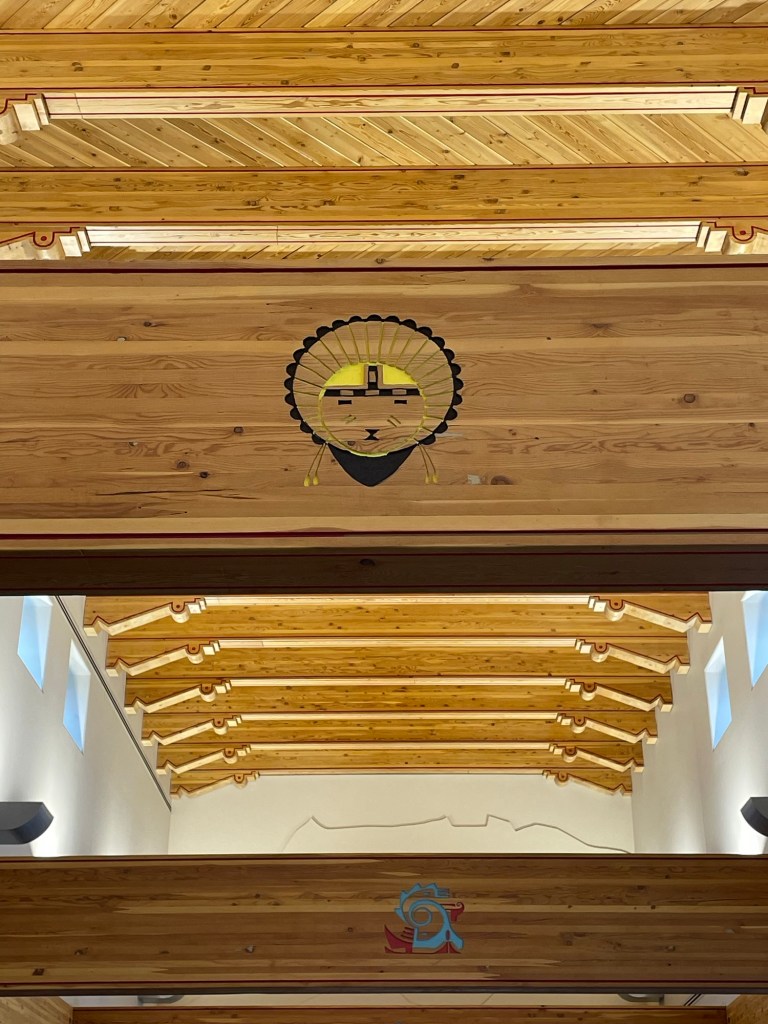
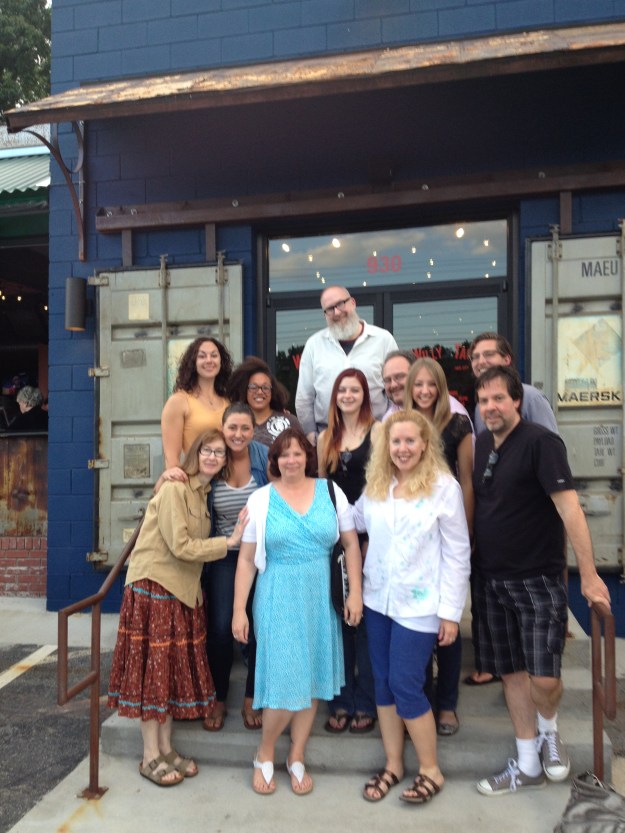
    My and Gary’s reading for Rebecca Aronson’s Bad Mouth Poetry Series in Albuquerque, New Mexico on September 6, 2025 at the Q Staff Theater was a long time in the making.

    We used to live in Albuquerque but relocated to Charleston, SC in July 2013 when Gary was hired as an Assistant Professor at the College of Charleston (and I was later hired as an adjunct) thus bringing to close my third and Gary’s second stint living in our favorite city so far.

    Though I should not have been, I was surprised by how overwhelmed with emotion I became the moment I stepped off the plane. The mesa, the mountains, the endless sky, that particular ineffable light that I’ve only experienced in Albuquerque, all brought back a rush of deeply seated memories of my early childhood years. Having not been back to New Mexico since my mother’s passing in 2018, those past moments popped up like so many perky roadrunners alert to to every scampering lizard.

    Anyway, we were delighted to read with our dear friend Christina Socorro Yovovich, whom we’d read with in at the UNM bookstore for National Poetry Month in 2008 (we think) and to have with us the talented musician Keith Brunstein.

    If you ever get a chance to read for Bad Mouth, you should totally do it. The Q Staff venue is exceptional — theater style raised seating, great acoustics, and a darkened interior to contrast with the enchantingly hot, bright sun of the high desert. And there is plenty of room in the foyer for social gathering and book signing.

    Many of our dearest friends and chosen family came out to exchange warm, genuine embraces, touch on recent griefs as a gesture of kinship, and share heartfelt anecdotes as a way to remove the sting from our collective recent troubles.

    I honestly couldn’t see leaving again, except that, well, I am building a good life here in Pittsburgh where new friends embrace me with the same level of warmth as those in Burque and the literary community appears to have plenty of room for newcomers — and outsiders — like me.

    Invitations for more readings have us making concrete plans to return to Albuquerque with more frequency and the many requests for virtual meetings and classroom visits will ensure our attentions are not so easily distracted from our Southwestern home this time.

    We’ll be back soon, Albuquerque. As soon as we can.

  • Writing on the Fly

    Writing on the Fly

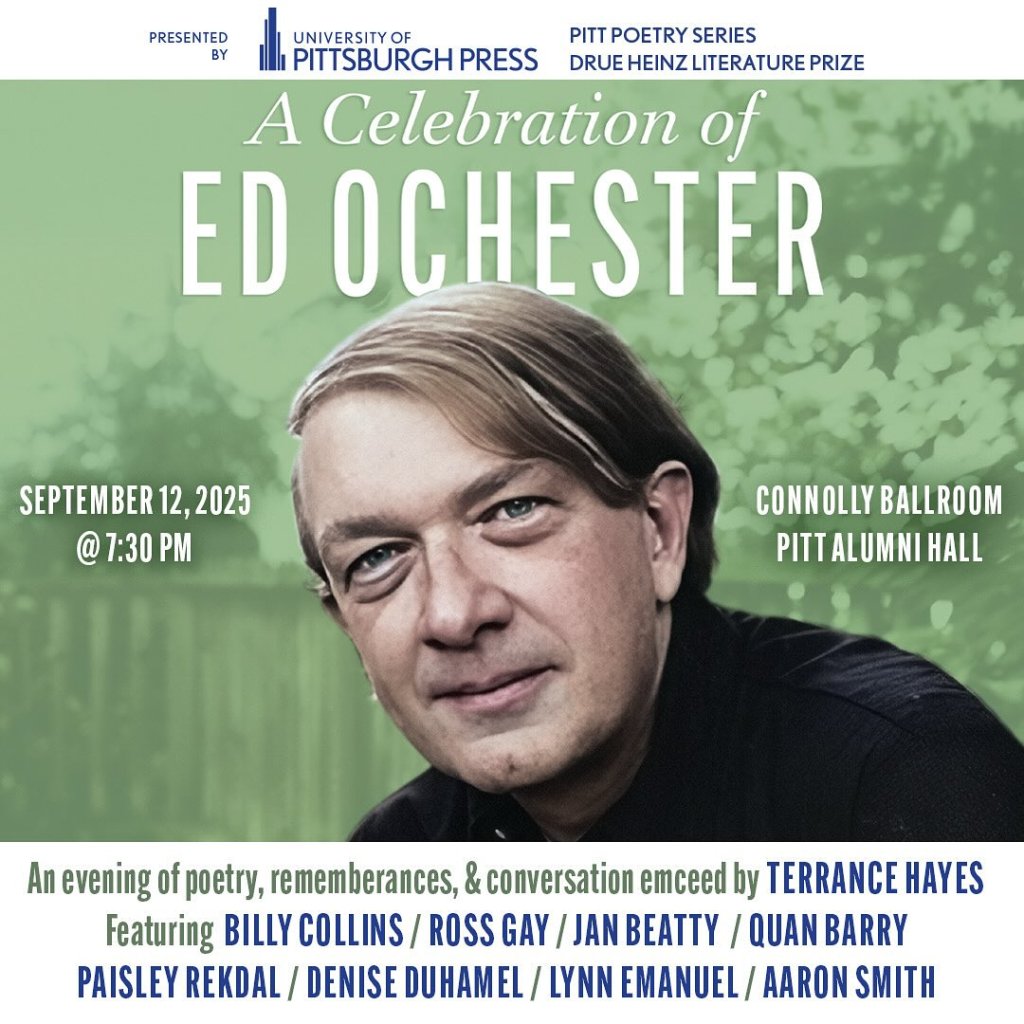
    It’s not often that a confluence of time, space, energy, and opportunity converge to create an ideal environment for writing. But just such a convergence did occur Friday afternoon, September 12, at the Pitt Writing Center with the workshop “Poetry in Everyday Stories: Celebrating the Empathy of Ed Ochester” facilitated by Pittsburgh’s rock star poet, Jan Beatty.

    As facilitator, Beatty expounded the power of nuance and understatement, the efficacy of concrete detail, and the vibrancy of dialogue. Using the brilliant work of Ed Ochester as model and illustration, she also emphasized the role of witness, empathy, and relationship in creating great poetry.

    We looked at Ochester’s “This Poem is for Margaret” and “Mary Mihalik” and drew from them inspiration for the series of writing prompts Beatty next led us through as we held in mind people we know or had recently engaged with in our everyday lives, noting that “there is great humainity in the people and the situations we run into every day, and that often these small meetings go unspoken.”

    Encouraging empathy with each progressive step toward a completed poem draft, Beatty suggested the utilization of direct address, such as that used in “This Poem is for Margaret” and stories from our past or our community’s past, such as is used in “Mary Mihalik.”

    For the first poem prompt I wrote about my encounter with an angry man at the garage who yelled at me because of where I’d parked my car and for the second prompt I wrote about a favorite aunt.

    Participants were completely absorbed in their writing and clearly enjoyed the experience. Many also generously shared their responses with the group when asked. I came away feeling encouraged and looking forward to developing the drafts I’d begun.

    Preciously what a workshop should do.

  • Post Solstice Academics and Poem Acceptance

    Having a featured poem on Vox Populi this Saturday morning, belonging to late 2025 is a wonderful benchmark and a real acknowledgement of my continued integration into the Pittsburgh literary community.

    Thanks to friend Ruth E. Hendricks for the connection and to editor Michael Simms for choosing “Post Solstice Academics” for today’s poem!

    Now, back to grading papers!

  • Lunch Between Poets

    Lunch Between Poets

    Among the number of talented, well-known poets that the University of Pittsburgh Press brought in from around the country this weekend to celebrate the life and work of former editor, Ed Ochester, was the poet Denise Duhamel, my mentor turned friend and colleague.

    Like most people who encounter her, I sort of fell in love with Denise’s warm energy and enthusiasm right off the bat. She was my faculty mentor for two out of four semesters at Converse University, but we continued our interactions well beyond the workshop arena. She’s oh so sharp when it comes to poetry and I grew tremendously as a result of working with her, not just in my writing, but in my confidence as a poet and in learning how to navigate the “poe-biz” (poetry business).

    We had been emailing each other about her Pittsburgh visit since sometime early last year, so had plenty of time to make plans, and to build anticipation for our reunion — despite knowing it would be brief and filled with other obligations.

    We caught up over lunch yesterday and shared news we most wanted from one another: how is the job, the partner, the writing, the next book, have you heard/seen ______? what’s happening with ______ , how are you navigating the current political climate?

    It was an easy back and forth, as it always is — a gentle re-centering, a moment to celebrate successes with someone how cares, to commiserate common or respective griefs with someone who understands. And, for me, a moment to take stock of how far I’ve come in my chosen life and career as a poet.

  • Upcoming Bad Mouth Reading in Albuquerque

    Upcoming Bad Mouth Reading in Albuquerque

    Gary and I will be returning to one of our hometowns for Rebecca Aronson’s Bad Mouth poetry reading series in just under two weeks.

    We can hardly believe it has taken twelve years for us to return to Albuquerque.

    Leaving the mountains, the high desert, and our good friends that summer twelve years ago was heart wrenching and we thought for certain we would get back to visit often, even made promises to do so, but building careers and navigating hurricanes with limited funds and, of course, dealing with the Covid Pandemic all bent our futures and our wills to other priorities.

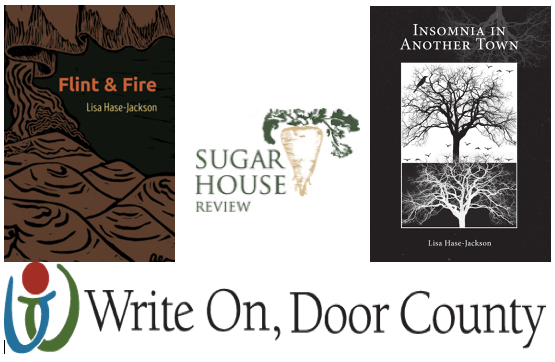
    Actually, I was scheduled to do a live Bad Mouth reading back in 2020, but lock-down conditions required we do a virtual event instead. I think one person has viewed it in all these years, probably because I am terrible at self-promoting, but I read poems from my first collection, Flint & Fire (Word Works Books) for that reading, which you can view here, as a kind of teaser, if you are interested: 2020 Bad Mouth Reading with Lisa Hase-Jackson.

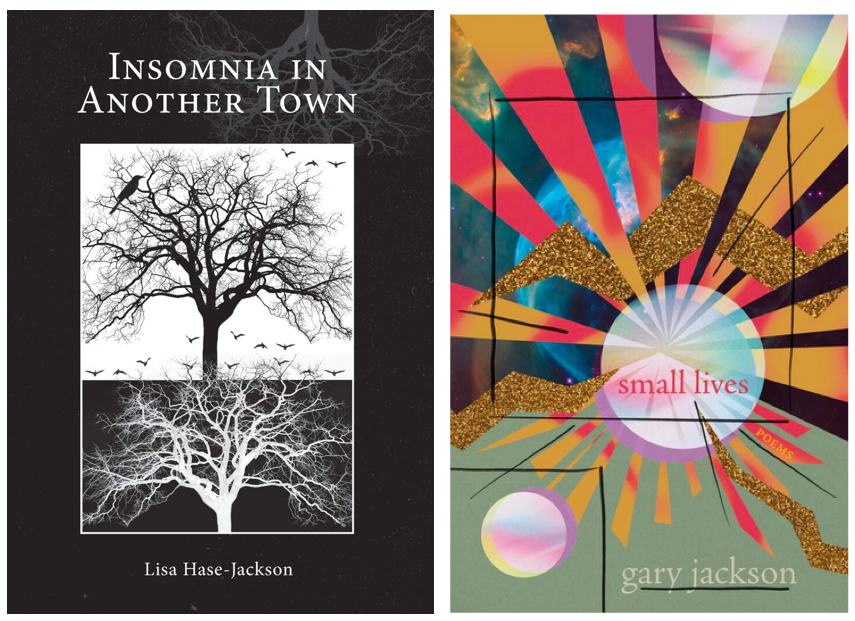
    I have since published my second collection, Insomnia in another Town (Clemson University Press), from which I will be reading on September 6.

    Gary will be reading from his newly published collection, Small Lives (UNM Press), as well as from his previous two collections, Origin Story (UNM Press) and Missing You Metropolis (Graywolf Press). This is the first time he will be reading from Small Lives, so I guess that makes this a kind of book launch. Appropriate, since UNM Press is locating in Albuquerque.

    Now that I think about it, Gary and I read together at a salon-style gathering in Rebecca’s home that last week we were in Albuquerque, so I guess this means we’ve come full circle. Or at least completed one of the many circles we find our selves a part of.

    So, if you’re in Albuquerque on September 6, please do try to come by. As the flyer mentions, most of the proceeds from donations will go to support NM Dream Team, which I’ve linked here so you can get a sense of the good work they do.

    If you are unable to make the Saturday reading, Gary will also be interviewing with Sara Daniele Rivera at Beastly Books (yes, the bookstore owned by George R.R. Martin) up in Santa Fe the night before, Friday September 5, from 5-6:30 PM.

    Or, better yet, come to BOTH readings!!

    It’s so cool that we get to promote our newest books and do a mini book tour together. Please come out and help us celebrate. We’re excited to get to see everyone again!

  • Whispers of Work: A Lament for Extinct Professions

    Write a poem about a profession which does not exist anymore or which is phasing out.
    If you like, you can aim for an ode, a lament, a diatribe, a docu-poem, narrative poem, or found poem with your chosen profession as the central image, setting, or source.

    Examples of extinct professions:

    • ice cutter
    • elevator operator
    • milkman
    • lamplighter
    • switchboard operator

    Examples of professions phasing away:

    • farmer
    • travel agent
    • mason
    • tailor
    • literary translator

    Professions at serious risk:

    • teacher
    • librarian
    • journalist
    • writer

    For Inspiration:

    Barnwork We Didn’t Talk Much About” by Charles A. Swanson, Zingara Poetry Review

    “Stay at Home Mom” by  Sabina M. Säfsten, Zingara Poetry Review

    “Fugitives” by Stephen Mead, Zingara Poetry Review
  • St. Patrick’s Breakfast with Friends and Soda Bread

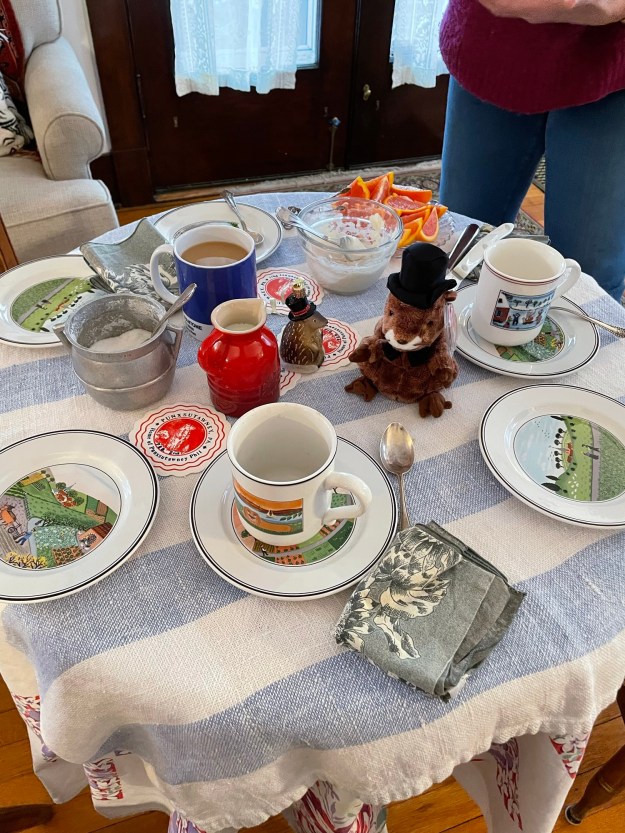
    I invited a few friends over for a casual breakfast the Sunday before St. Patrick’s day.

    We’ve been meeting for occasional breakfasts ever since Groundhog’s Day, 2025 to enjoy coffee, tea, homemade goodies and to talk ourselves off the precarious ledge that is American politics these days.

    We’ve come to call these informal unintentional semi-regular meetings our “Breakfast Club.”

    For this week’s Breakfast Club, I felt motivated to make something I’ve always wanted to make but always forget to: Irish Soda Bread.

    Irish Soda Bread became popular in Ireland when baking soda was introduced to the UK sometime during the potato famine, a time when yeast was hard to come by. Baking soda provided a satisfactory alternative to yeast for raising bread and quickly became a necessity, and the new active ingredient to use in this affordable bread recipe.

    When looking up recipes for, and the history behind, soda bread, I ran across a website dedicated to the preservation of Irish Soda Bread–The Society for the Preservation of Irish Soda Bread–which provides a plethora of information about Irish Soda Bread that any baker, history buff, or Hibernophile (a person fond of Irish culture, Irish language, and Ireland in general) would enjoy. According to The Society:

    A distinguishing feature of Baking Soda (Bread Soda) is its ability to work on soft wheat flour, a preference that persisted despite other parts of Britain favoring hard wheat flour and moving away from quick breads. In 1908, a significant portion of Ireland’s flour, especially in Belfast and Dublin, was soft wheat imported from the United States. This enduring link across the sea solidified the connection between Ireland and Soda Bread.

    The site also features recipes for Traditional Irish Brown Bread, Farls (Potato Cakes), and variations on the traditional Irish Soda Bread recipe.

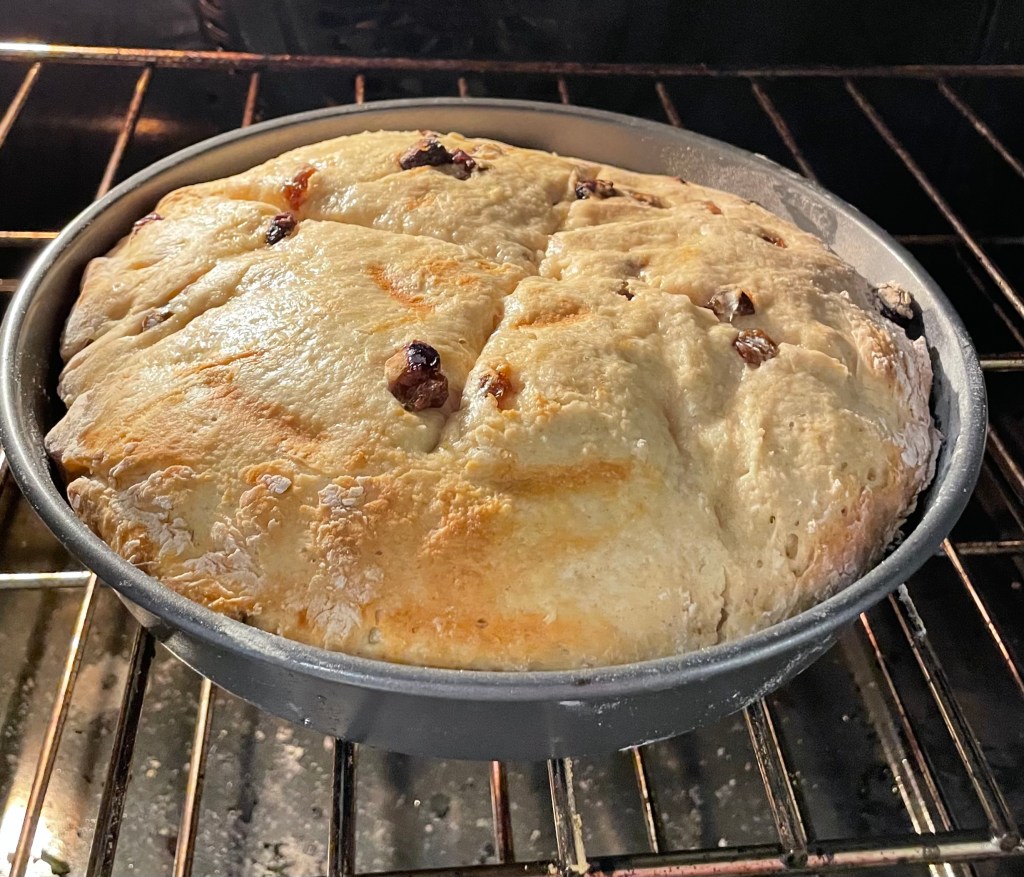
    I used the basic traditional recipe from their website for Sunday’s Irish Soda Bread, which lists flour, baking soda, salt, and buttermilk as its ingredients, consistent with other soda bread recipes I found on the internet–and since all the soda bread I’ve ever eaten had raisins–I added those as well.

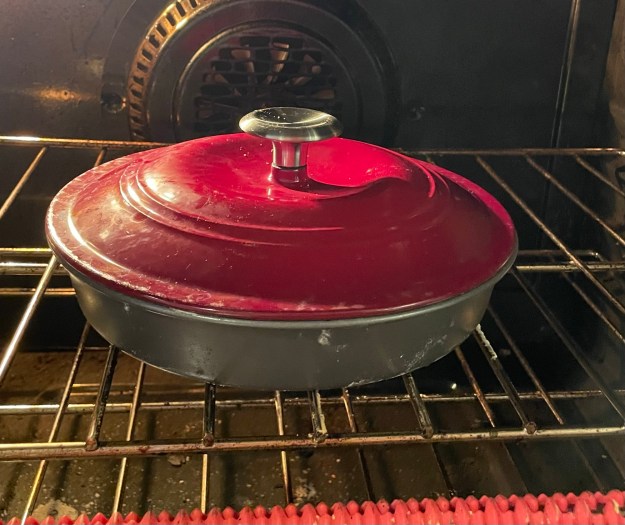
    A couple of recipe notes I feel are important here are to use pastry flour, not bread or self-rising flour, and to bake the bread covered with a lid or inverted pan on top for the first 30 minutes. This is to emulate a Bastible pot, an all-purpose cast iron pot used for most cooking in the early 19th century. I actually used the a lid from our knock-off Le Cruset dutch oven, and it seemed to work well.

    After the initial 30 minutes, instructions are to remove the lid and bake for another 15 minutes.

    As per the instructions, I removed the lid at the appropriate time and put the bread back in the oven, though it looked pretty done to me. In hindsight, I wish I had taken the bread out at that point, or at least only baked it for another 5 or so minutes. Those last 15 minutes browned it up a little too much and created a much crustier crust than I anticipated.

    Another note not mentioned above: soda bread really should be consumed the same day it is made.

    I thought it’d be okay to leave it overnight covered with a tea towel sprinkled with water. I mean, I’d be serving it within 24 hours, right, the exact length of a day? But by the morning the crust had become so hard that it was impossible to cut even with a bread knife. I broke it apart with my hands instead to get at the inside, which wasn’t bad, just, you know, over baked.

    The soda bread I used to order with my Beef and Guinness stew at an Irish Pub near my West Ashley home in Charleston, SC, and which I was hoping to create with this experiment, was much lighter than this bread, and seemed to have a subtle sweetness, too, so I’ll have to either find a recipe for a sweeter bread or make adjustments to the recipe I have.

    My guests politely tried my super crusty Irish Soda Bread but the fruit and yogurt salad I’d made that morning was more popular, as was the deep dish broccoli and cheddar quiche my husband had graciously made for us. In addition, my guests each brought delicious baked goodies to share making our breakfast nothing short of a feast–nay–an embarrassment of riches.

  • Seeking Hope

    I want to write a post about hope today.

    About how it is different, but related to, expectation, and of how difficult it is to keep.

    Of how I’m often not sure what hope is and often feel as if I have none.

    And of how Emily Dickinson’s poem “hope is the thing with feathers” sometimes restores me in those moments when hope feels the most nebulous:

    Hope is the thing with feathers
    That perches in the soul
    And sings the tune without the words
    And never stops at all,

    And sweetest in the gale is heard;
    And sore must be the storm
    That could abash the little bird
    That kept so many warm.

    I’ve heard it in the chillest land
    And on the strangest sea;
    Yet, never, in extremity
    It asked a crumb of me.

    Ah, the salve of poetry on the soul. Words strung in a certain and deliberate manner creating a feeling of centeredness amid confusion and chaos.

    Dickinson’s couching an abstract idea like hope within the apt imagery of “feathers” and “tune,” “storm” and “chillest land” is, of course, why her poetry has withstood time and fashion to resonate with readers today.

    And there are no more fitting or contemporaneous events than those which took place in Charlottesville, VA this past weekend to prompt contemplation on the subject again. To ask, what does hope stands for?

    Not unlike Dickinson’s bird, I see hope as fleeting, at best, and while it may in fact sing a tune somewhere beyond the wind and clouds of whatever storm is blowing through life at the moment, I am generally too busy dodging rain drops and lightning to think about it, much less hear it. 

    I guess all that running around is a necessary function of survival. The ego keeping me from doing something stupid during a downpour that might get me killed. The fight or flight response to a life-threatening situation helping me to survive that situation.

    There was a time I rather liked the excitement and danger of running around in storms. These days, though, I generally prefer to stay out of the wind and rain, if given the choice.

    But since I am speaking in metaphor, the kinds of storms I really mean don’t stop just because I’m inside, and they certainly don’t care what my past may have taught me about surviving,

    Or loving.

    Or hoping.

    And they almost always require that I leave the comforts of home.

    Other times, it’s just a big old-shit storm.

    I mean, something ugly and racist, hateful and riotous. Something that gains frenzied, savage energy with every violent projection and slur. Something that thrives in the absence of rational thought and perpetuates fear with architectural precision.

    The kind of storm expressly designed to extinguish the hope Dickinson envisions, the kind of hope I choose to believe in.

    I don’t know where that little bird may be right now, maybe off singing its tune as Dickinson suggests. Maybe beyond the clouds, maybe even over a rainbow.

    But for now, I’ve grabbed a pair binoculars.

    For now, I’m watching out.

  • A Week in Review: What I’m Reading, Watching, Writing, Making and Doing

    A Week in Review: What I’m Reading, Watching, Writing, Making and Doing

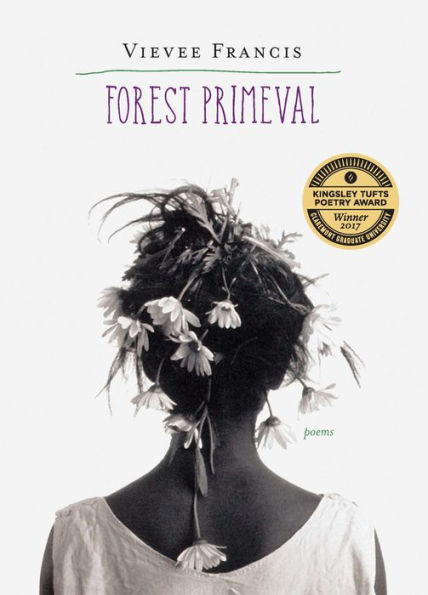
    What I’m Reading: Forest Primeval by Vievee Francis, finalist for the 2016 Pen Open Book Award. Besides sheer enjoyment, I am considering teaching poems from this book, or perhaps the entire collection, to students in my fall “Topics in Poetry: The Poem and The Fairy Tale” scheduled for fall 2025.

    What I’m Watching: The Regime on HBO (or Max or whatever it calls itself these days). I’m no critic of pop culture but find this series a satisfying escape from the news despite haunting similarities between politics in this show and those of America. I guess depictions of power and corruption with a hefty dose of insanity are fascinating.

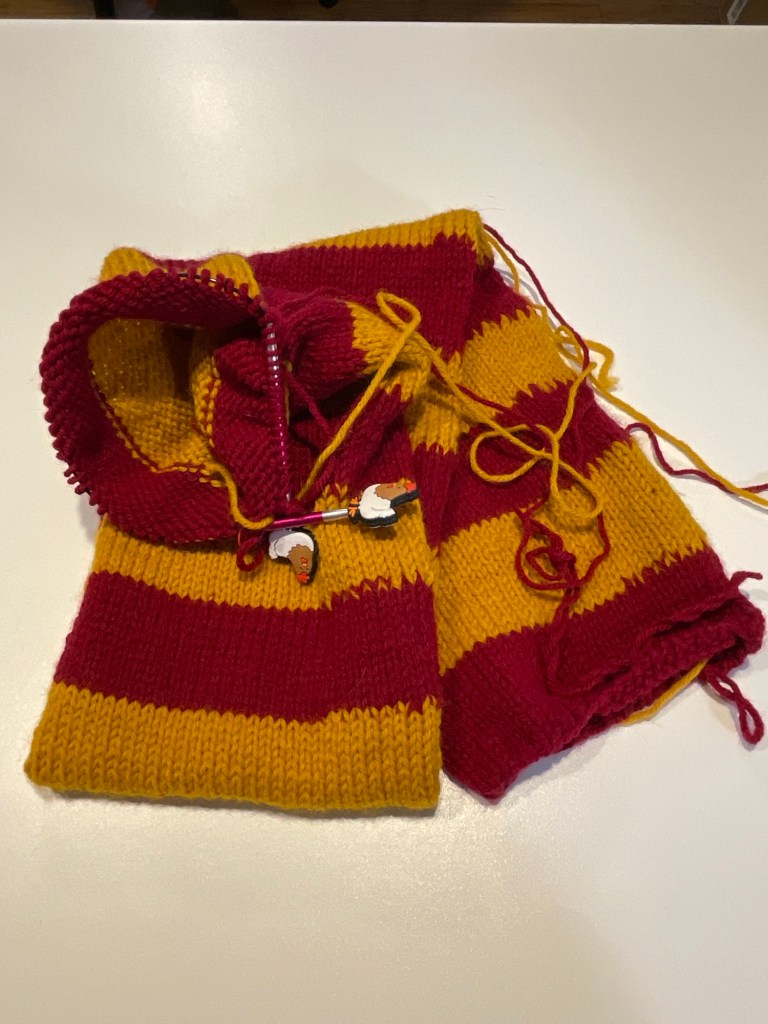
    What I’m Making: Harry Potter Gryffindor House scarf, knit in the round with Lion Brand Wool Ease acrylic and wool blend, cranberry and gold. Once finished and the tassels have been added, tails for color changes will be secure inside the tube. Once blocked, the color-change seams will be camouflaged.

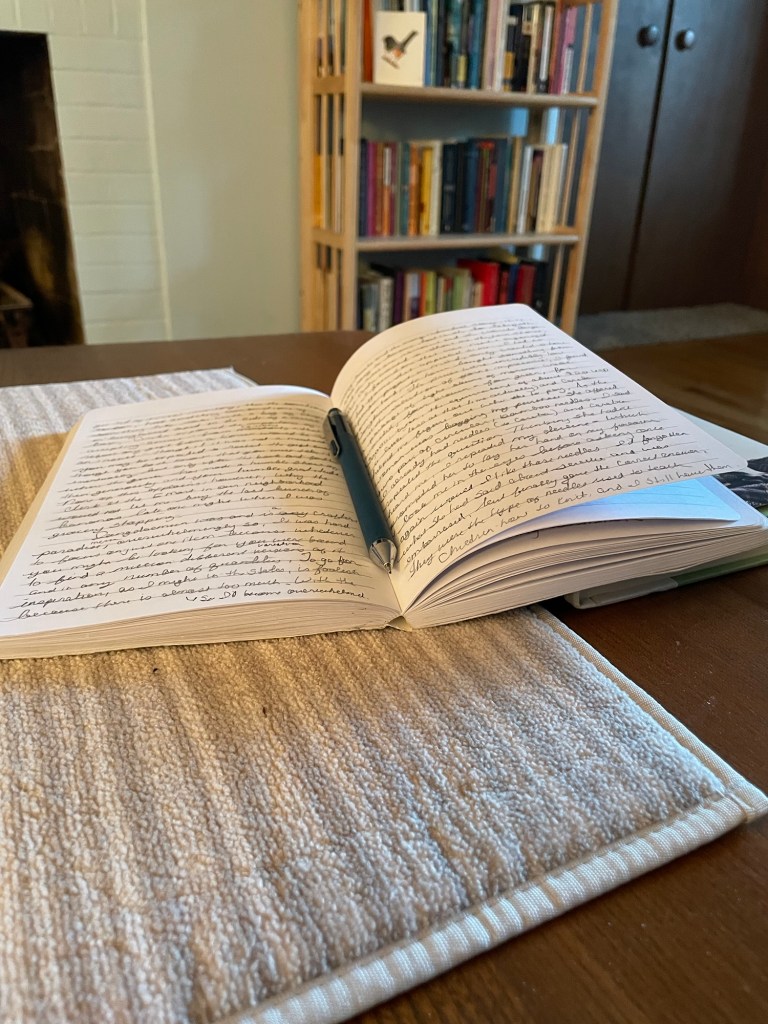
    What I’m Writing: Regular long hand journal entries for the sake of sanity, plenty of emails, course description for fall “Topics in Poetry” class, lesson plans for Intro to Poetry and Intro to CW classes, this blog, and a couple of essays that don’t seem to be going anywhere.

    What I am Looking Forward To: With the advent of warmer weather after months of a bitter cold Pittsburgh winter, I look forward to walking around the neighborhood. Before long the Forest Hills Farmers Market will resume and the local swimming pool will open.

  • Writers Conference of Northern Appalachia

    Today I drive to St. Francis University in Loretto, PA for this year’s WCoNA, my first time at this conference and my first conference of 2025. I am facilitating a generative writing workshop, which focuses on the intersection of place and of witness in poetry, scheduled for Saturday afternoon:

    Loretto is but 90 minutes away from Pittsburgh and driving through the late winter landscape will be a treat. The weatherman predicts precipitation that could manifest as either rain or snow, of which there has been plenty this year, but it’s not predicted to be much nor turn to ice. After the past six weeks of constant and escalating chaos, I welcome the opportunity to spend time with artists and writers focused on art and writing. With the exception of the pandemic, there has never been a more crucial time in life to create.

    The keynote for this year’s conference is Sarah Elaine Smith, author of the novel Marilou Is Everywhere (Riverhead Books, 2019) and the poetry collection I Live in a Hut (Cleveland State University Poetry Center, 2012). She will present Friday night.

    Here are brief descriptions of workshop sessions for which I’m registered:

    Special Friday Night Session, The Spirit and Essence of Northern Appalachia: Exploring Our Literary Identity – 06:00 PM: Featuring PJ Piccirillo, Sarah Elaine Smith, and Book of the Year short list recipients; moderated by the 2025 WCoNA Book of the Year Committee.

    Session One, Documenting the Places and People of Northern Appalachia – 10:10 AM: This panel features two poets from Central PA who have turned to writing documentary poetry, a deep tradition in American literature that combines the values of journalism with the techniques of creative writing to create work that tells truths through close attention to place and people. Julia Spicher Kasdorf will offer an introduction to the sub-genre and share examples of her own work in the fracking and farmer’s fields of Northern Appalachia. Abby Minor will share poems from her project that engages with the history and characters in her rural village. Participants will experiment with documentary exercises and discuss the pleasures and pitfalls of representing the places we come from.

    Session Two, Finding Your Muse in Northern Appalachia – 11:10 AM: Part reading, part generative workshop, this session will begin with a brief reading of new poetry collections by Judith Sornberger (The Book of Muses) and Marjorie Maddox (Small Empty Space) that showcase the people, places, and creatures of Appalachia. The authors, two veteran creative writing professors, will then lead the class in writing exercises based on references to Appalachia. Open to writers of both prose and poetry, this class will encourage participants to recognize, claim, and respond in writing to their own muses of Northern Appalachia.

    Session Three, Reading Writing, and Writing to Read – 01:15 PM: In this interactive workshop, you will begin to transform your written voice into something audible and embodied. We will begin by drawing lessons from writers who work in both performance and text. Then, we will focus on key elements of performance—such as time, vocal expression, and action-to understand how they can be instrumental in giving a dynamic, authentic reading. Group exercises will focus on: developing confidence as a speaker, responding to the environment, and practice strategies. Finally, we will cover tips for revising writing with reading / performance in mind.

    Session Four, Skipping this session to prepare – 02:15 PM

    Session Five, Landscapes of Witness: Poetry Writing in Northern Appalachia – 03:20 PM: This poetry workshop will focus on the intersection of place and witness in the context of Northern Appalachia, a region that is known for its deep history, complex landscapes, and multifaceted communities—each element contributing to a vibrant, rich story of resilience, memory, and identity. Through writing prompts, discussion, and close readings of relevant poetry, participants will explore how the land and its history shape—and are shaped by—observation and the act of witnessing. Participants will consider the environment around them, draw on personal experiences, and explore collective histories through the lens of poetry.

  • The Parable of the Mustard Seed, the Chanteuse and Wild Rice by Libby Bernardine

    Can we believe the mustard seed growseidt piaf
    into a large tree producing seed for the birds
    to gather—the ever-present sparrows build
    their nest, shake down the seeds then born
    by wind—many are fed

    The French called Edith Piaf la mone piaf,
    the Little Sparrow, child raised in poverty
    in a brothel, sang her chansons on a street
    corner, and once I saw her at Versailles
    in New York—who was this voice

    in this little frame belting out
    Padam Padam Padam, fist clenched
    in pounding rhythm, her voice
    from across the sea sending
    her song of love, La Vie En Rose

    Wild rice across the street gracefully
    dies, scatters seeds for any of the marsh folk
    to feed as it ages—the sparrow
    chit, chit whistling over near three red roses
    blooming on a bush, three years dormant

    I hear the faint sound of a cricket—
    I call it to me, the faith of its song
    I send it out among the grains.


    Libby Bernardin is the author of Stones Ripe for Sowing (2018, Press 53) and two Chapbooks, one The Book of Myth, chosen by Kwame Dawes. Publications have appeared in The Asheville Poetry Review, Southern Poetry Review, and Kakalak. She has received awards from the Poetry Society of South Carolina, and the North Carolina Poetry Society.

  • Interview with poet Pamela Yenser, author of Close Encounters Down Home

    When my good friend, Pam Yenser told me her poetry collection would be published earlier this year, I couldn’t wait to savor it. You see, I have missed working with Pam ever since I moved from Albuquerque to Charleston eight years ago. Missed hearing about her projects, missed reading her latest poem drafts, and equally missed telling her about my own work. Of course I had to interview her for Zingara Poetry Review, which you will find below immediately following a poem expert from her book, Close Encounters Down Home.

    Our Lives Were Like Firefly Light

    Our lives were like firefly lightclose encounters
    Caught in a jar, we lit up the night.

    How did our collectors punish us?
    Did Mother bruise us with brushes?

    Did Father grow closer by inches?
    Had he grown too big for his britches?

    Was he mad enough to break into
    her closet and remove each left shoe?

    The lawyers said she had dementia.
    Who was crazier was the question!

    Leave, my darlings, that long-ago life
    where Father knocked with a kitchen knife

    at your side door. Shake off that old shoe-
    stealing monster. I never left you

    alone to remember. Now you’re free
    of Mary and the Frankenstein she

    married. Look! I have razor blades sewn
    into the hem of every poem.

    from Close Encounters Down Home, Finishing Line Press, February 2021

    Pam YenserTell us a little about the genesis of your book, including your writing process.

    I love your reference to the “genesis” of my book! It’s an apt metaphor for CLOSE ENCOUNTERS Down Home. Although there was no single moment when I decided to write about my father’s fixation with the Roswell, New Mexico, flying saucer incident or how it affected me, I can tell you that it showed up among many poems with vivid and often distressing moments from childhood—some with recurring images and motifs I had not yet connected to the rest of my poetry collection. One day, I envisioned that story stretching from childhood and coming of age into a well-organized adult poem of perception. Once I focused on paring down to a thirty-page narrative, one memory begat another, telling the poet-speaker’s “true” story as honestly and openly as possible.

    The poetry writing process is an intricate exercise, isn’t it? There are the poems (part memory and part memoir) and then there is the plot (part chronology and part time travel). For the memoir aspect of my poems and creative nonfiction, I dig through biographical memorabilia: family photos, letters, hospital records, email reports, calendars, event notes, cute kid memorabilia, pre-Covid travel guides, and whatever is in the eight storage boxes bearing down on my bedroom wall. For allusions to historic events like the Roswell saucer crash, I collect contemporaneous accounts in books and magazines. It’s hard to keep up. My book was published two months before The New Yorker broke several stories in its May 2021 issue, revealing the highly anticipated opening of top-secret military reports on extra-terrestrial sightings—including the Roswell saucer incident.

    The poet-speaker’s story begins in Roswell, where flying saucer mania attracts her father, who straps her in and flies her down through the clouds and over the wreckage. “Cloud angels!” she remembers. “It looks like a broken kite!” The “red rocks and glitter” I wrote about years ago showed up in a photo released recently by the U.S. Army. Worried my book of poems would get lost among the hundreds of books titled “Close Encounters of the First Kind,” or the Second, Third, Fourth, and Fifth kind, for that matter, I added “Down Home” as a subtitle. There are several homes of memory in the book, and all include a fox of a father, a religion-possessed mother, a brother L.A. doctors called your little retarded brother,” two younger sisters, and their little brother.

    While grouping poems that emphasize time and space travel, I formatted “Memory’s Gate” and “Snow Angel” to travel typographically forwards and backwards on the page, like a windshear, creating a cyclone of words on the page. “The End of TV,” in the shape of a tornado a few pages before, confirms the news, “It’s coming.” Most of the poems are separate memories, but the book’s final poem “Damn, il pleut is a summation in rhymed couplets. It is also an illustration of the time and place displacements the speaker in the poem experiences. I was sitting in a recliner, a legal pad in my lap, when I had the notion to recount the father-daughter relationship from beginning to end. That poem submitted the next day—on the final day to enter—won the annual Ithaca Lit poetry contest. Thank you, judges…and Ms. poetry muse.

    Now, about the mechanics of the writing process, or should I say, the consequences of the writing process? The machinery of publishing…the publishing part.

    Like most everyone these days, I use Submittable to access challenges, and contest deadlines. It is nothing like the old days, when I mailed off a manila envelope containing a few poems and a stamped return envelope. I used to dread return of my poems—not only because of the usual rejection slip, but also because the pages themselves might be handled by many, mis-folded, or missing—which meant those printouts couldn’t be recycled for the next submission…but then, return envelopes might also contain encouraging notes. I remember an acceptance I received from esteemed Shenandoah Editor R.T. Smith, who wrote to me in a formal letter of acceptance that he had “at last received a sestina that worked.”

     How did your book come to be published?

    How, indeed! I was mentored into the process of publishing. I remember one night meeting the brilliant poet Hilda Raz, former Editor at Prairie Schooner, that widely respected journal at the University of Nebraska. Hilda had moved to Albuquerque about the time I did, when she became Editor at the University of New Mexico Press. I had long ago submitted poems to her, but we didn’t know each other. Fortunately, we all met through a college friend of poet and critic Stephen Yenser. She had read that my husband, Jon Kelly Yenser, and I were giving a reading, and she invited Hilda. Kelly had recently published chapbooks through Kattywompus Press—a wonderful experience, and that reading led to Hilda’s acceptance of Kelly’s collected poems at the University of New Mexico Press…and a mighty motivation for me.

    When Hilda Raz, a wonderful listener and ever an advocate for poets, realized how often I read my broadly published poems, she looked at Kelly and said to me, “Why don’t you have a book of poems? Every poet I know has one.” My excuses were inadequate: grading papers, managing home and garden, balancing a career and two kids. I had submitted my book-length manuscript only a handful of times. Hilda’s question was to the point, and soon enough she had me focused on submitting poems and collecting prizes: the first Bosque Poetry Prize for a quartet of poems on James Merrill, the Ithaca Lit Prize for the concluding seven-part poem of the chapbook “Damn, Il Pleut,” and a plaque I treasure from Leslie McGrath, judge at the W.B. Yeats Society of New York, in recognition of my epistolary verse “Dear Mary Shelley, Regarding Monsters.” At that point, Hilda gifted me a workshop and suggested I sign up for the annual Colrain Intensive Poetry Manuscript Conference. With additional encouragement from Four Way Books Founding Editor Martha Rhodes and also from Translator/Editor Ellen Watson, who had helped select some of my poems previously for the Massachusetts Review, I buckled down to CLOSE ENCOUNTERS, finishing it in March of 2020 and submitting the manuscript immediately to a Finishing Line Press chapbook contest. I didn’t “win,” and yet I did: I was a finalist, and Editor Leah Maines invited me to publish at her press. By that time, twelve of twenty-two poems in my manuscript were published in serious journals. I am delighted with the book. Finishing Line Press is a first-class operation which not only makes handsome books but has a well-developed marketing plan and distribution network—necessary elements for a successful publication.

    Can you discuss how you determine when to use formal elements in your poetry?

    I have never shied away from traditional or experimental forms; in fact, I tend to rhyme like hell when writing poems of witness. I was a formalist from kindergarten, thanks to a book of nursery rhymes my Grandmother sent. I stapled books of my rhyming poems for my teachers throughout grade and middle school; however, I didn’t know any other way to write until my Wichita High School teacher Lee Streiff, a beat poet who wrote flying saucer fiction, sent me to the library during class to read books by the imagists and early Beats. At Wichita State University, I fell in love with Theodore Roethke’s “My Papa’s Waltz,” and bought Lewis Turco’s Book of Forms for practice. I learned formalism at WSU by example: John Keats, Elizabeth Bishop, Langston Hughes, Gwendolyn Brooks, and James Merrill—poets whose rhyme and line breaks are meticulous and witty, and I was drawn to Sylvia Plath’s syllabic lines. I began to use syllabics in poems of mine that otherwise don’t appear to be formal; but it is the energy of rhyming couplets that drives my final chapbook poem to its logical conclusion.

    What are some overarching themes or motifs in your collection and how do you explore them?

    As I gathered my “memory poems” into a book, I used a flying motif in conjunction with time travel and family history. I meant to make a narrative out of memoir and motif, starting with the Roswell crash. But memory knows no chronology: sequence and consequence are distorted. Poems likewise move back and forth between the actual and the imagined—as does our understanding of interplanetary space travel! While arranging the order of CLOSE ENCOUNTERS poems, I seized the chance to emphasize time and space travel by placing poems that travel typographically forwards and backwards on the page midway in the book. In “Memory’s Gate,” the adult poet-speaker is pulling rotten fenceposts at her home in Idaho, when she remembers a neighbor and her father discussing flying saucers over a picket fence while her father casually reaches up her skirt as she walks along the top rail. In “Snow Angels,” I forward my truth, then reverse the direction of 9-9-9-3-foot syllabic lines to speak of the past. Here is a small excerpt illustrating the turn:

    It is our father who harries us

    along that old game of Fox and Geese,

    our spokes creating an enormous

    sign of peace

    until we are chased until all fall down

    to make hourglass waves of skinny arms

    and spraddled legs becoming frigid

    snow angels…

    …then and there in a dormitory

    meant for students in a Midwest mining town

    where the military marriage

    of a nurse

    and her captain came undone and I

    vanished inside—becoming nothing

    more than desire in her lover’s eyes

    for a girl.

    I should note how beautifully the overarching metaphor of flight is depicted in the painting on the cover of the book: blue skies, the exposed woman turning her back on a column of naked children, all those figures focused on the challenge and perils of flight…or escape. The artist who painted that triptych is a lifelong friend and former colleague who is familiar with my story—one that has versions in other lives; and so, in the opening, I invite my readers to come onboard through a literary device—the apostrophe:

    You’re in that saucer

    spinning out over Roswell

    on edge like a dime….

    Sylvia Plath seems like an important figure for you. Can you talk more about that?

    Ah, yes, but of course. Sylvia Plath reminded me of my own situation, right down to the moment I felt so trapped in my parents’ little brick house that I thought “If the wolf isn’t caught I will walk down to the nearby creek and drown myself. Mercifully, I could not figure out how to do that in water so shallow. Like Plath, I eventually told my father, in so many words, “we’re through.” I was a college student when I read Plath and started writing “Confessional” poems. I read Robert Lowell’s Life Studies. His students included Sylvia Plath and Anne Sexton. That was the heart of the movement. Though we both had “Daddy” poems, Plath’s efforts at suicide were unfortunately more focused than mine. For others who suffer closed doors and intimate inuendo, it takes time to react—it’s difficult to process what has just happened.

    “Zipper Trip,” my first confessional poem, was under consideration for a prize at Massachusetts Review when I withdrew it from the competition to protect my family from publicity that would have attracted and enraged my father. That poem, taught later in Women’s Studies classes and listed in literary indexes, drew responses from male as well as female readers who found themselves in a similar situation. I was driven from that point to read the many isolated, multilingual, and multi-gendered poets who speak out against repression. I sometimes try on their exact form and write my way within the shape of their argument—now called a “hermit crab” device. An example of a hermit crab poem in my chapbook is the opening “Like Emily, They Shut me up in Prose,” a 12-line Rondeau Prime form I closely follow. I even make myself at home in Dickinson’s title, which comes from the first line of her poem (the work of her editor, because she simply numbered poems and didn’t use titles.) Like a naked crab on the beach, I crawled inside her poem, making myself safe at home. Within her protective shell, am I the poet, poet-speaker, or a vulnerable creature hiding on a hot beach? I begin this book like a hermit crab, at home wherever I am safe from predation.

    What projects are you working on now?

    I’m completing a full-length manuscript with the working title of “Transported Here.” I am obviously not done with time and space travel—nor with shaped and formal poems. My Roswell experience begins that collection, including a section on the family that, as a reviewer put it, “does not travel well together” as they drive across the country on iconic Route 66. Continuing my interest in the unstable dynamics of memoir and memory, my collected poems recall campus protests of the 1970’s, during the run-up to Vietnam War and its interruption to our studies and our lives. I also write about love as passion and escape…into nature, human nature, and the historic role of the cicadas’ devastating “Insect Sex” on the Kansas landscape, necessitating that we find relief (re-leaf?) by being transported through travel—across state borders and abroad. The book ends with poems about the summer 1971 in Greece with James Merrill, our dear mentor and Yenser family guide. In this final chapbook-sized section of my collection, I attempt to capture all that is Merrillian in Greece: the art and food, politics, history, armed Colonels marching into a play in the amphitheater at Epidavros, the bucolic Peloponnese, the bluest seas, and whitewashed island towns, marble walls embraced with bougainvillea, and investigations of the ruins—both personal and planetary.

    Now, a question that everyone wants to know the answer to: How has writing been during this time of the pandemic, social political upheaval, and activism?

    Covid more or less shut down our writing routines until we got the green light, or rather the “turquoise” light here in New Mexico. We haven’t been able to join our writing tribe at the coffee shop, on campus, or in each other’s homes. Like so many others, Kelly and I had medical concerns and were directed to isolate at home, where we found ourselves excessively cooking, housekeeping, composting, gardening, dog walking, and Skyping for hours with family and friends. We were depressed by the politics of the first Covid year—not only horrified by the Corona virus and its blood-red spikes, but also disgusted with our nation’s bloody politics—so many shootings, so many lies, so much gratuitous violence. Aside from donating, I felt helpless to help. Sometimes, the best I could do was to shower and change pajama/sweats once a week to become presentable for a conversation or poetry reading on Zoom, but I also became aware and grateful for a safe house, companionship, and online transportation. We were obliged to sit for hours in our car, waiting for groceries, but wait we did, then wipe the stuff down, and cut out the rotten parts. That is the lesson we’re learning, isn’t it: to appreciate the leavings of our lives?

    Retired after working at ten colleges and universities, I have more time to write. I now manage a family business—NM Book Editors, where I teach as a developmental editor. I find it satisfying to see a client’s annual award-winning books of memoir reach the reading public, and I am educated by the subject areas I’m obliged to study. I recently discovered the Netflix series Rotten, which contains a segment featuring a New Mexico client: a lawyer trying to save American farming from international dumping of cheap products. I watch the British baking show to broaden my survival skills. I’ve learned to make biscotti and lost 20 pounds by giving it away to friends and neighbors. I’ve slept for 20 years and awakened to the silver in my hair. I have religiously washed my hands until my skin has become thin, transparent, loose, and smooth as silk. I’m writing my first Pandemic short story. The anti-hero is a politician who runs from room to room, trying to escape until Truth catches up with him, and he catches Covid.

    It came to me then in a dream, as I ran from room to room in Freud’s castle, that I too must have made a mistake: I turned a corner and fell to the bottom of a dry cement cistern. I stood up, spun around, looking upwards for toeholds, where there were none, and said, “Does this mean I’m dead?” But here I am, and all my family vaccinated and free as birds! In the tiny territory of our Albuquerque backyard, grown children are transported by car or plane from Wichita and LA, my hometowns. Meeting on our patio under climbing yellow roses, bees, and butterflies, we recite the names of this yard’s honorary survivors: Dove, Hawk, Magpie, Meadowlark, and Sparrow.

    Close Encounters Down Home is available for purchase at Finishing Line Press


    PAMELA YENSER (BA, MA, MFA) was born in Alexandria, Virginia, and grew up in Wichita, Kansas, and has been teaching at colleges and universities since she was a sophomore at WSU. She does improv and gives readings. Her poems are available online at Connotation Press and Notable Kansas Poets; in print at Poetry Northwest, Midwest Quarterly, Shenandoah, Massachusetts Review, others; and in many anthologies. She and her husband, the poet Jon Kelly Yenser (UNM Press), work at NM Book Editors, LLC, in Albuquerque, New Mexico.