Category: Poet Interviews

  • Interview with Kansas Poet Laureate Denise Low

    This week’s interview with Denise Low marks the beginning of the new Poet Laureate Series here at ZingaraPoet. Check back frequently for future interviews with Laureates from all over the U.S.

    I first became familiar with Denise Low when I was an undergraduate student at Washburn University and was given a copy of “Kansas Poems of William Stafford,” which she edited. I read the collection, found legitimacy in its pages and figured anyone who put together a collection like that was all right by me.

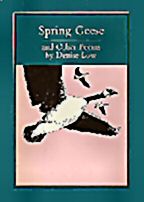
    Later, I discovered and read Low’s early collection of poetry, “Spring Geese.”  I think it resonated with me because, like the poems I write, this collection contains poems about that Kansas environment and natural history.

    Fast forward to November 2010. I’m living in Kansas City  and learn that Denise Low, second Poet Laureate of Kansas, will be reading at The Writers Place to promote her latest collection,  “Ghost Stories of the New West.”  Nothing could make me miss it.

    The reading that night was well attended  and Low did not disappoint. She is a dynamic reader and a gracious poet. I was thrilled to get a few minutes of her time to discuss poetry news and brag about my Alma Mater – home to Kansas’ first poet Laureate, Jonathan Holden. I did not know then that I would someday be asking her for an interview, but when the idea for a poet laureate series nudged my imagination, she was the first person I thought of (and, consequently, the first I asked).
    In this interview, directly following Pocahontas, Denise discusses her revision process, the current state of the arts in Kansas, and encourages poets who may be questioning their dedication to their craft. Her biography follows the interview as do links to her blog and website.

    Emjoy!

    Pocahontas: A Portrait

                                    In memory of Paula Gunn Allen

    Oval face     eyes turned aside    

    high collar, ruffled.     Once: a favored child              
    cartwheeler      envoy between camps
    student of  English      daughter of Powhatan           

     wife of Kocoum      political gamepiece          

    kidnap victim of Argall      forced bride
    converted wife of Rolfe      lady in wooden rooms
    awaiting a child           mother of Thomas

    literate Christian      forest Madonna

    tobacco cultivator     London celebrity
    ailing martyr.      Her words “Everyone must die.”
    and “It is enough that     the child lives.”

    Oil portrait filigree    tatting on a stamp

    lace-wreath collar     the woman named Matoaka
    narrowed-eyes look     a few days before the grave
    frozen obliqueness      now the last oval face.

    ——

    What did you take away from your experience as second Kansas Poet Laureate?
    Being poet laureate of Kansas was a great honor, and it helped me appreciate the educators, writers, arts administrators, and librarians across the state. Sometimes in a capitalist society the arts, especially poetry, can seem frivolous, but I came to understand how word arts connect to most skilled fluency with language. Literary uses of language impel readers to learn history and context. This is not a time in history when superficial reading will suffice. Poetry trains its readers to read closely and with a mind open to unexpected associations. It is essential to understand multi-layered communications in the public, social media, and private realms.

    How does poetry bring or add meaning to your life?

    1. First, I became involved with poetry so young, that it is hard to tease out how it, among other experiences, add meaning to my life. It’s a spiritual practice—I do believe that learning the discipline of language is one of many paths to enlightenment. It requires engagement with reality, not neuroses. Observation and reflection are the polarity, and syntax the means along the way. So poetry keeps me connected to immediate experience, and it makes historic tradition collapse into the present moment. We use ancient words, and each use reinvigorates them. I cannot imagine my life without poetry.

    2. Also, poetry helps me understand my multidimensional identity. It connects emotion, ideas, and spirit to the locus of body. And so it helps sort out the chaos—with grammar, syntax, image, and sound all coordinated into coherence. If a person visualizes a crystal, that sense of order is soothing. Likewise, and on more levels, poetry creates serenity—even poetry about hard truths.

    How do you protect your mental and physical creative space?

    I have arranged my days to create writing time—easier now that my child- and elder-caring years are behind me. The importance of my writing is an essential understanding in my marriage. I’ve claimed a small but nice room in the house for an office—it has a great view of the back yard—which is critical to my writing. My family, especially my husband, understands this is my calling. That support is invaluable.

    Tell me how you approach revising your work.

    Often. I write and rewrite. I have blind spots and repeat obvious words or miss opportunities. Once in a long while a poem comes out in one piece, but not often. To me, the editing is also very creative, and it gives me the opportunity to make better crafted writing. I’ve often been in a writers group, and I’ve worked with editors, so I’ve become impersonal about trying to improve work rather than treat it as a precious emanation from the great-poet-cosmos. Like William Stafford used to say, “Editors are our friends.”

    In your 2006 interview with Miranda Ericsson, you mentioned you were thrown lifelines at crucial moments in your life. Can you elaborate on these lifelines? How did they manifest and how did they help?

    I was about to abandon poetry and commit to developing prose projects when I won the Kansas Arts Commission Literary Arts Fellowship in Poetry, in 1991. That program was one award every two years to a poet in Kansas, and it was $5000. That was summer support plus a computer. Then in 2007 I became poet laureate for Kansas through the KAC, again. Of course, all those programs are suspended because of politics right now. These awards really helped me have the time needed to write and publish. I have been so fortunate to see so many aspects of the writing process and how it connects to audience. My next mission is to help restore these essential programs.

    Currently, I am president of the board of directors for the Associated Writing Programs, and through this role I’ve been able to see a wide range of programs that serve poets and other writers. All these experiences deepen my understanding of how crucial creativity is to being a conscious, contributing citizen. Creative writing is, I believe, the deepest form of literacy. If you can write a poem, you can assemble your children’s toys, maintain your car, troubleshoot your computer, write grant applications, and select factual information from the bovine excrement in the news media.

    How does keeping a blog fit in with your overall creative endeavors?

    I’ve had some illness this summer, so I’m very behind on my blog. I want to use it as a forum for book and reading reviews, because my region and my literary genres are so underserved. Some fabulous writers get overlooked because of poor distribution and poor publicity. Blogging helps me feel empowered to present writers of merit. For starters, I’m thinking of Robert Day’s terrific book of essays The Committee to Save the World, Jo McDougall’s memoir, and William Trowbridge’s amazing Ship of Fool. These are terrific, first-rate works that will not be in the New York media. But the internet blogosphere is democratic, and I hope to take advantage of its strengths to promote some good writing.
    Have you any advice to share with writers who may be struggling to continue their craft?

    1. Yes—first, be professional. The novelist David Bradley told me this at a critical period in my life. A few people are able to work at other jobs all their lives and keep a parallel writer’s life going. These are few. Commit yourself to taking classes, being involved in a writer’s group, and other faster ways to learn than trial and error. I see many people who put off writing during their most productive years, retire, and then expect to have writing skills in a few weeks. My mentor Carolyn Doty told me it takes ten years to learn how to write a novel. I believe her. Putting off writing for practical reasons is the most risky choice—for example, your health may not hold up, and when you retire, you may not be able to write.

    2. The second bit of advice is to get up early in the morning and write—you have some good hours before work schedules. Go to bed early, skip TV, and use those early hours.

    3. Third, read as much as you can of writing that you admire and that relates to your field. One of the great paradoxes is people want to write poetry in great numbers, but they don’t want to read others’ poetry, even the greats. Trust me. Reading great poetry will not stifle your own originality.

    4. Write about topics that matter. Reynolds Price did a great presentation at AWP one year about looking for material that will make a difference rather than self-centered cleverness. Hundreds of thousands of books are published and self-published every year. As a writer, what contribution can you make? I find myself impelled to document as much as I can of suppressed histories and voices. This led to the Langston Hughes in Lawrence project and many others.

    What’s next?

    Oh, so many projects. I have a number of articles that need revising. A book of essays about Midwestern literature—Natural Theologies—is coming out from The Backwaters Press of Nebraska later this year. I believe this is the first critical book entirely about contemporary literature of this region. I’m finishing a grant on Cheyenne ledger art, which is amazing conjoining of image and glyphic text. I’m trying to write a memoir about my grandfather who was of American Indian background. I want to get back to some research on Langston Hughes’s family. More.

    Denise Low, Kansas Poet Laureate 2007-2009, has 20 books of poetry and essays, including Ghost Stories of the New West (Woodley), named one of the best Native American Books of 2010 by The Circle of Minneapolis and a Notable Book by the Kansas State Library & Center for the Book. Other books are To the Stars: Poets of the Kansas Ad Astra Project (Mammoth/Washburn University Center for Ks. Studies) and Words of a Prairie Alchemist (Ice Cube Press), both Kansas Notable Books; and Thailand Journal: Poems, a Kansas City Star notable book (Woodley). She has taught creative writing and literature at Haskell Indian Nations University, the University of Kansas, and the University of Richmond. She is 2010-2011 president of the board of directors for the Associated Writers and Writing Programs, and she has served that organization as vice president and conference chair. Awards are from the Academy of American Poets, The Newberry Library, Lannan Foundation, National Endowment for the Humanities, Kansas Arts Council, and Kansas Center for the Book. Her MFA is from Wichita State University and her PhD is from the University of Kansas. Her blog is http://deniselow.blogspot.com and website is www.deniselow.com
  • Interview with Poet Amy Beeder

    Amy Beeder is the author of Burn the Field (Carnegie Mellon University Press, 2006). Her next book, Now Make An Altar, will appear from the same press in early 2012. Her work has appeared in POETRY, Ploughshares, The Nation, The Kenyon Review, The Southern Review and other journals. She lives in Albuquerque and teaches poetry at the University of New Mexico. Amy has lived and/or worked in France (student), Mauritania (Peace Corps teacher), Suriname (elections) and Haiti (elections and human rights observation). Before teaching, she was was also a sous-chef, a freelance writer, and a political asylum specialist. She has been teaching at the University of New Mexico for ten years, is married and has two daughters.

    1, Tell me a little bit about your history with poetry – the when, why and how of your experience.

    A. Like most writers/poets, I started writing when I was in grade school: mostly poetry. I also took poetry workshops in college, but I never even thought of trying to publish anywhere beyond the small departmental magazine.

    I spent a lot of time after college (and then after graduate school) working overseas or in DC . I never wrote anything but journals during those years

    Basically, poetry remained an occasional hobby until I went to graduate school. There, even though my major was literature, I started taking workshops with a poet named Gerald Barrax. That’s when I started writing seriously.  A few years later (after another stint in Haiti), I decided I wanted to publish−a sudden mania!−and started sending out to magazines and contests. My big break came when I won the “Discovery”/The Nation Award in 2011. On the strength of that I was hired as an adjunct to teach poetry at UNM, which I’ve been doing ever since.

    2. Many writers have regular writing schedules and rituals which contribute to their writing and creative product. How about you?

    On mornings I don’t teach, and after my kids go to school, I sit at my desk with coffee and a sharpened pencil (which is only for fiddling around with or scribbling notes, I actually write on the computer). Often I spend awhile looking at other people’s poems, usually from whatever journals I’ve received in the last month, looking for a word I like, or looking through books on other subjects for an idea or interesting phrase.  I keep telling myself I need to write on a laptop at the coffee shop like everyone else. But I haven’t done it yet.

    3. How do you maintain mental creative space when you can’t be at your work?

    I talk to myself a lot.

    4. In your experience, how do writing and teaching influence each other?

    I love teaching poetry, but the influence it has on my own work is mostly to keep me from it.  I think most writers, if they’re being honest, would admit this. Both writing and teaching require considerable time and dedication, and both are kind of intoxicating when things are going well. It’s easy to let teaching push writing out of the way.

    There’s a great essay by Stephen Dunn called “The Poet as Teacher: Virtues and Vices,” in which he says that teaching can’t hurt your writing as long as you remain more of a poet than a teacher.  I try to keep this in mind. If a poem is going well and I need to keep writing, the lesson plan, critique, grading, etc., can wait a day or two.

    5. Tell me about any current or upcoming projects you are working one or hope to begin working on. How do your early creative dreams guide and inform these projects?

    My second book, Now Make An Altar, will come out either late this year or in January 2012.  I am working on the third book, which will probably take a few years. I write slowly.

    Read more about Amy Beeder at The Poetry Foundation. “The Sunday Poem” by Amy can be read at Duke City Fix

    A copy of Amy’s book Burn the Field can be purchased at Amazon.com

  • Poet Interview: Colleen Maynard

    I met Colleen Maynard in Kansas City when I attended a poetry group at the Writers Place for which Colleen was facilitator. I felt an immediate affinity for Colleen and her style for approaching poetry, which is both perceptive and intuitive. We became friends outside of the group and though she is now in Illinois and I in New Mexico, we remain in correspondence and feel certain our paths will cross again some day. Colleen is among the kindest, gentlest people I’ve ever known and one of the many friends I am happy to have made during my eleven-month stay in Kansas City. I love what Colleen shares in her interview about living the artist’s life

    Here is Colleen’s poem, Kindling Walk, followed by our interview together. I’ve also included Colleen’s professional bio.

    Enjoy!

    Kindling Walk
    by Colleen Maynard

    1.
    After several blocks
    the welts from the sticks
    began to sear our cheeks.
    So we decided we had gathered
    enough kindling from the front lawns.
    The red door loomed around the bend
    just as
    one stick pierced Nora’s stockings.

    2.
    He took injured and dying things with him
    in the space underneath the scraggly pine trees.
    The way he spoke to them,
    there was a certain prodding in his voice
    that inspired shy kids to speak.
    Coming outside from the warm house,
    it was so dark he felt like whispering.

    Other of Colleen’s writings can be found at Fiction 365

    I know that you are a visual artist in addition to being a poet. Discuss how visual art and poetry intersect or synthesize for you. 

    As both writer and visual artist, words, images and ideas fuel my interest in the world. As a writer, my training as a visual artist remains firm, and as an artist I return to words and collecting. Growing up I burrowed into books and invented movie sets for their protagonists, i.e. re-fabricating a babysitter’s house as the creepy mansion in Nancy Drew and the Hidden Staircase, or the local Detroit Art Institute as the Metropolitan Museum of Art in From the Mixed up Files of Basil E. Frankweiler. I also inherited my parents’ love of old movies; by nine, my siblings and I were creating our own scripts, songs and choreography to perform and film. These performances had a gloss of imagination I applied to my life. I began noticing richness in place and site. I started writing poetry, where my characters lived in these exaggerated worlds yet held fast to some sort of transcendence or escape. My visual work focuses on technique and process, drawing attention to things like landscape and language. Lately I have been working on a body of work using tiny, accumulative pinpricks to create short, prose-like sentences upon paper. The writing and art-making play nice together. I cannot do one without the other and having two loves makes me feel less limited.

    Do you have any practices or rituals which help inspire you to work on your art?

    I wish I could say I’ve got down a morning routine–the writer in me most appeals to mornings–but my visual artist side tends to be more nocturnal, so I’m a little bipolar in my practice. Overall though, when I need to write or make something with my hands I react as quickly to it as possible–usually giving myself a 24 or 48 hour period to do it in. I find to get that extra surge of motivation I often need to write or create, I have to do something physical–a hard bike ride or short run helps without fail. It gets me out of the house, into a density of experience, and thinking in concise, fast terms.

    How do you make certain to spend time on your art or writing on a regular basis?

    It’s important to balance out research/inspiration and actually doing the work. When I’m strapped for time or low on energy I allow myself to hibernate, using the time to read, take notes, look up artists and materials, reconnect with any friends I may have neglected, etc… it’s important to have real-life experience from which to reflect your work. It’s easy to get lost in the big picture thinking at times– “in order to be the writer/artist I want to be, I have to work harder, be there more often”–but let’s face it, it’s crippling to put yourself and your work on such a pedestal. By breaking it into steps– “today, I’m going to spend 40 minutes in studio, edit one poem, and send it off to one journal” –it feels more fluid and honest–not to mention doable and tactile, which, I have to remind myself at times, is the main reason I create; to get messy, to get to carry it over to another day as an integral part of my life. Living a real artist’s life, I think, is much more heroic than creating a masterpiece that hangs in a museum.

    While most poetry doesn’t fit into any specific genre or adhere to any one description, there are useful ways to describe its aesthetics. Can you describe the aesthetic that your poems speak to or exemplify?

    Much like children that grew up idolizing books and movies, the characters in my bodies of work constantly confront their expectancy for larger-than-life physicality and emotions, and the alternating euphoria and discrepancies that emerge from this expectancy. I’m attracted to human vulnerability and moments of violence counteracted by calm narratives. My work comes off soft-spoken and not developed to shock the eye, yet once read, precise and unforgiving.

    Tell me about your future projects.

    As well as continuing the pin-prick on paper series, I’m doing a lot of fine-line drawings using pen, ink and collage that center around the idea of a child’s version of a fictional landscape (i.e. miniature dollhouse and plastic toys amongst items a bird might scavenge in an urban setting for its nest). I’m lately drawn to cast-off toys that I grew up with  and re-examining the relationships I had to them (toy as child, toy as talisman, toy as obligation, etc.). I’m also working on more narratives in the same vein as my 2010 self-published chapbook, Tiny Things, with its various girls and their ways of experiencing that adults often do not.

    ——-

    Bio:

    Colleen Maynard is a poet and visual artist. She is a 2007 graduate of the Kansas City Art Institute and has taught visual and language arts at the Mattie Rhodes Art Center in Kansas City. Her writing has previously been published in such places as the Australian-based Ceramic Art and Perception, and she is currently making a chapbook containing prose and drawings.

  • Interview with Kansas City Poet, Catherine Anderson

    Catherine Anderson is a Kansas City poet whom I met at a reading with former Kansas Poet Laureate, Denise Low, at The Writers Place. I find Anderson’s poetry to be socially aware and particularly compassionate toward the plight of the underprivileged and newly immigrated, which is also why I am drawn to it. It is no wonder her sensitivities lean towards such concerns, since Anderson has worked extensively with immigrant and refugee communities in the Kansas City area for a great deal of her professional life.  I was thrilled when Anderson agreed to an interview and am happy to introduce her to my readers this week. I hope her sentiments regarding the writing life find as much resonance with you as they have with me.

    How did you come to writing and what keeps you going?

    In the 1960’s I grew up in an industrial suburb of Detroit, half in nature and half in a rapidly changing urban environment. My father was a newspaper reporter covering Eastern European communities in Detroit and abroad, and my mother was a teacher, so I was fortunate to be living in a house of towering bookcases. Also, and perhaps not just as fortunate, my younger brother was diagnosed at the time with mental retardation and mental illness, a duality that kept him out of the public schools and made him ineligible for health insurance. Later, the diagnosis was autism, but by then the window of language acquisition had shut, and although he has grown into a sweet person, his language is severely disabled. The paradox of living in a family of storytellers, word wizards and comedians alongside a rather confused sibling who couldn’t do the most ordinary things has given me the gift of being comfortable in contradiction, uncertainty, and the absurd– most of the time. An unusual childhood resembling a circus act is not bad material for a writer. My late mother allowed my brother Charlie to roller skate in his bedroom, much to the disapproval of the neighbors. My father’s friends were mostly immigrants from Poland, the former Czechoslovakia, the Ukraine, Lebanon, and he had dictionaries from the whole range of languages these friends and contacts spoke. Between his good ear, their broken English, shots of vodka and his quick thumb through a dictionary, they entertained each other for hours in our small living room. Words and the absence of words were the central mystery of my childhood. Also, the civil rights and anti-war movements were major events in the 1960’s, and because of my father’s work, they couldn’t be easily ignored, even in the suburbs.

    As a kid, I wanted to write because my father made his living that way, and it seemed fun and adventurous. When I asked my father what I needed to do to become a writer, he said, without hesitation, “learn to type.” This told me a lot about his approach to the written word – one of labor, and work done by hand. I was constantly composing plays for school, or creating a newspaper and I’d end up writing out copy after copy because I didn’t have access to a mimeograph machine (the kind with purple ink). However, my father brought home carbon copy paper from his office, and I could make at least five carbon copies at a time for other kids to read. Always I wrote in the smallest possible letters, to get in as much as I could, without wasting carbon pages. Those were the problems of the craft I encountered in trying to enliven a dull history assignment or interpret a Biblical passage. At least once, I used writing to get through the tedium of school punishment. At St. Thecla’s Catholic school in Mt. Clemens, MI, talking to other students was not permitted in the hallways, on the school bus or while eating. I was a repeat offender so often that a nun told me I had to make up my own penance. Usually, I wrote out a thousand times, “I will not talk on the school bus,” but for this penance, I researched various folktales of talking animals and the consequences of just too much talk. (Remember the turtle who flew through the air by biting on a stick carried by two birds? We know what happened when he opened his mouth!) I am sure what I wrote was didactic and convincingly penitential. I had no intention of entertaining the nuns at the Felician Sisters’ Motherhouse in Livonia with this penance (no carbons made) but that was the result my mother told me months later.

    At the University of Missouri I studied philosophy intensely and was centered on learning German and French so that I could read European philosophers I liked in their original language. I was spending an enormous amount of time reading and writing my papers when I noticed that my language was beginning to become much more figurative. I was losing patience with the methodical discipline of philosophical thinking. At the same time, I worked as a desk clerk at local hotel in Columbia called The Downtowner, running from the front desk to my philosophy and language classes. When a major conference of phenomenologists came to town, I got to check all of them in, yet I was too shy to let on that I had read their work and was attending the conference. Instead, I helped Bill Minor, the custodian, spell “Welcome Phenomenologists” on the hotel’s neon marquee. Soon after the conference, I took Larry Levis’s poetry workshop and realized that I had found the art I wanted to practice, poetry. I worked hard on poems for two years, and then by graduation had won a fellowship to Syracuse University where I later received my master’s degree in English and Creative Writing, a kind of half breed of a program that was pre-PhD, and half MFA. I was not interested in the PhD program. Eventually I moved to Boston where I worked as an ESL teacher, community journalist, and finally staff writer for the health care reform organization that spirited through universal coverage in Massachusetts. By then, though, I had moved to Kansas City where I now work training healthcare interpreters.

    Writing that was clear, direct, and about something in the world was the style admired in my family. Poetry was not in that category, unless it was written by an Eastern European and reflected the geopolitical state of post World War II Europe! Although my father and my mother both appreciated literature they thought a young person from the Midwest writing poetry was a silly affectation & were thrilled when I landed teaching jobs, or spent time working as a journalist because these jobs assured them I could make a living. Most poets experience some opposition to their vocation, especially if someone is worried that you’ll never make a living. The best thing to do is keep employed because the last thing in the world your family wants you to be is a penniless dreamer. Ignore the pleading as well as any testy remarks about your chosen art. Keep dreaming but count your pennies.

    A feeling of adventure, defiance, and the possibility of transformation keeps me writing. Poetry has always been the essential lens through which to more deeply discern meaning in the absurd and unpredictable events of our lives. An appreciation for the paradox of being human, fated, and vulnerable in an astonishingly beautiful world is with me constantly as I write.

    How do you keep space in your life, home, and psyche for the creative life?

    Finding space and time to write is extremely difficult, and not something I do well. Some people have been able to accomplish the feat by taking on an academic career that may afford a little more time off (not as much as one would think, however) to devote to creative work. I started out teaching, but became impatient with the pace, and threw myself early on into anti-poverty work as an ESL teacher, activist and community journalist. This has been very demanding work over the years, requiring a lot of weekend and night-time hours. In order to write, I had to discipline myself to make the most of the time available, so that meant writing notes on the subway back and forth during the week, then spending a good eight hours at least on the weekend, creating poems from my notes. I also used every vacation and holiday to write, as much as I could. This became provincial after a while, and I wouldn’t advise it. There were times when I was writing steadily for the Chinatown community newspaper, or writing essays or grants when poems had to be overthrown for prose. Still, I always tried to keep the poetic line alive somewhere, somehow.

    I often keep two or three notebooks going: one is a kind of a daily encounter group – what I’m reading, thinking, responding to. Very literal, very boring, almost a log. Another one is purely for imagery, and that can be as crazy as it gets, with drawings, doodles, big letters. The rule is that nothing literal is allowed into that notebook, though images and figurative language are allowed in the boring notebook.

    Now that I live in a city without a subway, I miss the dream time that daily travel offered to the creative imagination. Since moving to KC, I’ve had to travel a bit in rural KS, and a few other cities where I find I can usually write in a hotel or a diner. The writing feels more alive, striking and honest to me when I pull it out of its usual hometown box. I’m still trying to re-create the sense of taking the subway while living in Kansas City, but haven’t been successful. There used to be access to a staircase at Union Station in Kansas City I could visit that from a certain angle that resembled the entry to North Station in Boston, but they won’t let anyone up the stairs anymore.

    What did you read as a child?

    I could get lost in the Bookhouse Books, a twelve-volume series my mother remembered from her childhood and bought me for my birthday. These books were chockfull of myths, fairytales, legends, history, all sequenced to follow a child’s developmental stages of reading. The introduction explaining the pedagogical intent of the series was interesting to me, as was all my mother’s infant development books. (I was the oldest in a family of three children.) The lives of those quirky medieval saints we had to study at St. Thecla’s were fascinating. And no quirkier a saint you’d ever find was Thecla herself who coaxed the female lions from devouring her when she was thrown into the arena. Through a series that was popular in the school library, I remember reading about the life of Luther Burbank and wanting to become an agronomist, and then Maria Mitchell, and wanting to be an astronomer. I read both Life and Time, following the Birmingham church bombings, the March on Washington, the Vietnam War, Haight-Ashbury, etc.  My parents had a copy of a remarkable book by Dale Evans of their disabled daughter titled The Necessary Angel, and it was one of the few I came across, as a child, that helped me to make a little more sense of life for a family with a disabled child.

    In high school, I adored Walt Whitman, John Steinbeck, especially East of Eden, and Thomas Hardy, especially Jude the Obscure. I loved Joyce Carol Oates, whose book reviews I remember reading in the Detroit News, the paper my father worked at.

    How do you approach the large task of putting a book together?

    I am not sure if I am very good at it, at least for my own work. A book I have now in manuscript has gone through a baptism by fire to get the right order. For now, I think I’ve got it. That might change. Titles are also confounding. The whole process is so strangely difficult. One suggestion I have is to not necessarily group poems according to subject matter, but go perhaps for tone. Also, sections may not always be necessary. If you do use sections, you can think of the middle section (usually the 2nd) as a centerpiece for the other two surrounding it. I wish I had better advice for this question. Another thing to do is study the sequencing of books you absolutely admire and try to crack the code. Ordering a book is kind of like trying to make art that can only be seen from the sky.

    A bit of advice about the poems themselves: ask your fellow readers to be as hard as possible on the book, and throw out poems that don’t hit the mark head-on, even if they have been published in the New Yorker, or Poetry.

    Biography:

    Catherine Anderson is the author of In the Mother Tongue (1983), a book of poems published by Alice James Books of Cambridge, Massachusetts. She was the Cornelia Ward Fellow for Poetry at Syracuse University in 1976, where she received an M.A. in English and creative writing in 1979. Anderson has published in many journals, including The American Voice, The Antioch Review, and The Harvard Review.

    Follow this link to read Anderson’s poem, Womanhood

  • Poet Interview: Esther Lee

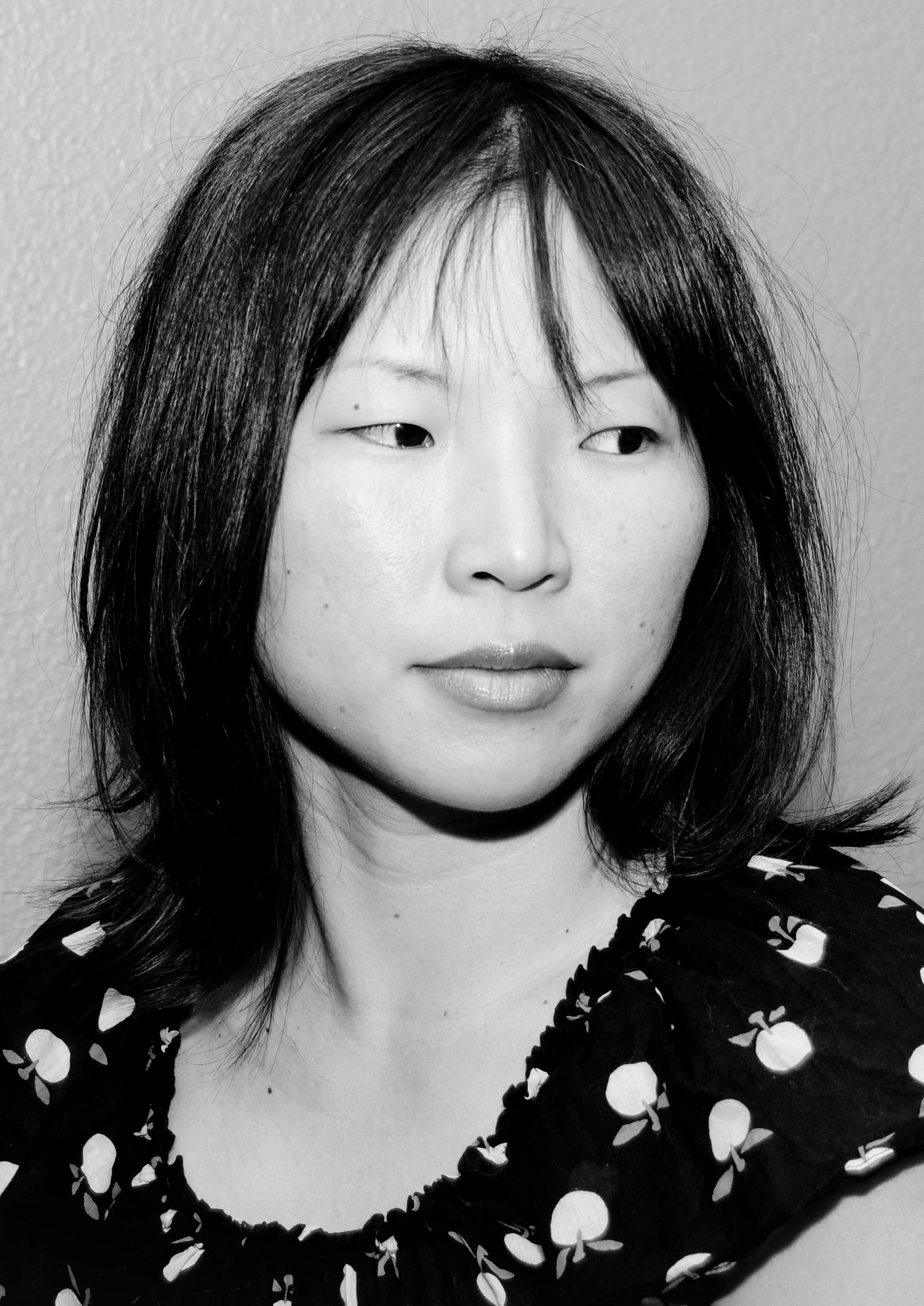
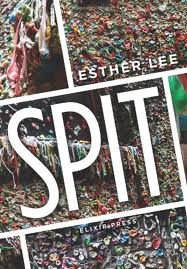
    This week’s featured poet is a “friend of a friend,” whom I look forward to knowing better. Becoming familiar with her poetic aesthetic these past couple of weeks has been a joy and I am eager to promote her work among my readers. While it’s never possible to truly sum up a poet’s work, Lee’s poems are admirably pithy, wry, and honest – concerned with the things in life and history that are difficult to contemplate. Waste no time acquiring her book “Spit” –  I personally recommend it.

    Here is a sample poem and interview with Esther Lee followed by an author bio and information about the book, “Spit.”

    Dear ____________est,

    I sleep between fits of awake. When luck outruns the
    running out, call me, the horrible habit. It’s not our
    fault, I scream. At four years old, wearing my mother’s
    clogs, my sister balances a tray, on it a cup of lemonade.
    She steps like a small elephant clamoring over burning
    tires. Glass carpeting the floor connotes the fallen
    church, welts my throat for forgiveness. What matters
    matters me the least. My sister’s pawing hands hand our
    bed-ridden father his antidote and next thing I know
    we’re smiling vulgarly. These the days when I mistook
    daffodils for tulips and tulips for one-armed men in
    gardens, their missing arms the evidence of my betrayal.

    Yours,

    __________est

    1. Tell me a little about your relationship with poetry and how it developed.

    I studied visual art as an undergrad, starting with 2-D work (painting, pastels, etc.) but eventually became more interested in installations, performance, and video (albeit, crudely done). I seemed to be attracted to ‘dangerous’ materials like resin, insulation, dead fish, dead bees. The ephemeral and the stinky, the toxic. I’m guessing this may be in part because of my upbringing. My parents once managed a small fish market in Maryland so the smell of crabs and fish surrounded me–in my father’s van, in my parents’ clothes. I learned to have a sick and tender response to those smells but also I was interested in how those ephemeral materials could change a space or performance with their sensory insistence. Those visual art pieces often incorporated language–either overtly with text in a video, or with an audio clip from the media, painted text on the canvas, etc. A mentor at that time encouraged me to seriously pursue writing and film. I’d shelved that advice until after I’d graduated and traveled to Korea. There, I was learning Korean but simultaneously felt this unreasonable fear of losing English, as if I could not have both. I began to dream in Korean and in a desperate attempt to hold onto my English, I started writing.

    2. Often poets and writers are involved in a number of creative projects beyond writing. Tell me about some other ways you express your creativity.

    Along with visual art, I guess another avenue was definitely music. I’d met this blues singer, Charles Atkins, who let me bother him on a regular basis. He helped me to shape my voice for singing, teaching me songs, always encouraging. He helped me to feel more confident on stage, to letting go while singing. Because of him, I started to sing in various music bands. And that love of music and appreciating how it shares qualities with poetry is still there.

    3. In what ways do you contribute to and become involved with the poetic, or creative, community?

    Kundiman, the retreat for Asian American writers, has been one of the most valuable experiences I’ve had as a writer. The other folks there–fellows, faculty, staff–are completely supportive during and after the retreat. I’ve never been part of such a chosen family of writers who genuinely lift each other up again and again. A true community like this thrives by cultivating this kind of generous energy and I hope that I contribute back to these communities that have so enriched my life. A priority for me has been to contribute back to marginalized communities. Sometimes that’s taken the form of managing literary magazines that promote writers from more marginalized communities, such as inmates, writers of color, LBTQ artists. As a teacher of creative writing, I hope that I can help my students recognize the value of diversity in all its forms (aesthetic, philosophical, authorial, etc.) and notice connections in the most unlikely places.

    4. How do you balance the many demands of life with the demands of writing poetry?

    I probably don’t. I’m writing regularly for a minute, then prepping for teaching, sulking about not exercising or whatever, but somehow the writing happens. It doesn’t necessarily happen in the most ideal way, which for me would be getting up and having tea, then writing all day with intermittent breaks of playing banjo and reading. Right now, that’s not my reality, but I am still interested in at least half of what I’ve started, so that’s a good sign.

    5. What are projects are you working on now?

    The main project I’m working on is a novel based on my mother’s childhood during the Korean War and her adulthood as an immigrant in Florida amid times of racial tension and anti-Asian sentiments. The novel explores the intergenerational nature of trauma—my mother’s early loss of her own mother and coping in war-torn Korea as a girl—and how one person’s experience invariably affects the lives of loved ones, in this case, my father, sister, and myself. It’ll incorporate elements of non-fiction, poetry, maps, and photographs too.

    Esther Lee currently lives in Salt Lake City, Utah and is pursuing her Ph.D. at the University of Utah (Literature/Creative Writing Program). She received her M.F.A. in Creative Writing from Indiana University and served as Editor-in-Chief for Indiana Review. She has been awarded the Elinor Benedict Poetry Prize and 2009 Utah Writer’s Contest Award; twice nominated for a Pushcart Prize, as well as nominated for a Ruth Lilly Fellowship.

    Her first poetry collection, Spit, was published this year and was selected for the Elixir Press Poetry Prize, and her chapbook, The Blank Missives, was published by Trafficker Press in 2007. Her poems and articles have appeared or are forthcoming in Ploughshares, Verse Daily, Salt Hill, Good Foot, Swink, Cream City Review, New Orleans Review, Hyphen, Columbia Poetry Review, Born Magazine, and elsewhere.

    Kevin Young calls Spit, Lee’s debut full-length book of poetry, “filled with bravado and brilliance” which makes “profound use of hollering across the ‘rusted hollows.’”

    Purchase a copy  at Small Press Distributors

    Visit Esther’s new website at: http://estherleewriter.com/news.html

  • Interview with Poet Juan Morales

    Today’s featured poet, Juan Morales, resides in Pueblo, Colorado where he is acting Director of Creative Writing at Colorado State University-Pueblo, a small public university. I know Juan as a conscientious and hardworking poet as well as a supportive friend. Here, Juan discusses the nuances of putting together a manuscript for publication as well as how to balance work with writing poetry. First, this poem from Juan:

    GARCILASO RECALLING A CHILDHOOD MEMORY, 1599

    I used to play in Sacsayhuaman,
    a neglected fortress that stretched
    above everyone into tidy tiers.  I felt

    my smallness walking the overgrown trail,
    gliding hands along smooth limestone, interlocking
    perfection, which once walled out

    enemies and elements.  Every day I watched men haul
    stones to town, quartering the angry spirits, leaving only
    enough rock to defeat its height until a day

    when wind rushed past like a broken army’s
    murmur.  I heard Sacsayhuaman call me
    beyond its crenulated walls, to the doorway

    into its long plunging arteries, passages under Cuzco,
    where light waned and chambers carried
    my voice deep into the labyrinth.  I stepped inside,

    to meet its haunted past, tumbling over
    like the hunger of rockslides, the heat
    of banked fires searing inside my innocent mind.

    (Previously published in Pilgrimage Magazine)

    1. Tell me about the publication of your first book of poetry.

    The first book of poems, Friday and the Year That Followed, originally started as my MFA thesis at the University of New Mexico, and I was fortunate to have the opportunity to work on refining it while I was in graduate school.  I submitted the manuscript to several contests and was a finalist a few times.  A short time after I defended my thesis and moved back to Colorado, I got a phone call from Tony Gorsline, Editor of Bedbug Press, who informed me I was the winner of the 2005 Rhea and Seymour Gorsline Poetry Competition.  Over the next year, I worked closely with Tony on editing, revising, and shaping the book as Bedbug was a smaller press.  He was very supportive and willing to give me a lot of input on the finished product, which helped me learn a lot about the publishing process.  The book was published in 2006.  Sadly, the press recently closed when Tony Gorsline passed away and with no one else to take up his cause. As previously mentioned, Bedbug was a small press and delivered beautiful books.  Tony Gorsline’s passing is a real loss to the poetry community.  He gave a lot and showed a lot of love for the written word.  Since the publication of the book, I have spent a lot of time doing readings at large and small venues and whenever they present themselves in the vicinity of Colorado and occasionally in other states.  The process of publishing and promoting have been an ongoing process that takes a lot of work and discipline, but I feel very lucky to get my book out there in the world.

    2. What anxieties arise around putting together a manuscript and how to you negotiate them?

    Assembling a manuscript can be an exciting experience, but it’s also pretty challenging and humbling.  After putting together the first book and my continued efforts on the second manuscript, I find one of the challenges is keeping the work fresh after spending so much time with the poems.  You live with the work so long that there’s a risk of getting lost in the revision process and overlooking the good work in there.  Sometimes when I read older poems at readings, I surprise myself with how much I like the poem.  With Friday, I had the experience of workshop and the publishing experience to figure out the right order, and I try to take those lessons into this new manuscript.  The original organization had an elaborate theme that wove the poems together with some specific epigraphs, but my readers became very confused about who was involved in the poems, where the poems were taking place due to all the jumps in time and place.  Ultimately, I simplified the manuscript with the organizing principle of geography: part one in Ecuador, part two following my father’s military career, and part three entering the supernatural.  The grounded approached helped the complexities emerge with the moments and snapshots in the poems.

    Now with the new manuscript, a book of encounters between the Incan empire and Spanish conquest, the anxiety for me comes with finding a way for the specific era of history matters to the contemporary reader while showing more of this world to the readers.   Stylistically, I want to make sure the book is concise but that it’s also in the right order, but the current manuscript also demands a sort of chronology to it as well.  I am working to navigate long sequence poems with concise choices inside them to give the reader enough time to pause and reflect on how these sections of poems become weaved into the larger tapestry.   By nature, I am very narrative with my work, so I hope to touch the lyrical more as I go on.  I guess the other anxiety is whether or not the intended organization will reach the readers or not, but I think all poets wrestle with this.

    3. How do you balance the duties entailed with your position as Director of Creative Writing at your college and writing poetry?

    I am finishing up my fourth year as the Director of Creative Writing at Colorado State University-Pueblo, which is a small public university.  My role as Director requires me to teach in multiple genres, advise creative writing major and minor students, act as faculty sponsor for Tempered Steel, CSU-Pueblo’s student literary magazine, and also curate the Southern Colorado (SoCo) Reading Series.  When I first started the position, I was overwhelmed with all the roles I had to play and the administrative side of the job, but it slowly came together.  Over the years, I have come to learn that my writing time has to be balanced with my role as a teacher.  Both are worthy pursuits and they overlap well.  One way I navigate my writing is keeping notebooks everywhere and writing whenever time permits.  I also make sure my courses overlap with my areas of interest and I also start every class I teach with 7-10 minutes of writing to help students get in the routine of writing and to keep me on track.  I used to think writers should always be writing, but I know now that we can go through times when we don’t write and emerge unscathed.

    4. Do goal setting and planning play a role in your creative process?

    As far as goals and planning go, they vary depending on deadlines and other things going on in my life.  I am always amazed when I see poets produce books and manuscripts so quickly, some of them being every other year or so.  As far as my process goes, I don’t like to rush it; instead, I want the product to be as polished as possible.  I’m a young writer so I still have a lot to learn.  My writing process starts with handwritten versions, then typed, and then sometimes I go back and write them by hand again to see how I can compress them further and remove instances of reporting.  I like to think that the poems can tell you when they are done, but I keep chipping away at them while also giving myself distance from them to return to them fresh.

    5. What creative endeavors, poetic or otherwise, are in your future?

    As I mentioned, the second manuscript is on track to be finished soon, so I hope to have that ready to submit to publishers in the near future.  I also find myself writing poems and flash fiction/prose poem pieces that do not fit the new manuscript.  The first two books have had specific focuses, so it’s exciting to write some poems with no plans or expectations, to see them grow organically into a project I can’t identify yet.  I also hope to start working on a larger fiction project that has been in my head for awhile.  That’s the fun thing about teaching so many genres at my university because the students and the different genres can be quite inspirational.  Hopefully, more work will find its way into the world very soon.

    Juan J. Morales is currently the Director of Creative Writing and Assistant Professor at Colorado State

    University-Pueblo. He is curator of the Southern Colorado Reading Series as wells as the student literary magazine, Tempered Steel.

    Read “My Eco Crimes” and “How My Father Learned English”, both by Juan Morales.

    “Friday and the Year That Followed” (ISBN 9780977197354) is available for purchase at Amazon

    Other books by Juan Morles include The Siren World—Poetry collection published by Lithic Press, 2015, and  The Ransom and Example of Atahualpa,” a limited edition poetry chapbook published by Casa de Cinco Hermanas Press, 2014.


  • Interview with Poet Lisa Chavez

    This month’s featured poet hails from the East Mountains of Albuquerque, New Mexico. Described by fellow poets as supportive and possessing a particular intuition for sequencing poems in a collection, Lisa weighs in on such topics as the creative process, the role of the MFA and the genesis of her poetry. Here then, following a poem from her most recent collection, is this month’s poet interview:

    In an Angry Season

    They’ve gone to witness the river’s mad
    descent into spring. The heave and thunder
    as the ice shakes itself from the shore,
    the way the frozen slabs–pachyderm grey
    and similarly sized–shear one into
    another as the Yukon shudders awake.
    From a hawk’s height the pipeline bridge
    mocks the river’s riot and churn. Perched
    there, they watch–then his pale hand
    turns her tawny face to his and
    they kiss, roar of loosed ice echoing.
    They are both just nineteen.

    And now they sit, hands clutching brown
    bottles, in a one-room cabin turned
    tavern. A wooden counter, scabbed over
    with men’s names. A naugahyde couch,
    slouching by the door. One man at the bar,
    face flat in a puddle of beer.
    His phlegmy snores. The room choked
    with smoke. The one they call Dirty Dave
    is telling a story: “We picked up this squaw
    hitching her way into town. Weren’t no room
    in the cab, so she crawled in back. I went after her.
    I said, whatever you hear, boys,
    don’t stop this truck.” Laughter.  He grins,
    gap-toothed and mean. Leers at the girl.
    “I like it when they fight.”  She shivers.
    Twists at a strand of her black hair.
    Her boyfriend draws her closer.
    Six men–they’ve been drinking
    all winter. One girl. One nervous
    boyfriend. A mining camp a hundred miles
    or more from town. And Dave stares
    at the girl. “What do you think of that?”

    And she thinks: There is so much evil
    in this world. And she thinks of her hand,
    squeezing the bottle till it breaks, scraping
    this man’s face to bone with the shards.
    And she thinks of the river, how in some
    angry seasons it could not be contained–
    bridges snapped like thread, whole villages
    devoured by the Yukon’s flood and fury.
    And she hears the river shift and growl.

    1. Tell me a little about your inspirations. In other words, what, or who, inspires you to write and create poetry? 

    My inspiration has changed over the years. I used to write more out of a sense injustice: I believed, and still do believe, that poetry can be a vehicle for change.  I haven’t given that up, but I’ve also written a lot about issues that were really personally compelling: on issues of race, gender and class, for example, and now I find it easier to address some of those big topics in creative nonfiction rather than in poetry. One thing that has not changed, however, is my love of story and character: poems often begin because I become fascinated by a character and his or her story. I see the poem as a way to live another life, however briefly, and to really get inside someone else’s head.

    When I’m looking for inspiration, photographs are a great trigger – photographs of people are great for creating characters. Several of the poems in my second book come from photographs. Reading poetry is also great inspiration.

    2. Often poets and writers are involved in a number of creative projects beyond writing. Tell me about some of the other ways you express your creativity. 

    For years, writing was pretty much all I did, and when the writing wasn’t going well, I felt creatively stuck. I think I had that kind of perfectionism that some artists have: I know I’m not nearly so skilled in other art forms, so I tend not to try them.  But in the past few years, writing had gotten much too serious and it just wasn’t fun anymore, so I decided to try some other creative projects, with absolutely no expectations.  And it was really fun!  I’m not a good visual artist by any means, but I enjoy a number of crafts, from paper crafts and altered books, to fabric art. I still can’t draw or sew very well, but I make do, and have fun.  I particularly like anything that involves collage and found art:  making new things out of old stuff.  In some ways it reminds me of writing: rearranging things until they make a pleasing pattern, the same way I may move words around on a page.

    3. What has been the role of poetry in your development as a creative person?

    You might say poetry has been the extended metaphor for my creative life. It is not all of it, but it has been a long-lasting mode of expression.  I started writing stories at 4, when my grandmother taught me how to write, and I never stopped. I thought I’d be a fiction writer, because mostly it was fiction I read and was nourished by, but even though I am very much a narrative poet, fiction is by far my weakest genre.  I never even tried to write poetry until I was an undergraduate, but once I discovered it, I felt like I’d found my form, and kept going with it.

    Still, not everything works in poetry. Sometimes I want to “tell” rather than just “show” and I’ve been writing creative nonfiction almost as long as I’ve been writing poetry.  The two genres go well together, I think, and when I want a larger palette, creative nonfiction is a good option.

    But writing is just one aspect of my creativity. I don’t hear people talking about this a lot, but for me one hazard of being a writer and academic is how professionalized writing becomes, and how tied to the job it is, and for me, this has stolen some of the magic of writing.  It seemed like work, not fun.  I’ve considered switching to genre fiction to get some of the playfulness back (I could literally write about magic then, if I’m writing fantasy!) and I do have some fantasy and sci-fi projects in the works.  I also regained some pleasure in writing about dogs on my blog—it’s so far removed from my work that I can feel free to just follow my interests.  But much of the rest of my creative life is something that is not professional in any way:  it’s the various projects I work on at home–dying cloth, making collage paintings or artist’s books, gardening, or whatever.

    4. What is your view on education in the creative process. Is an MFA an important credential for artists and writers to attain?  

    I think an MFA can be very useful, but it is certainly not the only route for artists.  What it does best is give artists and writers a time to fully devote themselves to their art in a way they will likely not be able to do again.  The best part of the MFA is the time immersed in writing, in taking classes, in writing, in critiquing writing, in teaching writing.  It’s a great gift, and a great way to hone craft.  That said, it certainly won’t guarantee people an academic job, nor will it even guarantee publication.  It’s an apprenticeship, and what comes after is up to the individual writer or artist.

    5. What are your current creative dreams and goals?  

    My current interests may not initially seem related to art, but I think they are. I’m really interested in holistic healing and a more holistic lifestyle in general; in fact, I’m planning on taking classes in things like aromatherapy, herbalism, etc.   From what I’ve discovered so far, holistic healers are incredibly creative people, working in a way I’d never considered, as their creativity is focused on health, both spiritual and physical.  They are also very intuitive in a way that really resonates with me as an artist, as so much of art begins in intuition. This kind of study will open up a new way of looking at the world that is rooted in the physical and energetic, rather than in just the intellect. I don’t know where this will take me as a creative person, but I do know that it has already energized my life, and I know that for me, health must be based in the physical, spiritual AND creative life, and I’m looking forward to what comes next creatively.

    Lisa D. Chavez has published two books of poetry: Destruction Bay and In an Angry Season, and has been included in such anthologies as Floricanto Si! A Collection of Latina Poetry, The Floating Borderlands: 25 Years of U.S. Hispanic Literature, and American Poetry: The Next Generation. Her creative nonfiction has been published in Fourth Genre, The Clackamas Literary Review and other places, and has also been included in several creative nonfiction text books. Her most recent essays appear in An Angle of Vision: Women Writers on Their Poor and Working Class Roots and The Other Latin: Writing Against a Singular Identity, forthcoming from the University of Arizona Press.

  • Inaugural Poet Interview: Alarie Tennille

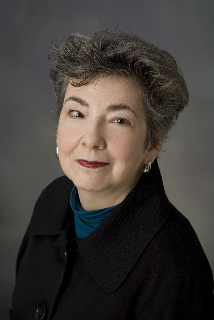
    The subject of my first poet interview is Alarie Tennille, a Kansas City poet whom I met at a fund-raising event for The Writers Place late in 2010. Our initial conversation was everything you might expect in such a social situation, but beyond our words was an instant affection and respect for each other as poets. I frequently run into Alarie at area poetry readings and other events and always make it a point to seek her out and have a conversation with her. It is my pleasure to feature her in this, my inaugural interview. Please sit back and enjoy this lively conversation.

    —–

    Alarie Tennille was born and raised in Portsmouth, Virginia with a genius older brother destined for N.A.S.A, a ghost, and a yard full of cats.  A Phi Beta Kappa, she graduated from the University of Virginia in the first class that admitted women.  She has spent most of her career as a professional writer and editor.   Alarie met her husband, graphic artist Chris Purcell, in college.   They moved to Kansas City in the early 1980s.

    A Pushcart nominee, Alarie serves on the Board of Directors of The Writers Place. Her poems have appeared in numerous journals, including Poetry East, Margie, ByLine Magazine, English Journal, Coal City Review, Kansas City Voices, I-70 Review, The Mid-America Poetry Review, Little Balkans Review, Rusty Truck, and The Kansas City Star.

    Featured poem:

    How to Get an Unusual Name

    Pick ancestors from a foreign-speaking
    land.  Begin with a name that is little heard
    even there.

    Now stir up some rebellion.   Politics and
    religion work best. But first make sure you’ve
    chosen visionary or stubborn stock. Neighbors
    must wish them dead, must drag ancient uncles
    from their beds to execution by gallows or
    guillotine.  This culls the family tree, makes
    those who stay change their names.

    Send the few remaining branches to
    different countries, where spelling will be
    changed and more cousins lost.  Your name
    will trip the new native tongue, and you’ll
    spend a lifetime correcting it.

    Now for the first name.   Choose parents
    who crave the exotic.  Hippies and
    Southerners work well.  They’ll take care
    of the rest.

    —-

    What drew you to writing, or more specifically, writing poetry?

    My earliest writing was an extension of make believe.   I was in the second or third grade when I wrote “The Mouse Family Christmas.”   I read it to my mother as she washed dishes, and she thought I was reading from a book.   That was a very proud moment!   In the fifth grade, I made friends in a new school when I wrote a wildly exaggerated, five-page essay on “Why I Shouldn’t Talk in Class.”  I later wrote for school papers, but didn’t care for journalism the way I enjoy writing fiction.   I was first drawn to writing because I enjoy creativity and because it’s a thrill to be able to entertain and move readers.

    When I decided at 17 that I wanted to be a writer and an English major, poetry was the last thing on my mind.   I wrote short stories and plays in college along with the long stream of required critical papers. I read mostly novels and drama.  I think my lack of interest in poetry then had a lot to do with not reading the right poets.  I was in the first co-ed class at the University of Virginia.   Almost all the literature in the curriculum was written by dead white men.  But I think it was the archaic language and formal verse, rather than who wrote it, that made me feel poetry wasn’t for me.  Later, poets like Jane Kenyon, Ted Kooser, and Nikki Giovanni helped me see that I could write about the small, everyday moments in my own life rather than war, politics, and epic heroes.

    I’ve been fortunate enough to support myself with my English degree, working as an editor or writer since college.   Frankly, it’s tiring and hard on the eyes to do that much paperwork every day, so for years I didn’t have enough passion or interest to write for myself when I got home from work.   A friend kept urging me to write my family stories, a project I was planning for retirement.   Then one day those stories started arriving in poems. I was hooked, and I started devoting myself to writing poetry in my spare time.

    How long have you been writing poetry?

    I’ve been writing a poem here or there since elementary school.  But I only got serious about writing poetry about seven years ago.  I’m a poet!

    That’s still a surprise to me.  Getting involved with The Writers Place, where I’m on the Board of Directors, helped me make connections and learn more about the craft.  So I suppose I’m either an overnight success or a late bloomer, depending on whether one sees the glass as half full or half empty.

    Tell me a little bit about your writing process. Feel free to discuss your writing space, the time of day you write or any rituals or visuals you might utilize to help you with your process.

    Poetry doesn’t pay my bills.   I spend my work week writing and editing, so I try not to pressure myself with a tight  writing schedule at home.   If I’m tired and force myself to write, it shows.  I spend much more time reading poetry, which is a vital part of the process.   When a few weeks go by without a poem, I begin to fret, but looking at artwork can usually jumpstart my writing.  I’m a night owl, so I most often write when I get my second wind—after 10:00 or 11:00 p.m.   Or I may just turn ideas over in my head all through the day­–or several days–before sitting down to work on them.  I have a cheerful, red study, full of books and my computer.   But I prefer writing first drafts in my family room, sitting on a sofa with an afghan, tablet, and maybe a cat on my lap.  Then I type the poems into my computer upstairs and begin the work of polishing.  The most structured part of my writing process is my writing group.   We try to meet about every six weeks.   Because there are only three of us, we can critique quite a few poems in an hour.   ANT (Alarie, Nancy, Tina) meetings give me the deadlines I need to make sure I keep writing.  And I believe every writer benefits from constructive criticism.

    Tell me about your first major publication.

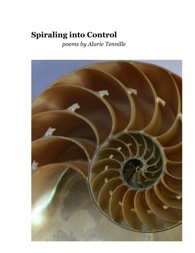
    Maybe it’s because I’m still new to poetry, but every publication is a thrill…and I’ve had about 50. My first poems appeared in The Kansas City Star, when John Mark Eberhart ran a poetry column in the Sunday paper.   Not only did that give me real confidence to submit to literary journals, but I was read and complimented by people I know who wouldn’t have seen the poems in journals.  I then branched into the local literary magazines, and we’re fortunate the Kansas City area is rich with them: Kansas City Voices, I-70 Review, Mid-America Poetry Review, Coal City Review, Little Balkans Review.  I like submitting to local journals because of the opportunities to give readings and mingle with the other authors.  It was a thrill when I had a poem published in Poetry East, because I was able to see my poem at Barnes & Noble.  My poems have also appeared in Margie, English Journal, and ByLine Magazine.  But, while It’s exciting to be in a volume beside poets I’ve admired for years, sending to little known journals can also have advantages.  Finding a fledgling review, Touch:The Journal of Healing, on duotrope.com, gave me the opportunity to publish my first chapbook through their publishing branch, The Lives You Touch Publications.   Spiraling into Control came out in July 2010 and is available on Amazon.

    What are your creative goals, plans, or dreams for the immediate future?

    I try to keep poems in circulation to publishers.  If I’m waiting to hear from at least three editors, I find I’m less discouraged when a rejection notice rolls in.  Often an okay will follow right behind it. Another chapbook would be nice, but publishing a full-length poetry book is my dream.