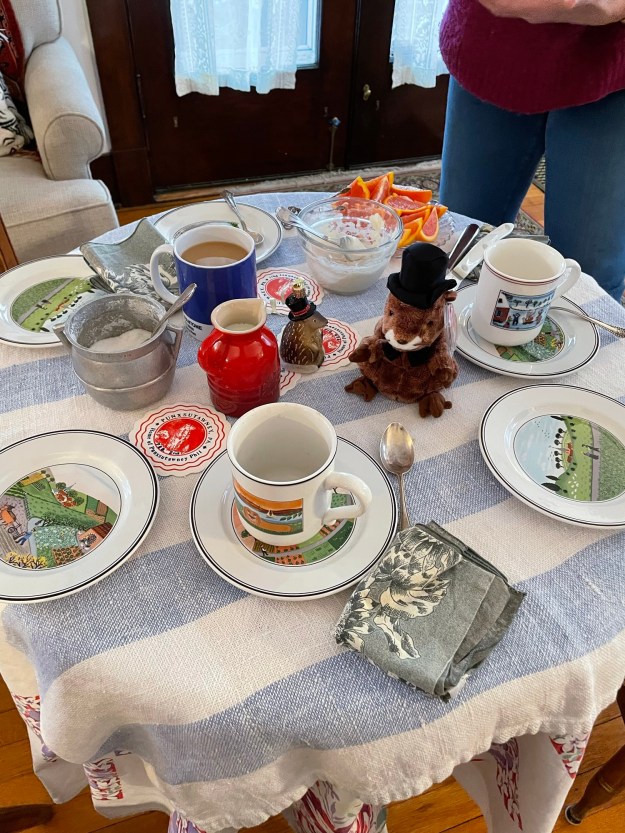
I invited a few friends over for a casual breakfast the Sunday before St. Patrick’s day.
We’ve been meeting for occasional breakfasts ever since Groundhog’s Day, 2025 to enjoy coffee, tea, homemade goodies and to talk ourselves off the precarious ledge that is American politics these days.
We’ve come to call these informal unintentional semi-regular meetings our “Breakfast Club.”
For this week’s Breakfast Club, I felt motivated to make something I’ve always wanted to make but always forget to: Irish Soda Bread.
Irish Soda Bread became popular in Ireland when baking soda was introduced to the UK sometime during the potato famine, a time when yeast was hard to come by. Baking soda provided a satisfactory alternative to yeast for raising bread and quickly became a necessity, and the new active ingredient to use in this affordable bread recipe.
When looking up recipes for, and the history behind, soda bread, I ran across a website dedicated to the preservation of Irish Soda Bread–The Society for the Preservation of Irish Soda Bread–which provides a plethora of information about Irish Soda Bread that any baker, history buff, or Hibernophile (a person fond of Irish culture, Irish language, and Ireland in general) would enjoy. According to The Society:
A distinguishing feature of Baking Soda (Bread Soda) is its ability to work on soft wheat flour, a preference that persisted despite other parts of Britain favoring hard wheat flour and moving away from quick breads. In 1908, a significant portion of Ireland’s flour, especially in Belfast and Dublin, was soft wheat imported from the United States. This enduring link across the sea solidified the connection between Ireland and Soda Bread.
The site also features recipes for Traditional Irish Brown Bread, Farls (Potato Cakes), and variations on the traditional Irish Soda Bread recipe.
I used the basic traditional recipe from their website for Sunday’s Irish Soda Bread, which lists flour, baking soda, salt, and buttermilk as its ingredients, consistent with other soda bread recipes I found on the internet–and since all the soda bread I’ve ever eaten had raisins–I added those as well.
A couple of recipe notes I feel are important here are to use pastry flour, not bread or self-rising flour, and to bake the bread covered with a lid or inverted pan on top for the first 30 minutes. This is to emulate a Bastible pot, an all-purpose cast iron pot used for most cooking in the early 19th century. I actually used the a lid from our knock-off Le Cruset dutch oven, and it seemed to work well.
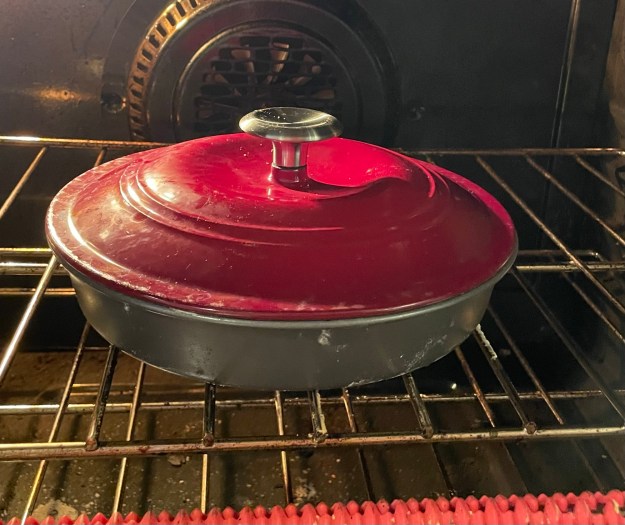
After the initial 30 minutes, instructions are to remove the lid and bake for another 15 minutes.
As per the instructions, I removed the lid at the appropriate time and put the bread back in the oven, though it looked pretty done to me. In hindsight, I wish I had taken the bread out at that point, or at least only baked it for another 5 or so minutes. Those last 15 minutes browned it up a little too much and created a much crustier crust than I anticipated.
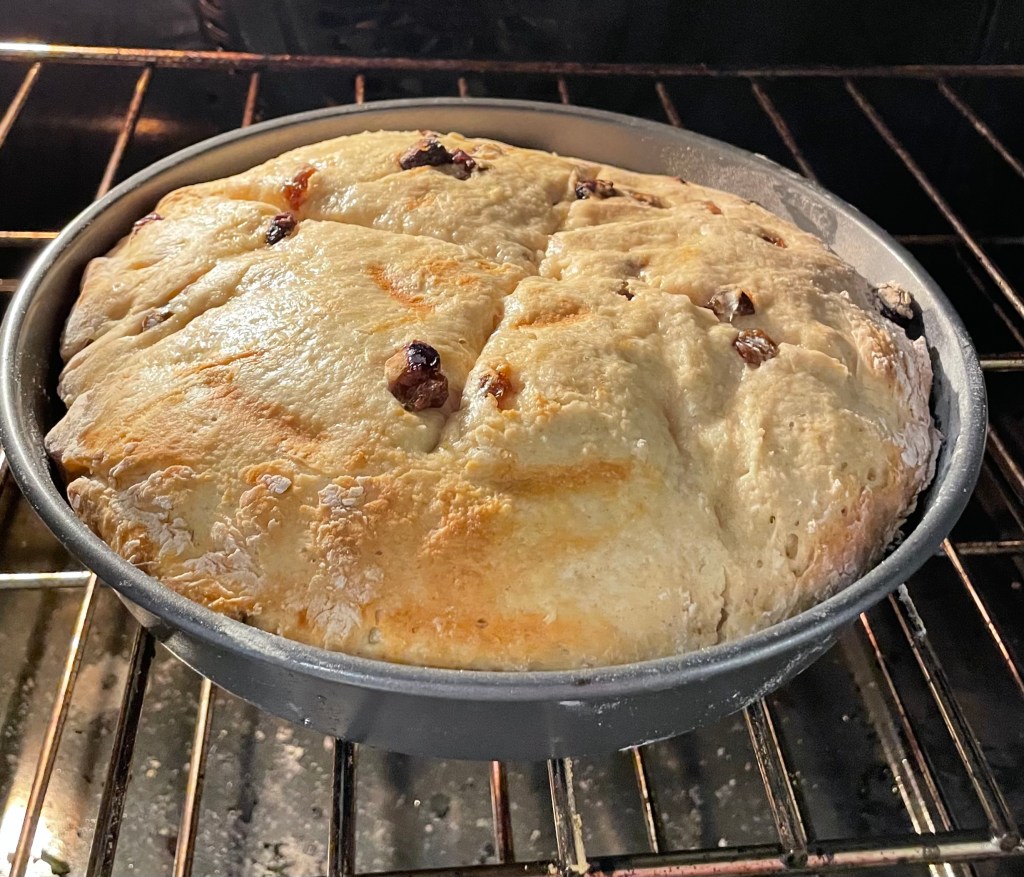
Another note not mentioned above: soda bread really should be consumed the same day it is made.
I thought it’d be okay to leave it overnight covered with a tea towel sprinkled with water. I mean, I’d be serving it within 24 hours, right, the exact length of a day? But by the morning the crust had become so hard that it was impossible to cut even with a bread knife. I broke it apart with my hands instead to get at the inside, which wasn’t bad, just, you know, over baked.
The soda bread I used to order with my Beef and Guinness stew at an Irish Pub near my West Ashley home in Charleston, SC, and which I was hoping to create with this experiment, was much lighter than this bread, and seemed to have a subtle sweetness, too, so I’ll have to either find a recipe for a sweeter bread or make adjustments to the recipe I have.
My guests politely tried my super crusty Irish Soda Bread but the fruit and yogurt salad I’d made that morning was more popular, as was the deep dish broccoli and cheddar quiche my husband had graciously made for us. In addition, my guests each brought delicious baked goodies to share making our breakfast nothing short of a feast–nay–an embarrassment of riches.
 The Zingara Project
Always nice to connect.